
Finding the perfect cabinet organizer rack for your HDB flat is not as simple as buying a standard size off the shelf. While HDB flats share common layout principles, the actual internal dimensions of your kitchen and wardrobe cabinets depend heavily on whether you have a Build-To-Order (BTO) flat, a resale unit, or custom carpentry. To ensure a cabinet organizer rack fits securely and functions without jamming, you must measure the exact internal clearances of your specific cabinets rather than relying on nominal industry standards. Mapping out your cabinet’s interior layout prevents the frustration of buying organizers that block doors, collide with hinges, or fail to slide out smoothly.
Why Assumed Standard HDB Cabinet Sizes Can Mislead
Relying on generic “standard” dimensions when shopping for a cabinet organizer rack often leads to costly mistakes. In Singapore, the evolution of HDB flat designs has introduced significant variations in carpentry dimensions. Newer BTO flats frequently feature different kitchen layouts and developer-provided fittings compared to older resale flats, which may have undergone multiple rounds of custom renovations. These design differences mean that a rack designed for a modern BTO kitchen might not fit the deeper or shallower configurations of an older resale flat.
Furthermore, custom built-in wardrobes and kitchen cabinets are rarely identical in their internal dimensions. Carpenters adjust cabinet depths and widths to accommodate uneven walls, structural pillars, or specific room layouts. A wardrobe designed to fit a specific bedroom alcove may have a shallower internal depth than a freestanding unit, directly affecting the type of pull-out organizer you can install.
Products mentioned in this guide
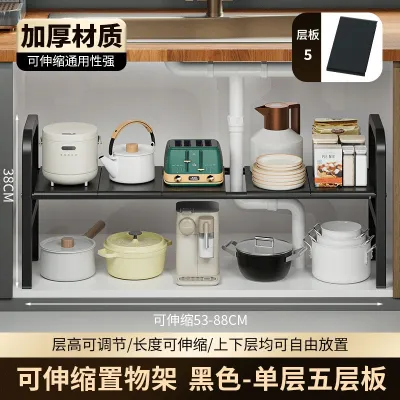
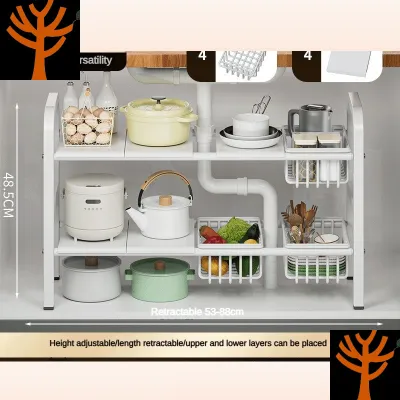
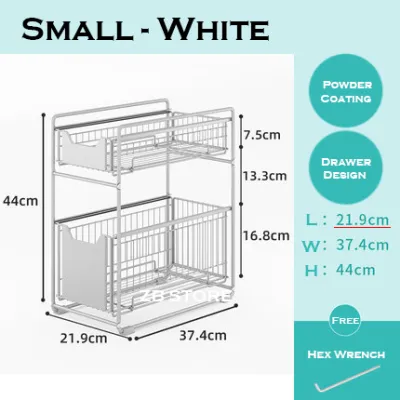
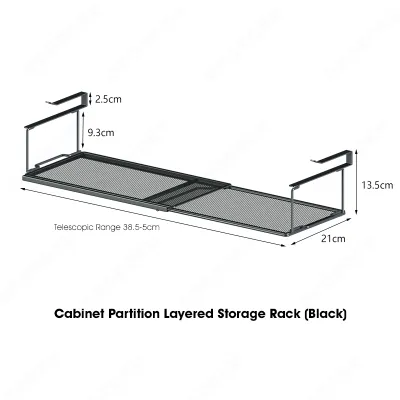
Prices are valid at publication and may change. Please refer to the product page for the latest price.
External measurements also do not reflect the actual usable space inside. Countertop overhangs can restrict vertical access, while thick back panels, internal partitions, and bottom skirting boards reduce the true internal width and depth. If you purchase a cabinet organizer rack based solely on the external width of the cabinet carcass, you will likely find that the organizer is too wide to slide past the face frame or door opening.
How to Measure Internal Cabinet Clearances Accurately
To find a cabinet organizer rack that fits perfectly, you must gather precise internal measurements using a reliable measuring tape. Do not take a single measurement and assume the cabinet is perfectly square. Start by measuring the internal width at three distinct points: the front, the middle, and the back of the cabinet. Carpentry can bow or settle over time, especially in humid environments, and a rack that fits at the front of the cabinet might get stuck halfway in if the walls narrow toward the back.

Next, determine the true internal depth of the cabinet. Measure from the front edge of the cabinet frame (or the inner face of the closed door) to the back panel. It is crucial to measure up to the closed door rather than the outer edge of the shelf, as some doors sit flush inside the frame while others overlay it. This measurement ensures that when the cabinet door is fully closed, it will not press against the organizer rack or prevent the door latch from securing.
Finally, measure the vertical height of the target zone. If your cabinet has adjustable shelves, measure the distance between the shelf pins to see if you can reposition them to accommodate a taller rack. For fixed shelves, measure from the base panel to the underside of the top panel or the shelf above. Always leave a safety margin of at least one to two centimeters at the top to allow your hands to comfortably reach items stored on the top tier of the organizer.
Accounting for Hinges, Pipes, and Hardware Obstructions
The most common reason a cabinet organizer rack fails to fit is a failure to account for internal hardware and utilities. Concealed hinges, which are standard in most HDB kitchen and wardrobe doors, protrude significantly into the cabinet’s opening space. When measuring the entry width, you must measure the narrowest point of the opening, which is usually the distance between the protruding hinge bodies when the door is open at a ninety-degree angle. If you plan to install a pull-out drawer or wire basket, it must clear these hinges to slide out.
Kitchen sink cabinets present additional challenges due to plumbing, waste pipes, and water filtration systems. A standard rectangular organizer rack will rarely fit around a central drainpipe or a bulky garbage disposal unit. For these zones, you will need to measure the clearance on either side of the pipes and consider specialized U-shaped organizers or modular, stackable shelves that can be built around the plumbing.
Wardrobes also feature unique obstructions, such as hanging rods, sliding door tracks, and drawer runners. Sliding wardrobe doors are particularly tricky because one door always overlaps the other, meaning only half of the wardrobe is accessible at any given time. Your organizer rack must be narrow enough to fit entirely within the clear opening of one open sliding door, with enough clearance to avoid scratching the inner face of the sliding panel as it moves.
Matching Organizer Rack Types to Specific Cabinet Zones
Once you have your precise measurements, you can match the right style of cabinet organizer rack to the specific zones of your home. For deep kitchen base cabinets, pull-out wire or solid-bottom baskets are highly effective. These systems bring items from the dark back corners of the cabinet directly into view. When selecting a pull-out rack, prioritize models with adjustable mounting brackets that can be calibrated to match your measured internal width, and ensure the slide runners are rated for the weight of heavy pots and pans.
Upper kitchen cabinets, which are typically shallower and taller, benefit from tiered shelf inserts or under-shelf baskets. Since these cabinets are at eye level or higher, tiered inserts allow you to see spices, canned goods, or mugs clearly without stacking them precariously. Under-shelf baskets slide onto existing shelves to utilize the empty vertical space below them, making them ideal for storing light items like food wraps, napkins, or baking sheets.
In bedroom wardrobes, organization needs shift toward modularity and fabric or lightweight plastic inserts. Adjustable drawer dividers and stackable plastic bins allow you to customize deep wardrobe shelves for clothing, accessories, or bedding. If you are organizing a wardrobe with deep shelves, look for modular organizers that can be stacked securely or configured side-by-side to match the exact width of your wardrobe compartment, preventing wasted space on the sides.
Installation Limits and Carpentry Safety Checks
Before purchasing and installing any cabinet organizer rack, you must evaluate how it will attach to your cabinetry and whether the structure can support it. Organizers generally mount using either heavy-duty adhesives or screws. Adhesive options are convenient for lightweight plastic or wire racks in rental units, but they require a smooth, non-porous surface like laminate to adhere properly. For heavy-duty pull-out racks, screw-in mounting is essential to prevent the rack from tipping forward when fully extended.
You must also check the weight capacity limits of your existing cabinet shelves and the organizer itself. Standard HDB adjustable shelves rest on small plastic or metal support pins, which can shear or slip under excessive weight. If you install a heavy metal organizer loaded with cast-iron cookware on an adjustable shelf, you risk bowing the shelf or causing a structural failure. Always place heavy pull-out organizers on the solid base panel of the cabinet rather than on middle adjustable shelves.
Finally, inspect the thickness and material of your cabinet partitions before drilling. Many modern cabinets are made of medium-density fibreboard (MDF) or particleboard, which can crumble or split if drilled incorrectly. If your installation requires mounting tracks to a thin partition wall between two cabinets, ensure the screws are short enough not to pierce through to the adjacent compartment. If you are unsure about the structural integrity of your cabinets or need to modify load-bearing partitions, stop and consult a professional carpenter to avoid costly damage.
Frequently Asked Questions (FAQ)
Can I use tension-mounted organizers in HDB wardrobes?
Tension-mounted organizers can be used in HDB wardrobes, but they require careful evaluation of the wardrobe’s side panels. These organizers rely on outward pressure to stay in place, which can cause thin plywood or particleboard partition walls to bow outward over time. To prevent damage, only install tension rods or shelves against solid wood panels or reinforced cabinet frames, and regularly check that the pressure has not caused the panels to warp or separate from the back backing.
What should I do if my cabinet walls are not perfectly square?
If your cabinet walls are slightly uneven or out of square, avoid rigid, fixed-size metal frames that require an exact fit. Instead, opt for adjustable-width organizer racks or modular, freestanding plastic bins that offer some wiggle room. If you must install a slide-out track in a slightly uneven cabinet, you can use thin plastic or wood shims behind the mounting brackets to level the tracks, ensuring the drawer slides smoothly without binding or jamming.
Do I need to remove existing shelves to install pull-out racks?
In most cases, you will need to remove or adjust existing shelves to accommodate a pull-out rack. Pull-out mechanisms require significant vertical clearance to allow you to lift items in and out of the baskets. Before removing a shelf, verify that it is not a fixed structural shelf that holds the cabinet frame together. If the shelf is adjustable, simply remove it and store it safely, then mount the pull-out tracks directly to the cabinet floor or side walls, ensuring there is sufficient height for your tallest stored items.

Community discussion
Share your experience or ask a question. Comments are reviewed before publication.