
Finding the right 3-seater fabric sofa brand for a Singapore HDB flat requires balancing physical space constraints, tropical climate demands, and structural durability. Instead of looking for a single universal brand, homeowners should evaluate options based on transparency regarding frame construction, fabric performance metrics, and delivery logistics tailored to HDB dimensions. A successful choice fits the living room layout without blocking walkways, withstands high humidity, and can navigate tight lift doors and corridors during delivery.
Assessing HDB Layout Constraints for a 3-Seater Sofa
Typical HDB living rooms require careful spatial planning to avoid a cramped environment. A standard 3-seater sofa usually ranges from 180 cm to 230 cm in length, with a depth of 85 cm to 100 cm. Before browsing brands, measure your designated wall space and ensure at least 60 cm to 75 cm of clearance for walkways around the sofa. This clearance is essential for maintaining comfortable traffic flow between the seating area, the coffee table, and the television console.
Delivery failures are a common and costly issue when buyers forget to measure access routes. Standard HDB passenger lifts have specific door heights, cabin depths, and weight capacities that limit the size of fully assembled furniture. Measure the lift door width, cabin height, and diagonal clearance to ensure the sofa can be maneuvered inside. If the sofa cannot fit into the lift, delivery teams may have to use the stairwell, which often incurs manual handling fees of S$10 to S$20 per floor.
Products mentioned in this guide
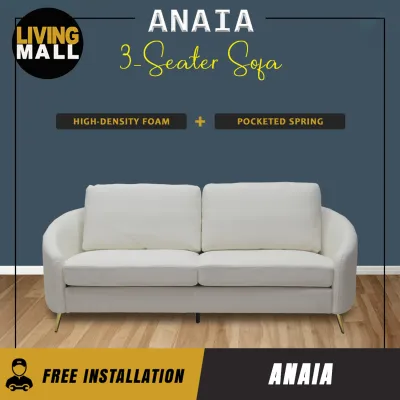
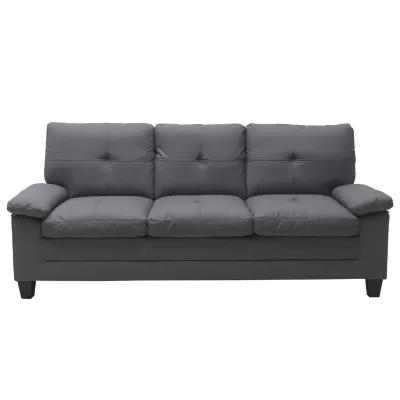
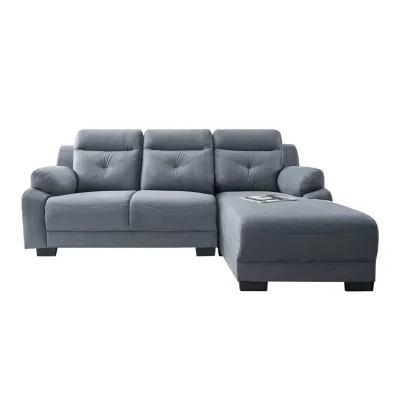
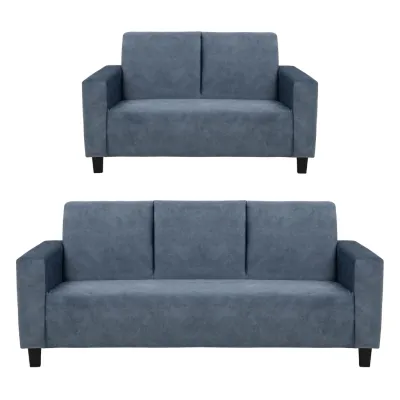
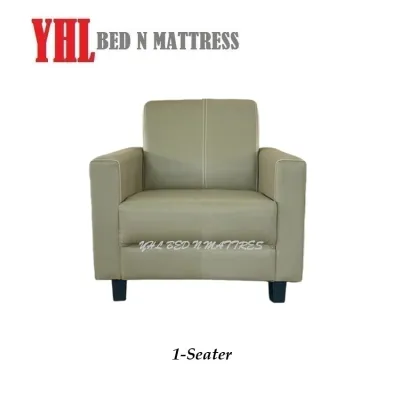
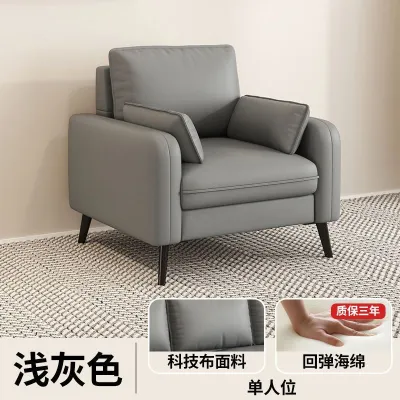
Prices are valid at publication and may change. Please refer to the product page for the latest price.
In compact HDB layouts, the visual weight of a sofa significantly impacts the perception of space. Sofas with high, bulky armrests and solid bases that sit flat on the floor can make a small living room feel claustrophobic. Choosing a brand that offers low-profile arms or slim, raised legs (at least 12 cm to 15 cm high) creates an illusion of space by allowing light to pass underneath. This design choice also simplifies cleaning, as it provides sufficient clearance for robotic vacuums to operate without getting stuck.
Core Criteria for Evaluating Fabric Sofa Brands
The longevity of a sofa depends heavily on its internal skeleton, which is often hidden from view. Look for brands that specify kiln-dried hardwood, such as birch, beech, or larch, for their frames. Kiln-drying removes moisture from the wood, preventing it from warping, cracking, or developing mold in Singapore’s humid climate. Avoid brands that only list generic “wood” or rely heavily on staples and glue without dowels, corner blocks, or metal brackets at critical stress points.

Seat comfort and shape retention depend on the foam density and suspension system. High-resiliency (HR) polyurethane foam with a density rating of at least 30 kg/m³ to 35 kg/m³ is standard for durable seating that resists sagging. Brands should also disclose their suspension methods, such as pocket springs, sinuous (no-sag) springs, or high-tension webbing. Pocket springs offer localized support and reduce motion transfer, while sinuous springs provide a firmer, highly durable base.
Reliable brands provide detailed specifications for every component rather than relying on vague marketing terms. They do not hide material origins or use ambiguous descriptions like “premium comfort blend” without explaining the actual materials. Look for manufacturers that offer clear technical sheets, exploded-view diagrams of their sofa construction, and explicit details about their quality control processes. This transparency is a strong indicator of manufacturing standards and product reliability.
Choosing the Right Fabric for Singapore's Climate
Singapore’s high humidity and warm temperatures make fabric selection critical for long-term comfort. Natural fibers like linen and cotton blends offer excellent breathability and a cool feel, but they can be prone to wrinkling and moisture absorption if not treated. Synthetic fibers like polyester, nylon, and acrylic are highly durable, resistant to stretching, and less prone to trapping moisture. A blend of natural and synthetic fibers often provides the best balance of comfort, breathability, and durability.
To verify fabric durability, check the Martindale rub count and pilling grade in the product specifications. For everyday residential use in a busy household, look for a Martindale rating of at least 15,000 to 20,000 rubs; households with pets or children should aim for heavy-duty fabrics rated at 30,000 rubs or higher. Pilling resistance is graded on a scale of 1 to 5, with Grade 4 or 5 indicating minimal fuzzing or fiber balling over time.
Removable and washable covers are highly practical for HDB living, where spills and dust accumulation are inevitable. Check if the brand’s fabric covers can be completely zipped off for machine washing or dry cleaning. If the covers are fixed, verify if the fabric has been pre-treated with water- and stain-resistant coatings, and check the manufacturer’s instructions regarding compatible spot-cleaning agents to avoid damaging the fibers.
Building Your Brand Shortlist and Verifying Claims
A warranty is a strong indicator of a brand’s confidence in its product. Compare warranty terms across your shortlisted brands, paying close attention to what is covered and what is excluded. A robust warranty typically covers the internal frame and suspension for 5 to 10 years, while cushions and fabric covers may only be covered for 1 to 2 years. Read the fine print to identify exclusions, such as normal wear and tear, fabric fading, or damage caused by improper cleaning.
Online reviews can reveal long-term performance issues that are not apparent in a showroom. When browsing reviews on independent platforms or the brand’s website, filter for keywords like “sagging,” “pilling,” “stitching,” and “customer service.” Pay attention to how the brand responds to negative feedback; a responsive customer support team that resolves issues quickly is a valuable asset. Avoid brands with a pattern of unresolved complaints regarding structural defects or delivery delays.
Never rely solely on digital screens to choose a fabric color or texture, as screen calibrations can distort colors. Most reputable sofa brands allow customers to order physical fabric swatches, often for free or a nominal fee. Place these swatches in your HDB living room to see how the color changes under natural daylight and warm indoor lighting. You can also test the swatch’s stain resistance by spilling a few drops of water or coffee to observe how easily it cleans up.
Navigating Delivery, Assembly, and After-Sales Support
Before finalizing your purchase, clarify all delivery logistics with the retailer to avoid unexpected costs. Ask about delivery fees, specific delivery time slots, and potential surcharges for walk-ups if the sofa cannot fit into your HDB lift. If you need to dispose of your old sofa, check if the brand offers a disposal service, what the associated fees are, and whether this service must be booked in advance.
Review the return policy thoroughly, especially for custom-made or made-to-order fabric sofas. Many brands charge restocking fees (often 10% to 20% of the purchase price) for returns, and some custom configurations may be entirely non-refundable. Understand the protocol for transit damage; the retailer should have a clear process for replacing damaged parts or the entire unit at no extra cost to you.
When the delivery team assembles the sofa in your home, perform a thorough inspection before signing the delivery note. Sit on every part of the sofa to check for unusual squeaks, wobbles, or uneven cushioning. Inspect the fabric seams, zippers, and legs for any loose threads, tears, scratches, or misalignment. Document any defects immediately with photos and report them to the delivery team and customer service.
Frequently Asked Questions (FAQ)
Can a standard 3-seater sofa fit through typical HDB lifts?
Yes, most standard 3-seater sofas can fit through typical HDB passenger lifts, but it depends heavily on the sofa’s overall dimensions and design. A standard HDB lift door is usually around 80 cm to 90 cm wide, with a cabin height of about 200 cm to 210 cm. To ensure a safe fit, compare the sofa’s longest dimension (length) against the lift’s internal height and diagonal clearance. If the sofa length exceeds 210 cm, it may need to be tilted diagonally or transported via a service lift. If dimensions are borderline, consult the retailer’s delivery team for a professional site assessment or consider a modular design.
Are modular 3-seater sofas better for HDB flats than fixed frames?
Modular 3-seater sofas offer significant advantages for HDB flats, particularly regarding delivery maneuverability and layout flexibility. Because modular sofas are delivered in separate, smaller sections, they easily navigate tight HDB corridors, lift doors, and narrow entryways, virtually eliminating delivery failures. Additionally, modular designs allow you to reconfigure the seating arrangement if you move to a new home or decide to change your living room layout. However, fixed-frame sofas often provide superior structural rigidity and a more seamless aesthetic, making them a preferred choice if access routes are clear and you do not plan to rearrange your furniture.

Community discussion
Share your experience or ask a question. Comments are reviewed before publication.