
Quick Answer: Sizing a Rotating Bookshelf for Compact Spaces
Finding the right rotating bookshelf size for a compact Singapore home is a balancing act between maximizing your book collection and preserving precious floor space. To choose the perfect unit, you must look beyond the static dimensions of the furniture and calculate its active footprint.
The core spatial formula to keep in mind is: Base Footprint + Rotation Clearance Buffer = Total Required Floor Space. Because a rotating bookshelf spins on a central axis, its corners will extend past its static footprint during rotation, requiring a clear circular zone to operate without scraping your walls or adjacent furniture.
When selecting a unit, you will face a direct trade-off between vertical storage capacity and physical floor footprint. A taller, narrower tower saves floor space but can dominate a room visually, while a shorter, wider unit offers a convenient tabletop surface but takes up more valuable floor real estate. Additionally, you must verify your ceiling height and check for overhead obstacles such as ceiling fans, low-hanging pendant lights, or air conditioning units before committing to a tall model.
Products mentioned in this guide
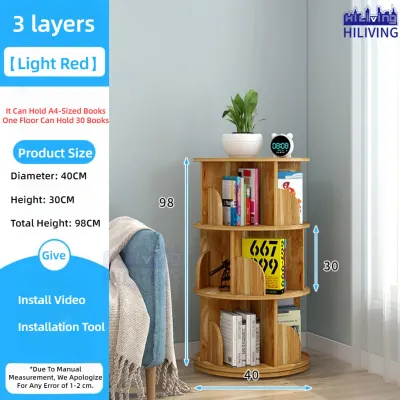
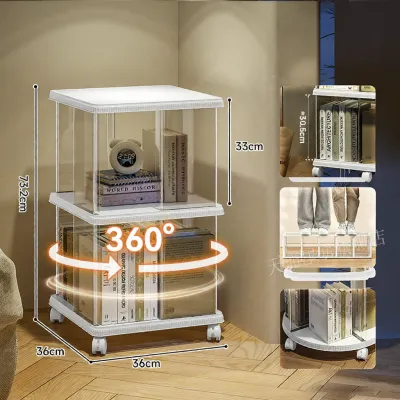
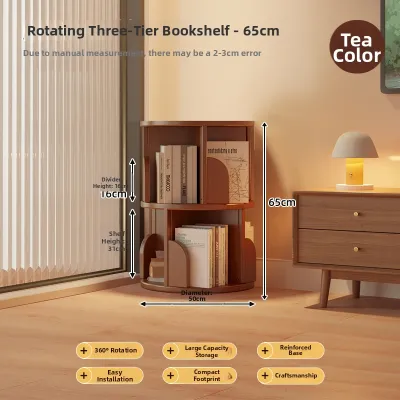
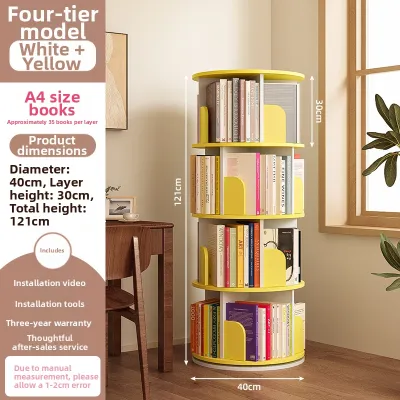
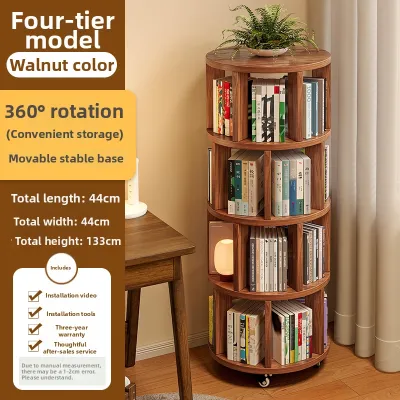
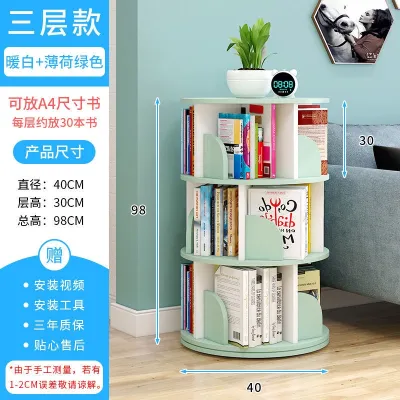
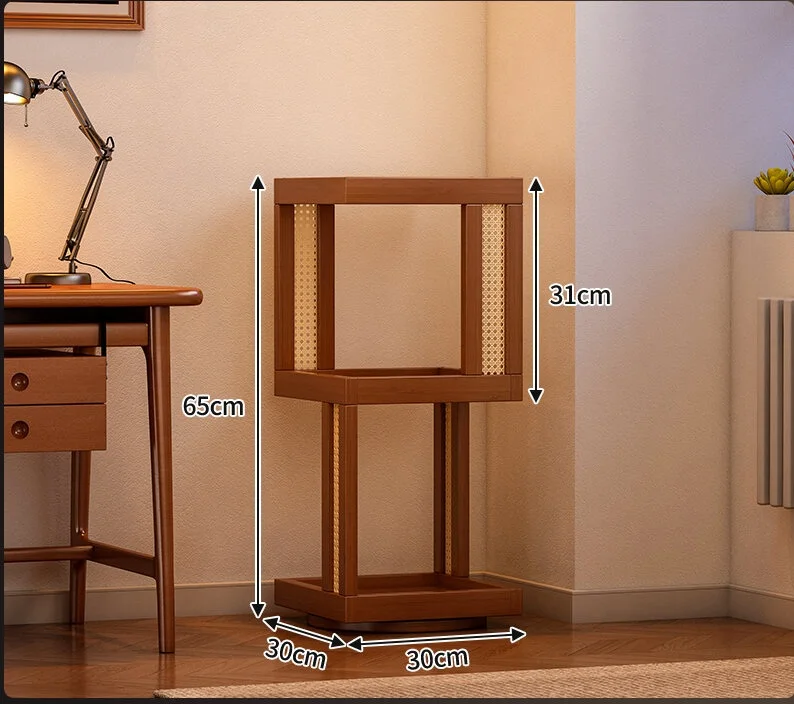
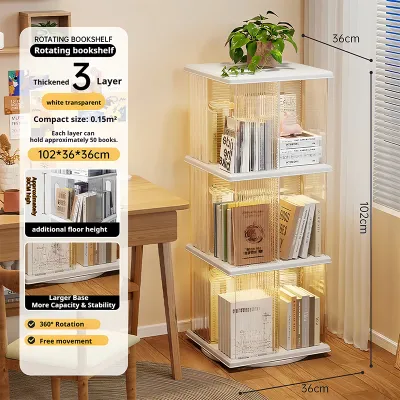
Prices are valid at publication and may change. Please refer to the product page for the latest price.
Measuring Your Space for Rotation Clearance
To ensure your new bookshelf can spin freely, you must measure the intended placement area with high precision. Start by measuring the static base diameter of the bookshelf, then calculate the diagonal measurement of the shelves, as a square or rectangular shelf requires more clearance at its corners when rotating than a circular base suggests.

Always add a clearance buffer of at least 5 to 10 centimeters on all sides of the maximum rotation path. This buffer prevents the corners of the shelves from scraping against your walls, damaging wallpaper, or scuffing paint during daily use.
Next, map out the active swing path of the bookshelf and check for potential conflicts with other elements in your living room. Consider the swing doors of nearby cabinets, the opening path of windows, high-traffic walkways, and the placement of existing seating arrangements like sofas or armchairs. A bookshelf that blocks a walkway when turned at a certain angle will quickly become a daily frustration.
Finally, account for local architectural features that might affect how close the base can sit to the wall. Skirting boards along the floor can push the stationary base of the bookshelf several centimeters forward, altering your clearance calculations. You should also check for uneven floor tiles, parquet transitions, or built-in wall niches that could cause the unit to sit at an angle, which can affect both the rotation mechanism and the stability of the shelf.
Evaluating Key Dimensions: Base, Height, and Shelf Depth
Understanding how the physical specifications of a rotating bookshelf translate into actual storage capacity will help you choose the right model for your book collection.
Base Diameter versus Shelf Depth
The overall base diameter of the unit directly dictates the maximum usable shelf depth, but the relationship is not always linear. Because most rotating bookshelves feature a central support column or spindle, the actual depth of each individual shelf compartment is measured from the outer edge to this central core.
- Small Bases (35 cm to 40 cm): Typically suitable for standard paperbacks, pocketbooks, and small novels. Larger textbooks or art books will overhang the edges, potentially blocking the rotation path.
- Medium to Large Bases (45 cm to 55 cm): Provide enough compartment depth to accommodate larger hardcover books, magazines, and storage bins without compromising the spinning mechanism.
Height Limits and Visual Weight
Height is a critical factor when balancing storage needs with the visual proportions of a small living room. Standard residential ceilings in Singapore HDB flats typically sit around 2.6 meters, while some condominiums may offer slightly more vertical space.
- Tall Towers (1.5 meters to 1.8 meters): These units maximize vertical space, making them excellent for avid readers with extensive collections. However, a solid, dark-colored tower of this height can feel visually heavy and make a small room feel more enclosed.
- Mid-Height Units (1.1 meters to 1.4 meters): These offer a balanced compromise, providing substantial storage while keeping the top surface at a comfortable height to display plants, photo frames, or a small table lamp.
Tier Configurations
Choosing the right number of tiers depends on who will be using the bookshelf and how accessible you need the items to be. A three-tier or four-tier unit keeps all books within easy reach, making it highly accessible for children or for placement next to a low armchair. A five-tier or six-tier tower utilizes vertical space efficiently but requires you to bend down for the lowest shelf and reach up high for the top tier, which may not be ideal for older adults or those with limited mobility.
Adapting to HDB and Condo Layout Constraints
Singapore’s modern apartment layouts require creative furniture placement to maintain an open, airy feel while securing sufficient storage.
Corner Placements
Corners are often underutilized in small living rooms, making them the most popular spot for a rotating bookshelf. Placing a rotating unit in a corner allows you to reclaim dead space, but you must pull the stationary base far enough away from both intersecting walls to allow the rotating corners of the shelves to clear the walls easily.
Open-Plan Dividers
In open-concept HDB or condo layouts where the living room transitions directly into the dining area or home office, a mid-height rotating bookshelf can serve as a subtle room divider. Because these units are finished on all sides and can be accessed from any angle, they define separate zones beautifully without blocking natural light or restricting airflow across the room.
Proximity to Main Entrances
Avoid placing a tall rotating bookshelf too close to your main entrance or foyer. Entryways are high-traffic transition zones that require clear pathways; a bulky, spinning piece of furniture placed here can create a physical bottleneck, restrict the movement of guests, or interfere with the opening of your front door or household shelter door.
Checking Stability, Weight Limits, and Floor Protection
Because a rotating bookshelf is a dynamic piece of furniture with moving parts, safety and maintenance are paramount to ensure long-term durability.
Weight Limits and Load Distribution
Always verify the manufacturer’s specified weight limits for both the overall unit and individual tiers before loading your books. To prevent the unit from becoming top-heavy and tipping over during rotation, always place your heaviest items—such as large hardcovers, encyclopedias, or heavy binders—on the bottom tier. Lighter paperbacks, decorative items, and accessories should be reserved for the upper tiers.
Base Mechanism and Floor Protection
The quality of the rotating mechanism determines how smoothly the shelf operates under a full load. Look for units equipped with heavy-duty steel ball-bearing swivel plates, which distribute weight evenly and rotate quietly.
To protect your flooring—whether you have vinyl, laminate, engineered wood, or polished porcelain tiles—ensure the stationary base of the bookshelf is fitted with non-scratch felt pads or rubber feet. This prevents the base from shifting or scratching the floor surface when you spin the shelves.
Regular Maintenance
In Singapore’s warm and humid climate, dust and ambient moisture can accumulate quickly in the moving parts of your furniture. Dust and pet hair can settle into the ball-bearing track, causing friction, squeaking, or jamming over time. Plan to vacuum around the base mechanism regularly and wipe down the shelves with a dry microfiber cloth to keep the rotation smooth and effortless.
Frequently Asked Questions (FAQ)
Can a rotating bookshelf be placed on a carpet or rug?
Yes, but with caution. Placing a rotating bookshelf on a thick, plush pile carpet or a soft shag rug can cause the stationary base to sink unevenly, tilting the unit and putting extra strain on the rotating mechanism. For optimal stability and smooth rotation, place the bookshelf on a hard, level floor. If you must place it on a rug, choose a low-pile, tightly woven rug, or place a rigid, flat furniture coaster or protective mat beneath the base to ensure it remains perfectly level.
How do I prevent a tall rotating bookshelf from tipping over?
To prevent a tall rotating bookshelf from tipping, you must focus on proper weight distribution and base stability. Because these units rotate 360 degrees, traditional wall-anchoring straps cannot be used without blocking the spinning function. Therefore, you should select a model with a wide, heavy, and solid base that provides a low center of gravity. Always load the heaviest books on the lowest shelves, and avoid spinning the unit with excessive force, especially when it is fully loaded.

Community discussion
Share your experience or ask a question. Comments are reviewed before publication.