
Finding the right thin book shelf rack for a compact Singapore apartment requires balancing space efficiency with structural safety. In typical HDB flats and condominiums, floor space is at a premium, making vertical storage an absolute necessity. However, a shelf that is too deep can block walkways, while one that is too thin might tip over under the weight of heavy books. To maximize your living area, you must look beyond generic “space-saving” labels and focus on precise dimensions, structural integrity, and secure mounting options.
Assessing Your Space and Constraints
Before browsing online marketplaces or visiting local furniture showrooms, you must take precise measurements of your intended space. Do not rely on visual estimation, as even a few millimeters of misalignment can prevent a shelf from fitting or cause it to block adjacent features. Start by measuring the exact width, depth, and height of the wall area where you plan to place the rack.
When measuring, look out for physical obstructions that are common in Singapore homes. Skirting boards along the base of the wall can push the bottom of a bookshelf forward, creating an unstable gap at the top. Power outlets, light switches, and internet data points must remain accessible, so ensure your shelf does not block these utilities. Additionally, take note of overhead air conditioning trunking, ceiling beams, or window frames that might restrict the maximum height of a tall tower unit.
Products mentioned in this guide
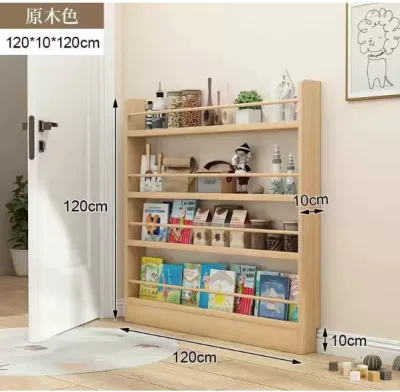
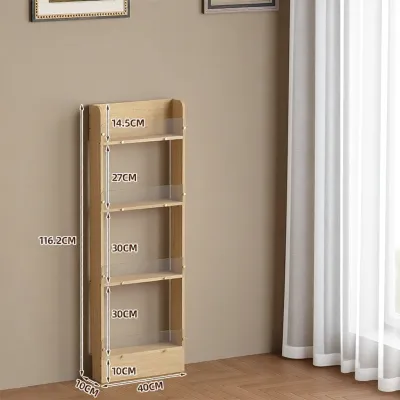
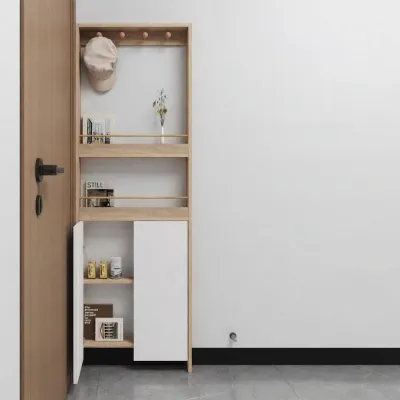
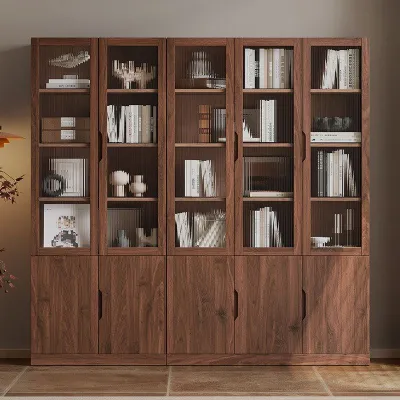
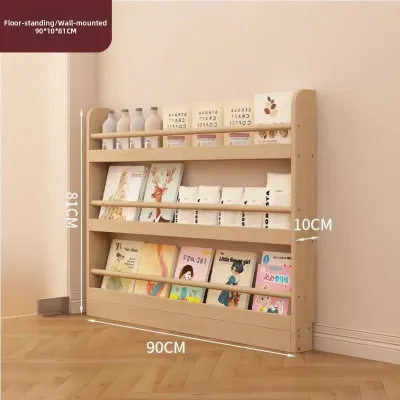
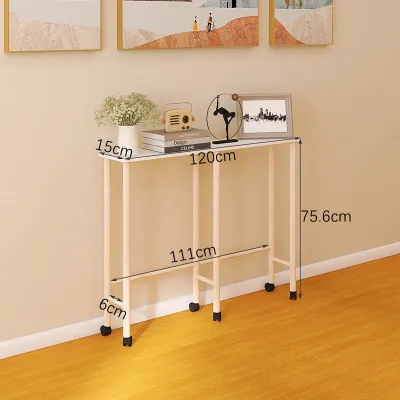

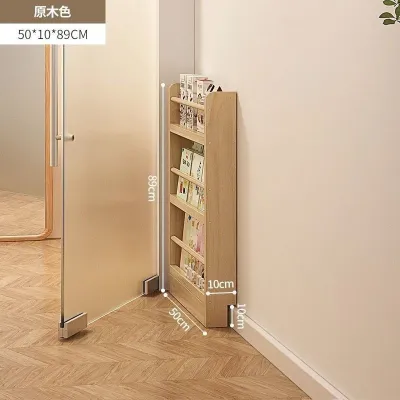
Prices are valid at publication and may change. Please refer to the product page for the latest price.
Walkway clearance is another critical factor in narrow layouts. A thin book shelf rack should not impede daily movement through corridors, living rooms, or bedrooms. Measure the door swing arcs of nearby rooms and wardrobe doors to ensure they can open fully without striking the shelf. If the rack is placed in a high-traffic hallway, aim to leave at least 90 centimeters of clear walkway space to allow comfortable passage for family members.
Finally, evaluate the structural environment of your apartment. Newer HDB flats and condos often feature a mix of solid concrete walls and hollow drywall partitions. Knowing your wall type is essential because it dictates whether you can safely mount a floating shelf or anchor a tall, narrow bookcase. Floor load limits are rarely an issue for standard home libraries, but if you plan to store exceptionally heavy volumes, placing the rack against a load-bearing wall is always the safest approach.
Key Features to Look for in Thin Book Shelf Racks
When evaluating thin book shelf racks, understanding depth thresholds is the first step to choosing the right design. Ultra-thin display ledges typically feature a depth of 10 to 15 centimeters, which is ideal for displaying children’s books, thin paperbacks, or magazines with their covers facing forward. For standard novels, hardcovers, and textbooks, look for a depth of 20 to 25 centimeters, which allows books to sit spine-out without protruding into the room.

Stability is the most critical safety consideration for any narrow furniture piece. Because thin shelves have a high center of gravity and a small footprint, they are inherently prone to tipping. Look for units that feature weighted bases, adjustable leveling feet to compensate for uneven flooring, or built-in brackets for wall anchoring. Any freestanding unit taller than 100 centimeters should ideally come with a dedicated anti-tip kit.
Modularity and adjustability offer long-term flexibility as your book collection and living arrangements change. Look for racks with adjustable shelf heights, which allow you to customize the spacing to fit tall reference books or short paperbacks without wasting vertical space. Modular systems that let you stack units vertically or expand them horizontally are excellent for adapting to different rooms if you move to a new apartment in the future.
Material choice directly impacts both the durability and the visual weight of the shelf. Solid wood and powder-coated steel offer excellent structural rigidity and are less likely to sag under heavy loads over time. Engineered wood, such as medium-density fibreboard (MDF) or particleboard, can be a cost-effective alternative, but you must verify that the shelves are thick enough to prevent bowing under the weight of dense book collections.
Types of Thin Shelving Solutions for Narrow Layouts
Vertical tower shelves, often referred to as spine bookshelves or column shelves, are designed to maximize vertical space while occupying a minimal footprint. These units typically feature a central metal or wooden spine with small, horizontal shelves branching out. They are perfect for tight corners, narrow wall strips between windows, or the small gap next to a bed, allowing you to stack dozens of books vertically in a space no wider than a single hardcover.
Leaning and ladder shelves offer a stylish, contemporary aesthetic while maintaining a slim profile. These racks lean against the wall at a slight angle, with the shelves gradually increasing in depth from top to bottom. The angled design naturally distributes weight toward the wall, but the base still sits relatively close to the skirting board. This style works well in living rooms and study areas where you want a mix of book storage and decorative display space.
Wall-mounted floating shelves and ledge systems are the ultimate space-savers because they completely eliminate the need for floor contact. By mounting shelves directly to the wall, you keep the floor area clear, making the room feel larger and easier to clean. Ledge systems are particularly useful in narrow hallways, behind sofas, or above desks, where a traditional floor-standing bookcase would block movement or seating.
Rotating book towers utilize a 360-degree spinning mechanism to provide access to a large volume of books from a single, compact footprint. These square or circular towers can hold books on all four sides, making them incredibly efficient for corner placements. Before choosing a rotating model, ensure you leave enough clearance around the unit so it can spin freely without scraping against walls or adjacent furniture.
How to Build Your Shortlist and Verify Before Buying
Building a reliable shortlist requires careful filtering when browsing online marketplaces and local furniture retailers. Avoid relying on generic search terms like “space-saving shelf” or “slim bookcase,” as these can return wide or deep units that do not fit your specific constraints. Instead, use precise search filters to target units with a depth of 25 centimeters or less, and cross-reference these dimensions with your initial space measurements.
Never purchase a thin book shelf rack without verifying its weight capacity and material specifications. Look for detailed product descriptions that state the maximum load limit per shelf, especially if you plan to store heavy academic textbooks or large art books. If a listing lacks clear weight capacity guidelines, contact the seller or manufacturer directly to confirm the specifications before making a purchase.
Delivery and assembly logistics are often overlooked but are crucial for a smooth buying experience in Singapore. Check the packaged dimensions of the flat-pack or pre-assembled unit to ensure it can fit inside your apartment building’s lift, stairwells, and front door. If you live in a condominium with strict delivery hours or lift booking requirements, coordinate with the retailer to ensure the delivery window aligns with your building’s management policies.
Additionally, consider the assembly requirements of the shelf. Some modular metal racks feature tool-free assembly, while heavy wooden units may require power drills and multiple people to assemble safely. If you are not comfortable with DIY assembly, look for retailers that offer professional installation services for a small fee, which often includes securing the unit to your wall.
Installation and Safety Checks for HDB and Condo Walls
Securing your thin book shelf rack to the wall is a non-negotiable step to prevent tipping hazards, especially in households with active pets or young children. Before drilling, you must identify the material of your wall. Structural walls, household shelter (bomb shelter) walls, and external walls in HDB flats are typically made of reinforced concrete, which requires a rotary hammer drill and masonry wall plugs. Internal partition walls, on the other hand, are often made of drywall or hollow blocks, requiring specialized anchors designed to spread the load behind the wall board.
Always use the anti-tip restraints provided by the manufacturer, or purchase heavy-duty L-brackets from a local hardware store if none are included. Mount the brackets to the solid frame of the bookshelf rather than a thin backboard, and secure them directly into a wall stud or solid concrete. Even if a freestanding shelf feels stable when empty, the center of gravity shifts dramatically once it is loaded with books, making it highly susceptible to tipping if someone pulls on a top shelf.
If you encounter difficulties during installation, or if you are unsure about what lies behind your wall, stop and consult a qualified professional handyman. Drilling into walls carries the risk of striking concealed electrical wiring, air conditioning copper pipes, or water lines. A professional installer will have the necessary tools, such as wall scanners and heavy-duty drills, to complete the installation safely and ensure your thin book shelf rack is securely anchored for years to come.
Frequently Asked Questions (FAQ)
Can I use a thin book shelf rack without anchoring it to the wall?
It is highly discouraged to use a thin book shelf rack without anchoring it to the wall, especially if the unit is tall or narrow. Thin shelves have a very small base footprint and a high center of gravity, making them inherently unstable. When books are loaded onto the upper shelves, or if a book is pulled forward, the entire unit can easily tip over. To ensure the safety of your household, always secure any thin shelf taller than one meter to the wall using appropriate anti-tip brackets and wall anchors.
How do I prevent books from falling off ultra-thin floating shelves?
To keep books secure on ultra-thin floating shelves or display ledges, choose shelves that feature a built-in front lip or raised edge. This physical barrier prevents books from sliding forward if they are bumped. For open-ended shelves, use heavy, non-slip bookends to keep the volumes upright and tightly packed. Additionally, practice strategic weight distribution by placing heavier books closer to the wall brackets and lighter paperbacks toward the outer edges to minimize stress on the shelf mounts.

Community discussion
Share your experience or ask a question. Comments are reviewed before publication.