
Selecting a single cooling mattress in Singapore requires a systematic approach to balancing material science with personal comfort. Because Singapore’s tropical climate maintains high humidity and warm ambient temperatures year-round, a mattress must do more than simply cushion your body; it must actively facilitate heat dissipation. Finding the right option involves matching your specific firmness preference—whether soft, medium, or firm—with verified cooling technologies, while ensuring the mattress physically fits your living space and bed frame.
To make an informed decision, you must look past generic marketing terms and evaluate the structural components of the mattress. By understanding how different materials interact with body heat and how firmness levels affect airflow, you can select a single mattress (standardized at 91 cm x 190 cm in Singapore) that supports both your spine and your thermal comfort throughout the night.
How to Evaluate Cooling Technologies in Single Mattresses
Cooling technologies in modern mattresses generally fall into two categories: passive ventilation and active phase regulation. Passive ventilation relies on structural design to allow air to flow freely through the mattress, carrying heat and moisture away from your body. Active regulation uses materials that change physical states or conduct heat to manage the temperature at the immediate sleep surface.
Products mentioned in this guide
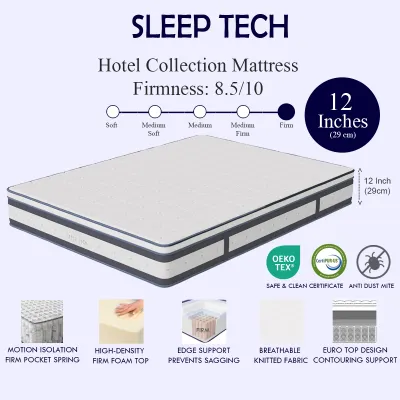
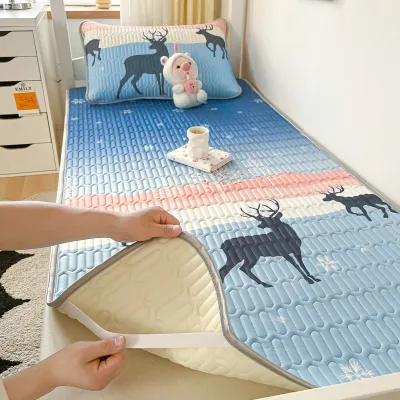
Prices are valid at publication and may change. Please refer to the product page for the latest price.
Phase-change materials (PCMs) represent one of the most advanced active cooling technologies available. These materials incorporate microcapsules that absorb body heat and liquefy when you get too warm, then solidify and release heat when your body temperature drops. This continuous cycle helps maintain a consistent, neutral temperature zone. When evaluating a mattress utilizing PCMs, check whether the technology is printed directly onto the cover fabric or infused into the top comfort layers, as proximity to your body directly influences its effectiveness.
Gel-infused foams and graphite infusions are common chemical methods used to address the heat-retaining properties of traditional memory foam. Gel particles or beads are mixed into the liquid foam mixture during manufacturing; these particles conduct heat more rapidly than open-cell foam alone, drawing warmth away from the surface. Graphite infusions work similarly, utilizing the natural thermal conductivity of carbon to create pathways for heat to escape. However, because these infusions eventually reach thermal equilibrium, they must be paired with an open-cell foam structure that allows the absorbed heat to escape rather than accumulate.
Breathable coil systems, such as pocketed innersprings, provide the most reliable form of passive cooling. Unlike solid foam blocks, which restrict air movement, the open space between individual pocketed coils acts as a natural ventilation chamber. As you move during sleep, the compression and expansion of the coils pump warm air out through the sides of the mattress and draw cooler ambient air in. Hybrid mattresses, which combine a pocketed coil base with specialized cooling foam comfort layers, typically offer a superior thermal balance compared to all-foam models.
Beyond the internal core, the mattress cover and border construction play a critical role in heat dissipation. Look for covers woven with naturally breathable fibers such as Tencel (derived from wood pulp), bamboo-derived rayon, or specialized high-density polyethylene (HDPE) cooling yarns that feel cold to the touch. Additionally, check for the presence of 3D mesh border gussets along the sides of the mattress. These mesh panels act as exhaust vents, allowing air pushed through the coil system or open-cell foam to escape laterally rather than remaining trapped beneath your body.
Matching Your Sleep Style to the Right Firmness Level
Firmness is not merely a matter of personal preference; it directly dictates how deeply your body sinks into the mattress, which in turn affects your skin’s exposure to ambient air. When you sink deeply into a soft mattress, the surrounding material wraps around your body, creating an insulating microclimate that traps body heat. Conversely, a firmer mattress keeps your body positioned on top of the surface, maximizing the surface area exposed to room airflow and fan circulation.

To maintain both spinal alignment and optimal temperature regulation, you must align your sleeping position and body weight with the appropriate firmness level. The following decision matrix outlines how different sleep profiles correspond to recommended firmness ranges and their primary cooling considerations:
| Sleep Position | Body Weight | Recommended Firmness | Primary Cooling Focus |
|---|---|---|---|
| Side Sleeping | Under 60 kg | Soft (3 to 5 out of 10) | Open-cell comfort layers to offset deep sinkage heat traps |
| Back / Combination | 60 kg to 80 kg | Medium-Firm (6 to 7 out of 10) | Balanced transition layers to maintain airflow under moderate compression |
| Stomach / Back | Over 80 kg | Firm (8 to 10 out of 10) | High-density hybrid systems to maximize surface-level convective cooling |
Soft Cooling Mattresses
Soft cooling mattresses are primarily suited for lightweight side sleepers who require significant pressure relief. When sleeping on your side, your shoulders and hips concentrate your body weight onto a small surface area. A softer surface allows these pressure points to sink sufficiently, keeping your spine in a straight, neutral line and preventing joint pain.
However, this deeper sinkage inherently increases the risk of heat retention. Because more mattress material comes into direct contact with your body, air cannot circulate easily around your torso and limbs. To mitigate this heat-trap effect, a soft mattress must feature highly breathable top layers. Look for models that utilize natural latex with pincore ventilation holes, or open-cell polyurethane foams that do not rely on body heat to contour to your shape.
When shopping, do not rely solely on generic “soft” marketing labels, as perception varies widely between manufacturers. Instead, verify the mattress’s Indentation Load Deflection (ILD) rating or consult the manufacturer’s specific firmness scale. A true soft mattress designed for cooling should pair a low ILD comfort layer (typically between 10 and 15) with a highly conductive cover material to ensure that heat is rapidly dispersed before it can penetrate and pool in the deeper foam layers.
Medium-Firm Cooling Mattresses
Medium-firm mattresses, typically rated between 6 and 7 on a standard 10-point scale, represent the most versatile option for single sleepers. This firmness level is highly recommended for combination sleepers who frequently change positions throughout the night, as well as average-weight individuals who require a balanced blend of contouring pressure relief and structural push-back support.
In terms of temperature regulation, medium-firm mattresses offer an excellent compromise. They allow just enough sinkage to cushion the shoulders and hips without enveloping the body. This moderate positioning keeps a significant portion of your skin exposed to ambient air while still providing enough surface contact to benefit from conductive cooling technologies like gel or graphite infusions.
When verifying a medium-firm cooling mattress, pay close attention to the transition layers situated directly beneath the top comfort foam. These transition layers must be firm enough to prevent your heavier body parts, such as your pelvis, from sinking too deeply, while remaining porous enough to allow downward airflow. Perforated high-resiliency foams or micro-coils are excellent transition materials that preserve both the structural integrity and the breathability of the mattress.
Firm Cooling Mattresses
Firm cooling mattresses, rated 8 to 10 on the firmness scale, are ideal for stomach sleepers, back sleepers, and heavier individuals. These sleep profiles require a highly supportive surface to prevent the hips and pelvis from sagging, which can cause hyperextension of the lower back and lead to chronic spinal discomfort.
From a thermal perspective, firm mattresses are inherently the coolest options available. Because your body remains positioned flat on top of the mattress surface rather than sinking into it, there is minimal material contact along your sides. This maximizes the efficiency of convective cooling, allowing ceiling fans or air conditioning units to easily sweep heat away from your skin.
To ensure long-term durability and consistent airflow in a firm mattress, verify the construction of the base support system. A high-quality firm mattress should feature a robust pocketed coil system constructed from heavy-gauge steel wire (typically 1.8 mm to 2.0 mm in diameter). Additionally, ensure the perimeter is reinforced with high-density foam encasement that features ventilation channels, which preserves edge support while allowing lateral heat dissipation when you sit or sleep near the edge of the bed.
Pre-Purchase Checks: Space, Delivery, and Bed Frame Compatibility
Before finalizing your purchase of a single cooling mattress, you must perform several physical and logistical checks to avoid costly return fees or structural damage. In Singapore, a standard single mattress measures 91 cm in width and 190 cm in length. Begin by measuring your bed frame’s internal dimensions to ensure a snug fit, leaving no more than a 2 cm gap along the edges to prevent the mattress from shifting during use.
Next, evaluate the physical clearance in your bedroom. Ensure that placing a 190 cm long bed frame allows at least 60 cm of walking space around the foot and sides of the bed, and does not obstruct wardrobe doors, drawers, or air conditioning airflow. If you live in an older HDB estate or a condominium with tight common areas, measure the height and width of your doorways, staircase turns, and elevator cabins. While many modern mattresses are delivered compressed in a box, traditional flat-delivered mattresses require clear physical pathways to prevent damage to the fabric during transit.
Finally, inspect your existing bed frame to ensure it is structurally compatible with your new mattress. For pocketed coil and hybrid mattresses, a slatted base is highly recommended, but the spacing between the slats must not exceed 7.5 cm. Slats spaced too far apart will allow the coils or foam to sag downward under weight, which voids most manufacturer warranties and compromises spinal support. Furthermore, ensure the frame has a sturdy center support rail and a load capacity that easily accommodates both the mattress weight and your body weight.
Protecting Your Purchase: Trials, Returns, and Warranties
Investing in a high-quality single cooling mattress requires protecting your purchase through a clear understanding of post-purchase policies. Many online mattress brands offer sleep trials, which typically range from 100 to 120 nights. These trials are designed to give your body time to adjust to the new support system, a process that normally takes between three to four weeks. Be aware that most brands enforce a mandatory break-in period (often 21 to 30 nights) before you can initiate a return.
Do not confuse a sleep trial with a standard return policy. Standard return policies, often found at traditional physical showrooms, may only apply to unopened, unused mattresses in their original packaging. If you open and sleep on the mattress, you may not be eligible for a refund. Additionally, always read the fine print regarding return logistics. Some companies offer free return pickups, while others charge a restocking or transportation fee, which can range from S$50 to S$150 in Singapore.
Warranty terms must also be scrutinized to prevent accidental voiding. A typical mattress warranty spans 10 to 15 years, but it only covers manufacturing defects such as sagging deeper than a specified threshold (usually 2.5 cm to 4 cm) or broken coils. To keep your warranty valid, you must use an appropriate, non-sagging bed frame, keep the original law tags attached, and keep the mattress free from stains. Using a breathable, waterproof mattress protector is highly recommended; it protects the mattress from sweat and spills without blocking the cooling properties of the underlying layers.
Frequently Asked Questions (FAQ)
Do cooling mattresses actually work in Singapore's humid climate?
Cooling mattresses are designed to dissipate and regulate body heat rather than actively lower the ambient room temperature. In Singapore’s highly humid environment, a cooling mattress works by preventing heat from pooling beneath your body, but its efficiency is closely tied to the surrounding room conditions. To achieve optimal sleep quality, you should pair a cooling mattress with complementary climate control, such as a ceiling fan to promote convective airflow or an air conditioning unit to lower the ambient humidity and temperature.
Can I use a cooling mattress on any bed frame?
No, you cannot use a cooling mattress on just any bed frame without risking both its performance and its warranty. Solid, non-ventilated platform bases or divans with solid wooden tops can restrict downward airflow, trapping moisture and heat at the bottom of the mattress and significantly reducing its cooling efficiency. For optimal breathability, use a high-quality slatted bed frame with slat spacing between 5 cm and 7.5 cm, which provides robust physical support while allowing warm air to escape freely from the underside of the mattress.

Community discussion
Share your experience or ask a question. Comments are reviewed before publication.