
Finding the right wardrobe or cupboard brand for a compact HDB bedroom in Singapore is a balancing act between maximizing limited square footage and securing durable, long-term storage. Because typical HDB bedrooms—especially in newer Build-To-Order (BTO) flats—often feature tight layouts, structural beams, and specific window placements, a standard off-the-shelf wardrobe may not always fit seamlessly. A highly effective solution depends on whether your space demands the millimeter-precision of custom carpentry or the cost-effective flexibility of modular, freestanding cupboard brands. By focusing on precise spatial measurements, material durability, and smart internal configurations, you can select a brand or service provider that transforms a cramped bedroom into an organized, highly functional sanctuary.
Measuring Your HDB Bedroom Constraints and Storage Goals
Before browsing any wardrobe showroom or online catalog, you must establish the exact physical boundaries of your bedroom. Start by measuring the available floor footprint where the cupboard will stand, taking care to note the location of electrical outlets, light switches, and air-conditioning units. In Singapore’s humid climate, air-conditioning trunking often runs along bedroom walls, which can severely restrict where a tall wardrobe can be placed. You must also measure the clearance required for ceiling fans, ensuring that open wardrobe doors or sliding panels do not interfere with the fan’s blades when it is in operation.
Vertical space is another critical dimension to map out. Standard HDB ceiling heights typically range from 2.6 to 2.8 meters, but structural beams can reduce this height significantly in specific areas of the room. If you plan to purchase a tall freestanding cupboard, ensure there is at least a 5 to 10-centimeter gap at the top to allow the unit to be uprighted during assembly. Additionally, measure the swing radius of your bedroom door and any adjacent windows to prevent physical collisions that could damage your furniture or restrict access to your room.
Products mentioned in this guide
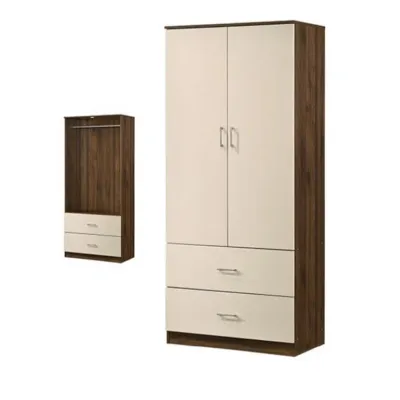
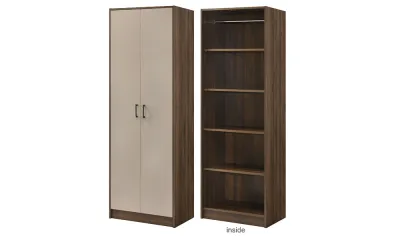
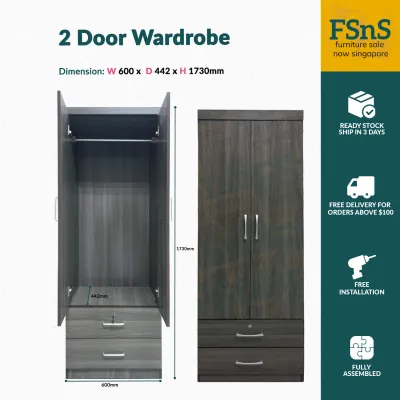
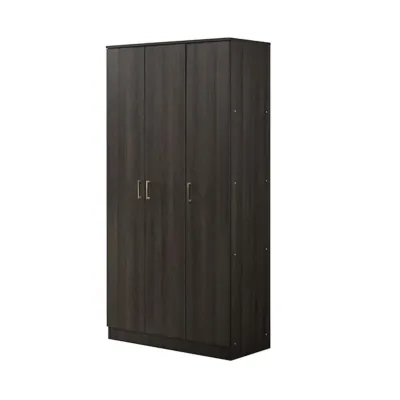
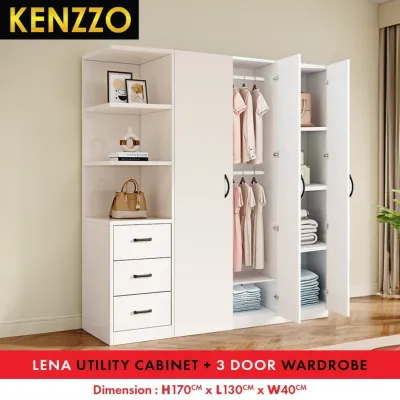
Prices are valid at publication and may change. Please refer to the product page for the latest price.
Logistical constraints are just as important as the final bedroom layout. You must verify the dimensions of your HDB block’s passenger lift, the width of the common corridors, and the clearance of your front door and bedroom door frames. Large, pre-assembled freestanding cupboards or long custom-built wood panels may not fit into standard lifts or navigate tight corridor corners. Confirming these access pathways beforehand prevents costly delivery failures, restocking fees, or the need to carry heavy components up multiple flights of stairs.
Finally, conduct a thorough inventory of your personal storage needs to determine the internal configuration of your wardrobe. Group your belongings into hanging garments, folded clothing, undergarments, and bulky items like luggage or bedding. If you have a large collection of long dresses or winter coats, you will require more vertical hanging space. Conversely, if you prefer folded knitwear and t-shirts, prioritize brands that offer deep drawers and adjustable shelving. Understanding your storage profile ensures you choose a brand that offers the right mix of internal accessories rather than a generic layout that wastes valuable space.
Custom Carpentry vs. Freestanding Cupboard Brands: Which Fits Your Space?
When deciding how to furnish your HDB bedroom, the primary choice lies between engaging a custom carpentry service or purchasing from a freestanding cupboard brand. Custom carpentry is highly regarded for its ability to maximize every square centimeter of an awkward layout. If your bedroom features structural pillars, uneven corners, or a recessed wall, a skilled carpenter can build a wardrobe that fits flush against these obstacles, eliminating dead space where dust can accumulate. This approach allows for a seamless, full-height design that stretches from floor to ceiling, providing storage capacity while creating a clean, integrated visual aesthetic. However, custom carpentry typically involves a higher initial financial investment, longer lead times, and cannot be easily relocated if you move to a new home.

On the other hand, freestanding and flat-pack cupboard brands offer excellent flexibility and immediate availability. These brands provide pre-designed wardrobes in standard widths and depths, making them highly cost-effective options for budget-conscious homeowners or renters. If you anticipate moving in the near future, a freestanding wardrobe can be disassembled, transported, and reassembled in your next residence. The trade-off is that freestanding units rarely fit perfectly into HDB alcoves, often leaving awkward gaps at the sides or top that cannot be easily utilized for storage.
For homeowners seeking a middle ground, system furniture brands offer semi-customizable modular wardrobes. These brands utilize standardized cabinet frames that can be mixed, matched, and bolted together to fit your specific wall length. You can select from various door styles, such as sliding or hinged, and customize the interior with modular drawers, shelves, and hanging rods. This system approach provides much of the tailored functionality of custom carpentry at a fraction of the cost, with significantly shorter delivery times. When evaluating system brands, ensure their standard frame depths (typically 60 centimeters) do not block your bedroom walkway or overlap with your bed frame.
Key Quality and Space-Efficiency Checks for Wardrobe Brands
To ensure your chosen wardrobe brand delivers a product that withstands daily wear and tear, you must look beyond aesthetic appeal and inspect the underlying material specifications. In Singapore’s high-humidity environment, standard particleboard can absorb moisture over time, leading to sagging shelves, warping, and mold growth. Look for brands that utilize high-density fiberboard (HDF), plywood, or moisture-resistant engineered wood. Examine the edge banding on the doors and shelves; high-quality laser or hot-melt edge banding seals the core material from moisture and prevents peeling, which is a common issue in cheaper wardrobes.
Hardware quality is a primary indicator of a wardrobe’s lifespan. Open and close the doors and drawers repeatedly to test the smoothness of the runners and hinges. For tight HDB bedrooms where space is at a premium, sliding doors are highly recommended because they do not require clearance to swing open. However, sliding doors rely heavily on the quality of their track systems. Ensure the brand uses heavy-duty aluminum tracks and smooth-rolling nylon or steel wheels equipped with soft-close mechanisms. Cheap sliding tracks can easily derail, jam, or become noisy over time, causing significant frustration.
The efficiency of a wardrobe is determined by its internal layout options. A high-quality brand should offer a diverse range of space-saving accessories that help you utilize every cubic centimeter. Look for pull-out trouser racks, shallow jewelry drawers, adjustable shelving pins, and corner carousels that turn hard-to-reach corners into functional storage zones. If you have high ceilings, check if the brand offers pull-down hanging rods, which allow you to store seasonal clothing near the ceiling and easily lower the rod when needed.
Before finalizing your purchase, verify the brand’s warranty terms and customer service reputation. A reliable wardrobe brand should offer a multi-year warranty covering structural integrity, door alignment, and moving hardware like hinges and drawer runners. Do not rely solely on pristine showroom displays, which are meticulously set up under controlled conditions. Ask the brand or contractor to show you actual completed HDB bedroom case studies or customer photos. This allows you to observe how their wardrobes look in real-world, compact settings and how they handle common HDB design challenges like skirting boards and wall unevenness.
Navigating Quotations, Delivery, and Safe Installation
The purchasing process for a new wardrobe involves several critical steps to avoid hidden costs and ensure a safe, professional installation. When requesting quotes from wardrobe brands or carpentry firms, insist on fully itemized breakdowns. The quotation should clearly separate the cost of the cabinet carcasses, door panels, specific hardware (such as soft-close hinges or sliding tracks), delivery fees, and on-site assembly charges in S$. Be wary of vague, lump-sum quotes that bundle these services together, as they often hide extra fees for climbing stairs, handling heavy items, or installing custom infill panels to close gaps against your walls.
Safety must be a top priority during the installation phase, especially for tall or heavy wardrobes. Freestanding cupboards and modular systems have a high center of gravity and pose a serious tip-over risk if they are not securely anchored to the wall. Ensure the installation team plans to mount the wardrobe to your bedroom wall using appropriate brackets and wall plugs. Before any drilling begins, the installers must use a digital wall scanner to check for concealed HDB electrical wiring, air-conditioning conduits, or water pipes embedded in the concrete walls. Drilling into a live wire or utility pipe can cause severe damage and expensive repairs.
Once the installation is complete, conduct a meticulous on-site inspection before signing off on the delivery and paying the final balance. Start by checking the alignment of the wardrobe doors; they should hang straight with consistent gaps between panels. Open and close every drawer and door to ensure they glide smoothly without sticking, squeaking, or rubbing against the frame. Inspect the edge banding and laminate finishes for any chips, scratches, or exposed glue. Finally, check the gap tolerances where the wardrobe meets your walls and ceiling; any custom infill panels should be neatly sealed with silicone or acrylic caulk to prevent dust and pests from entering the gaps.
Frequently Asked Questions (FAQ)
Do I need HDB approval to install a built-in wardrobe?
Generally, you do not need to apply for a formal permit from the Housing & Development Board (HDB) to install standard built-in wardrobes or cupboards in your bedroom. These installations are classified as non-structural fixtures and do not affect the structural integrity of the building. However, you must ensure that the total weight of the wardrobe and its contents does not exceed the allowable floor load limits of your flat. Additionally, you are strictly prohibited from hacking or modifying structural concrete walls, columns, or the original HDB-provided household shelter (bomb shelter) walls to accommodate your wardrobe. If your wardrobe installation requires minor modifications to non-structural partition walls, it is best to consult a registered renovation contractor to ensure compliance with all prevailing HDB guidelines.
How can I optimize a cupboard for a bedroom with low ceilings?
Optimizing a cupboard in a bedroom with low ceilings requires a combination of smart vertical design and specialized internal accessories. To maximize storage without making the room feel claustrophobic, opt for a full-height, custom-built wardrobe with light-colored or mirrored door panels. Mirrored doors reflect light and create the illusion of a larger, taller space. Inside the wardrobe, utilize the highest zones for storing lightweight, infrequently used items such as seasonal bedding, winter wear, or travel bags packed in clear, labeled storage bins. To make these high areas accessible, install a pull-down wardrobe lift or hanging rod, which uses a hydraulic or spring-loaded lever mechanism to swing your clothes down to a comfortable reaching height, eliminating the need for a bulky step stool in a tight bedroom.

Community discussion
Share your experience or ask a question. Comments are reviewed before publication.