
Choosing the best fabric wardrobe for a Housing & Development Board (HDB) bedroom in Singapore depends on matching the wardrobe’s frame strength and cover material to your specific room dimensions and the local humid climate. Since there is no single brand that fits every home, the ideal choice is one that offers verified dimensions to fit your layout, uses robust connectors that resist sagging, and features a breathable cover to prevent moisture buildup. By focusing on local furniture retailers and reputable online marketplaces that provide clear specifications, replacement parts, and transparent return policies, you can find a reliable, cost-effective storage solution that fits seamlessly into your bedroom.
Why Fabric Wardrobes Suit HDB Bedroom Layouts
HDB bedrooms, particularly in newer Build-To-Order (BTO) flats, often feature compact layouts where space optimization is critical. Traditional solid wood wardrobes or custom built-in carpentry require a significant financial commitment and permanently lock in a room’s configuration. Fabric wardrobes offer a highly flexible alternative, allowing you to adapt your storage as your living arrangements or family needs evolve over time.
Because these wardrobes are lightweight, they are exceptionally easy to assemble, disassemble, and reposition. If you decide to rearrange your bedroom layout to accommodate a larger bed, a study desk, or a baby cot, you can move a fabric wardrobe without professional assistance or the risk of damaging your flooring. This mobility is also highly beneficial for tenants renting HDB rooms who need portable furniture that can easily transition to a new home.
Products mentioned in this guide
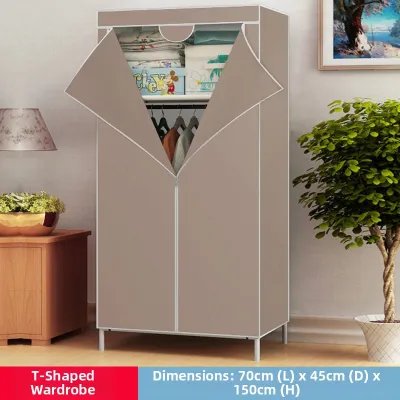
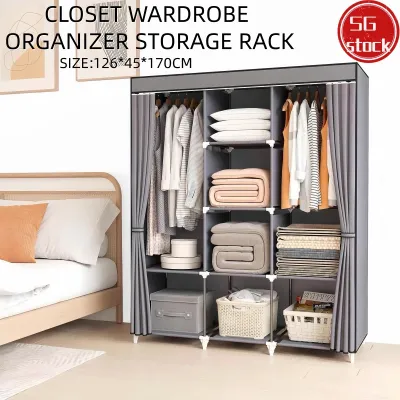
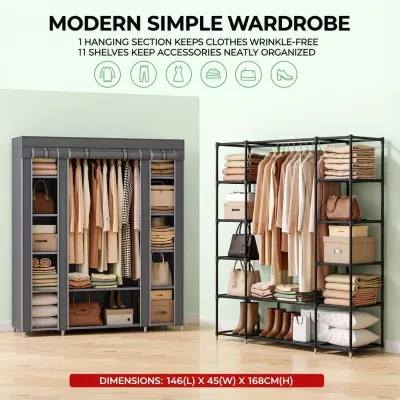
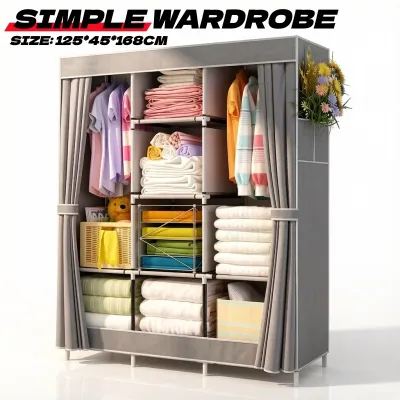
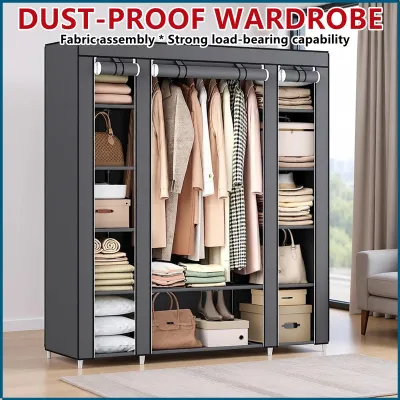
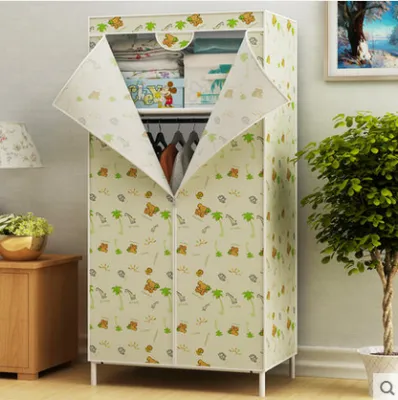
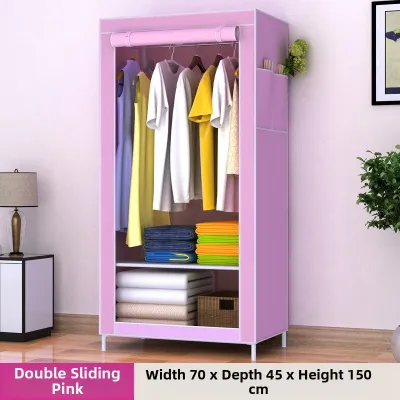
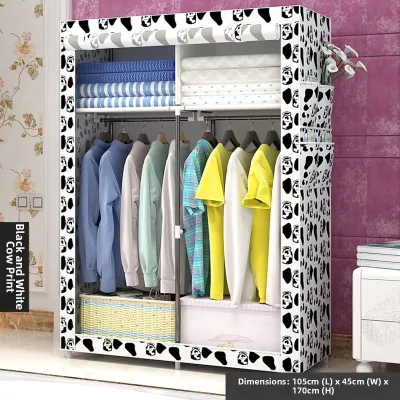
Prices are valid at publication and may change. Please refer to the product page for the latest price.
The spatial footprint of a fabric wardrobe is highly adaptable. Unlike heavy wooden cabinets that require wide clearance margins, fabric models often come in narrow, modular, or corner-friendly configurations. This allows you to utilize awkward alcoves, narrow gaps next to structural pillars, or the space directly behind a bedroom door that would otherwise go unused.
From a financial perspective, fabric wardrobes represent a low-commitment investment. They provide immediate, organized hanging and shelving space at a fraction of the cost of permanent carpentry. This makes them excellent temporary solutions for guest rooms, children’s bedrooms, or transitional periods while you plan a larger home renovation.
How to Measure Your HDB Bedroom for a Fabric Wardrobe
Before browsing online catalogs or visiting local furniture showrooms, you must take precise measurements of your bedroom to ensure a safe and functional fit. Start by measuring the exact floor area where you plan to place the wardrobe. Use a metal measuring tape to record the width and depth, and always measure from the skirting boards rather than the bare wall to avoid purchasing a unit that is slightly too wide for the designated spot.

Vertical clearance is equally critical in HDB flats. Measure the height from the floor to the ceiling, taking note of any low-hanging beams, ceiling fans, or light fixtures. You must also account for wall-mounted air-conditioning units and their associated plastic trunking, which often runs along the upper sections of HDB bedroom walls. Ensure the top of the wardrobe sits well below any air-con units to allow for proper airflow and easy access for regular servicing.
Do not overlook the locations of electrical outlets, light switches, and internet data points. Placing a wardrobe directly in front of a power socket can block access to essential plugs or force you to position the wardrobe further away from the wall, creating an unstable gap. If you must place the wardrobe near these utilities, select a model with an open back or a flexible frame that allows safe access to the wall plates.
Next, evaluate the clearance required for daily use. While fabric wardrobes do not have heavy wooden doors that swing outward, they do feature fabric covers that open via zippers or roll-up mechanisms. Ensure there is enough physical space in front of the wardrobe for you to stand comfortably, unzip the cover, and roll it up without being squeezed against your bed frame or study chair.
Finally, verify the internal dimensions of the wardrobe against your actual storage needs. Standard clothes hangers require an internal depth of at least 50 to 55 centimeters to hang freely without pressing against the front cover. If the wardrobe is too shallow, your clothes will push against the fabric, causing unsightly bulges, putting strain on the zippers, and potentially trapping moisture against the fabric walls.
Evaluating Build Quality and Material Durability
The longevity of a fabric wardrobe depends heavily on its structural components and the quality of its materials. When evaluating different models, the frame is your first line of defense against sagging and structural failure. Look for frames constructed from thickened steel pipes or rust-resistant aluminum alloys. Avoid exceptionally thin metal tubes that can easily bend under the weight of a fully loaded hanging rod.
Pay close attention to the connectors that hold the frame together. Most budget-friendly fabric wardrobes use plastic joints to link the metal pipes. Inspect the specifications to ensure these connectors are made from high-density polypropylene (PP) or reinforced ABS plastic, which are less prone to cracking under tension. Some premium models feature metal screw-in joints or reinforced corner brackets, which offer significantly higher stability and prevent the frame from wobbling over time.
The fabric cover serves as the protective barrier for your clothing, making its material composition highly important. Non-woven synthetic fabrics are common and lightweight, but they can degrade and tear easily if exposed to direct sunlight or high tension. For greater durability, look for covers made from Oxford fabric or canvas. These materials offer superior tear resistance, are easier to wipe clean, and provide better protection against dust while remaining breathable enough to prevent stale air from lingering inside.
Examine the quality of the zippers and stitching, as these are common failure points on fabric wardrobes. Double-stitched seams and heavy-duty nylon or metal zippers are essential for daily use. Check if the cover includes secure fastening straps or hook-and-loop patches to hold the rolled-up doors in place, which prevents unnecessary strain on the zipper tracks when you are organizing your wardrobe.
Structural stability can be further enhanced by checking for built-in reinforcement features. Look for models that incorporate cross-bracing bars, wider base feet, or multi-tier shelving units that act as horizontal stabilizers. A wardrobe with a reinforced bottom shelf or elevated legs allows you to clean the floor underneath easily, preventing dust accumulation and protecting the lower fabric edge from moisture during floor mopping.
Evaluating Brands and Retail Options for Fabric Wardrobes
When searching for fabric wardrobes in Singapore, you will encounter a wide variety of sourcing channels, ranging from established local furniture retailers to massive online marketplaces. Each channel offers distinct advantages and trade-offs regarding product verification, delivery speed, and customer support.
Established local furniture showrooms and home improvement stores allow you to inspect the physical product before buying. Visiting a physical store lets you feel the thickness of the fabric cover, test the smoothness of the zippers, and physically shake the display model to assess its structural stability. Buying from a local retailer also typically ensures standardized sizing that aligns with typical Singapore home layouts, along with reliable local warranty coverage and straightforward return policies if you discover missing or defective parts during assembly.
Online marketplaces and specialty home e-commerce platforms offer an extensive array of designs, sizes, and configurations that may not be available in physical stores. When shopping online, it is crucial to read verified customer reviews carefully, paying close attention to photos uploaded by actual buyers. These real-world images often reveal the true color of the fabric, the actual thickness of the metal frame, and how well the wardrobe holds up under a realistic load of clothing.
To evaluate a specific brand or seller online, check their responsiveness and the availability of replacement parts. Reputable brands often sell spare plastic connectors, extra hanging rails, or replacement fabric covers separately. This is a major advantage, as a single cracked plastic joint or a torn cover does not force you to discard the entire wardrobe. Prioritize sellers who provide clear, step-by-step assembly manuals or video guides, as poor instructions can lead to incorrect assembly, which severely compromises the wardrobe’s structural integrity.
Compare the shipping and delivery terms offered by different platforms. Because fabric wardrobes are packaged in flat, relatively heavy boxes, ensure the delivery service includes transport directly to your HDB unit, especially if your block has specific lift access rules or long walkways. Check the seller’s return policy to confirm how they handle transit damage, as bent metal pipes or torn fabric covers should be replaced promptly before you begin the installation process.
Assembly, Climate Care, and Safety Precautions
Proper assembly is the foundation of a safe and durable fabric wardrobe. When your wardrobe arrives, unpack all components and organize them by size and type before starting. Follow the manufacturer’s instructions meticulously, ensuring that every metal pipe is pushed completely into its plastic or metal connector. If a pipe is only partially inserted, the frame will be uneven, placing uneven stress on the joints and causing the wardrobe to lean or collapse under load.
To make assembly easier without damaging the parts, you can use a rubber mallet to gently tap the pipes into their joints. Avoid using a standard metal hammer, which can dent the steel tubes or crack the plastic connectors. Once the frame is fully assembled, verify that it is perfectly level and stable on your bedroom floor before you attempt to slide the fabric cover over the structure. Forcing a tight cover over an unaligned frame is a primary cause of immediate seam tears.
Singapore’s tropical climate presents unique challenges for fabric furniture, primarily due to high relative humidity. To prevent mold and mildew from developing on your fabric cover and clothing, avoid placing the wardrobe directly against external-facing concrete walls, which can trap moisture. Maintain a gap of at least five to ten centimeters between the back of the wardrobe and the wall to facilitate continuous airflow.
Incorporate active moisture control measures inside the wardrobe. Place disposable dehumidifier tubs, silica gel packets, or hanging moisture absorbers on the shelves and hanging rails, and replace them regularly as they fill with water. Keep the wardrobe cover zipped shut during highly humid days or when running an air conditioner, but open it periodically on dry, breezy days to let fresh air circulate through your garments.
Safety must always be a priority, particularly regarding weight distribution. Strictly adhere to the manufacturer’s specified load limits for both the hanging rails and individual shelves. Distribute the weight of your clothing evenly across the entire length of the rail rather than clustering heavy items in the center, which can cause the metal pipe to bend permanently. Place heavier items, such as storage boxes or folded denim, on the bottom shelves to lower the wardrobe’s center of gravity and minimize the risk of tipping.
Frequently Asked Questions (FAQ)
Can a fabric wardrobe support heavy winter coats or suits?
Fabric wardrobes can support heavier garments like winter coats or formal suits, provided you select a model specifically designed with reinforced steel frames and heavy-duty connectors. Always check the manufacturer’s rated load capacity for the hanging rail before purchasing. To prevent structural damage, distribute the weight of heavy coats evenly across the rail, place them close to the vertical support columns where the frame is strongest, and avoid overloading a single section of the wardrobe.
How do I prevent mold on the fabric cover in a humid climate?
Preventing mold on a fabric wardrobe in a humid environment requires a combination of strategic placement and active moisture management. Position the wardrobe away from damp walls and bathroom entrances to ensure adequate ventilation around the entire unit. Use hanging moisture absorbers or silica gel packs inside the wardrobe, and replace them promptly when saturated. Additionally, ensure that all clothes are completely dry before hanging them up, as storing damp garments in an enclosed fabric space rapidly accelerates mold growth.

Community discussion
Share your experience or ask a question. Comments are reviewed before publication.