
Choosing between the Unica stool and other popular dining stools depends on how you balance minimalist design with structural requirements. The Unica stool appeals to those seeking a specific modern aesthetic, whereas mainstream alternatives—ranging from industrial metal frames to traditional wooden designs—often offer different structural or stylistic trade-offs depending on your exact space, dining habits, and decor.
To make an informed decision, you must look past marketing claims and focus on objective factors: visual footprint, material verification, and structural stability.
Competing stool types generally fall into three categories. Minimalist stools focus on clean lines and low visual weight, often utilizing molded plastics or slim metal legs. Industrial stools prioritize rugged utility, frequently featuring steel frames and distressed wood seats. Traditional stools offer substantial wooden frames, often with upholstered seats and high backs, providing a classic look at the cost of a larger physical and visual footprint. Understanding these categories helps contextualize where the Unica stool sits in the broader market.
Products mentioned in this guide
![[TheGoodFurniture] Plastic stool stackable unica chair Lightweight Sturdy Durable Colorful chairs.塑料椅头 🌟Can Mixed Colors 🌟](https://img.lazcdn.com/g/p/3fad4242655387f8d40e94ad8a16bd4d.jpg_400x400q80.jpg_.webp)
Prices are valid at publication and may change. Please refer to the product page for the latest price.
In Singapore’s compact apartments, where dining areas often double as workspaces, the physical and visual footprint of your seating is crucial. A stool that tucks away completely can transform a high-traffic walkway, while a bulky alternative might restrict movement. As open-concept living becomes the norm, dining stools are no longer just occasional seating; they are daily-use furniture that must withstand constant shifting, cleaning, and sitting.
Style and Aesthetics: Matching Your Dining Space
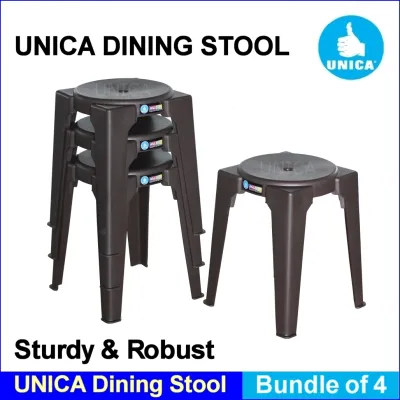
The visual weight of a stool dictates how spacious your dining area feels. The Unica stool is characterized by its streamlined profile, which minimizes visual clutter. When compared to bulkier traditional stools, a minimalist design keeps sightlines open, making a small dining area feel more spacious. Conversely, if your dining room is large with high ceilings, a stool with too little visual weight might look lost or insubstantial. You must evaluate whether you want your seating to blend seamlessly into the background or serve as a bold design statement.
The choice between backless and low-back designs also impacts both aesthetics and usability. Backless stools can slide completely under your dining table or kitchen island when not in use, keeping walkways clear and maintaining a clean, uninterrupted line across your counter. However, they offer no lumbar support, making them less suitable for extended sitting. Low-back stools provide a touch of support while still keeping a relatively low profile, though they will protrude slightly above the tabletop.
The success of any stool design relies heavily on how its finish interacts with your existing furniture. The Unica stool’s surface treatments must be carefully matched against your dining table. If you have a warm teak table, a cold metal or stark plastic stool might create an unwanted contrast unless intentionally styled. Always request manufacturer swatches or view the finishes under realistic home lighting—such as warm LED or natural daylight—as showroom lighting can distort colors.
Before committing to any purchase, physical compatibility is paramount. Use this checklist to verify dimensions:
- Seat Height: Measure from the floor to the top of the seat. For standard dining tables (around 75 cm high), you need a seat height of approximately 45 cm. For kitchen counters (around 90 cm high), look for counter stools around 60 to 65 cm.
- Under-Table Clearance: Ensure there is at least 25 to 30 cm of space between the top of the stool seat and the underside of the table or counter to allow comfortable leg movement.
- Width and Spacing: Allow at least 15 cm of space between each stool, and 30 cm from the end stools to the table edge, so guests do not feel cramped.
- Doorway and Lift Access: For fully assembled stools, verify that the packaged dimensions can easily pass through your apartment's doorways and lift access.
Additionally, consider the footrest height. A well-positioned footrest not only improves sitting comfort but also acts as a structural stretcher that reinforces the stool’s legs. If the footrest is too high or too low for your height, it can cause discomfort during longer meals.
Build Quality and Stability: What to Verify Before Buying
Do not rely solely on generic descriptions like “wood” or “metal.” Check the product labels and technical specifications. Solid hardwood (such as oak, ash, or walnut) offers reliable longevity but requires protection from extreme humidity changes. Engineered wood (like MDF or plywood with veneer) can be stable and warp-resistant, though its durability depends on the quality of the veneer and edge banding. For metal frames, look for powder-coated steel or aluminum alloys, which resist corrosion and scratches better than basic painted finishes.

The longevity of a dining stool is determined by its joints. If you are inspecting a stool in person, check the underside. For wooden stools, look for mortise-and-tenon joinery or reinforced corner blocks rather than simple wood screws. For metal stools, inspect the welds; they should be smooth, continuous, and free of pinholes or uneven beads. If the stool requires home assembly, examine the quality of the bolts and threaded inserts. Loose or poorly threaded hardware will inevitably lead to wobbling over time.
A stable base is essential, particularly in active households. Stools with a wider leg flare generally offer better tip-over resistance than those with strictly vertical legs. If your household includes young children or active pets, prioritize designs with a lower center of gravity and non-slip feet. Always verify the manufacturer’s stated weight capacity. A high-quality dining stool should comfortably support standard residential weight limits without flexing or creaking.
Floor protection is a critical but often overlooked aspect of build quality. Sliding a stool across hard floors can cause permanent damage to both the stool legs and your flooring. Inspect the bottom of the stool legs for built-in glides. Nylon or plastic glides work well on carpets, while soft felt pads are essential for protecting hardwood, parquet, or vinyl floors from scratches. For tiled floors, durable rubber caps can help dampen noise and prevent slipping.
Maintenance is another key factor in long-term build quality. Stools with intricate crevices or textured surfaces can trap dust and food crumbs, requiring frequent cleaning. Smooth, non-porous materials like molded plastics or finished metals are easier to wipe down after meals. If you choose upholstered options, check if the fabric has been treated for stain resistance or if the covers are removable for washing.
The Final Decision: Which Stool Fits Your Lifestyle?
Choose the Unica stool if your dining area demands a modern, minimalist aesthetic with a light visual footprint, and its verified dimensions align precisely with your table clearance. It is ideal for those who appreciate clean lines and want a stool that can easily tuck away when not in use, preserving precious floor space in open-plan layouts.
Choose competing alternatives if you prioritize plush, upholstered comfort for long dining sessions, require a high backrest for lumbar support, or prefer the rustic charm of industrial metal and reclaimed wood. If your dining space experiences heavy wear and tear, a more rugged, heavy-duty alternative might better suit your daily routine.
When evaluating the long-term value, consider your household’s daily habits. A cheaper, lightweight stool might seem appealing initially, but if it requires frequent replacement due to loose joints or worn finishes, investing in a sturdier, well-constructed option is often more cost-effective over time.
Verify first if you are uncertain about the assembly process, floor protection, or exact weight limits. Check whether the stool includes felt pads or rubber glides to protect your flooring—especially on sensitive surfaces like vinyl, parquet, or polished marble. When in doubt, consult the manufacturer’s official specifications or contact the retailer directly to clarify warranty terms and return policies before finalizing your order.

Community discussion
Share your experience or ask a question. Comments are reviewed before publication.