
Selecting a high-quality rattan wardrobe for a Housing & Development Board (HDB) flat in Singapore requires moving past generic brand rankings and focusing on verifiable construction standards. Because Singapore’s high humidity and typical HDB room layouts present unique environmental and spatial challenges, the ideal brand is ultimately the one whose manufacturing specifications align with your specific home conditions. A successful purchase relies on a clear decision matrix: evaluating structural frame integrity, inspecting the weaving technique, and verifying spatial adaptability. Rather than relying on styled marketing photographs, buyers must learn to audit physical samples and technical specifications to ensure long-term durability.
Key Quality Indicators to Check Before Buying
Evaluating the structural frame of a rattan wardrobe is the first step in determining its overall quality and load capacity. High-quality brands typically construct their wardrobe frames from solid hardwoods like teak, ash, or mahogany, which provide the necessary rigidity to support both the woven panels and heavy clothing. If a brand uses engineered wood, such as medium-density fibreboard (MDF) or plywood, verify that it is treated with a moisture-resistant sealant to prevent swelling in Singapore’s humid climate. Avoid wardrobes with flimsy back panels or frames that wobble when gentle pressure is applied to the sides.
The type of rattan used and its pre-weaving treatment directly impact how well the wardrobe resists pests and moisture. Natural rattan should undergo a thorough kiln-drying process to reduce its internal moisture content to a stable level, usually between 10% and 12%, before assembly. This process minimizes the risk of warping, cracking, and mold colonization. When reviewing product specifications, check if the manufacturer applies an anti-fungal and pest-resistant coating to the fibers. If you prefer synthetic alternatives, ensure the brand uses high-density polyethylene (HDPE) rattan, which is highly resistant to moisture and UV rays, rather than cheaper PVC plastics that degrade quickly.
Products mentioned in this guide
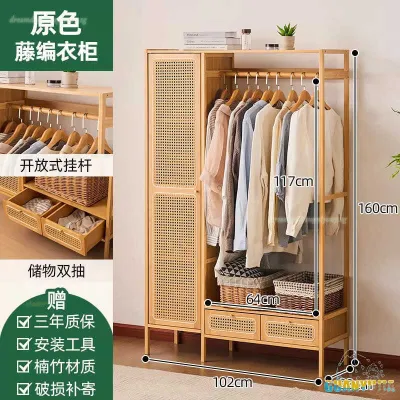

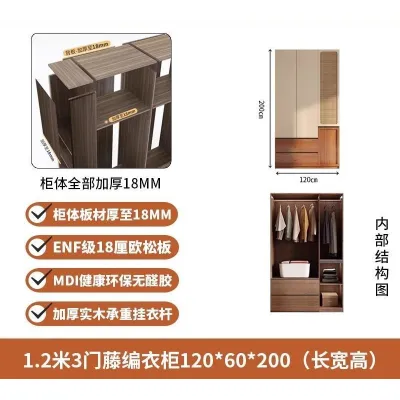
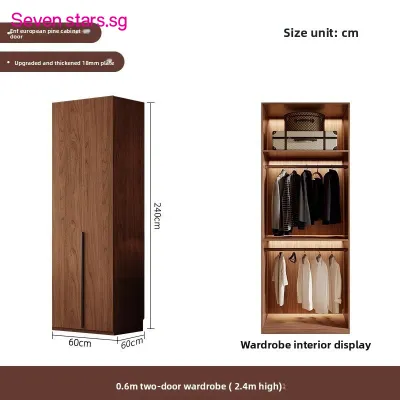
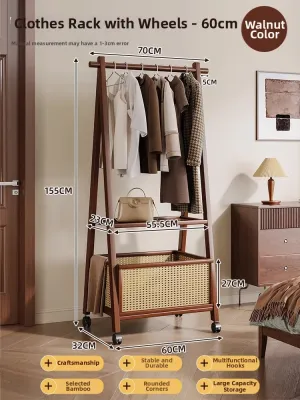
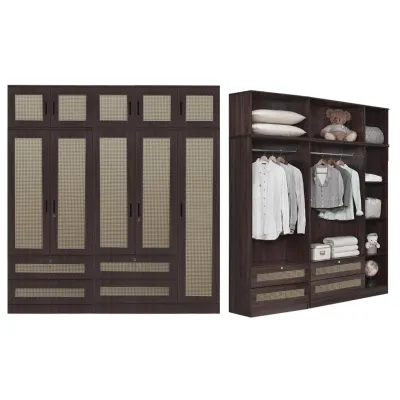
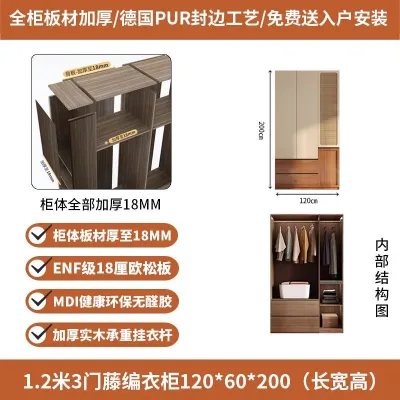
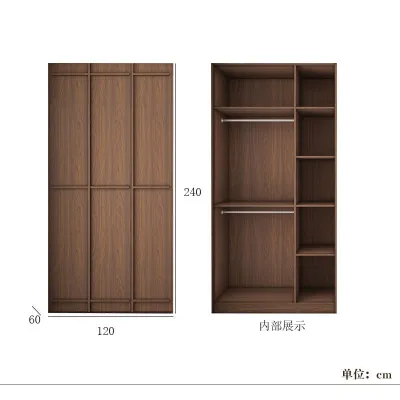
Prices are valid at publication and may change. Please refer to the product page for the latest price.
Inspecting the weaving tension and finish is crucial to prevent damage to your garments. Run your hands gently over the woven panels to check for uniform tension; there should be no sagging, loose ends, or sharp fibers protruding from the surface. High-quality craftsmanship is evident in how the rattan is secured to the frame. Look for clean spline-groove construction or neatly wrapped edges rather than exposed staples or messy glue lines. A smooth, protective lacquer or polyurethane topcoat is essential to seal the fibers, preventing them from snagging delicate fabrics like silk, lace, or fine linen.
Hardware and joinery are the silent indicators of a wardrobe’s lifespan. Examine the hinges, drawer runners, and structural joints to ensure they can withstand daily use. Premium brands utilize traditional joinery methods, such as mortise-and-tenon or dowel joints, to connect the main frame components. Door hinges should be adjustable, soft-closing, and made of rust-resistant materials like stainless steel or brass to prevent corrosion from ambient humidity. Drawer tracks should operate smoothly without sticking or catching, even when the drawers are fully loaded.
HDB Space and Logistics Adaptation Checklist
Precise dimensional planning is essential when integrating a rattan wardrobe into compact HDB bedrooms, especially in newer Build-To-Order (BTO) layouts. Measure the designated floor area carefully, keeping in mind that skirting boards can prevent a wardrobe from sitting completely flush against the wall, requiring an extra 1.5 to 2 centimeters of clearance. Check the ceiling height, which typically ranges from 2.6 to 2.8 meters in standard HDB flats, to ensure there is enough vertical clearance to stand the wardrobe upright during assembly. Additionally, account for the swing radius of hinged doors to ensure they do not obstruct walkways, bedside tables, or air-conditioning units.

Delivery access is a critical logistical hurdle that buyers often overlook until the delivery day. Before finalizing your purchase, verify the dimensions of your HDB block’s passenger lift, including the door opening width, internal cabin height, and diagonal depth. If the wardrobe is delivered fully assembled, it must be able to fit inside the lift and navigate tight corridor corners and your front doorway. For flat-pack items, confirm that the delivery team has sufficient floor space in your home to assemble the unit safely without damaging surrounding walls or fixtures.
Managing humidity and airflow around your wardrobe is vital to preserving natural rattan fibers. Avoid placing the wardrobe directly against external-facing concrete walls, which tend to absorb heat and trap moisture during heavy downpours. Maintain a clearance gap of at least 5 to 10 centimeters between the back of the wardrobe and the wall to promote continuous air circulation. This simple spatial adjustment prevents stagnant air pockets from forming, significantly reducing the likelihood of mold and mildew growth on both the wardrobe and your clothing.
Weight distribution and floor loading must be evaluated to protect your home’s flooring. Rattan wardrobes with solid wood frames can be exceptionally heavy, especially when fully loaded with winter wear or heavy bedding. Check that the wardrobe’s feet are wide enough to distribute this weight evenly, or use protective felt pads to prevent denting or scratching. This precaution is particularly important if your HDB flat features vinyl, laminate, or engineered wood flooring, which are more susceptible to pressure marks than traditional ceramic tiles.
Sourcing and Verifying Reliable Retailers
Visiting a physical showroom is highly recommended when shopping for tactile furniture like rattan. A showroom visit allows you to assess the true color of the material under natural light, test the door alignment, and feel the texture of the weave firsthand. It also gives you an opportunity to speak directly with sales representatives about the sourcing of their materials and the specific manufacturing processes used. If physical inspection is not possible, request high-resolution close-up photos and videos of the joints and weaving details from the retailer.
Understanding the manufacturer’s warranty and return policies provides a safety net against premature product failure. Look for retailers that offer a clear, written warranty covering structural frame defects and hardware failures for at least one to five years. While natural wear and tear of the rattan weave is rarely covered under standard warranties, the retailer should guarantee that the weave will not unravel or split within the first few months of delivery. Always clarify who bears the cost of transport and labor if a repair or replacement is required under warranty.
Customization options can help you maximize awkward corners or sloped ceilings common in older HDB resale flats. Some local furniture brands offer modular configurations, allowing you to select the frame size, door style, and internal shelving layout that best fits your storage needs. If you require a bespoke fit, look for retailers that specialize in semi-custom carpentry, where they can adjust the height or width of a standard design to match your bedroom’s exact dimensions.
Verifying online reviews requires a critical eye to separate genuine customer experiences from curated marketing feedback. When browsing online marketplaces or social media, filter for reviews that include real-life photos of the wardrobe in an actual HDB setting. Pay close attention to comments regarding the punctuality and professionalism of the delivery team, the quality of the on-site assembly, and how the furniture performs after six months to a year of exposure to Singapore’s tropical climate. Consistent complaints about loose hinges, sagging shelves, or musty odors are clear warning signs.
Routine Maintenance for Tropical Climates
Regular dusting is the foundation of preserving the intricate weave of a rattan wardrobe. Dust and airborne particles easily settle into the crevices of the woven panels, which can attract moisture and pests over time. Use a soft-bristle brush, a feather duster, or a vacuum cleaner equipped with a soft brush attachment to gently clear debris from the weave at least once a week. Avoid using stiff wire brushes or abrasive scrubbing pads, as these can scratch the protective lacquer finish and fray the natural fibers.
Active moisture management is essential during Singapore’s wet monsoon seasons when indoor relative humidity can consistently exceed 80%. Keep the bedroom well-ventilated by opening windows on dry, sunny days to encourage cross-ventilation. Inside the wardrobe, place disposable dehumidifier tubs or hanging moisture-absorbing bags to keep the internal air dry. If the room is prone to dampness, running an electronic dehumidifier for a few hours each day can help maintain an optimal indoor humidity level of around 50% to 60%.
Protecting your wardrobe from prolonged exposure to direct sunlight prevents the rattan from drying out and becoming brittle. Ultraviolet (UV) rays can cause natural fibers to fade, crack, and lose their structural elasticity over time. Position the wardrobe away from direct window paths, or install sheer curtains, blinds, or UV-blocking window films to filter the incoming sunlight. If one side of the wardrobe receives more light than the other, consider rotating the furniture periodically to ensure even aging of the wood and rattan.
Knowing when to stop DIY maintenance and seek professional help can save your wardrobe from irreversible damage. If you notice signs of structural warping, deep cracks in the load-bearing frame, or persistent mold infestations that return despite thorough cleaning, DIY solutions are no longer sufficient. Furthermore, if you discover tiny, clean holes in the wood accompanied by fine, powdery dust, this indicates an active wood-boring insect infestation. In such cases, immediately isolate the wardrobe and contact a professional pest control service or a qualified furniture restorer to address the issue.
Frequently Asked Questions (FAQ)
Can I install a rattan wardrobe in an HDB household shelter?
No, installing a heavy, fixed wardrobe inside an HDB household shelter (commonly known as a bomb shelter) is highly discouraged and may violate local building guidelines. HDB regulations strictly prohibit drilling, mounting, or modifying the structural walls, ceiling, or steel door of the household shelter, as this compromises its protective integrity. Any furniture placed inside the shelter must be completely freestanding, non-fixed, and easily movable so that it does not block the ventilation sleeve or obstruct the rapid closing of the heavy steel door during an emergency.
Is natural rattan better than synthetic PE rattan for indoor wardrobes?
The choice between natural and synthetic PE rattan depends on your aesthetic preferences and willingness to perform routine maintenance. Natural rattan offers unmatched organic warmth, unique tonal variations, and a classic tactile feel that synthetic materials cannot fully replicate, making it highly desirable for indoor bedrooms. However, synthetic PE rattan is completely impervious to moisture, mold, and pests, making it an incredibly practical, low-maintenance choice for high-humidity areas or homes without consistent air conditioning. Always check the manufacturer’s care labels to align your choice with your lifestyle.
How do I fix a loose or unraveling rattan weave on my wardrobe?
For minor sagging in natural rattan panels, you can attempt a simple, reversible tightening method using warm water. Lightly dampening the back of the woven rattan panel with a warm, wet cloth causes the natural fibers to expand slightly; as they dry naturally in a well-ventilated room away from direct heat, the fibers will contract and tighten up. However, if the rattan weave has completely unraveled, snapped, or pulled away from the frame spline, do not attempt to glue or staple it back yourself. Stop using the affected section and contact the manufacturer or a professional furniture repair specialist to re-weave or replace the panel.

Community discussion
Share your experience or ask a question. Comments are reviewed before publication.