
Selecting the right wardrobe for your Housing & Development Board (HDB) bedroom is one of the most significant furniture decisions you will make. Oak wood, celebrated for its prominent grain patterns, exceptional density, and warm natural hues, is a highly sought-after material for creating a cozy, premium sanctuary. However, navigating the Singapore furniture market can be challenging. With space at a premium in modern BTO (Build-To-Order) and resale flats, and the local climate presenting high humidity levels, you must look beyond aesthetics. True value is not merely about finding the lowest price tag; it is about finding a piece that fits your specific layout, withstands environmental stressors, and offers a structural lifespan that justifies the initial investment. Rather than chasing a single brand name, homeowners should evaluate retailers based on material transparency, structural warranties, and precise spatial adaptability.
Defining True Value: Price vs. Longevity in HDB Bedrooms
To define true value, you must calculate the total cost of ownership over the wardrobe’s lifespan. A low-cost wardrobe made of low-grade particle board or medium-density fibreboard (MDF) might cost only S$300 to S$600 upfront. However, in Singapore’s humid climate, these materials are highly susceptible to moisture absorption, which leads to swelling, sagging shelves, and structural failure within a few years. In contrast, a well-crafted solid oak wardrobe costing S$1,500 to S$3,000 can easily last for decades. When you divide the purchase price by the years of trouble-free service, solid wood often emerges as the more economical choice. Furthermore, solid oak can be sanded down, repaired, and refinished if it sustains scratches or dents over time, a feat that is impossible with laminated or veneered furniture.
Beyond the sticker price, you must account for hidden transactional costs that can quickly inflate your budget. Many retailers charge separate fees for delivery, professional on-site assembly, and the disposal of your existing wardrobe. In Singapore, disposing of large furniture can be a logistical headache; while some Town Councils offer free bulky item removal services for HDB residents, there are strict limits on volume and scheduling. If your retailer offers a seamless, all-in-one package that includes delivery, assembly, leveling, and disposal, this convenience adds substantial value to your purchase.
Products mentioned in this guide
![[CozyNest ]All Solid Wood Oak Bedroom Wardrobe Storage Cabinet](https://img.lazcdn.com/g/p/de9f8fa071592a18b191afcf51e27ab1.jpg_webp_400x400q80.jpg_.webp)
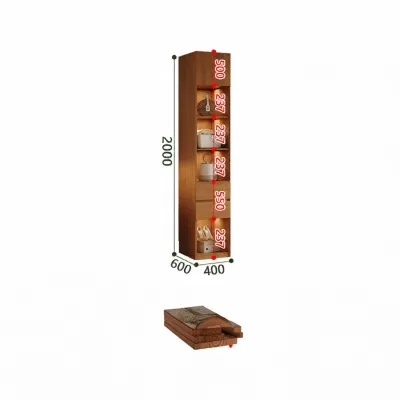
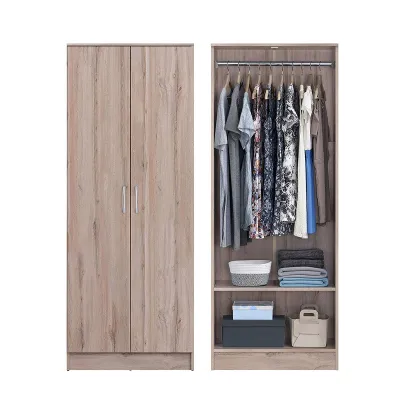
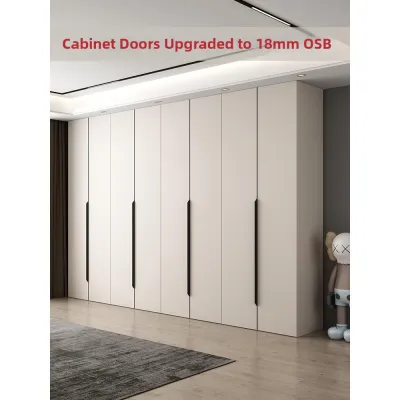
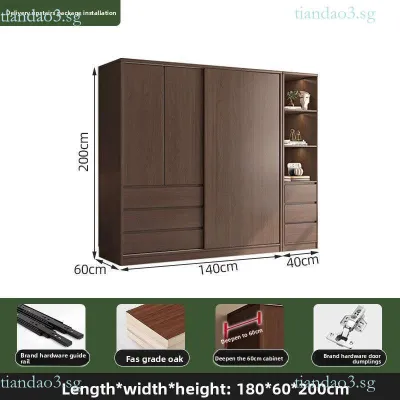
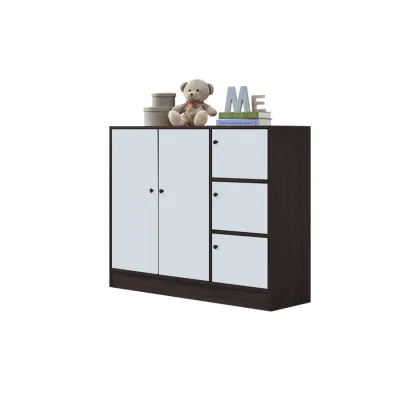
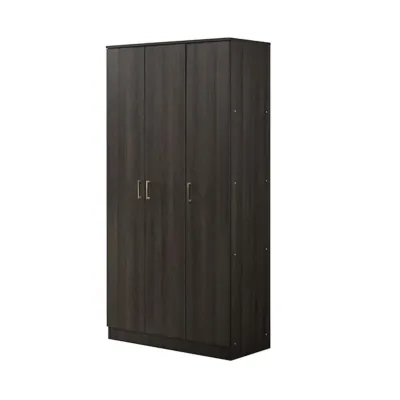

Prices are valid at publication and may change. Please refer to the product page for the latest price.
Another critical decision is choosing between freestanding units and modular or semi-custom wardrobes. Freestanding oak wardrobes offer the flexibility of being moved during future renovations or when relocating to a new home. However, they often leave awkward gaps at the sides and top, which can become dust traps in compact HDB bedrooms. Modular oak systems allow you to configure the internal shelving, drawers, and hanging rails to match your storage needs, maximizing every cubic centimeter of space. While semi-custom modular systems carry a premium price, they bridge the gap between mass-produced freestanding units and expensive, permanent built-in carpentry.
Verifying Material Claims: Solid Oak vs. Veneer and Imitations
Verifying material claims is essential to protect your investment from misleading marketing terms. In the furniture industry, terms like “oak wardrobe” are frequently used to describe the color or finish rather than the actual wood species. You will encounter three primary material categories: solid oak, oak veneer over engineered wood, and rubberwood stained to look like oak. Solid oak is cut directly from oak trees and offers unmatched strength and natural beauty. Oak veneer consists of a paper-thin slice of real oak glued onto a core of MDF or plywood; while it looks like real wood on the surface, it lacks the structural durability and refinishing potential of solid timber. Rubberwood, a plantation hardwood native to tropical regions, is highly durable and eco-friendly, but it is structurally different from oak and should not be priced at a premium under the guise of being “oak.”

To verify what you are actually buying, perform a physical inspection whenever possible. First, examine the end grains of the wood panels. On a solid wood wardrobe, the grain pattern on the face of the panel should flow continuously over the edge and match the grain pattern on the end. If the grain pattern abruptly stops or looks perfectly uniform across multiple panels, you are likely looking at a veneer or a synthetic laminate. Second, assess the weight of the components; solid oak is incredibly dense and heavy, so a solid wood drawer or door will feel noticeably substantial compared to an engineered wood counterpart.
Next, inspect the joint construction of the wardrobe. High-quality solid oak furniture utilizes traditional joinery techniques, such as dovetail joints for drawers and mortise-and-tenon joints for the main frame. If you observe that the drawers are held together by staples, thin wire nails, or simple plastic brackets, the wardrobe is unlikely to support heavy loads over time. Finally, check the materials used for the back panel and drawer bottoms. Retailers often cut corners by using thin, low-grade plywood or hardboard for these hidden areas. A true high-value wardrobe will use sturdy, moisture-resistant backing materials that prevent the frame from twisting or warping. Always read the detailed product specification sheets and ask the retailer direct questions rather than relying on vague e-commerce titles.
Space Adaptation: Fitting Wardrobes into HDB Bedroom Layouts
Fitting a large piece of furniture into a compact HDB bedroom requires meticulous spatial planning. The first step is determining the appropriate door mechanism based on your room’s layout. Hinged doors require a significant amount of clearance to swing open fully. Typically, you need at least 50cm to 60cm of unobstructed space in front of the wardrobe to open the doors and stand comfortably while accessing your clothes. If your bed frame is positioned close to the wardrobe, hinged doors may block the walkway entirely or strike the bed. In such tight configurations, sliding doors are highly advantageous because they operate within the wardrobe’s own footprint. However, keep in mind that sliding door mechanisms require a wider overall cabinet depth—usually around 65cm compared to the 60cm required for hinged wardrobes—to accommodate the double-track system.
Vertical space utilization is another key factor in maximizing HDB bedroom storage. Standard freestanding wardrobes typically stand between 1.8m and 2.0m tall. With standard HDB ceiling heights hovering around 2.6m, this leaves a substantial gap of unused space at the top. You can utilize this space by opting for wardrobes with matching top-cabinet extensions, which allow you to store seasonal items, bedding, or luggage out of sight. If you choose a tall or top-heavy wardrobe, safety must be your top priority. Solid oak is exceptionally heavy, and a fully loaded wardrobe can pose a serious tip-over hazard if doors are pulled open quickly. Ensure the wardrobe is securely anchored to your concrete HDB wall using heavy-duty wall plugs and brackets.
Before finalizing your purchase, you must verify that the wardrobe can actually be delivered to your bedroom. Many homeowners overlook the physical constraints of HDB common areas. Create a measurement checklist and verify the following dimensions: the width and height of your HDB lift door, the internal diagonal depth of the lift cabin, the clearance of any tight corners in your corridor, and the dimensions of your bedroom doorway. If you live in an older estate with narrow stairwells or small lifts, a fully assembled solid wood wardrobe may not fit. In these scenarios, you must confirm that the retailer delivers the wardrobe in flat-pack form and performs the assembly directly inside your bedroom.
Evaluating Retailer Reliability and After-Sales Support
Evaluating the reliability of the retailer is just as important as inspecting the wardrobe itself. A high-quality product can be ruined by poor installation or lack of after-sales support. Start by scrutinizing the warranty terms offered by the brand. A reputable retailer should provide a structural warranty of at least 1 to 5 years. This warranty should explicitly cover structural defects, joint separation, and hardware failures such as broken drawer runners or failing hinges. Be sure to read the fine print regarding natural wood movement; because solid wood is a living material that reacts to humidity, minor expansion or contraction is normal and typically excluded from warranties. However, severe warping that prevents doors from closing properly should be covered.
Delivery timelines and installation professionalism can vary significantly between brands. Solid oak wardrobes require precise leveling during assembly, especially on HDB floors which may have slight slopes or uneven screeding. If a heavy wardrobe is not perfectly leveled, the frame can twist, causing the doors to misalign and the sliding tracks to bind. Ask the retailer if their delivery team consists of trained, in-house carpenters who understand how to handle solid wood, or if they outsource the work to general third-party couriers.
To gauge a retailer’s true service quality, look for independent customer feedback on third-party review platforms rather than relying solely on the curated testimonials on the brand’s own website. Search specifically for how the company handles delivery delays, product damage, and warranty claims. A brand that actively responds to negative reviews and offers constructive resolutions is far more reliable than one with a flawless but potentially curated online presence. Clear communication regarding lead times—especially for imported or made-to-order oak furniture—is a hallmark of a trustworthy retailer.
Building Your Shortlist: Sourcing and Comparing Options
Building a shortlist of potential oak wood wardrobe options requires a structured approach that balances physical inspection with digital research. While online marketplaces offer unparalleled convenience and competitive pricing, buying a major solid wood item sight unseen carries significant risks. Whenever possible, prioritize retailers that maintain physical showrooms in Singapore. Visiting a showroom allows you to physically test the wardrobe: you can slide the doors to check for smooth operation, pull out the drawers to inspect the joinery, feel the texture of the timber, and verify the actual color under realistic lighting conditions.
Once you have gathered information from several sources, construct a comparison matrix to evaluate your options objectively. Your matrix should include the following criteria: the total price (inclusive of delivery, assembly, and tax), the verified material composition (such as 100% solid oak versus an oak-and-veneer mix), the exact external dimensions, and the estimated lead time. To compare the storage efficiency of different models, you can calculate the price per liter of internal storage volume by multiplying the internal width, depth, and height of the wardrobe.
Finally, do not hesitate to ask retailers for physical wood samples or swatches. This is particularly useful if you are trying to match the oak wardrobe with existing bedroom furniture, such as an oak bed frame or bedside tables. Oak comes in various grades and finishes, ranging from light, natural oils to darker, lacquered stains. Having a physical sample allows you to view the wood in your own bedroom’s lighting, ensuring that your new wardrobe harmonizes beautifully with your space while delivering the long-term value and durability you expect.
Frequently Asked Questions (FAQ)
How can I tell if a wardrobe is made of real oak wood?
Check the grain continuity across the edges and corners of the panels. Real oak has a distinct, prominent open-grain pattern with visible medullary rays (fleck patterns). It is also exceptionally heavy and dense. Inspect the screw holes and hardware mounting points; real solid wood will show clean wood fibers and hold screws tightly, whereas MDF or particle board will show compressed wood dust or loose fibers.
Do solid oak wardrobes require special care in Singapore's humid climate?
Yes, Singapore’s high relative humidity can cause solid wood to expand and contract. To maintain your oak wardrobe, keep the bedroom well-ventilated and avoid placing the wardrobe in direct sunlight or directly under an air conditioning vent where rapid temperature swings occur. Use mild dehumidifiers (like disposable moisture absorbers) inside the wardrobe, and clean the wood using a dry or slightly damp microfiber cloth. Avoid harsh chemical cleaners or excessive water, and consider applying a manufacturer-approved wood wax or oil annually to preserve the protective finish.

Community discussion
Share your experience or ask a question. Comments are reviewed before publication.