
Finding a bamboo shoe rack in Singapore that successfully balances structural integrity with generous storage capacity requires looking beyond surface aesthetics. Bamboo has gained immense popularity as a sustainable, lightweight, and visually warm material for home organization. However, Singapore’s persistent high humidity and compact residential layouts present unique challenges. A poorly constructed rack can quickly succumb to mold, structural sagging, or joint instability under the weight of a household’s footwear collection. To make an informed investment, you must understand how to evaluate material treatments, joint designs, and spatial configurations.
This guide outlines the essential quality indicators, capacity calculations, and maintenance practices necessary to select a durable bamboo shoe rack that fits your home perfectly. By focusing on objective verification steps rather than unverified brand marketing, you can secure a storage solution that remains stable and functional over the long term.
Key Indicators of Bamboo Shoe Rack Build Quality
To ensure your bamboo shoe rack can withstand daily use and Singapore’s tropical climate, you must first examine how the raw material has been processed and assembled. Bamboo is technically a grass, meaning its natural fibers are highly porous and susceptible to moisture absorption if left untreated. When evaluating different brands and models, prioritize units that have undergone a thorough carbonization process.
Products mentioned in this guide
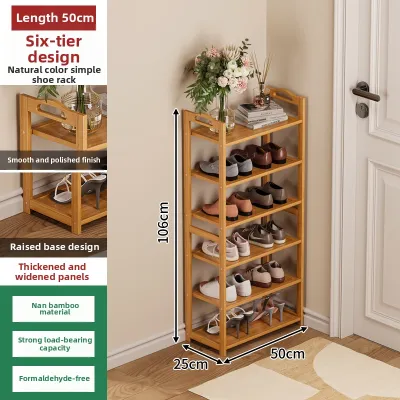
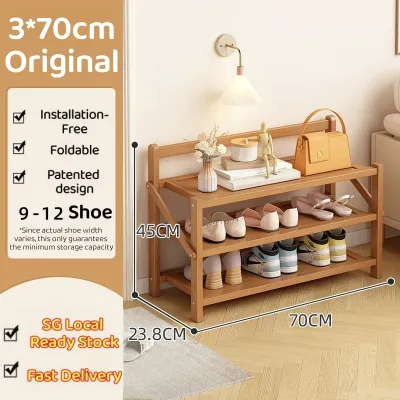
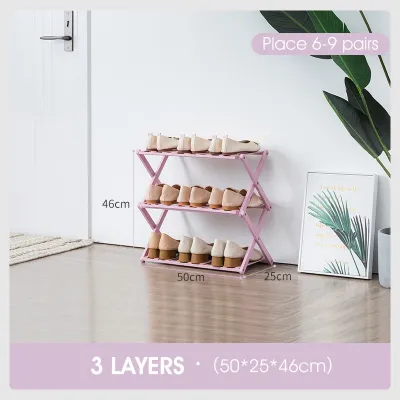
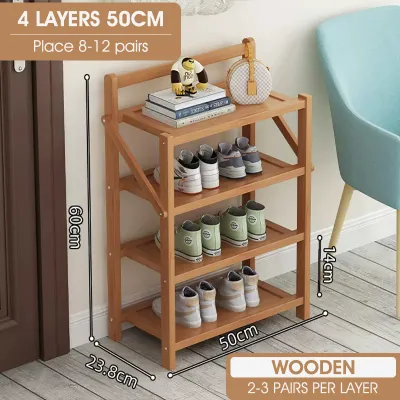
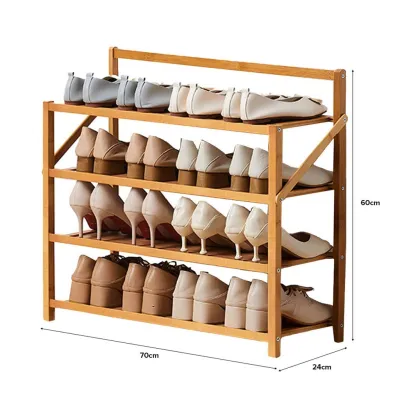
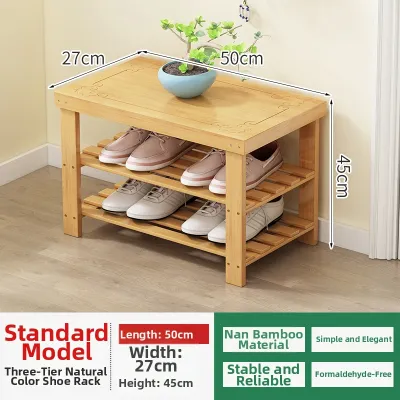
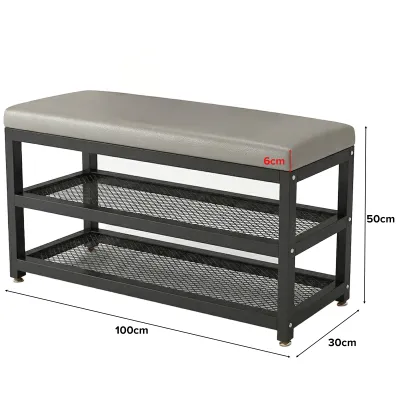
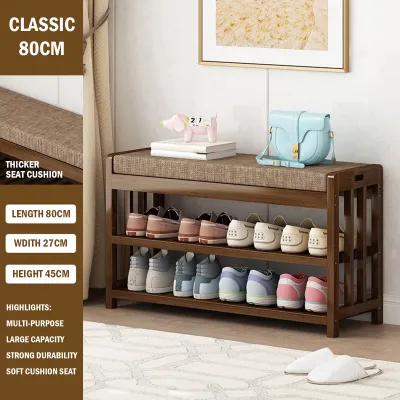
Prices are valid at publication and may change. Please refer to the product page for the latest price.
Carbonization involves subjecting the bamboo to high temperatures and pressure, which caramelizes the natural sugars within the fibers. This process not only gives the bamboo a richer, darker tone but also significantly reduces its water absorption capacity, making it far less hospitable to mold spores and wood-boring insects. In addition to carbonization, inspect the surface finish. A high-quality bamboo shoe rack should feature a continuous, smooth protective coating, typically a water-resistant polyurethane or lacquer. Run your hand along the undersides of the shelves and the interior faces of the frame; raw, unsealed bamboo in these hidden areas will easily absorb ambient moisture from the air or damp footwear, leading to localized swelling and mold growth.
The assembly hardware and joint design are equally critical to long-term stability. Avoid racks that rely solely on wood glue or simple wooden dowels at key load-bearing junctions. Instead, look for units that utilize metal-on-metal connections, such as threaded metal inserts embedded into the bamboo, paired with high-tensile steel bolts. This configuration allows you to tighten the joints periodically if the wood naturally expands and contracts with seasonal humidity shifts, preventing the frame from developing a permanent wobble.
Finally, assess the load-bearing architecture of the shelves. Bamboo strips are typically laminated together to form solid panels or slats. For optimal durability, the individual slats should be closely spaced and supported by a robust perimeter frame. Look for models that incorporate a central support rail beneath each shelf or diagonal cross-bracing on the rear of the unit. These design elements distribute weight evenly and prevent the shelves from bowing downward over time under the weight of heavier footwear.
Assessing Storage Capacity and Spatial Fit
Achieving the perfect balance between storage capacity and spatial fit requires a systematic approach to measurement and layout planning. Before browsing retail options, you must accurately quantify your household’s storage needs and map out the physical constraints of your entryway.

Begin by calculating your required capacity based on the types of shoes you own. On average, a standard pair of adult shoes requires approximately 20 to 25 centimeters of horizontal shelf width. Multiply this by the number of pairs you need to store to determine the total linear shelf space required. For example, a household looking to store 15 pairs of shoes will need approximately 300 to 375 centimeters of cumulative shelf length, which can be divided across multiple tiers.
Vertical clearance is another critical factor. Standard flat shoes, sandals, and sneakers typically require a shelf height of 15 to 18 centimeters. However, if your collection includes high-top sneakers, ankle boots, or high heels, you will need a clearance of 20 to 30 centimeters. To accommodate a diverse footwear collection without wasting vertical space, look for bamboo shoe racks that offer adjustable shelf heights or removable slats, allowing you to customize individual tiers as your storage needs evolve.
In Singapore, residential layouts—particularly in HDB flats and compact condominiums—often dictate strict spatial limits. If you plan to place your shoe rack in a narrow foyer or along an external HDB corridor, you must ensure it does not obstruct daily foot traffic or violate local safety regulations. For corridor placement, Singapore Civil Defence Force guidelines require maintaining a clear escape path of at least 1.2 meters. Consequently, a shallow-depth shoe rack, typically measuring between 25 and 30 centimeters deep, is ideal for keeping the pathway clear while still providing adequate space for standard shoe sizes.
Before finalizing your purchase, perform a thorough spatial check of your delivery route. While many bamboo shoe racks are delivered flat-packed for easy assembly, some premium models may arrive fully assembled. Measure the clear width and height of your main entryway, internal doorways, elevator doors, and any tight turns in your corridors or stairwells. Ensuring the packaged or assembled unit can navigate these transitions smoothly prevents delivery delays and potential damage to your walls or the furniture itself.
Navigating Retail Channels and Verifying Brand Claims
Finding a reliable bamboo shoe rack in Singapore involves navigating a diverse landscape of physical furniture showrooms and online ecommerce platforms. Each retail channel offers distinct advantages, and knowing how to verify manufacturer claims is key to avoiding low-quality purchases.
Physical showrooms provide an invaluable opportunity to conduct a hands-on quality inspection. When visiting a store, physically test the display models for structural rigidity. Apply gentle downward and lateral pressure to the top of the rack to check for wobbling or joint play. Inspect the consistency of the protective lacquer, check for any visible splinters or rough edges, and verify that the hardware feels secure. Additionally, take note of any strong chemical odors; a high-quality, properly cured finish should not emit intense volatile organic compound smells.
Conversely, online marketplaces offer a vastly broader selection of designs, sizes, and price points, but they require a more analytical approach to verification. When shopping online, do not rely solely on polished product photography or initial five-star reviews written immediately after delivery. Instead, filter user reviews to focus on feedback submitted after several months of use. Look specifically for mentions of structural sagging, joint failure, splitting bamboo, or mold development. This long-term feedback provides a much more accurate representation of how the product performs in Singapore’s humid environment.
To verify brand claims regarding material quality and safety, request or look for official product specification sheets. Reliable manufacturers will clearly state the exact material composition—such as 100% solid Moso bamboo rather than cheap wood composites with a thin bamboo veneer. Furthermore, check for environmental and safety certifications, particularly regarding formaldehyde emissions. Look for ratings such as E1 or E0, which indicate that the adhesives used in the lamination process emit safe, minimal levels of formaldehyde, ensuring healthier indoor air quality for your household.
Maintaining Bamboo Furniture in a Tropical Climate
Proper maintenance is essential to preserve the structural integrity and aesthetic appeal of your bamboo shoe rack in Singapore’s tropical climate. Because bamboo is a natural, organic material, it remains sensitive to environmental conditions even after processing and finishing.
Establish a routine cleaning schedule to prevent dust and moisture from accumulating on the surfaces. Use a dry, soft microfiber cloth to dust the rack weekly. For deeper cleaning, use a cloth that is only slightly damp with a solution of mild, pH-neutral soap and water. Immediately follow up with a dry cloth to remove any residual moisture. Never use harsh chemical cleaners, abrasive scrubbing pads, or excessive amounts of water, as these can strip away the protective lacquer and allow moisture to penetrate the bamboo fibers.
Placement is equally critical to preventing degradation. Avoid placing your bamboo shoe rack in areas exposed to direct, intense sunlight, such as next to unshaded balcony doors or windows. Prolonged exposure to UV rays and heat can dry out the bamboo, leading to warping, fading, and structural cracking. Conversely, protect the rack from excessive dampness. Avoid placing wet umbrellas directly against the frame, and ensure that wet or muddy shoes are allowed to dry completely in a well-ventilated area before placing them on the bamboo shelves.
Monitor the condition of your shoe rack regularly for signs of wear or damage. If you notice minor structural wobbling, check and tighten the assembly bolts immediately to prevent uneven stress on the joints. However, if you observe severe structural failures—such as deep, pervasive mold growth that has softened the wood, extensive splintering along load-bearing supports, or permanent warping that compromises stability—stop using the rack immediately. In such cases, consult the manufacturer’s guidelines or a furniture professional to determine if repairs are feasible, or replace the unit to ensure household safety.
Frequently Asked Questions (FAQ)
How much weight can a standard bamboo shoe rack shelf typically hold?
The weight capacity of a bamboo shoe rack shelf varies significantly depending on its specific construction, shelf thickness, and support design. General assumptions about bamboo’s natural strength should not be used to estimate load limits. Always refer to the manufacturer’s official product label or assembly manual for the exact weight rating. To maximize stability and prevent structural strain, distribute heavier items—such as heavy boots, wet-weather footwear, or storage boxes—across the bottom shelves. This keeps the unit’s center of gravity low, reducing the risk of tipping or lateral wobbling.
What should I do if I notice mold forming on my bamboo shoe rack?
If you detect surface mold on your bamboo shoe rack, address it promptly using gentle, non-destructive methods. Wipe the affected areas with a slightly damp cloth and a mild, diluted soap solution, then immediately dry the surface thoroughly with a clean towel. Move the rack to a well-ventilated indoor area with good airflow to ensure all moisture evaporates completely. Avoid using harsh chemical bleaches or soaking the wood, as this can permanently damage the protective finish and weaken the bamboo joints. If the mold has penetrated deep into the bamboo fibers, causing the material to soften, crumble, or repeatedly grow mold despite thorough cleaning, the structural integrity has been compromised, and the rack should be replaced.

Community discussion
Share your experience or ask a question. Comments are reviewed before publication.