
Finding the right storage solution for a compact HDB bedroom requires balancing floor space with functional accessibility. A 1-door wardrobe offers a highly targeted footprint, making it an excellent choice for tight corners, narrow walkways, or as an addition to existing bedroom furniture. To find the best fit among local brands, you must evaluate how their standard dimensions, door swing clearances, and installation services align with the specific layout constraints of your flat. By understanding what to look for in terms of materials, hardware, and delivery logistics, you can select a single-door unit that maximizes storage without making your bedroom feel cramped.
Assessing Your HDB Bedroom Layout and Clearances
HDB bedrooms, particularly in newer Build-To-Order (BTO) flats, often feature compact layouts where every centimeter of floor space counts. When planning the placement of a single-door wardrobe, the primary challenge is navigating narrow walking paths between the bed and the wall. A standard wardrobe depth typically ranges from 50 to 60 centimeters, which can significantly restrict movement if placed in a high-traffic pathway. If your room layout forces you to place the wardrobe near the foot of the bed, you must ensure there is still enough clearance for a person to walk past comfortably when the wardrobe door is closed.
Calculating the door swing clearance is a critical step before committing to any specific brand or model. A 1-door wardrobe with a hinged door requires a clear arc equal to the width of the door panel, which is usually between 40 and 60 centimeters. You must ensure this swing path does not collide with your bed frame, bedside tables, or bedroom entry door, leaving enough room for you to stand comfortably while accessing your clothes. If the clearance is exceptionally tight, you might want to look for brands that offer sliding doors or open-shelving concepts, though these are less common in single-door configurations.
Products mentioned in this guide
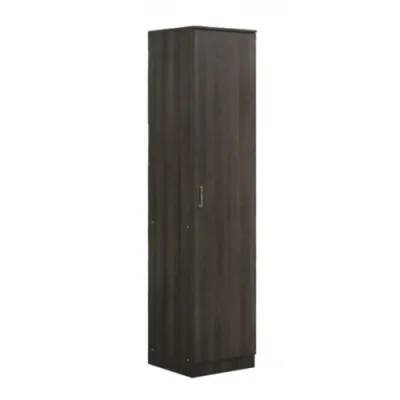
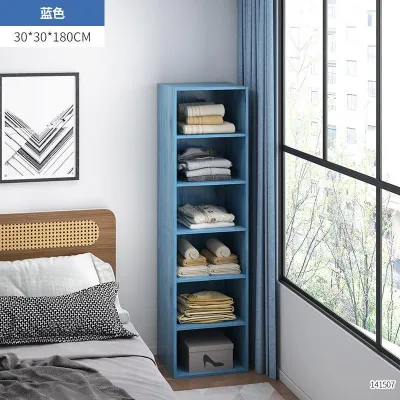
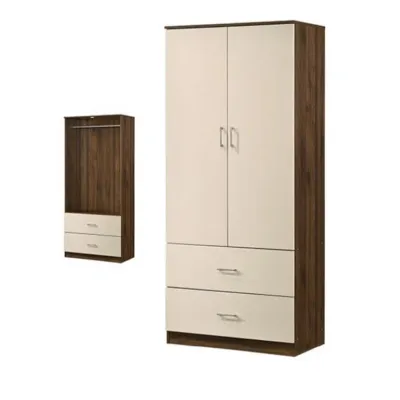
![[Furniture Amart] 1 DOOR WARDROBE CABINET SWINGING DOOR IN OAK WALNUT LIME OAK SINGLE DOOR (LIMITED OFFER!)](https://img.lazcdn.com/g/p/4173215194984da203c5af2299f5e9b2.jpg_400x400q80.jpg_.webp)
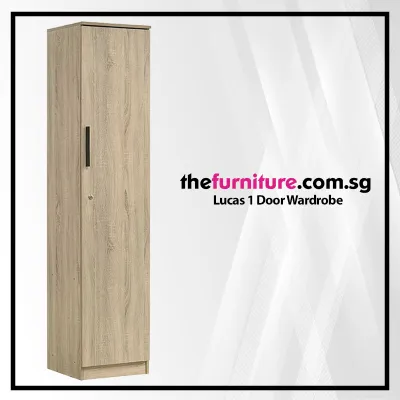
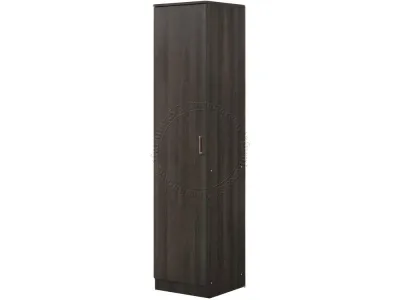
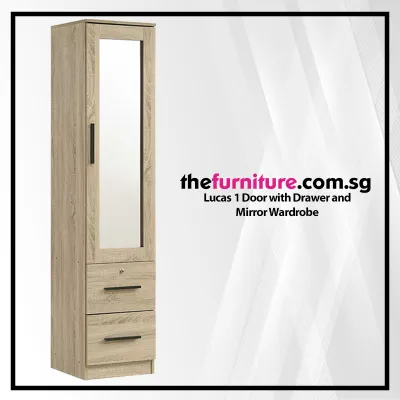
Prices are valid at publication and may change. Please refer to the product page for the latest price.
Vertical and structural elements unique to HDB flats also dictate where a wardrobe can stand. Look upward to identify any air-conditioning trunking, structural beams, or ceiling cornices that might obstruct a tall unit. Additionally, note the positions of wall-mounted power sockets and light switches, as blocking them with a heavy wardrobe can disrupt your room’s functionality and require inconvenient extension cords. If a socket must be covered, ensure the wardrobe back panel has a pre-cut cable outlet or that you can easily modify it during assembly to maintain access to your power points.
What to Look for in a Local Wardrobe Brand
When shortlisting furniture brands in Singapore, prioritize those that offer modular sizing options. Because HDB bedroom dimensions vary across different flat types and generations, a brand that provides multiple width, depth, and height configurations allows you to maximize your vertical space without custom-building. Look for brands that offer slim profiles, such as 40-centimeter or 50-centimeter widths, which fit neatly into awkward alcoves. Some modular systems even allow you to stack units vertically or join them side-by-side, giving you the flexibility to expand your storage setup in the future if your needs change.

The delivery and installation process is another crucial factor when choosing a local retailer. Opt for brands that employ in-house delivery and assembly teams rather than third-party logistics providers. In-house teams are generally more familiar with local housing layouts, lift access limitations, and the care required to transport furniture through narrow flat corridors without damaging the walls or the wardrobe itself. Furthermore, professional installers can make minor on-site adjustments, such as leveling the wardrobe on slightly uneven floors, which is a common occurrence in older HDB flats.
Finally, examine the warranty terms and customer support policies offered by the brand. A reliable wardrobe should come with a clear warranty covering structural integrity, such as frame warping, as well as the functionality of moving parts like hinges and drawer runners. Checking these terms beforehand ensures you are protected against premature wear caused by daily use and local environmental conditions. A brand that stands behind its hardware with a multi-year warranty is often a strong indicator of manufacturing quality and long-term durability.
Freestanding vs. Built-In Single-Door Solutions
Deciding between a freestanding 1-door wardrobe and a custom built-in unit depends largely on your budget, timeline, and long-term housing plans. Freestanding wardrobes are highly flexible, allowing you to rearrange your bedroom layout or pack up the unit and transport it to a new home if you move. They are readily available for purchase, meaning you can have them delivered and assembled within a few days. This makes them an ideal choice for immediate storage needs or for temporary living arrangements where permanent modifications are not practical.
In contrast, built-in single-door solutions offer superior space efficiency and visual integration. Custom carpentry can be designed to run flush against your walls and extend fully to the ceiling, completely eliminating dust-gathering gaps and maximizing every square centimeter of storage. However, this option involves longer lead times for fabrication and installation, higher upfront costs, and cannot be relocated when you move out. It also requires engaging an interior designer or contractor, which adds complexity to your home improvement project.
For renters or those planning to upgrade their property in a few years, freestanding units from reputable retail brands represent a practical and cost-effective choice. If you are a homeowner planning to stay in your flat long-term and want a seamless, premium look that blends with your bedroom’s architectural lines, investing in custom built-in carpentry is often the more satisfying route. Weighing these factors carefully will help you choose a solution that aligns with both your current lifestyle and your future housing goals.
Verifying Material and Hardware Specifications
Singapore’s warm and humid climate poses specific challenges for wooden furniture, making material verification essential. When browsing wardrobe brands, check the product specifications for the type of engineered wood used, such as medium-density fibreboard (MDF) or particleboard. Ensure the panels are sealed with high-quality laminate or melamine finishes and feature robust edge banding to prevent moisture from penetrating the core and causing swelling. Unprotected edges can easily absorb atmospheric moisture, leading to warping, mold growth, and structural degradation over time.
The hardware of a 1-door wardrobe determines its daily usability and lifespan. Inspect the hinge mechanisms closely, looking for soft-close features that prevent doors from slamming and reduce wear on the cabinet frame. High-quality hinges should also offer multi-directional adjustability, allowing you or the installer to realign the door panel easily if it begins to sag over time. Since a single door carries its entire weight on one side, robust hinges are critical to prevent the door from scraping against the bottom frame or failing to close securely.
Internal configuration flexibility is another key detail to verify before buying. Look for brands that design their wardrobes with pre-drilled internal holes, allowing you to adjust the height of shelving units and hanging rods as your storage needs change. A well-designed single-door unit should let you easily switch between full-length hanging space, double-tier hanging, or a stack of storage shelves. This adaptability is particularly valuable in a 1-door wardrobe, where the limited interior volume must be utilized as efficiently as possible to accommodate different types of clothing and accessories.
Pre-Delivery Measurement and Access Checklist
To avoid the frustration of a wardrobe that does not fit or cannot be delivered, perform a thorough measurement of your allocated space. Use a metal measuring tape to record the exact width, depth, and height of the spot, taking measurements at the top, middle, and bottom of the wall. Be sure to subtract the thickness of any skirting boards, as these can prevent a freestanding wardrobe from sitting flush against the wall. If you plan to place the wardrobe next to a window, ensure there is enough clearance for curtains or blinds to operate without being pinched by the cabinet.
Next, map out the delivery route from the unloading bay to your bedroom door. Measure the height and width of your HDB block’s lift door, the interior dimensions of the lift cabin, and the clearance of any tight corners in the common corridors. If your flat is only accessible via stairs, or if the wardrobe cannot fit into the lift, verify the brand’s policies regarding staircase delivery fees and physical clearance requirements. Knowing these details in advance prevents unexpected delivery failures and additional charges on the day of arrival.
Finally, check the levelness of your bedroom floor and the straightness of your walls using a spirit level. Uneven floors are common in residential units and can cause a tall, narrow 1-door wardrobe to wobble or sit at an angle, which affects door alignment. Identifying these issues early allows you to prepare shims or request adjustable leveling feet from the installation team to ensure a stable and safe setup. A perfectly level installation not only looks better but also ensures that the wardrobe doors open and close smoothly without putting unnecessary strain on the hinges.
Frequently Asked Questions (FAQ)
Can I install a built-in 1-door wardrobe in an HDB household shelter?
No, you cannot install a built-in wardrobe that requires drilling or structural anchoring inside an HDB household shelter. Housing regulations strictly prohibit any modification that compromises the structural integrity of the shelter, including drilling into the reinforced concrete walls, floor, or ceiling. The shelter is designed to protect occupants during emergencies, and any penetration of its steel-reinforced structure can weaken its protective capabilities. If you require storage inside your household shelter, you must use freestanding, non-anchored shelving units or wardrobes that stand independently on the floor without damaging the protective structure.
Do I need approval to install a tall freestanding wardrobe?
No, you do not need official approval from housing authorities to place a tall freestanding wardrobe in your bedroom. However, because tall and narrow furniture can pose a tip-over hazard, it is highly recommended to secure the unit to the wall using anti-tip brackets. If you choose to anchor a freestanding wardrobe, ensure you only drill into non-structural partition walls and avoid any drilling into structural columns or beams, which is strictly regulated. Always check the manufacturer’s instructions for the appropriate wall anchors and fasteners suitable for your specific wall type to ensure a safe and secure installation.

Community discussion
Share your experience or ask a question. Comments are reviewed before publication.