
A kids’ loft bed frame is an excellent space-saving solution, especially in Singapore where maximizing floor space in compact apartments is a priority. Elevating the sleeping area opens up valuable room underneath for a study desk, play corner, or storage. However, elevating a child’s bed introduces specific safety considerations. Before purchasing a loft bed frame, you must evaluate its structural integrity, compliance with safety standards, and suitability for your child’s age and your home’s physical layout. Ensuring the frame meets established safety benchmarks is the most critical step in preventing falls, entrapment, and structural failures.
How to Verify Safety Certifications and Compliance Labels
When shopping for a loft bed frame, do not rely solely on marketing claims of “child-safe” construction. Legitimate manufacturers design and test their products to meet rigorous international safety standards. In Singapore, reputable brands align with recognized global standards such as European Standard EN 747 (specifying safety, strength, and durability for bunk and loft beds) or American Standard ASTM F1427.
To verify these certifications, inspect the product packaging, the physical frame, or the manufacturer’s official documentation. Compliant loft beds often feature a permanent label affixed directly to the frame detailing the manufacturer’s name, the safety standard met, and warnings regarding mattress thickness and age limits. If purchasing from a local retailer or an online marketplace, ask the seller to provide official test reports or compliance certificates from accredited testing laboratories.
Products mentioned in this guide
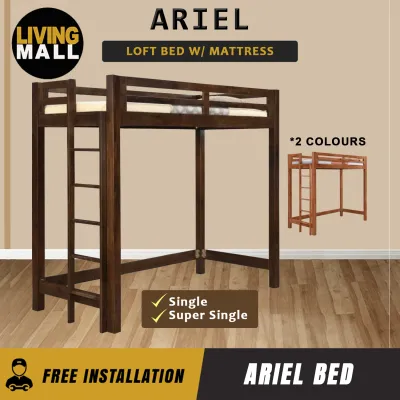
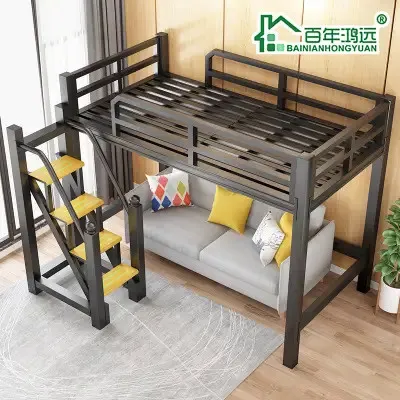

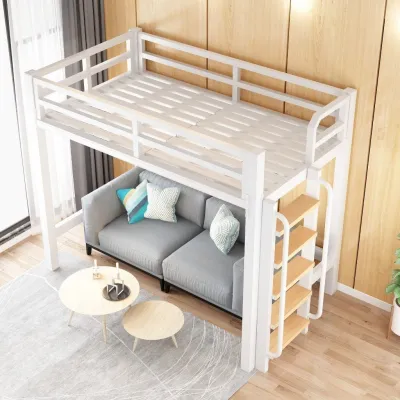
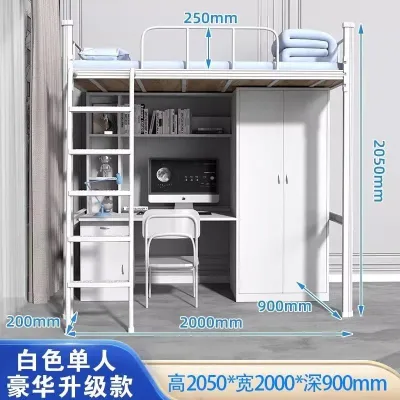
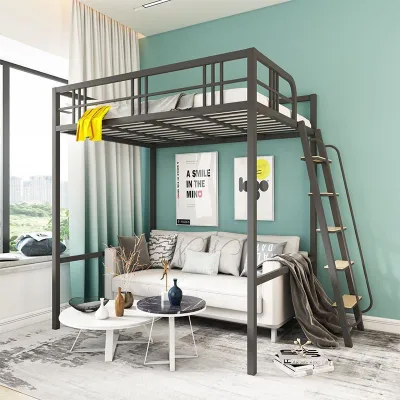
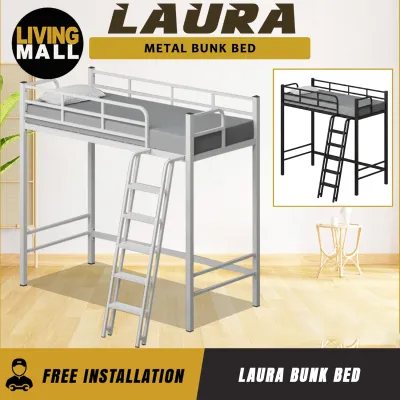
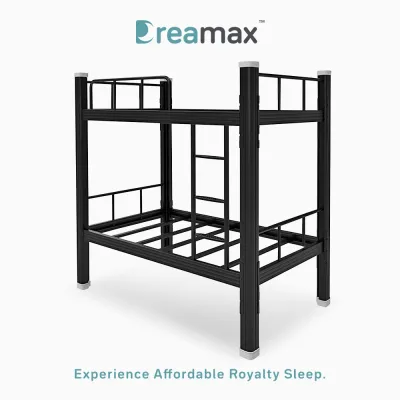
Prices are valid at publication and may change. Please refer to the product page for the latest price.
Cross-referencing these safety marks is essential to avoid unverified claims. You can search the issuing body’s official database or contact the manufacturer to confirm the certificate registration number. Additionally, check if the product complies with local consumer product safety guidelines in Singapore, ensuring any integrated electrical components, such as built-in desk lights, carry the safety mark.
Essential Design Features for Fall Prevention and Stability
Evaluating a loft bed frame requires a close inspection of its physical design. You must look beyond aesthetics to assess the structural components that directly prevent accidents and ensure the bed remains stable under daily use.

Guardrails and Mattress Fit
Guardrails are the primary defense against falls, making their height and coverage critical. When evaluating a loft bed frame, do not measure the guardrail height from the bare bed base alone; instead, calculate the height relative to the top of the mattress. Safety standards require that the top of the guardrail sits at least 127 millimeters above the top surface of the mattress.
To maintain this safety margin, check the manufacturer’s specifications for the maximum allowable mattress thickness. Using a mattress that is too thick reduces the effective height of the guardrail, creating a severe fall hazard. Furthermore, ensure guardrails are installed on all four sides of the bed. Even if the bed is placed flush against a wall, a gap can open up as the frame shifts, creating an entrapment risk. The only acceptable opening in the guardrail should be the designated entry point for the ladder, which must not exceed specified width limits—typically between 300 and 400 millimeters.
Ladders, Stairs, and Access Points
The access point is one of the most active areas of a loft bed frame and requires careful evaluation. Inspect how the ladder or staircase attaches to the main frame. Integrated ladders that bolt securely to the frame are more stable than hook-on styles, which can shift or detach. Look for robust fastening hardware and check that the ladder does not wobble when pressure is applied.
The design of the rungs or steps also plays a major role in preventing slips. Rungs should be wide enough to support a child’s foot comfortably and feature anti-slip textures or grooved surfaces. Avoid ladders with thin, round metal rungs, as these can be slippery and painful to climb. Evaluate the angle of the ladder; a slight incline is easier and safer to navigate than a completely vertical ladder. If the design includes stairs, ensure each step is deep enough for stable footing and includes secure handholds or grab rails.
Frame Stability and Edge Finishing
A high-quality loft bed frame must be free of physical hazards that could cause cuts, splinters, or bruises. Run your hands along all accessible wooden or metal parts to verify that the finishes are smooth, splinter-free, and free of sharp edges. All corners should be rounded rather than sharp and angular.
Examine the quality of the joints, fasteners, and support slats. Heavy-duty steel bolts and barrel nuts are preferred over simple wood screws, as they provide a tighter, more durable connection that can be retightened over time. The support slats under the mattress must be strong, securely fastened to the frame, and spaced closely enough to prevent the mattress from sagging.
Finally, check the frame design for potential entrapment hazards. Children can get their heads or limbs caught in gaps within the headboard, footboard, or guardrails. To prevent this, ensure that all gaps within the structure are either smaller than 90 millimeters (to prevent a child’s body from passing through) or larger than 230 millimeters.
Spatial Clearances and Installation Safety Checks
Before purchasing a loft bed frame, you must carefully measure your child’s bedroom to ensure adequate spatial clearance. In Singapore, standard residential ceiling heights, particularly in HDB flats, typically range from 2.6 to 2.8 meters. This height constraint makes precise calculations essential. Measure the distance from the floor to the ceiling, and compare it to the overall height of the loft bed frame.
To ensure your child can sit up comfortably in bed without bumping their head, maintain a minimum clearance of 750 to 900 millimeters between the top of the mattress and the ceiling. This clearance also ensures proper air circulation, which is vital in Singapore’s warm, humid climate.
Installation safety is just as critical as the frame’s design. Many loft beds require anchoring to the wall to prevent tipping, especially if the frame is lightweight. Review the manufacturer’s anchoring instructions before buying. If your home has partition walls or hollow bricks, you may need specialized wall plugs or professional installation services to ensure a secure anchor.
Additionally, plan the placement of the bed carefully. Never position a loft bed frame near windows, where a child could climb out or become entangled in window blind cords. Keep the bed a safe distance away from ceiling fans, light fixtures, and air conditioning units to prevent accidental impact.
Age Restrictions, Weight Limits, and Safe Usage Boundaries
Loft beds are not suitable for all children. International safety standards and manufacturers strictly recommend that children under the age of six should not use the top bunk or a loft bed. Younger children lack the coordination and spatial awareness required to safely navigate the ladder and avoid falling out of bed during sleep or play.
Always verify both the static and dynamic weight capacities of the loft bed frame. The static weight limit refers to the weight the bed can support when stationary, while the dynamic weight limit accounts for the forces exerted when a child moves, climbs, or sits down. Ensure the weight limit accommodates your child’s current weight, the weight of the mattress, bedding, and potential growth. Don’t forget to check the weight capacity of the ladder or stairs, as this component must support the child’s full weight during ascent and descent.
Establishing clear safety rules with your child is essential for safe usage. Explain that the loft bed is strictly for sleeping and quiet activities. Prohibit rough play, jumping on the mattress, or using the guardrails as climbing obstacles. Additionally, warn your child never to hang items such as ropes, belts, bags, or clothes hangers from the bed frame, as these present severe strangulation hazards.
Pre-Purchase and Post-Assembly Verification Checklist
To streamline your buying and setup process, use a structured checklist to verify safety at every stage.
Pre-Purchase Checklist:
- Measure the bedroom ceiling height and calculate the clearance above the mattress (aim for at least 750 millimeters).
- Check the dimensions of your doorways, hallways, and lifts to ensure the flat-packed frame can be delivered into your home.
- Confirm the frame complies with recognized safety standards (such as EN 747 or ASTM F1427) by checking product labels.
- Verify the maximum mattress thickness specified by the manufacturer and select a compatible mattress.
- Ensure the manufacturer provides clear wall-anchoring hardware and instructions if required.
Post-Assembly Checklist:
- Verify that all bolts, screws, and fasteners are fully tightened and flush with the frame surface.
- Test the stability of the bed by gently shaking the frame; there should be no significant wobble or swaying.
- Confirm that the guardrails are securely attached on all sides and that the entry gap is within the safe width range.
- Check that the ladder or staircase is firmly anchored to the frame and does not shift when climbed.
- Inspect all surfaces for any exposed hardware, sharp edges, or splinters.
Once the bed is in use, schedule periodic maintenance checks every three to six months. Hardware can loosen over time due to natural wood expansion, humidity changes in Singapore, and the vibrations of daily use. Retighten all fasteners, inspect the joints for wear, and check the support slats to ensure the bed remains structurally sound.
Frequently Asked Questions (FAQ)
Can I use a regular adult mattress on a kids' loft bed frame?
Using a regular adult mattress on a kids’ loft bed frame is generally not recommended unless it strictly matches the manufacturer’s specified dimensions and thickness limits. Adult mattresses are often significantly thicker than specialized kids’ mattresses, which can reduce the effective height of the guardrails to less than the safe 127-millimeter threshold, increasing the risk of falls. Additionally, adult mattresses can be much heavier, consuming a large portion of the frame’s maximum weight capacity. Always check the product manual for the exact mattress dimensions and weight limits before purchasing a replacement.
What should I do if the loft bed frame starts wobbling after assembly?
If your loft bed frame starts wobbling, stop using it immediately to prevent injury. Have your child sleep elsewhere while you troubleshoot. Begin by checking all fasteners, joints, and brackets against the assembly manual, as loose bolts are the most common cause of instability. If you find loose hardware, tighten it securely, but avoid over-tightening wood screws as this can strip the wood. If the wobble persists, check that the bed is on a level floor and that any required wall anchors are securely fastened. If you cannot resolve the instability, or if you notice cracked wood or defective parts, contact the manufacturer or a qualified furniture repair professional.

Community discussion
Share your experience or ask a question. Comments are reviewed before publication.