
A half height bed offers an excellent space-saving solution for children’s bedrooms, but because the sleeping surface is elevated, safety must be the primary consideration. When shopping for a half height bed in Singapore, parents should look for compliance with recognized international safety standards such as EN 747 (the European standard for bunk and high beds) or ASTM F1427 (the American standard for bunk beds). These certifications ensure the bed has undergone rigorous testing for structural stability, guardrail strength, and entrapment prevention.
Choosing the right elevated bed involves understanding how these standards protect your child from common household accidents. While a half height bed is lower than a traditional loft or bunk bed, it still elevates a child significantly above the floor, introducing unique physical risks that standard single beds do not present. By verifying specific certifications and conducting physical checks, you can create a secure sleeping and play environment.
Why Safety Standards Matter for Half Height Beds
Elevated sleeping surfaces inherently introduce gravity-related risks that require careful engineering to mitigate. Falls are the most common hazard associated with half height beds, occurring most frequently when children are sleeping, playing, or climbing up and down. Robust, tested guardrails are essential to prevent a child from rolling out of bed during the night, particularly during active sleep phases.
Products mentioned in this guide

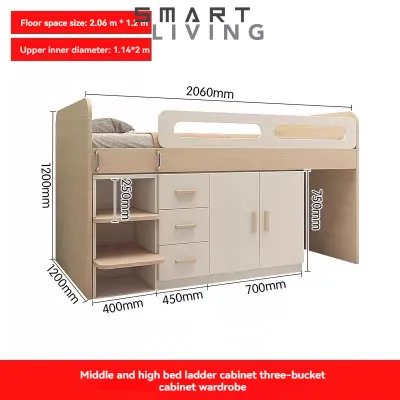
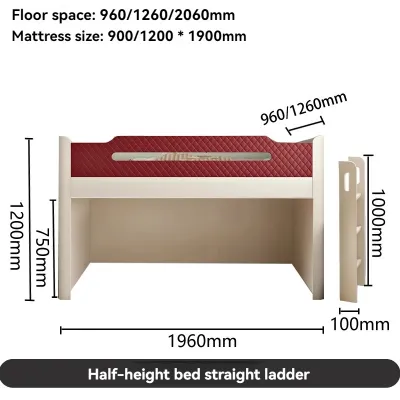
![[Pre-order]Half height storage bed home small unit boys and childrens bed combination under bed desk wardrobe integrated half height storage bed](https://img.lazcdn.com/g/p/a610c7f23359a6e3465536382f6a678f.jpg_400x400q80.jpg_.webp)
![[Pre-order]Solid wood half height bedchildrens bed integrated multifunctional bunk bed and bunk table combination bed](https://img.lazcdn.com/g/p/0fc7c9e98aebeeed351f20fde3fee6f3.jpg_400x400q80.jpg_.webp)
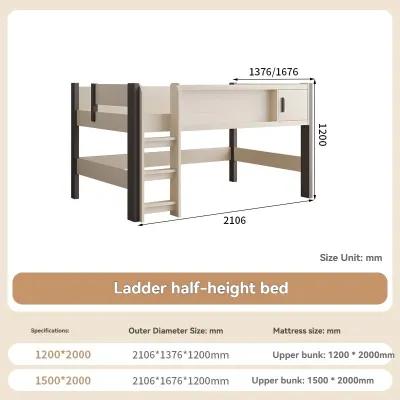
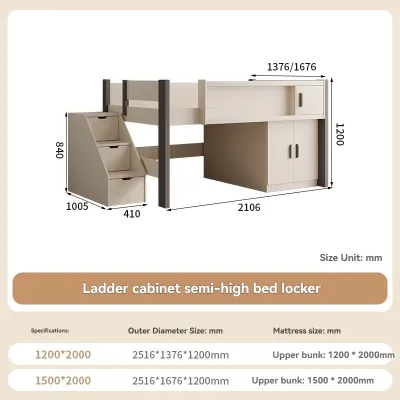
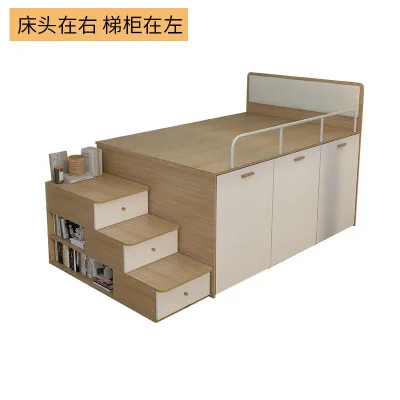
Prices are valid at publication and may change. Please refer to the product page for the latest price.
Entrapment is another critical risk that safety standards address with extreme precision. Children can easily get their heads, limbs, or bodies caught in gaps between safety barriers, ladder rungs, or the mattress and the bed frame. If a gap is large enough for a child’s body to slip through but too small for their head, it poses a severe strangulation hazard.
Standardized testing simulates years of wear and tear in a matter of days, subjecting the bed frame to rigorous structural and material evaluations. Testing laboratories apply heavy loads to the sleeping platform, impact forces to the guardrails, and repeated stress to the ladder attachments. These evaluations ensure that the bed will not collapse, wobble, or break under the dynamic forces of a child’s daily movement.
Key Safety Certifications and Standards to Look For
When evaluating a half height bed, the product documentation or physical labels should reference specific international standards. The most common and rigorous standard for elevated beds sold in Europe and frequently imported to Singapore is EN 747. This standard specifies stringent requirements for the safety, strength, and durability of bunk beds and high beds for domestic use, ensuring that every joint and barrier meets safety thresholds.

In the United States, the equivalent standard is ASTM F1427, which outlines the Standard Consumer Safety Specification for Bunk Beds. This standard covers similar safety parameters, focusing heavily on guardrail integrity, ladder design, and the prevention of entrapment hazards. If a product complies with either EN 747 or ASTM F1427, it indicates that the manufacturer has designed the bed to meet global safety benchmarks.
In Singapore, consumer goods are regulated under the Consumer Protection (Consumer Goods Safety Requirements) Regulations (CGSR) administered by Enterprise Singapore. While Singapore does not have a standalone local manufacturing standard specifically for half height beds, the CGSR requires consumer products to conform to established international standards like EN or ASTM. Therefore, verifying these international certifications is your best assurance of local compliance.
When evaluating materials, remember that a premium wood or metal name alone does not guarantee durability or safety. Instead, check the quality of the joints, the non-toxic nature of the finish, and the manufacturer’s care instructions to ensure the bed remains stable in your specific home environment. To verify these claims, look for permanent safety labels printed directly on the bed frame, usually located on the inside of the headboard, footboard, or guardrail. Do not hesitate to ask the retailer or brand for a copy of the independent test report from an accredited laboratory such as TÜV, SGS, or Intertek to confirm the certification is valid and current.
Structural and Design Safety Checks Beyond Certifications
Even when a half height bed carries a certification label, performing a physical inspection of the bed’s design features provides an extra layer of reassurance. Start by measuring the guardrail height. The top of the guardrail must sit at least 160 mm above the top surface of the mattress. This means you must choose a mattress that matches the manufacturer’s recommended thickness; using a mattress that is too thick will reduce the effective height of the guardrail, rendering it unsafe.
Next, examine the gap spacing across the entire bed structure. To prevent head and limb entrapment, gaps between the guardrail slats, ladder rungs, and the bed frame must be strictly controlled. Standard safety guidelines dictate that these gaps should either be smaller than 75 mm (to prevent a child’s foot or hand from getting stuck) or larger than 230 mm (to allow a child’s head and body to pass through completely without entrapment). Avoid any bed with gaps falling between these two measurements.
The ladder or steps require close scrutiny for stability and ease of use. The ladder must be securely bolted or hooked to the main frame with robust attachment mechanisms that cannot be easily dislodged by an active child. The steps should be wide enough to support a child’s foot comfortably, and they should feature slip-resistant textures or grooves to prevent slips during late-night descents.
Finally, assess the mattress fit within the bed frame. There should be no significant gaps between the edges of the mattress and the sides of the bed or the guardrails. A gap wider than 30 mm can easily trap a child’s arm or leg, leading to injury. Always measure the internal dimensions of the bed frame and purchase a mattress that fits snugly on all sides.
How to Verify Compliance Before and After Purchase
Verifying safety begins during the shopping process and continues through delivery and assembly. Before making a purchase, ask the retailer detailed questions about the bed’s structural specifications. Inquire about the maximum weight capacity of the sleeping platform and the ladder, as well as the recommended mattress dimensions. A reputable retailer should readily provide these details along with the official compliance certificates.
Before finalizing your purchase, measure your child’s bedroom to ensure there is adequate clearance from the ceiling and light fixtures. Consider doorway and lift access for delivery, as well as the anchoring method required to secure the bed to the wall for maximum stability. If your home has plasterboard walls, you will need to locate the studs or use specialized anchors to ensure the bed is safely secured.
When the bed is delivered, inspect the packaging and the components before assembly. Ensure that all hardware, brackets, and structural pieces are present and undamaged. Look for the mandatory physical certification stickers and warning labels on the bed parts. The assembly instructions must be clear, highly detailed, and include step-by-step diagrams; never attempt to assemble an elevated bed without the official manual, as incorrect assembly can compromise structural integrity.
Additionally, check for any product recalls or safety alerts related to the specific brand, model, or manufacturing batch. You can search online databases maintained by international consumer safety organizations or local regulatory bodies like Enterprise Singapore. Taking a few minutes to verify that the model has a clean safety record can prevent serious accidents in your home.
Red Flags and When to Stop Using the Bed
As a parent, you must remain vigilant throughout the lifespan of the half height bed. An immediate red flag is the absence of any safety or warning labels on the product or its packaging. If a manufacturer does not display these mandatory markings, it is highly likely the bed has not undergone independent safety testing, and you should avoid purchasing or using it.
Over time, daily use can cause hardware to loosen or materials to degrade. Conduct regular structural checks, shaking the bed gently to test for wobbling or instability. If you notice loose bolts, cracked wooden slats, splintering surfaces, or bent metal brackets, these are signs that the bed’s structural integrity is compromised. Never ignore a squeak or a slight sway, as these indicate that joints are under stress.
If you discover broken guardrails, a loose ladder, or significant structural damage, you must halt use of the bed immediately. Do not allow your child to sleep or play on the bed until it has been thoroughly inspected and repaired. Avoid temporary DIY fixes using unapproved hardware; instead, contact the manufacturer, the retailer, or a qualified furniture professional to obtain authorized replacement parts and ensure the bed is restored to its certified safety standard.
Frequently Asked Questions (FAQ)
At what age is it safe for a child to transition to a half height bed?
Most international safety standards, including EN 747 and ASTM F1427, recommend that elevated beds, including half height beds, should not be used by children under the age of six. At this stage, children typically have developed the coordination, balance, and spatial awareness required to safely navigate ladders and elevated platforms. However, age is not the sole indicator of readiness. Parents must assess their child’s individual developmental milestones, climbing ability, and tendency to sleepwalk or move restlessly during the night before making the transition.
Can I add aftermarket guardrails to a half height bed that lacks them?
Adding third-party or aftermarket guardrails to an elevated bed is highly discouraged and can introduce severe safety risks. Aftermarket rails are not structurally integrated into the bed frame and may shift, bend, or detach under pressure. This lack of compatibility often creates unpredictable gaps between the guardrail and the mattress, leading to dangerous entrapment hazards. To maintain the bed’s safety certification, use only manufacturer-approved guardrails and replacement parts designed specifically for that model.
Do safety standards apply to second-hand or inherited half height beds?
While safety standards exist for new products, second-hand or inherited beds often carry hidden risks. Older models may have been manufactured before current, stricter safety standards were implemented, or they may have suffered material fatigue, micro-cracks, or missing hardware over years of use. If you choose to use a second-hand half height bed, you must verify that it meets modern safety standards, inspect every joint for wear, ensure all original hardware is present, and obtain the original assembly instructions to guarantee correct setup.

Community discussion
Share your experience or ask a question. Comments are reviewed before publication.