
Dunlopillo mattresses offer a spectrum of firmness levels—typically categorized as Soft, Medium, and Firm—designed to balance the natural contouring of latex with robust core support. The exact feel of each level depends on how the brand’s signature latex comfort layers interact with its underlying pocketed spring or solid latex support cores. Soft options provide a deep, pressure-relieving cradle; Medium balances gentle cushioning with stable alignment; and Firm offers a highly supportive, buoyant surface with minimal sinkage. Finding the right match requires looking beyond the label to understand how these materials respond to your body weight and preferred sleeping position.
Decoding Dunlopillo's Firmness Options
When browsing a Dunlopillo lineup, you will encounter several distinct firmness labels, most commonly Plush (or Soft), Medium, and Firm. Some regional collections may also feature intermediate options like Medium-Firm or Extra Firm. These labels serve as a guide to help you navigate the collection, but they are not universal measurements. A “Medium” from one mattress collection might feel slightly softer or firmer than a “Medium” from another, depending on the specific construction and materials used.
To verify the exact specifications of the model you are considering, look closely at the product tags, official spec sheets, or retail displays. Dunlopillo mattresses typically combine natural latex comfort layers with either a pocketed spring system or a solid latex core. The firmness rating is a composite of these layers. For instance, a mattress labeled “Plush” often features a thicker, lower-density latex top layer, whereas a “Firm” model will utilize a higher-density latex layer or a stiffer pocketed coil system underneath. Understanding these structural differences is the first step in predicting how the bed will perform in your home.
Products mentioned in this guide
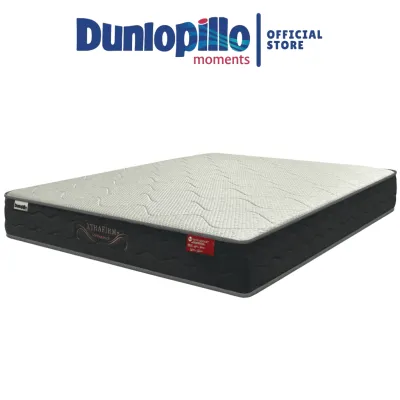



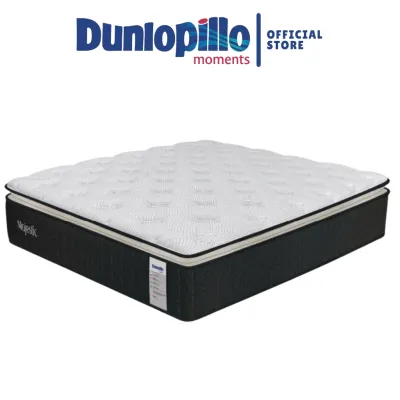
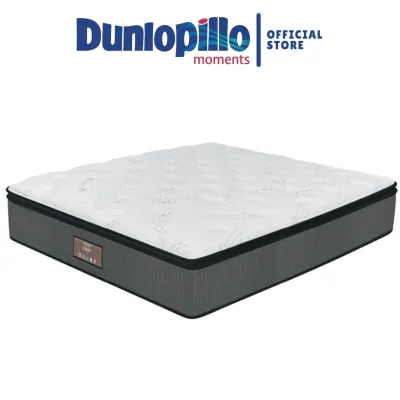
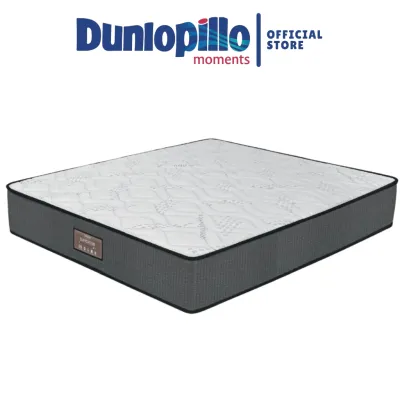

Prices are valid at publication and may change. Please refer to the product page for the latest price.
How Each Firmness Level Actually Feels
The sensation of lying on a Dunlopillo mattress is unique due to the inherent elasticity of latex. Unlike memory foam, which slowly contours to your body and can leave you feeling “stuck,” latex responds instantly to pressure, providing an active, buoyant support.

A Soft or Plush Dunlopillo mattress offers a luxurious, cloud-like sensation. As you lie down, you will feel an immediate, gentle sinkage around your shoulders and hips. The latex comfort layer contours closely to your body’s curves, distributing your weight evenly and relieving pressure points. However, because of the natural resilience of latex, you will still experience a subtle upward push that prevents you from sinking too deeply into the support core.
A Medium Dunlopillo mattress represents the classic balance of cushioning and support. When you lie on a Medium model, the initial feel is soft and welcoming, but the sinkage is controlled. Your body contours slightly into the top layer, but you quickly meet the firm resistance of the support core or pocketed springs. This creates a sensation of sleeping “on” the mattress rather than “in” it, making it exceptionally easy to turn over and change positions during the night.
A Firm Dunlopillo mattress provides a highly resilient, taut surface. Sinkage is minimal, and the mattress offers immediate, robust resistance to your body weight. The feel is buoyant and stable, keeping your spine in a neutral, flat alignment. While the latex comfort layer still prevents the surface from feeling like a hard board, the overall sensation is one of solid, uncompromising support that keeps you positioned high on top of the bed.
Matching Firmness to Your Sleep Profile
Selecting the ideal firmness is not just a matter of personal preference; it is highly dependent on your physical traits and how you sleep. Your primary sleeping position dictates where you need pressure relief and where you require firm support to maintain proper spinal alignment.
Side sleepers generally fare best with Soft to Medium Dunlopillo mattresses. In this position, the shoulders and hips protrude deeply into the bed. A softer surface allows these areas to sink sufficiently, preventing pressure buildup that can lead to numbness, while keeping the spine straight. Back sleepers, on the other hand, require a Medium to Firm mattress. This level of firmness supports the natural curve of the lower back, preventing the pelvis from sinking too deep and straining the lumbar region. Stomach sleepers need a Firm mattress to keep their hips and abdomen elevated, preventing an unnatural arch in the lower spine.
Your body weight also plays a critical role in how a mattress feels. Lighter individuals (under 60 kg) exert less force on the mattress and may find that a Firm or even a Medium model feels exceptionally hard, as they do not compress the comfort layers enough to experience their contouring benefits. Conversely, heavier individuals (over 90 kg) will compress the comfort layers more deeply and may “bottom out” on a Soft mattress, making a Medium-Firm or Firm model necessary to provide adequate deep-tissue support.
For couples with differing sleep profiles, finding a compromise is essential. A balanced Medium mattress is often the safest middle ground. Alternatively, you can explore dual-firmness options where each side of the mattress is customized to a different firmness level, or consider using adjustable bed bases that allow you to fine-tune your sleeping position to relieve pressure regardless of the mattress’s inherent firmness.
Verifying Comfort Before You Commit
Because firmness is highly subjective, testing a mattress in person is the most reliable way to ensure a good match. When visiting a local showroom, do not simply sit on the edge of the bed or lie down for a few seconds. Spend at least 10 to 15 minutes resting in your typical sleeping position. Wear comfortable, loose clothing that allows you to move naturally, and pay close attention to how your shoulders, hips, and lower back feel after several minutes of stillness.
Additionally, always verify the retailer’s post-purchase policies before finalizing your order. Many premium mattress brands and authorized retailers offer a sleep trial period, allowing you to test the mattress in your own home for a set number of nights. Be sure to check the specific return and exchange conditions, as well as any mandatory break-in periods—it often takes your body two to four weeks to adjust to a new support system.
Finalizing your setup also means considering the foundation your new mattress will rest on. A heavy latex mattress requires a sturdy, unyielding base to perform as intended. If you place a premium Dunlopillo mattress on an old, sagging divan or a slatted frame with wide gaps, the mattress may sag, making it feel much softer and less supportive than it did in the showroom. Ensure your bed base is in good condition and meets the manufacturer’s specifications to preserve both the intended firmness and your warranty. When planning your purchase, also keep in mind delivery logistics; if you live in a high-rise apartment or condominium, verify that your building’s lift can accommodate the dimensions of a fully assembled mattress, as heavy latex models cannot be easily bent or folded during transport.
Frequently Asked Questions (FAQ)
Does a firmer Dunlopillo mattress last longer?
No, a mattress’s firmness does not directly correlate with its lifespan. The durability of a Dunlopillo mattress is primarily determined by the density and quality of the latex layers, the gauge of the pocketed springs, and the overall construction quality. A high-quality Soft mattress made with dense, natural latex can easily outlast a lower-quality Firm mattress. To gauge longevity, focus on the material specifications and the manufacturer’s warranty terms rather than the firmness rating alone.
Can I change the firmness of my Dunlopillo mattress later?
You cannot alter the fundamental support core of a mattress once it has been manufactured. However, you can easily adjust the surface feel and pressure relief by adding a mattress topper. A soft latex or memory foam topper can soften a mattress that feels too firm. Conversely, making a soft mattress feel firmer is much more difficult, though ensuring you are using a solid, non-yielding bed base can sometimes provide a slightly more supportive feel.

Community discussion
Share your experience or ask a question. Comments are reviewed before publication.