
Finding the right shoe box storage is a balancing act between protecting your footwear collection and maintaining an effortless daily routine. In many modern homes, especially where space is at a premium, standard shoe racks can quickly become cluttered, dusty, and visually chaotic. Transitioning to dedicated shoe boxes offers a streamlined, clean aesthetic, but choosing the wrong style can make retrieving your favorite pairs a daily frustration. The decision ultimately comes down to two primary designs: clear drop-front boxes and standard top-opening stackable boxes.
The ideal choice depends on how often you wear different pairs, the physical dimensions of your wardrobe, and your local climate. For instance, in humid environments like Singapore, shoe storage must do more than just save space; it must also protect delicate materials from moisture buildup and mold. Understanding how these two storage styles function in real-world conditions will help you build an organized, accessible, and protective wardrobe setup.
Understanding the Core Structural Differences
To choose the right system, it is essential to understand the physical mechanics of each box type. Clear drop-front shoe boxes are engineered with a front-facing door that opens outward or slides inward. This door is typically secured by magnets, snap-locks, or gravity hinges. Because the opening is on the front panel, the top and sides of the box remain completely solid and structural. This design allows you to access the interior chamber without disturbing whatever is sitting on top of the box.
Products mentioned in this guide
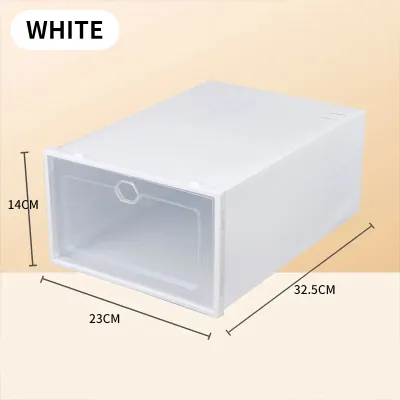
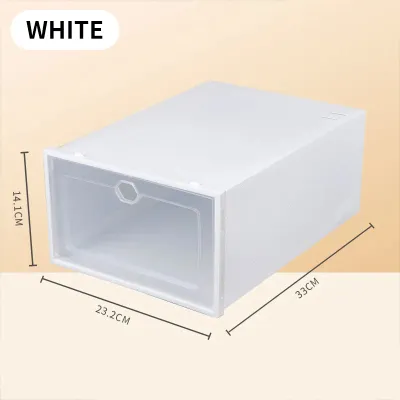
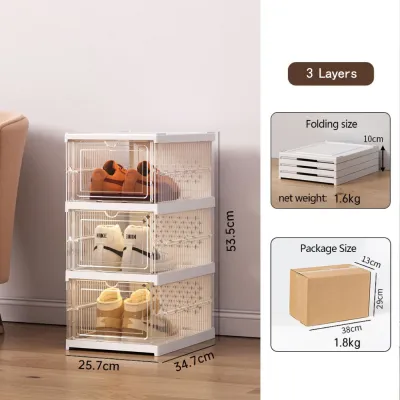
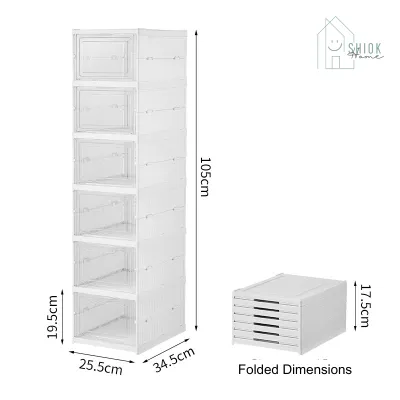
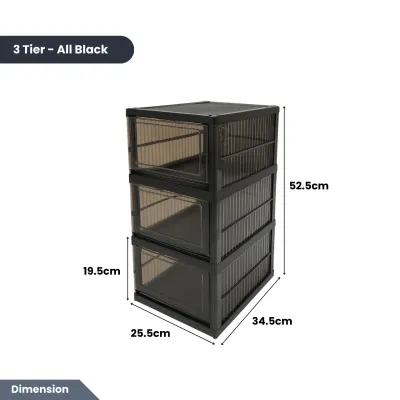
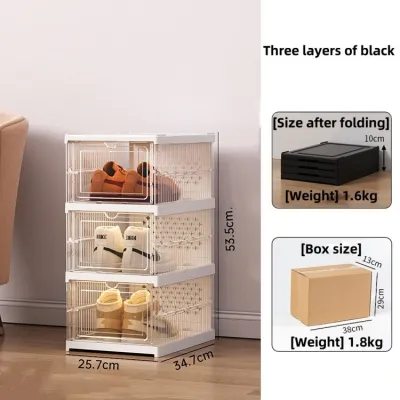
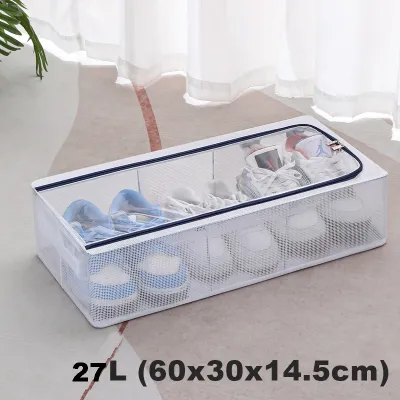
Prices are valid at publication and may change. Please refer to the product page for the latest price.
In contrast, standard stackable shoe boxes rely on a traditional top-opening lid. To access the shoes inside, you must lift the lid off the base. These boxes often feature recessed lids or interlocking tabs on the top and bottom surfaces, which help align the boxes when they are stacked vertically. However, because the entry point is at the top, any weight placed on the lid—such as another shoe box—blocks access to the opening.
These structural differences directly dictate how much physical space the boxes occupy and how you interact with them. Drop-front boxes are typically constructed from rigid plastics like acrylic or heavy-duty polypropylene to support the front-door frame. Standard stackable boxes can range from rigid plastics to softer, flexible plastics, which are often shipped flat and assembled at home.
Comparing Daily Accessibility and Visibility
Daily accessibility is where the practical differences between these two designs become most apparent. If you stack your shoe boxes five or six units high, retrieving a pair of shoes from a bottom drop-front box is a simple, one-handed task. You open the front door, slide the shoes out, and close the door. The rest of the stack remains completely undisturbed, saving you time and effort during busy mornings.

With standard top-opening stackable boxes, retrieving a pair from the bottom of a tall stack requires a multi-step process. You must physically lift and remove the top four or five boxes, set them aside, remove the lid of the target box, retrieve your shoes, replace the lid, and then restack the boxes. This repetitive lifting can become tedious, often leading to a habit of only wearing the shoes stored in the top boxes, while the pairs at the bottom are forgotten.
Visibility plays a massive role in keeping your collection organized and utilized. Clear, transparent panels allow you to see your entire collection at a glance, eliminating the need to open multiple boxes to find a specific pair. High-visibility acrylic or clear polypropylene boxes also make it easy to monitor the condition of your footwear. In warm, humid climates, being able to spot early signs of dust, mold, or material degradation without opening every box is a major advantage for preserving expensive leather shoes, heels, and sneakers.
Matching Box Dimensions to Your Closet Layout
Before purchasing any shoe box storage system, precise measurements of your wardrobe space are critical. Start by measuring the depth, width, and height of your closet shelves or the floor space where you plan to stack the boxes. Standard adult shoes can vary significantly in length and height; high-top sneakers, platform heels, and men’s dress shoes require larger interior dimensions than flat sandals or running shoes.
Spatial footprint and clearance are often overlooked when selecting shoe boxes. Drop-front boxes require clear physical space directly in front of the stack to allow the doors to swing open fully. If your wardrobe has sliding doors, tight walkways, or is located in a narrow hallway, a front-swinging door might strike obstacles or block traffic. In these tight spaces, drop-front boxes with doors that slide inward or standard top-opening boxes that you pull out entirely before opening may be more practical.
Stacking height and structural stability are also closely tied to box dimensions and materials. Rigid, hard-plastic drop-front boxes generally offer superior load-bearing capacity, allowing you to stack them higher safely. Soft, folding plastic stackable boxes tend to bow or warp under heavy loads, which can cause the stack to lean or collapse. Always check the manufacturer’s specifications for maximum safe stacking heights and weight limits, and place your heaviest footwear, such as boots or heavy sneakers, in the bottom boxes of the stack.
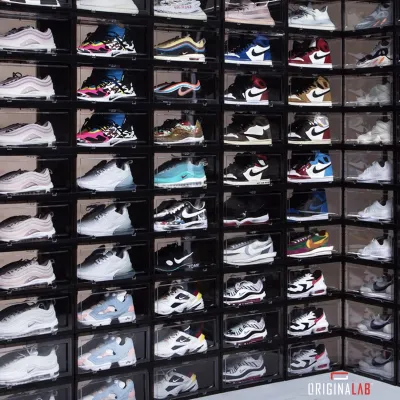
Finally, consider where the boxes will live. If you are placing boxes on high, fixed closet shelves, top-opening boxes can be difficult to reach and unstack safely. For high shelves, individual drop-front boxes placed side-by-side are much easier to manage. If you are building a floor-to-ceiling shoe wall, a rigid, interlocking drop-front system provides the necessary stability and ease of access for a large-scale installation.
Decision Framework: Choosing Your Shoe Box Storage
To finalize your decision, evaluate your storage habits, closet space, and budget against the following framework:
Choose clear drop-front boxes if:
- You need quick, daily access to your shoes without unstacking boxes.
- You plan to stack your storage more than three units high.
- You have sufficient clearance in front of your shelves for doors to swing open.
- You want a highly visible, premium display for a sneaker or heel collection.
Choose standard top-opening stackable boxes if:
- You are storing seasonal, occasional, or off-season footwear that you rarely need to access.
- Your closet shelves are shallow, leaving no room for front-opening door clearance.
- You prefer a simpler, budget-friendly storage solution with fewer moving parts.
- You plan to store shoes individually on low, wide shelves rather than in tall vertical stacks.
Neither option may fit your needs if your wardrobe shelves are shallower than the length of your shoes. Always verify the external dimensions of the boxes to ensure they do not overhang your shelves or prevent your closet doors from closing. Additionally, if your wardrobe has strict height restrictions or low, non-adjustable shelves, measure the combined height of stacked boxes to ensure they will fit comfortably within the vertical clearance.
Frequently Asked Questions (FAQ)
How can I keep stacked shoe boxes stable?
To ensure your stacked shoe boxes remain stable and secure, always check for built-in interlocking mechanisms. Many high-quality storage boxes feature molded grooves, pegs, or nesting lids that lock the base of one box into the top of another, preventing lateral sliding.
If you are stacking boxes on smooth surfaces like polished wood shelves or tiled floors, place a non-slip shelf liner or silicone mat beneath the bottom box. This simple addition increases friction and prevents the entire stack from shifting when you open or close the doors. Additionally, always place the heaviest shoes in the bottom boxes to keep the center of gravity low, and avoid stacking boxes beyond the height recommended by the manufacturer.
Is ventilation necessary inside clear shoe boxes?
Yes, ventilation is highly important, particularly in humid climates where stagnant air can trap moisture. When shoes are worn, they absorb sweat and moisture from your feet. Storing them immediately in an airtight plastic box can trap this moisture, creating an ideal environment for mold, mildew, and unpleasant odors to develop. Over time, trapped moisture can also cause the adhesives in sneaker midsoles to degrade or leather to crack.
When shopping for shoe box storage, look for designs that incorporate ventilation holes, slotted rear panels, or small gaps around the door frame to encourage continuous airflow. To further protect your footwear, always ensure your shoes are completely clean and dry before placing them inside any enclosed storage box. Placing a small silica gel packet or a moisture absorber inside the box can also help manage humidity levels.

Community discussion
Share your experience or ask a question. Comments are reviewed before publication.