
Finding the perfect entryway seating that also stores footwear requires a careful balance of dimensions and structural integrity. In space-constrained homes, such as modern apartments or narrow foyers, a slim shoe bench is an excellent solution. However, because “slim” designs restrict the front-to-back footprint, you must evaluate how these pieces handle both the physical load of an adult sitting down and the spatial requirements of your footwear collection. Storage capacity in these units is dictated primarily by width and tier configuration rather than depth, while overall build quality generally splits into three main brand categories: engineered wood flat-pack, solid wood premium, and metal-frame modular. Each category presents distinct trade-offs in material durability, joinery stability, and weight-bearing limits that you must verify before purchasing.
Evaluating Storage Capacity in Slim Profiles
When a shoe bench has a depth of under 25cm, standard horizontal shoe placement becomes a challenge. Most adult shoes measure between 26cm and 32cm in length, meaning they cannot sit straight on a shallow, flat shelf without protruding. To overcome this, slim benches often employ angled shelves or drop-down tilting drawers where shoes are stored vertically or at a steep angle. When evaluating these designs, check if the internal clearance accommodates high-top sneakers or heels, as angled compartments can significantly restrict vertical space.
Tier spacing is another critical factor. Fixed shelves might limit you to flat sandals, slippers, or low-profile loafers. Look for models that feature adjustable or removable shelves, allowing you to customize the height of each tier. This flexibility is essential if you plan to store a mix of seasonal footwear, bulky running shoes, or ankle boots. Without adjustable tiers, you may find yourself unable to use a significant portion of the bench’s designated storage space.
Products mentioned in this guide
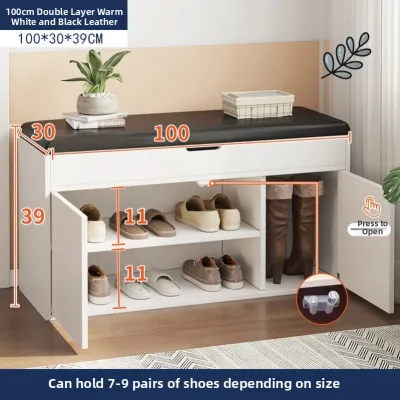
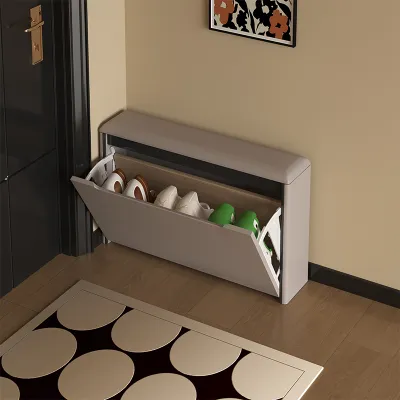
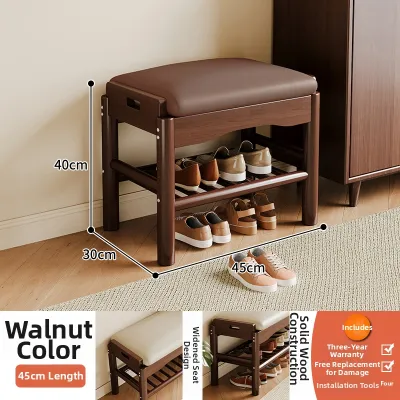
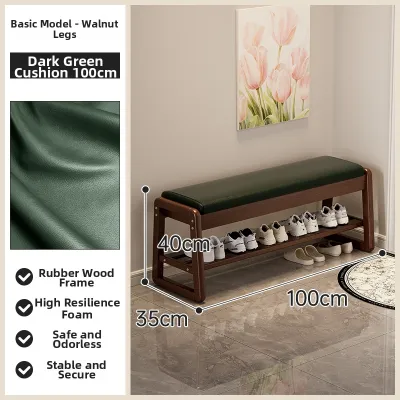
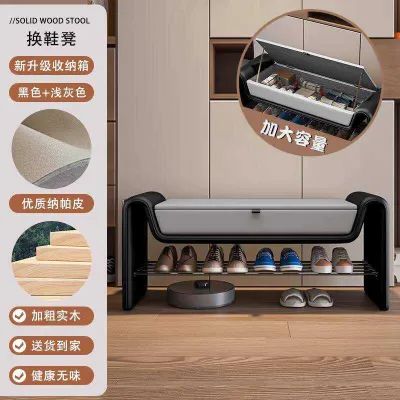
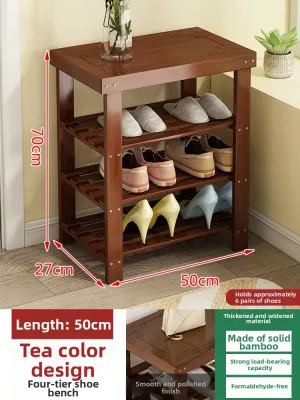
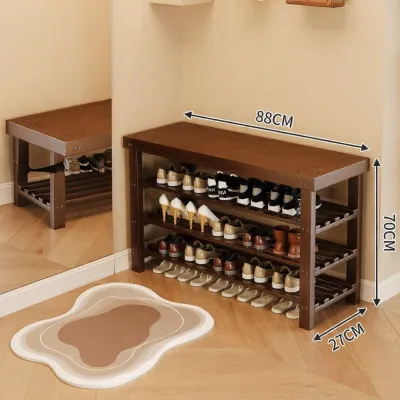
![17vm [Ready Stock] Shoe Bench With Seat Shoe Cabinet Entrance Shoe Stool Integrated Entrance Shoe Stool 6B0P7](https://img.lazcdn.com/g/p/3d8746894a124740f46152f40fcf6af2.jpg_webp_400x400q80.jpg_.webp)
Prices are valid at publication and may change. Please refer to the product page for the latest price.
To estimate the actual capacity of a slim bench, use a simple width-to-capacity ratio. On average, a pair of adult shoes requires approximately 20cm to 25cm of horizontal width. A bench with a width of 80cm can comfortably hold three to four pairs of flat shoes per tier. Multiply this by the number of tiers to find the total capacity. Keep in mind that bulky sneakers or wide-soled shoes will reduce this estimate, while children’s shoes or slim sandals may allow you to squeeze in an extra pair per shelf.
Comparing Build Quality Across Common Brand Categories
The structural integrity of a slim shoe bench is paramount because it serves a dual purpose: storage and seating. A bench that wobbles or bows under weight is not only frustrating to use but can also pose a safety hazard in your entryway. The market is largely divided into three construction philosophies, each offering different levels of stability, moisture resistance, and maintenance requirements.

To help you compare these options at a glance, the table below outlines the typical characteristics of each brand category. Always verify these details against the specific manufacturer’s product specifications before making a final decision.
| Category | Material Type | Structural Joinery Methods | Moisture Resistance Considerations | Routine Maintenance Needs |
|---|---|---|---|---|
| Engineered Wood Flat-Pack | Particleboard or MDF with laminate/veneer | Cam-locks, dowels, and wood screws | Low; edges must be sealed to prevent swelling | Wipe dry immediately; check and tighten hardware periodically |
| Solid Wood Premium | Hardwood or softwood timber | Mortise and tenon, dowels, or pocket screws | Moderate to high; depends on protective finish | Periodic oiling or waxing; avoid standing water |
| Metal-Frame Modular | Steel or iron tubing with wood/fabric top | Welded joints, bolts, and threaded inserts | High; requires anti-rust powder coating | Dusting; check bolt tightness occasionally |
Regardless of the category you choose, always check the manufacturer-specified weight limit for the seating surface. A reliable entryway bench should support at least 100kg to 120kg to safely accommodate an adult sitting down. If a product listing does not clearly state its maximum weight capacity, treat it as a storage-only unit and avoid using it as a seat.
Engineered Wood and Flat-Pack Brands
Engineered wood flat-pack benches are highly popular due to their affordability and wide variety of modern finishes. However, the durability of these benches depends heavily on whether they are constructed from particleboard or Medium-Density Fibreboard (MDF). MDF is denser and offers better screw-holding strength than particleboard, making it less prone to stripping or sagging over time. When browsing budget-friendly brands, check the product specifications to identify the exact type of engineered wood used.
The long-term stability of flat-pack furniture relies on the quality of its joinery, which typically consists of metal cam-locks and wooden dowels. Under the repeated stress of someone sitting down and standing up, these joints can gradually loosen. Over time, this leads to a noticeable wobble. To maintain structural integrity, you will need to periodically inspect the bench and tighten the cam-locks, though repeated tightening can eventually wear out the surrounding engineered wood.
Another critical consideration for engineered wood is its performance in high-humidity environments, such as entryways in tropical climates like Singapore. If wet shoes or umbrellas are placed near the bench, or if damp footwear is stored inside, moisture can seep into unsealed edges. This causes the wood fibers to swell, bubble, and permanently lose their structural strength. Look for engineered wood benches that feature fully banded edges and water-resistant laminate finishes to mitigate this risk.
Solid Wood and Premium Joinery Brands
Solid wood benches represent a premium investment, offering exceptional natural beauty and superior structural longevity. The weight capacity and dent resistance of these benches are largely determined by the wood species. Hardwoods like oak, teak, or walnut are highly durable and resist the daily scuffs of footwear, whereas softwoods like pine or fir are more prone to indentation and scratching. If your entryway experiences heavy daily traffic, prioritizing a hardwood construction will ensure the bench maintains its appearance for years.
The superior strength of premium solid wood benches often comes from traditional joinery techniques. Methods such as mortise-and-tenon joints or dowel joinery distribute weight much more evenly than standard metal screws driven directly into wood. These traditional joints are often reinforced with high-strength wood glue, creating a unified structure that does not loosen or wobble under repeated seating loads.
To protect your investment, pay close attention to the surface treatment of the wood. Solid wood is porous and can suffer from water rings, stains, or mold if exposed to wet shoes or damp umbrellas. Ensure the bench has a high-quality protective finish, such as a polyurethane sealant, lacquer, or water-resistant oil. Regular maintenance, including wiping away moisture immediately and occasionally reapplying a protective wax or oil, is necessary to preserve the wood’s integrity and appearance.
Metal-Frame and Modular Brands
Metal-frame shoe benches offer a modern, industrial aesthetic combined with excellent structural stability. The strength of a metal bench depends on the gauge (thickness) of the steel or iron tubing used in its construction. Thicker frames resist bending and bowing under heavy loads, while integrated cross-bracing or support bars prevent side-to-side swaying. When evaluating metal options, look for welded joints rather than purely bolted connections, as welds provide a much stiffer and more durable frame.
Because entryways are transition zones where wet shoes and outdoor debris accumulate, rust prevention is crucial for metal furniture. High-quality metal benches feature powder-coated or electroplated finishes that seal the underlying metal from moisture and air. Inspect the finish closely for any chips or scratches, as exposed metal can quickly begin to rust, especially in humid climates.
The seating surface of a metal-frame bench is typically made of wood, laminate, or upholstered fabric. It is important to check how this top is secured to the metal base. Look for designs where the seat is fastened using machine screws threaded into metal inserts, rather than simple wood screws driven directly into the underside of the seat. This ensures a secure, long-lasting connection that will not strip or wobble over time.
Essential Dimension and Clearance Checks
Before purchasing any slim shoe bench, precise measurements of your entryway are essential to ensure a safe and functional layout. Walkway clearance is the first priority, especially in narrow hallways or foyers. To maintain comfortable and safe passage, aim to leave at least 90cm of unobstructed width in your main walkway. If your hallway is exceptionally narrow, a bench with a depth of 15cm to 20cm may be necessary to prevent the space from feeling cramped or creating a tripping hazard.
Next, carefully map out the swing paths of all nearby doors, including your main entry door, closet doors, and any adjacent cabinet drawers. A bench that blocks a door from opening fully is a constant source of frustration and can cause cosmetic damage to both the door and the furniture. Open every door in the vicinity to its maximum angle and measure the remaining clearance to ensure the bench’s footprint sits entirely outside these paths.
Seating ergonomics should also guide your choice of bench height. A standard, comfortable seating height for most adults is between 40cm and 48cm. This height allows you to sit with your feet flat on the floor, providing optimal balance while bending over to tie or untie your shoes. Benches that are too low can be difficult to stand up from, particularly for older adults, while benches that are too high may make it awkward to reach your feet comfortably.
Decision Framework: Which Build Type Fits Your Entryway?
Choosing the right slim shoe bench comes down to aligning your household’s daily habits, budget, and environmental conditions with the strengths of each material category. If you are furnishing a low-traffic entryway, renting your home, or working with a strict budget, an engineered wood flat-pack bench is a practical choice. It provides clean, modern aesthetics and sufficient storage for light daily use, provided you take care to keep it dry and occasionally tighten the hardware.
For busy households with high daily traffic, children, or pets, a solid wood premium bench is the most reliable long-term option. Its superior load-bearing capacity, resistance to physical wear, and ability to be refinished make it a durable piece of furniture that can last for decades. This option is also highly suited to humid climates, provided the wood is sealed with a moisture-resistant finish.
If you prefer a minimalist look with maximum structural stability and minimal visual bulk, a metal-frame modular bench is an excellent fit. These designs are incredibly sturdy, easy to clean, and often feature open shelving that promotes air circulation around your shoes, helping them dry faster. They are ideal for modern, industrial, or contemporary entryways where space is at a premium.
Finally, perform a few physical checks of your entryway before finalizing your purchase. If your floor is uneven, look for a bench with adjustable leveling feet to prevent wobbling. If the bench will be placed near a heat source or direct sunlight, ensure the materials can withstand temperature fluctuations without warping. Lastly, because slim benches have a narrow footprint and a high center of gravity, always check if the manufacturer includes anti-tip wall anchors, which are highly recommended for household safety if you have young children or pets.
Frequently Asked Questions (FAQ)
How many pairs of shoes can a slim shoe bench actually hold?
The actual capacity of a slim shoe bench depends on its width and internal configuration. For a standard bench width of 80cm, you can typically fit three to four pairs of adult shoes per tier. If the bench features a tilting drawer design with a depth of under 25cm, it may hold six to twelve pairs total, depending on whether the shoes are low-profile flats or bulkier sneakers. To maximize capacity, store larger or bulkier footwear on open lower shelves and reserve narrow compartments for sandals, slippers, and low-top shoes.
Is a slim shoe bench safe to sit on without tipping over?
Yes, a slim shoe bench is safe to sit on, provided you adhere to the manufacturer’s specified weight limits and ensure the bench is placed on a flat, level surface. Because slim benches have a narrow depth, they inherently have a higher center of gravity, which can increase the risk of tipping if weight is distributed unevenly or if someone leans heavily against the back. To ensure maximum safety, especially in households with children or pets, look for models that include anti-tip wall mounting hardware to secure the unit firmly to the wall.

Community discussion
Share your experience or ask a question. Comments are reviewed before publication.