
Finding the ideal slim office chair for a home office often involves navigating tight spatial constraints, such as compact study corners in HDB flats or dual-purpose bedrooms. No single brand or model universally wins the title of the best slim office chair. The right choice depends on a careful balance between your physical space limitations and your daily sitting hours. To make an informed decision, you must evaluate brands based on a conditional framework that weighs structural build quality, ergonomic comfort, and long-term value against your specific household needs.
Rather than relying on generic marketing claims, choosing a high-performing compact chair requires looking closely at material specifications, safety certifications, and design details. By understanding how a chair’s footprint interacts with your desk setup and how its structural components support your body, you can avoid the common pitfalls of purchasing a chair that is either too bulky for your room or too uncomfortable for extended work sessions.
Defining "Slim" and Setting Your Space Priorities
When searching for a slim chair, it is essential to distinguish between visual slimness and a physically compact footprint. Visual slimness refers to a minimalist aesthetic characterized by thin frames, low-profile backrests, and lightweight materials. While these chairs look elegant and keep a room feeling open, they do not always translate to a smaller physical footprint. A physically compact chair, on the other hand, features a narrower seat pan, a smaller five-star base diameter, and low-profile or tuck-away armrests. Understanding this distinction prevents you from buying a chair that looks small but still crowds your floor space.
Products mentioned in this guide
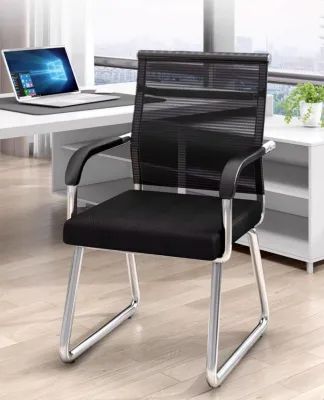
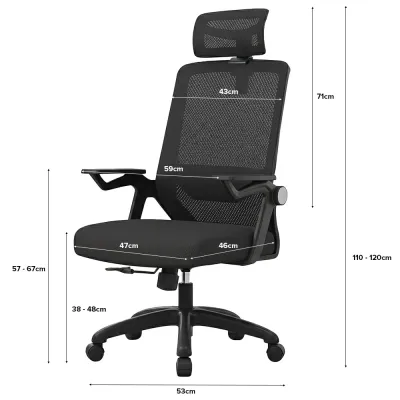
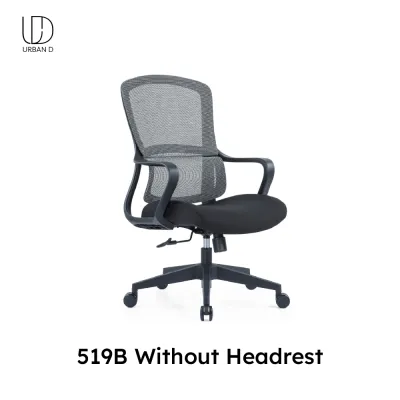
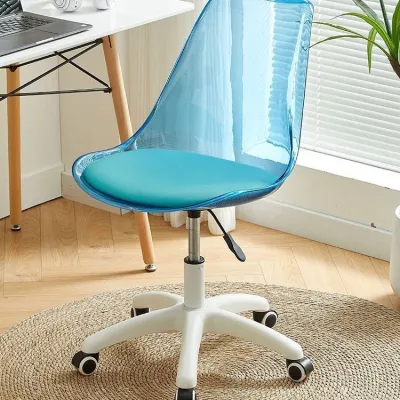
Prices are valid at publication and may change. Please refer to the product page for the latest price.
Your daily usage hours should dictate whether you prioritize ergonomic adjustability or a compact profile. If you sit at your desk for eight or more hours a day, ergonomic features such as adjustable lumbar support, seat depth, and tilt tension must take precedence over extreme space-saving designs. Conversely, if you only use your home office for two to three hours of casual browsing or administrative tasks, you can safely prioritize a highly compact, visually minimalist chair that tucks completely out of sight when not in use.
Before browsing any brand catalogs, you must establish your hard spatial limits by taking precise measurements of your home office. Start by measuring the available floor space around your desk, ensuring there is enough room for the chair’s base to rotate and glide without hitting walls or nearby furniture. Next, measure the clearance height and width under your desk to ensure the chair’s armrests and seat can slide underneath. Finally, do not forget to measure the width of your doorways and lift entryways; ensuring the fully assembled chair can easily pass through these transition points is a crucial step that is often overlooked.
Evaluating Build Quality and Structural Stability
Evaluating the structural integrity of a slim chair is critical because compact designs have less surface area to distribute weight and lateral forces. The choice of frame and base materials directly impacts the chair’s stability and longevity. While reinforced nylon frames are common and offer lightweight flexibility, polished aluminum or steel bases provide superior weight distribution and a lower center of gravity. A heavier, metal-reinforced base ensures that a narrower chair remains stable and does not tip over when you lean back or reach for items on your desk.

To verify a brand’s claims of durability, look for recognized industry safety certifications on the product label or manufacturer specification sheet. Standards such as those set by BIFMA (Business and Institutional Furniture Manufacturers Association) indicate that the chair has undergone rigorous testing for load capacity, base durability, and mechanism longevity. Additionally, pay close attention to the gas lift cylinder class. A high-quality office chair should feature a Class 3 or Class 4 gas lift, which ensures smooth height adjustments and safely supports daily weight loads over several years.
Inspect the joint and connection points of the chair, as these are the most common areas of structural failure. Slimmer profiles often require robust internal steel bracing to prevent the backrest and armrests from wobbling over time. When examining a chair in a showroom or reviewing user feedback, check for any play or looseness in the connections where the backrest meets the seat pan. A well-built slim chair should feel solid and cohesive, with no noticeable creaking or shifting when you change your seating position.
Balancing Comfort and Ergonomics in Compact Designs
Achieving long-term comfort in a compact chair requires a careful analysis of the backrest style. Mid-back mesh chairs are highly popular for home offices because they offer a lightweight look and excellent breathability. In warm and humid climates, a high-quality mesh backrest is often preferable to thick upholstery because it prevents heat buildup and keeps you cool throughout the day. However, if you require comprehensive upper-back and neck support, you may need to look for a slim high-back model that incorporates a narrow, contoured frame to provide support without adding visual bulk.
Seat pan design is another critical factor that directly affects your leg circulation and overall comfort. When a chair’s overall seat width and depth are reduced to achieve a slim profile, the front edge of the seat can press against the back of your knees. To prevent this, look for a seat pan with a cascading or “waterfall” front edge. This downward slope reduces pressure on your thighs, promotes healthy blood flow, and prevents numbness during long sitting sessions. Additionally, ensure the seat cushion uses high-density molded foam or resilient mesh that does not bottom out under your weight.
Armrest configurations play a dual role in both ergonomics and space management. Fixed, slim armrests can save lateral space but may not position your elbows at the correct height for typing, leading to shoulder strain. Adjustable armrests (such as 2D or 3D configurations) allow you to customize the height and angle to support your arms ergonomically. If under-desk clearance is your primary concern, look for brands that offer flip-up armrests. These allow you to enjoy ergonomic arm support while working, and then flip the arms up to slide the chair completely under the desk when your workday is done.
Assessing Long-Term Value and Durability
When investing your hard-earned S$ in a home office chair, assessing long-term value goes beyond comparing the initial purchase price. A key indicator of a brand’s confidence in its product is the warranty terms. Carefully read the warranty details to see what is actually covered. While some brands advertise a lengthy warranty period, the fine print may restrict this coverage to the steel frame while offering only one or two years of coverage for moving parts, tilt mechanisms, and the gas lift cylinder. A truly valuable warranty should cover these high-use mechanical components for a reasonable duration.
Another important aspect of long-term value is the availability of replacement parts. Over years of daily use, components like casters, armrest pads, and seat cushions will naturally experience wear and tear. Reputable brands often make these individual parts available for purchase, allowing you to repair your chair rather than replacing the entire unit. Before buying, check the manufacturer’s website or contact their customer service to confirm if they stock replacement parts and how easy they are to install at home.
To gauge how well a slim chair will hold up over time, look for specific wear indicators in long-term user reviews and product forums. Pay attention to reports of mesh sagging, fabric pilling, or premature foam compression. If multiple users note that the seat cushion lost its support within the first year, or that the mesh backrest became loose and lost its tension, it is a strong sign that the materials used may not justify a premium price tag. Choosing a brand with a proven track record of material resilience ensures your chair remains comfortable for years to come.
Actionable Checklist for Shortlisting and Verifying Brands
To streamline your search and ensure you select the right slim office chair for your home, apply this practical decision framework and verification process:
- Identify Your User Profile: If you work eight or more hours a day, focus your search on premium ergonomic brands that offer slim models with adjustable lumbar support and seat depth. If you work fewer hours or prioritize a clean aesthetic, look for design-focused lifestyle brands that emphasize visual minimalism and a highly compact footprint.
- Cross-Reference Physical Dimensions: Do not rely on generic size labels like "small" or "compact." Obtain the exact specification sheet from the manufacturer and compare the seat width, base diameter, and maximum armrest height against your physical measurements of your desk and room.
- Check the Castors and Flooring Compatibility: Ensure the chair comes with the correct castors for your floor type. Hard nylon castors are suitable for carpets, while soft polyurethane (PU) castors are essential to prevent scratching on hard surfaces like vinyl, laminate, or parquet flooring.
- Verify the Return Policy and Trial Period: Because comfort is highly subjective, sitting in a chair for a few minutes in a showroom cannot replicate a full day of work. Prioritize brands that offer a risk-free home trial period or a flexible return policy, allowing you to test the chair's comfort and stability in your actual home office setup.
Frequently Asked Questions (FAQ)
Are slim office chairs suitable for long hours of working from home?
Yes, slim office chairs can be suitable for long hours of working from home, provided they do not sacrifice essential ergonomic adjustments. If you plan to sit for extended periods, look for a slim chair that features adjustable lumbar support, a cascading seat edge to maintain leg circulation, and a high-quality tilt mechanism. Avoid purely aesthetic task chairs that lack adjustability, as a rigid or non-supportive frame can lead to discomfort and poor posture over time.
How do I measure my desk space to ensure a slim chair fits properly?
To ensure a proper fit, start by measuring the clear width between your desk legs to confirm the chair’s base can slide in easily. Next, measure the height from the floor to the underside of your desk drawer or tabletop; your chair’s armrests must sit below this height if you want to slide the chair fully under the desk. Finally, measure the depth of your desk to ensure that when the chair is tucked in, it does not protrude too far into your room’s walkway.

Community discussion
Share your experience or ask a question. Comments are reviewed before publication.