
Determining whether a Sea Horse 2-seater leather sofa outperforms competing brands depends on verifying specific material grades, structural specifications, and spatial fit, as universal performance rankings are unavailable. This guide provides the exact criteria to objectively evaluate quality, comfort, and long-term value across different furniture retailers in Singapore.
When shopping for a compact living space, selecting a 2-seater leather sofa requires balancing comfort, durability, and cost. Sea Horse is a household name, widely recognized for its mattresses and functional furniture, but comparing its 2-seater leather sofas to other market alternatives requires a systematic look at material specifications. Because there is no single winner for every household, your decision should rest on verifiable product details rather than brand reputation alone.
To make an objective comparison, you must look beyond the showroom styling and evaluate the underlying construction. Different brands target different price points and design preferences, meaning a Sea Horse sofa might excel in straightforward utility while alternative brands might offer greater customization or premium leather grades. By analyzing leather quality, frame construction, cushion support, and delivery logistics, you can identify which sofa fits your home and budget.
Products mentioned in this guide
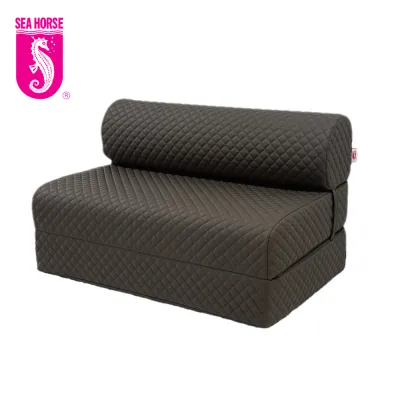
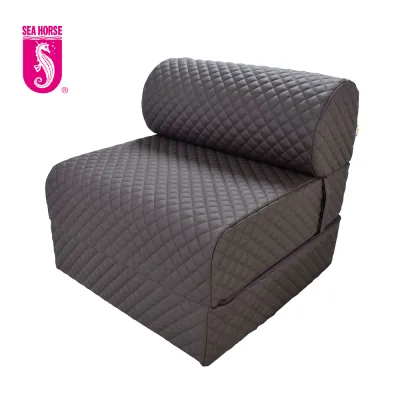
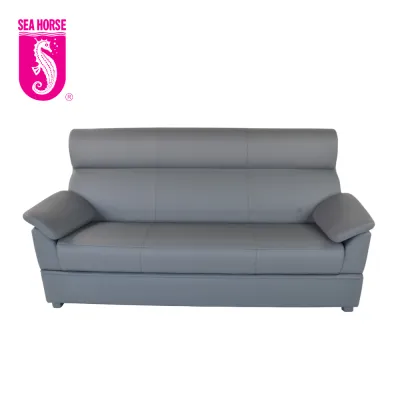
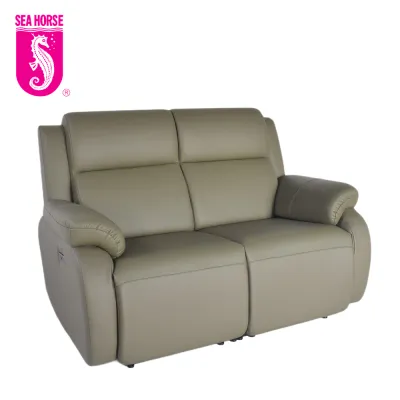
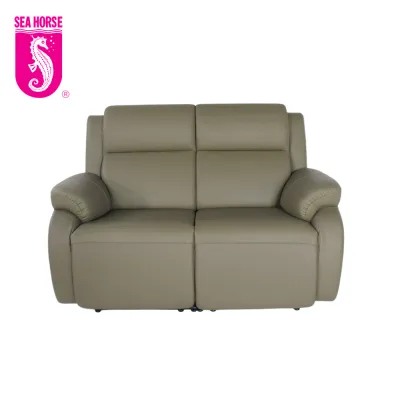
Prices are valid at publication and may change. Please refer to the product page for the latest price.
Defining the Comparison Criteria for 2-Seater Leather Sofas
The first step in comparing 2-seater leather sofas is understanding the upholstery material. Leather sofas in Singapore generally fall into several categories: full-grain, top-grain, split, or bonded leather. Full-grain and top-grain represent high-quality options, offering natural breathability and wear resistance, whereas split and bonded leathers are more budget-friendly but prone to peeling over time. When evaluating Sea Horse or any other brand, always ask the sales representative for the specific leather classification and check the product tag rather than relying on generic genuine leather marketing.
Another common industry practice to verify is the half-leather configuration. Many mid-range 2-seater sofas utilize genuine leather on the contact areas—such as the seat cushions, backrests, and armrests—while using matching synthetic leather (polyurethane or PVC) on the back and sides. This hybrid approach significantly lowers the retail price in S$ while keeping the tactile benefits of real leather where it matters most. Compare the ratio of genuine to synthetic materials across brands to ensure you are getting fair value for your money.
Beneath the leather lies the structural frame, which dictates the sofa’s lifespan. High-quality frames typically use kiln-dried solid wood, which resists warping in Singapore’s humid climate, or heavy-duty engineered wood. Ask about the joint construction; frames that are glued, dowelled, and reinforced with corner blocks offer greater stability compared to those held together solely by staples or simple screws. A sturdy frame prevents the sofa from creaking or shifting when you sit down.
Finally, cushion density determines how well the sofa retains its shape. Look for high-density polyurethane foam, often rated by weight (such as 30 kg/m³ or higher). Lower-density foams feel soft initially but tend to sag within a few years of daily use. Upholstery tension also plays a role; the leather should be pulled taut enough to prevent immediate wrinkling but have enough give to accommodate the natural compression of the foam underneath.
Evaluating Build Quality and Comfort Features
Ergonomics are highly subjective and must be tested physically. When visiting showrooms in Singapore, pay close attention to the seating depth and backrest height of the 2-seater models. A seat depth that is too deep may cause your knees to bend uncomfortably or force you to slouch, while a backrest that is too low will not provide adequate neck support during long periods of sitting. Armrest height and angle should also allow your shoulders to relax naturally.

The internal suspension system works in tandem with the foam to distribute your weight. Most quality 2-seater sofas use either sinuous springs (S-shaped wires running across the frame) or high-tensile elastic webbing. Sinuous springs generally offer a firmer, more traditional bounce and excellent durability, while elastic webbing provides a softer, more contoured feel. Some premium models incorporate pocketed coils within the foam cushions themselves, similar to mattress construction, to isolate movement and provide targeted support.
Manufacturing precision is visible in the details. Inspect the stitching along the seams of the leather; straight, tight, and double-stitched seams indicate careful assembly and prevent the leather from tearing under tension. Check the edge finishing around the corners and base of the sofa to ensure the leather is wrapped smoothly without awkward bunching. Additionally, look at the placement of zippers on removable cushion covers; high-quality designs conceal zippers behind leather flaps to protect your flooring or adjacent furniture from scratches.
Space Planning and Delivery Constraints
In Singapore, where HDB flats and condominiums often feature tight entryways and compact living rooms, physical dimensions are a critical constraint. Before committing to a purchase, measure the exact footprint of the designated space, leaving at least 30 to 50 centimeters of clearance around the sofa for comfortable foot traffic. If you are considering a reclining 2-seater, you must also calculate the extra clearance required behind the backrest and in front of the footrest when fully extended.
Do not overlook the delivery path. Measure the width and height of your home’s main doorway, any narrow hallways, and the internal dimensions of the passenger lift. Many delivery disputes arise because a fully assembled 2-seater sofa cannot fit into a standard lift or navigate a tight corridor corner. Check whether the sofa legs are removable, as unscrewing them can often shave off crucial centimeters during delivery.
Furthermore, clarify the retailer’s delivery and installation policies. Some brands include professional delivery, on-site assembly, and the removal of packaging materials in their base price, while others charge separate fees for these services. If you live in a walk-up apartment without lift access, verify if there are additional stair-carrying charges per floor. Understanding these logistical details beforehand prevents unexpected costs on delivery day.
Assessing Value, Warranty, and After-Sales Support
A comprehensive warranty is a strong indicator of a manufacturer’s confidence in their product. When comparing Sea Horse with other local retailers, distinguish between the warranty coverage for the internal frame and the leather upholstery. Frame warranties often extend from 3 to 10 years, covering structural failures or joint separation. In contrast, leather warranties are typically much shorter—often 1 to 2 years—and usually cover manufacturing defects like seam splitting rather than natural wear, fading, or accidental punctures.
To evaluate the price-to-spec ratio, compare the total cost in S$ against the verified materials used. A higher-priced sofa from a premium brand may be justified if it features full-grain leather, a solid hardwood frame, and pocketed coil seating. Conversely, if a budget-friendly brand offers a similar half-leather specification with a solid frame at a lower price point, it may represent better utility value for a household that prioritizes function over luxury.
Finally, research the brand’s after-sales support ecosystem. Find out if the retailer offers local repair services, replacement cushions, or professional leather cleaning recommendations. A brand with an established local presence in Singapore is often easier to deal with should you need to claim a warranty or repair a damaged section years down the road, compared to online-only retailers with limited local customer service.
Decision Framework: Which Brand Fits Your Needs?
Choose a Sea Horse 2-seater leather sofa if your primary goal is finding a straightforward, functional piece of furniture at a predictable S$ price point. If the verified dimensions fit your living room layout, the firmness of their signature foam meets your comfort preferences, and you prefer the convenience of an established brand with physical showrooms across Singapore, Sea Horse offers a reliable, low-risk option for everyday use.
Choose alternative brands if you require highly customized options, such as specific leather colors, premium full-grain upholstery, modular configurations, or specialized ergonomic designs. If your living room aesthetic demands a mid-century modern profile, Scandinavian minimalism, or specific European leather certifications, exploring specialized furniture boutiques or larger home furnishing retailers will yield more tailored choices.
Verify first if the product specifications on the showroom floor or website are ambiguous regarding leather authenticity or frame materials. Always measure your doorways and lift access before placing an order, and read the fine print of the warranty policy to ensure it aligns with your household’s daily usage patterns, especially if you have active family members or specific seating requirements.
Frequently Asked Questions (FAQ)
How can I verify if a sofa uses genuine leather?
To verify leather authenticity, start by checking the official product label and asking the retailer for a material specification sheet. Genuine leather exhibits natural variations in grain, pore patterns, and minor imperfections, whereas synthetic alternatives have a highly uniform, repeating texture. You can also perform a gentle touch test; real leather warms up quickly to body heat and has a distinct, organic scent, while synthetic materials tend to feel cooler, plasticky, and may carry a chemical odor.
Do leather sofas require special maintenance in a humid climate?
Yes, Singapore’s high humidity requires consistent care to prevent mold growth and leather degradation. Position your sofa away from direct sunlight and direct air-conditioning vents, as extreme temperature fluctuations can dry out the leather and cause it to crack. Dust the surface weekly with a dry, soft microfiber cloth to remove abrasive particles, and apply a manufacturer-approved leather conditioner once or twice a year to maintain moisture balance and protect the finish.

Community discussion
Share your experience or ask a question. Comments are reviewed before publication.