
Finding the right desk chair for your home office in Singapore requires looking beyond marketing claims to evaluate adjustability, build materials, and long-term support. The best brand for your setup depends entirely on your daily working hours, physical requirements, and budget. If you prioritize all-day ergonomic support and long-term durability, premium ergonomic brands offer the most comprehensive adjustability. If you need a balance of decent comfort, versatile aesthetics, and a moderate price point, mid-range hybrid brands are typically the most practical choice. For occasional use or strict budgets, entry-level brands provide basic functionality, provided you verify their weight capacity and stability limits.
Assessing Your Workspace and Physical Requirements
Before comparing different chair brands, you must measure your physical workspace to ensure a seamless fit. Start by measuring your desk height from the floor to the underside of the desk surface, as well as the clearance between the desk legs. This ensures that the chair’s armrests can slide underneath the desk when not in use, saving valuable floor space in compact Singapore apartments. Additionally, measure the width of your desk opening to confirm that the chair’s base can rotate freely without striking the desk frame.
Logistical access is also critical. If the chair arrives fully assembled, check the dimensions of your building’s lift, stairwells, and doorways. A wide five-star base may require careful maneuvering through tight entryways or standard HDB corridors. Confirming these measurements beforehand prevents delivery failures or the inconvenience of assembling a complex piece of furniture in a cramped hallway.
Products mentioned in this guide
![[SG Ready Stock]Ergonomic Office Chair Computer Desk Chairs Mesh Home Office Desk Chairs with Lumbar Support](https://img.lazcdn.com/g/p/585691bae859ee8d697593367d59d085.jpg_400x400q80.jpg_.webp)
![[SG Ready Stocks] Ergonomic Office Chair - 8.5cm Thick Cushion + Antislip Surface Adjustable Backrest & Detachable Headrest Flip-Up Arms Rocking & Lock Function 15-Min Easy Assemble for Home/Office](https://img.lazcdn.com/g/p/056ecb65b2a442dd9a476ff654362085.jpg_400x400q80.jpg_.webp)
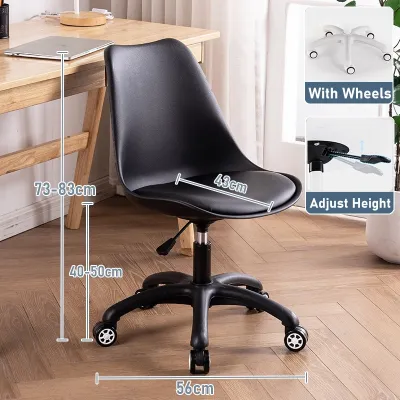
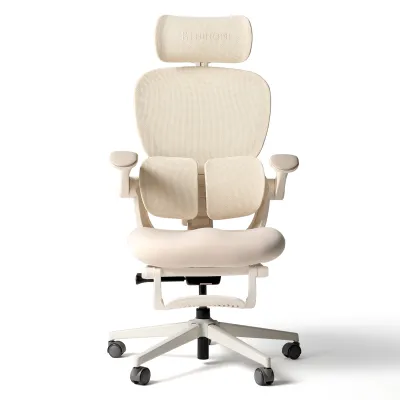
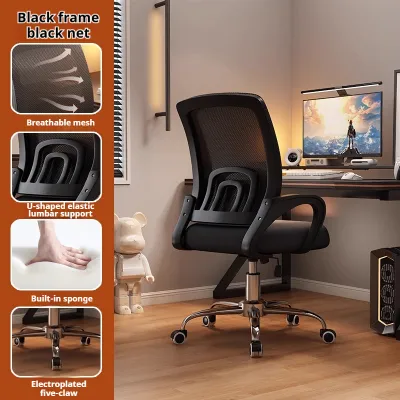
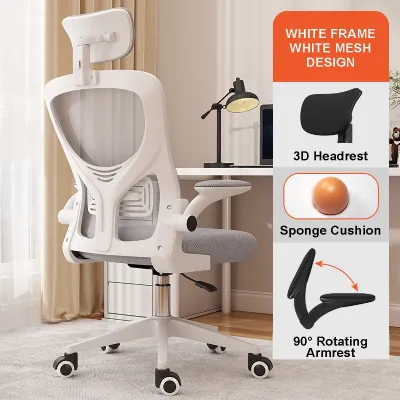
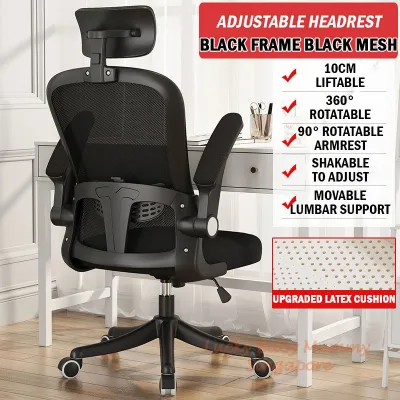
Prices are valid at publication and may change. Please refer to the product page for the latest price.
Your physical posture needs should dictate the level of adjustability you require. If you sit for more than six hours a day, look for dedicated lumbar support, adjustable seat depth, and a headrest to reduce spinal strain. The seat depth is particularly important; a seat that is too deep can press against the back of your knees and restrict circulation, while a seat that is too shallow will not support your thighs properly.
Finally, evaluate your flooring to choose the correct caster type. Hardwood parquet, vinyl, and laminate floors are highly susceptible to scratches from standard hard nylon casters. If you have these floor types, look for brands that offer soft polyurethane (PU) casters, or use a protective floor mat. For carpeted study rooms, standard hard casters are suitable as they glide smoothly without snagging.
Comparing Desk Chair Categories by Market Positioning
The desk chair market is broadly divided into three distinct tiers, each offering a different balance of ergonomic features, material quality, and long-term durability. Understanding these categories helps you align your budget with your physical comfort expectations and daily usage patterns.

Premium Ergonomic Brands
Premium ergonomic brands focus heavily on advanced engineering and highly customizable adjustment points. These chairs typically feature synchronous tilt mechanisms, which allow the backrest and seat to recline at different angles to maintain proper spinal alignment as you shift positions. They also offer multi-dimensional armrests that adjust for height, depth, width, and angle, alongside dynamic lumbar support systems that adapt to your movements.
The materials used are selected for exceptional durability and comfort. High-grade, breathable mesh is commonly used for both the seat and backrest, promoting airflow to keep you cool in Singapore’s warm and humid climate. The structural bases are often constructed from heavy-duty reinforced aluminum or high-tensile nylon, ensuring the chair remains stable over years of continuous use. While the initial investment is higher, these brands typically offer extensive warranties that reflect their long-term durability.
Mid-Range and Hybrid Brands
Mid-range and hybrid brands strike a balance between ergonomic functionality and aesthetic versatility. To keep costs manageable, these chairs often make strategic compromises, such as offering fewer adjustment points, utilizing standard high-density foam cushions instead of advanced mesh, or featuring fixed or simple height-adjustable armrests. The lumbar support in this category is often adjustable via a manual slider rather than an active, self-adjusting mechanism.
These brands appeal to users who want a multi-purpose chair that fits into a shared living space, study, or gaming setup. Hybrid designs often blend professional office ergonomics with modern, minimalist aesthetics or sporty gaming styles. While they offer reliable comfort for moderate daily use, their overall lifespan and weight capacity limits may be lower than those of premium models, making it important to check the manufacturer’s specifications before buying.
Budget-Friendly and Basic Brands
Budget-friendly and basic brands cater to users who need straightforward seating without a significant financial commitment. When shopping in this tier, it is essential to prioritize safety and stability over advanced features. Look for chairs that include a reliable pneumatic gas lift for height adjustment and a stable, five-point star base to prevent tipping.
Over time, budget chairs are more prone to visible wear and structural degradation. Synthetic leather upholstery may peel or crack in humid conditions, and low-density seat foam can flatten permanently, reducing comfort during longer sitting sessions. Consequently, these chairs are best suited for occasional use, short administrative tasks, or secondary workspaces where you do not plan to sit for extended periods.
Key Specifications to Verify Across Any Brand
Regardless of the brand name or marketing claims, you should always verify specific technical details on the product label or manufacturer’s specification sheet. First, check the maximum weight capacity of the chair and look for recognized industry testing standards, such as BIFMA (Business and Institutional Furniture Manufacturers Association) certification. A BIFMA-certified chair has undergone rigorous testing for structural integrity, base stability, and mechanism durability, giving you greater confidence in its safety.
Next, examine the exact seat height range to ensure it matches your physical proportions and desk setup. To maintain healthy blood circulation, your feet should rest flat on the floor with your knees bent at a 90-degree angle when the chair is adjusted to your preferred height. If the minimum seat height is too high for your stature, you may need to purchase a separate footrest to avoid leg fatigue.
The construction of the base and casters is another critical area to inspect. A reinforced nylon or cast aluminum base provides superior stability compared to thin plastic alternatives. Ensure the casters are rated for your specific floor type and glide smoothly without excessive noise. If you plan to use the chair on delicate flooring, verify if the manufacturer offers specialized soft-wheel options.
Upholstery selection is particularly important in Singapore’s tropical climate. While genuine or synthetic leather offers a sleek look and is easy to wipe clean, it can trap heat and moisture, leading to discomfort during long working hours. Breathable mesh or high-performance fabric allows for better ventilation, keeping you cooler throughout the day. If you choose fabric, check the cleaning instructions to see if the material is stain-resistant or if the seat cover is removable for washing.
Finally, review the assembly requirements before making your purchase. Some brands ship their chairs fully assembled, while others require complete user assembly with included tools. Check the estimated assembly time and determine if the process requires a second person, especially when handling heavy components like the tilt mechanism or the main seat base.
Evaluating Warranty, Return Policies, and After-Sales Support
A high-quality desk chair is a long-term investment, making after-sales support a crucial factor in your decision. Compare the warranty lengths offered by different brands, paying close attention to the fine print. A comprehensive warranty should cover the structural frame, gas lift cylinder, and mechanical tilt adjustments, as these are the components most likely to experience wear over time. Be aware that some brands offer shorter warranty periods for upholstery, mesh, and armrest pads compared to the main frame.
Before purchasing, research the availability and cost of replacement parts. Even the most durable chairs may eventually require a new set of casters, fresh armrest pads, or a replacement gas lift. Brands that maintain a local inventory of spare parts in Singapore make it much easier to service your chair quickly without waiting weeks for international shipping.
Additionally, carefully review the retailer’s return policy, especially when buying online without trying the chair first. Bulky furniture can be difficult and expensive to return. Check if the retailer charges restocking fees, whether you are responsible for return shipping costs, and if the chair must be returned in its original, unassembled packaging. Understanding these terms beforehand protects you from unexpected expenses if the chair does not suit your body shape.
Decision Framework: Choosing the Right Brand Category
To finalize your choice, use this conditional framework to match your daily routine and physical requirements with the right brand category.
You should invest in a premium ergonomic brand if you work from home for eight or more hours daily, experience chronic back or neck discomfort, and view your office setup as a direct investment in your physical well-being. The highly adjustable lumbar support, seat depth, and armrests of a premium chair provide the precise customization needed to maintain healthy posture during long, focused working sessions.
A mid-range hybrid brand is the most practical choice if you work moderate hours, have a flexible budget, and want a chair that complements your home’s interior design. These chairs offer a balanced combination of comfort and style, making them ideal for multi-use rooms where the chair serves both as a work seat and a casual chair for reading or gaming.
Opt for a budget-friendly brand if you only use your home desk occasionally for short tasks, such as paying bills or checking emails. This option is also suitable if you are setting up a temporary workspace or working within a strict initial budget, provided you carefully verify the chair’s basic stability and weight limits.
Before making any final purchase, always cross-reference the specific model’s dimensions, weight capacity, and return policy with your physical profile and home office space. Taking the time to verify these details ensures your chosen chair will provide reliable support and comfort for years to come.
Frequently Asked Questions (FAQ)
How often should I replace my home office desk chair?
You should consider replacing your desk chair when you notice visible physical degradation or a decline in ergonomic support. Common physical signs include a flattened seat cushion that no longer provides padding, peeling or torn upholstery, and a sinking gas lift cylinder that fails to maintain your set height. Ergonomically, if you begin to experience unusual lower back pain, neck strain, or general fatigue during your normal working hours, it is a strong indication that the chair’s internal support structures have worn out. As a baseline, check the manufacturer’s expected lifespan or the remaining duration of your warranty to help plan your replacement.
Are gaming chairs a good alternative to traditional office chairs for home use?
Gaming chairs can serve as an alternative, but they feature distinct design differences that may not suit everyone for standard desk work. Most gaming chairs utilize a bucket-seat design with high backrests and deep side bolsters inspired by race cars, which can restrict lateral movement compared to the open design of traditional office chairs. If the seat depth or armrest height of a gaming chair does not align with your desk dimensions, it can lead to poor posture and shoulder strain. Before choosing a gaming chair for long working hours, verify that the lumbar support is fully adjustable and that the seat cushion density is firm enough to support your weight without bottoming out.

Community discussion
Share your experience or ask a question. Comments are reviewed before publication.