
Selecting an office lounge chair that successfully bridges the gap between active productivity and deep relaxation requires looking beyond aesthetic appeal. The ideal dual-purpose chair must provide structured, adjustable support to prevent fatigue during long hours of typing, while also offering the flexibility to recline comfortably during breaks or evening reading sessions. Because home offices often double as personal sanctuaries, especially in space-conscious urban environments like Singapore, finding this balance involves evaluating how different manufacturers design their adjustment mechanisms, select their materials, and manage the physical footprint of their seating. Rather than searching for a universal winner, the key is to understand your specific daily workflow and physical needs, allowing you to systematically check manufacturer specifications and return policies to find a model that fits your home seamlessly.
Understanding the Trade-Offs Between Ergonomics and Lounge Comfort
To find a chair that serves both work and leisure, you must first understand the fundamental tension between ergonomic task design and lounge comfort. Traditional task chairs are engineered to keep your body in an active, upright posture. They feature highly adjustable lumbar support, seat depth sliders, and precise armrest heights that align your forearms parallel to your desk. These features minimize strain on your spine and wrists during intensive typing sessions. Conversely, a lounge chair is designed to distribute your body weight over a larger surface area, encouraging a reclined, relaxed posture that reduces muscle tension in the lower back but makes active desk work difficult.
When a chair attempts to perform both roles, certain trade-offs inevitably arise. A highly supportive task chair may feel too rigid or restrictive when you want to lean back and watch a presentation or read a book. On the other hand, a plush, lounge-leaning chair often lacks the necessary lumbar tension and seat-pan adjustments required to keep you from slouching when you lean forward to use a keyboard. If you sit in a reclined position while trying to type, you may find yourself straining your neck forward to see your screen, leading to upper back and shoulder discomfort over time.
Products mentioned in this guide
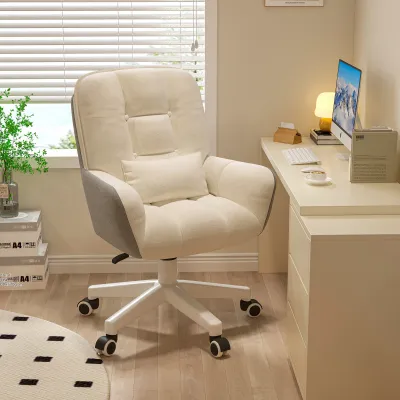
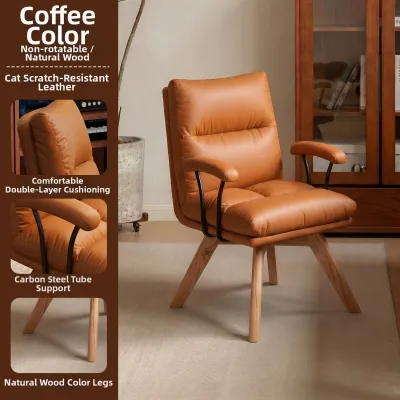
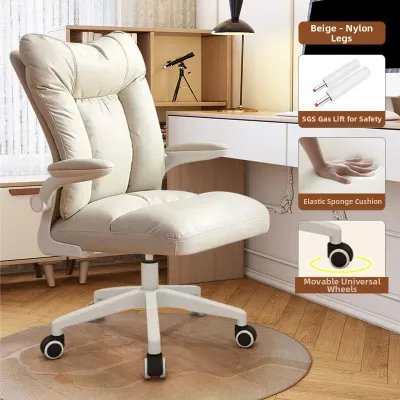
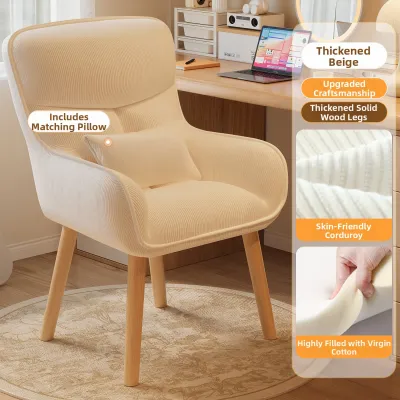
Prices are valid at publication and may change. Please refer to the product page for the latest price.
To verify if a hybrid office lounge chair can handle both modes, you must carefully examine the manufacturer’s technical specifications. Look for models that explicitly detail their recline angles, tension controls, and locking positions. A true dual-purpose chair should offer a robust upright lock that holds the backrest at a 90-to-100-degree angle for active work, alongside a smooth, tension-adjustable recline that lets you tilt back to at least 120 degrees or more for relaxation. Checking these specifications helps ensure the chair’s structural joints and gas cylinders are rated for dynamic movement across both sitting styles.
Which Adjustable Features Matter Most for Dual-Purpose Use
The mechanism controlling how a chair reclines is the most critical factor in determining its dual-purpose utility. When comparing different models, pay close attention to whether they use a synchro-tilt mechanism or a multi-function tilt lock. A synchro-tilt mechanism is highly beneficial for hybrid use because it tilts the backrest and the seat pan at a synchronized ratio—typically 2:1. This means as you recline, your feet remain flat on the floor and your knees stay at a comfortable angle, preventing the front of the seat from lifting and cutting off circulation to your thighs. A multi-function lock, meanwhile, allows you to tilt the seat and backrest independently and lock them at your preferred angle, which is excellent for dedicated lounging but may require manual adjustment when transitioning back to work.

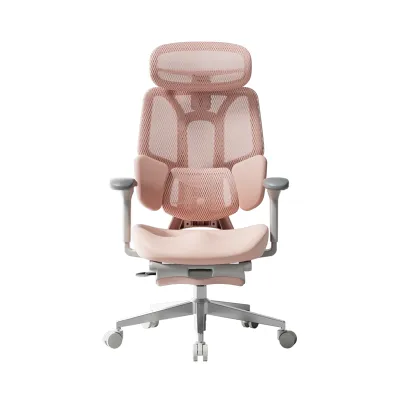
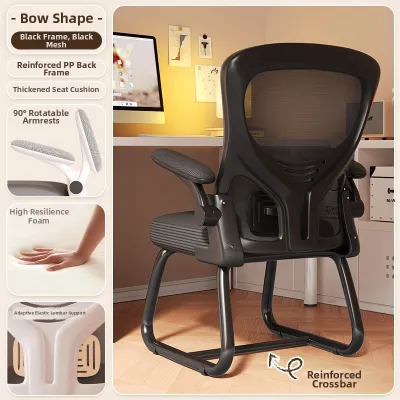
Armrest adjustability is another feature that directly impacts both your typing posture and your ability to relax. Fixed armrests or basic height-adjustable designs often fail to support your arms when you change positions. For a successful hybrid setup, look for chairs featuring three-dimensional (3D) or four-dimensional (4D) armrests. These allow you to adjust not only the height but also the width, depth, and pivot angle. When typing, you can slide the armrests inward and forward to support your elbows close to your body. When lounging, you can pivot them outward or slide them back to clear your desk and allow your arms to rest in a wider, more relaxed position.
Finally, do not overlook the relationship between the headrest, lumbar support, and recline angle. In a standard task chair, lumbar support is designed for an upright posture. When you recline, your spine elongates, and the point where you need support shifts. High-quality hybrid chairs feature dynamic lumbar systems that automatically adjust their tension or position as you tilt. Similarly, an adjustable headrest is essential for lounging; it should tilt forward to support your head and keep your eyes facing your monitor or book even when your torso is reclined, preventing neck strain.
Checking Materials and Build Quality for Home Use
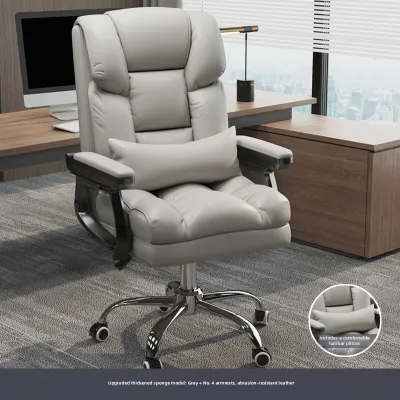
The materials used in an office lounge chair affect not only its long-term durability but also your daily comfort, particularly in warm and humid climates. Breathable mesh is an excellent choice for the backrest, as it promotes continuous airflow and prevents heat buildup during long working hours. However, for a lounge-style experience, a pure mesh seat can sometimes feel too firm or restrictive. A highly effective compromise is a hybrid design featuring a breathable mesh backrest paired with a contoured, high-density foam seat upholstered in a soft, durable fabric. Synthetic leathers and premium vinyls offer a sleek, modern look and are easy to wipe clean, but they can trap heat and feel sticky against the skin if your home office is not constantly air-conditioned.
Beyond upholstery, you must verify the structural integrity of the chair’s base and frame. A stable base is crucial when you are reclining deeply or shifting your weight. Check the manufacturer’s specifications for the wheelbase diameter—larger diameters, typically around 65 to 70 centimeters, provide greater stability against tipping. Additionally, look for a certified Class 4 gas lift cylinder, which is the industry standard for smooth height adjustments and reliable weight capacity. Ensure the stated weight limit comfortably accommodates your body weight with a generous safety margin, especially if you plan to use the chair in a fully reclined position.
The type of casters attached to the base also requires careful consideration to protect your home flooring. Standard hard nylon casters are designed for low-pile carpets and can easily scratch or gouge hardwood, laminate, or vinyl flooring common in modern apartments. If your home office has hard floors, look for chairs equipped with soft polyurethane (PU) casters, which provide quiet, smooth rolling without leaving marks. If you plan to place the chair on a thick rug or carpet, ensure the casters are large enough—ideally 60 millimeters or more in diameter—to roll smoothly without catching or straining the chair’s base.
Measuring Space and Clearance for Reclining Mechanisms
Before purchasing an office lounge chair, you must carefully measure your home office layout to ensure the chair can function fully without obstructing your space. Reclining mechanisms require significant clearance behind the desk. To calculate the necessary space, measure the distance from the edge of your desk to the nearest wall or piece of furniture. A chair that reclines deeply can extend anywhere from 30 to 50 centimeters backward from its upright position. Failing to account for this clearance can result in the headrest or backrest scraping against walls, damaging both your home’s paintwork and the chair itself.
You must also consider the chair’s overall width and armrest span in relation to your desk and doorways. Measure the clearance between your desk legs to ensure the chair can slide fully underneath when not in use, which is essential for keeping walkways clear in compact rooms. Additionally, check the width of your room doorways and, if living in a high-rise apartment, the dimensions of your building’s lift. Some high-end executive lounge chairs feature wide, fixed frames that do not disassemble easily, making delivery and installation difficult if your entryways are narrow. Check if delivery services include assembly, as some retailers charge extra fees in S$ for on-site setup.
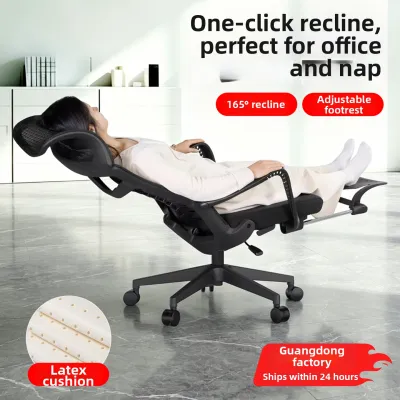
If the model you are considering includes an integrated pull-out footrest or requires a separate ottoman, you must plan for this extra forward footprint. An integrated footrest typically extends 40 to 60 centimeters from the front of the seat pan. Ensure there is enough open floor space in front of your desk to deploy the footrest comfortably without hitting desk drawers, computer towers, or waste bins. If using a separate footstool, verify that you have a dedicated spot to store it nearby when you need to transition back to an upright typing position.
Matching the Right Chair Profile to Your Daily Routine
To narrow down your choices, map your daily routine to the specific design profiles of available chairs. If your workday consists of intensive typing, data entry, or video calls where you must remain alert and upright for eighty percent of the time, a task-leaning hybrid is your best option. These models prioritize precise ergonomic adjustments, such as seat-pan tilt and highly adjustable armrests, while offering a moderate recline function for quick five-minute breaks. They ensure your posture remains supported during your most productive hours without sacrificing the ability to stretch out occasionally.
Conversely, if your routine involves a high volume of reading, reviewing documents, watching online presentations, or taking creative brainstorming breaks, a lounge-leaning hybrid is more suitable. These chairs often feature thicker padding, wider seat pans, and more generous recline angles, sometimes accompanied by an integrated headrest and footrest. While they still offer basic height and lumbar adjustments to keep you comfortable during brief typing tasks, their primary focus is on pressure relief and relaxation, making them ideal for a more relaxed working style.
Before making a final decision, always verify if you have specific physical needs that require specialized attention. If you experience chronic back pain, neck strain, or joint issues, look for chairs that carry recognized ergonomic certifications or offer highly customizable lumbar support systems. It is important to remember that even the most highly rated chair may not suit every body type. If you begin using a new chair and experience persistent discomfort, numbness, or pain during your trial period, stop using it immediately and consult a qualified medical professional or physical therapist to assess your setup.
Frequently Asked Questions (FAQ)
How long should I test an office lounge chair before deciding it fits my routine?
You should aim to test a new office lounge chair for at least two to three weeks to allow your body to adjust to its support structure. During this trial period, use the chair throughout your typical workdays as well as your evening relaxation hours to evaluate how well it transitions between tasks. Before purchasing, carefully check the retailer’s return policy, paying close attention to the return window, potential restocking fees, and whether they require the chair to be returned in its original packaging. This ensures you can return or exchange the chair if it does not provide the comfort and support you need.

Community discussion
Share your experience or ask a question. Comments are reviewed before publication.