
Finding the right kitchen countertop cabinet in Singapore requires balancing limited kitchen space with highly specific storage needs. In typical Singaporean homes, such as HDB flats or condominiums, kitchen layouts are often compact, making efficient countertop storage essential. There is no single universal brand that fits every household; instead, the ideal provider depends on whether your layout demands exact millimeter-level precision, specific material integration, or highly standardized modular fittings. Homeowners must choose between bespoke local carpenters, specialized system cabinet brands, and large home furnishing retailers, each offering distinct advantages in flexibility, lead times, and structural adaptability. By understanding your spatial constraints and material requirements, you can select a provider that delivers a durable, functional, and aesthetically pleasing storage solution.
Defining Your Countertop Storage Requirements
Before approaching any cabinet provider in Singapore, you must establish the exact physical and functional parameters of your kitchen countertop cabinet. The first step is to measure the vertical clearance between your existing countertop and the ceiling or the underside of your wall-hung cabinets. This measurement determines the maximum height limit of your new storage unit, ensuring it does not block existing fixtures, windows, or lighting. In many local apartments, overhead space is highly constrained, so accurate vertical measurements prevent costly installation errors.
Next, identify the primary storage load your cabinet will carry. If you plan to store heavy small appliances like stand mixers, coffee machines, or microwave ovens, the cabinet shelves and base must be engineered to support significant weight without sagging. Conversely, if the unit is intended for lightweight items such as spices, tea tins, or dry goods, you can prioritize slimmer shelving and more intricate internal dividers. Clearly defining this load profile helps your provider recommend the correct material thickness and support structures.
Products mentioned in this guide
![AStar Kitchen Cabinet with Top Doors and Drawers Plywood tiled Table top Display shelf [SG SELLER] -INSTOCKS](https://img.lazcdn.com/g/p/a41dc3965022b13c1a1940b25d16ad3b.jpg_400x400q80.jpg_.webp)
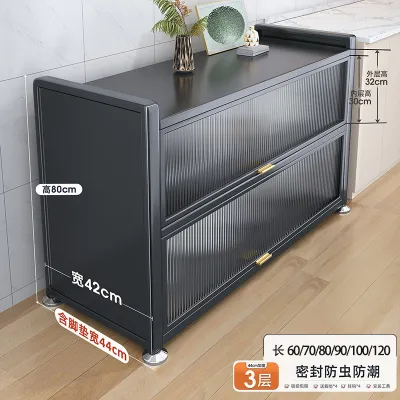
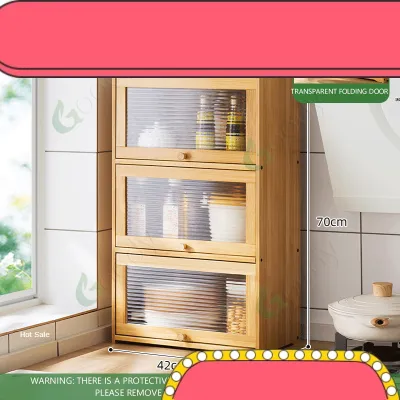
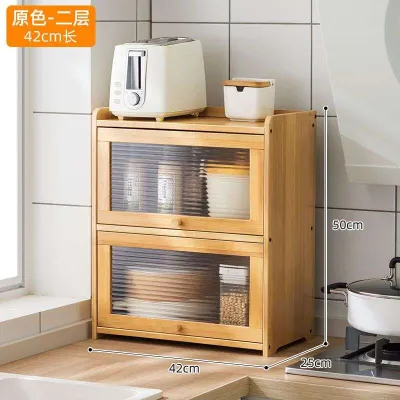
Prices are valid at publication and may change. Please refer to the product page for the latest price.
Finally, determine the optimal cabinet depth. A kitchen countertop cabinet must be deep enough to house your target items but shallow enough to preserve usable workspace on the countertop in front of it. Standard kitchen countertops in Singapore are typically 600mm deep; a countertop cabinet that is too deep will leave you with insufficient prep space, while one that is too shallow may fail to fit standard appliance footprints. Balancing these dimensions ensures your kitchen remains highly functional for daily meal preparation, especially in narrow galley kitchens where every millimeter of workspace counts.
Comparing Kitchen Cabinet Providers for Customization
When sourcing a kitchen countertop cabinet, Singaporean homeowners generally choose from three main categories of providers, each offering a different level of customization and service.

Bespoke local carpenters represent the traditional route, offering the highest level of dimensional flexibility. Because they build units from scratch, they can accommodate awkward corners, structural pillars, and non-standard heights common in older HDB estates or unique condominium layouts. This path allows you to integrate custom materials, such as matching a specific laminate to your existing woodwork. However, bespoke carpentry typically involves longer lead times, and you must actively verify the quality of the hardware, hinges, and runners they plan to install, as these components heavily influence the cabinet’s lifespan.
System and modular cabinet brands offer a different approach, utilizing standardized sizes with highly engineered internal fittings and consistent factory finishes. These brands provide predictable quality and robust warranties, making them an attractive option for homeowners who value precision manufacturing. The trade-off is that their designs are limited to predefined module increments (such as 300mm, 450mm, or 600mm widths). If your countertop space requires an intermediate size, you may end up with filler panels that waste valuable storage space.
Large home furnishing retailers provide readily available, cost-effective, and highly accessible units. These off-the-shelf options are excellent for rapid installation and tight budgets. However, they offer minimal to no structural customization. If you choose this route, you must adapt your kitchen layout to fit the retailer’s fixed dimensions, rather than adapting the cabinet to fit your kitchen.
To make a conditional decision, use a clear framework based on your spatial constraints. Choose bespoke local carpenters if your kitchen has irregular dimensions, structural columns, or requires an exact millimeter fit to maximize every inch of countertop space. Opt for system cabinet brands if your kitchen layout is straightforward and you prioritize high-quality, standardized internal organizers, soft-close mechanisms, and predictable manufacturer warranties. Select large retailers only if you have standard spaces, require immediate delivery, and are working within a highly restricted budget.
Evaluating Customization Features and Materials
Selecting the right materials and features is critical to ensuring your kitchen countertop cabinet performs well over time. The kitchen is a demanding environment characterized by high humidity, heat, and airborne grease. When discussing options with your chosen provider, check the manufacturer’s specifications for moisture and heat resistance, especially if the cabinet will be positioned near cooking zones or sink areas. High-pressure laminates and solid surface materials are common choices in Singapore due to their durability and ease of cleaning, but you must verify that the backing materials and adhesives used are rated for high-moisture environments to prevent warping or delamination.
Internal configuration options should also be evaluated closely. Look for cabinets that offer adjustable shelving tracks, which allow you to reconfigure the interior layout as your storage needs change. For higher countertop cabinets, consider pull-down mechanisms or pull-out drawers that bring items within easy reach without requiring a step stool. Specialized dividers, spice racks, and integrated knife blocks can also be customized to keep your countertop completely clutter-free.
Integration capabilities are another hallmark of high-quality customization. If you want a seamless look, ask if the cabinet provider can match the cabinet base or doors to your existing countertop material, such as quartz, sintered stone, or solid surfacing. Additionally, consider incorporating built-in task lighting, such as recessed LED strip lights under the cabinet, to illuminate your workspace. If you plan to store and use appliances inside the cabinet, ensure the design includes concealed channels or grommets for power outlets, allowing you to plug in devices safely without exposing messy wiring.
Verifying Installation Safety and Maintenance
A customized kitchen countertop cabinet must be installed securely to prevent structural failure and ensure long-term safety. Before mounting any heavy cabinet, you must verify the structural integrity of the wall. Concrete walls, common in Singapore’s HDB flats, offer excellent load-bearing capacity, but lightweight partition walls or drywall require specialized anchoring methods and reinforcement. If the wall type or its load-bearing capacity is unknown, always consult a qualified structural professional or professional installer before proceeding with the installation.
In addition to wall mounting, you must consider the load capacity of the countertop itself if the cabinet rests directly on it. Heavy stone or quartz countertops can easily support the weight of a cabinet, but thinner or older laminate countertops may require additional structural support or a wall-hung design to prevent cracking or bowing over time.
Heat dissipation is another critical safety factor. If your countertop cabinet is designed to house heat-generating appliances like toaster ovens, coffee makers, or microwaves, you must ensure there is adequate clearance around the appliance. Without proper ventilation space, heat can build up rapidly, potentially damaging the cabinet’s interior finishes, degrading the adhesives, or creating a fire hazard. Check the appliance manufacturer’s manual for specific clearance requirements and design the cabinet doors or back panels to allow sufficient airflow during operation.
Finally, establish a regular maintenance routine based on the manufacturer’s care instructions. Different finishes require specific cleaning methods; for instance, matte laminates may need specialized cleaners to avoid fingerprint smudges, while high-gloss surfaces can scratch easily if wiped with abrasive cloths. Regularly inspect the moving parts of your specialized hardware, such as hinges, drawer runners, and lift-up mechanisms. Keeping these components clean and free of grease buildup ensures they continue to operate smoothly and prevents premature wear.
Frequently Asked Questions (FAQ)
Can I install a countertop cabinet on a tiled backsplash?
Yes, you can install a countertop cabinet on a tiled backsplash, but it requires extreme care to avoid cracking or shattering the tiles. The installer must use specialized diamond-tipped or carbide-tipped drill bits designed specifically for ceramic or porcelain tiles. Before drilling, it is essential to verify the underlying wall structure behind the tiles to ensure the anchors can grip a solid substrate. Always consult a qualified professional installer to assess the wall and perform the drilling safely.
How do I prevent moisture damage to cabinets above the countertop?
To protect your cabinets from steam and moisture damage, verify the quality of the edge banding and surface coatings with your manufacturer before purchase. Polyurethane (PU) or laser edge banding provides a tighter seal against moisture compared to standard glue-applied banding. Additionally, ensure your kitchen has adequate ventilation, such as a high-capacity range hood, and maintain the manufacturer’s recommended clearance distances from steam-generating appliances like rice cookers and kettles.

Community discussion
Share your experience or ask a question. Comments are reviewed before publication.