
When shopping for a king size mattress in Singapore, buyers face a wide array of brands offering varying firmness levels and construction methods. Rather than declaring a single best brand, this guide provides a structured framework to compare comfort layers, support cores, and overall build quality. Use these criteria to evaluate which brand’s offerings align with your sleep preferences, bedroom logistics, and budget.
To find the right king size mattress, you must look past marketing terms and evaluate objective build specifications, delivery logistics, and trial policies. Brands in the local market differ primarily in their proprietary firmness scales, the composition of their comfort layers (such as latex, memory foam, or hybrid pocket springs), and their structural support systems. By understanding these differences, you can make an informed decision that ensures long-term comfort and durability.
Defining Your King Size Mattress Requirements
Before comparing brands, establish your baseline space and logistical requirements. A standard king size mattress in Singapore typically measures 183 centimeters wide by 190 centimeters long. This substantial footprint requires a spacious bedroom to accommodate both the bed frame and surrounding furniture without creating a cramped environment.
Products mentioned in this guide
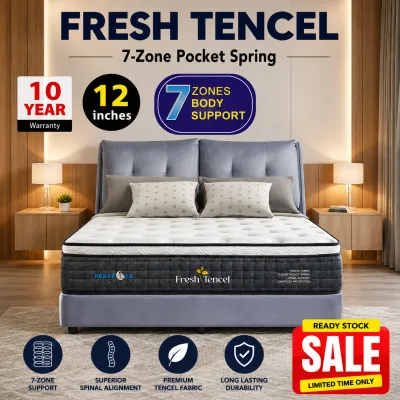
![[SG] NEXT DAY DELIVERY + FREE PILLOWS. Pocket Spring FIRM Mattress Luxury Memory Foam Single Super Single Queen King High Quality. Euro Design and High Quality. Comes in King Size Queen Super Single and Single Size Mattress. Free & Fast Delivery](https://img.lazcdn.com/g/p/f3daa9a9becc0782f477139f4696cded.jpg_400x400q80.jpg_.webp)
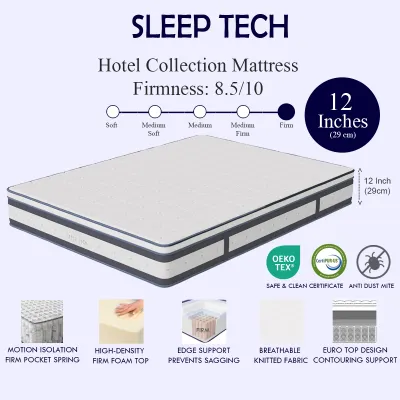
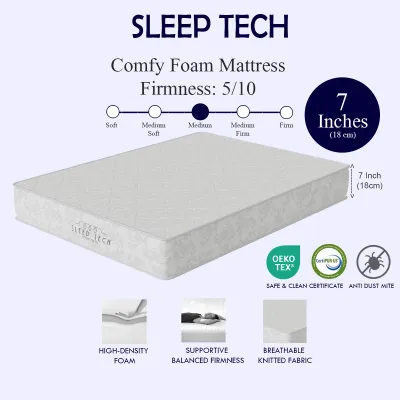
![[SG] [CLEARANCE] Pocketed Spring Spring Mattress from SLEEP TECH Cloud Mattress Single Super Single Queen and King Size](https://img.lazcdn.com/g/p/d9fd4bb40448ada26abd1a44619b237a.jpg_400x400q80.jpg_.webp)
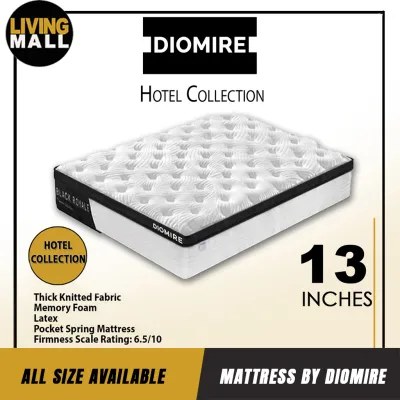
![[PRE-ORDER] Getha Intercontinental Royal III Mattress - King/Queen/Super Single/Single](https://img.lazcdn.com/g/p/f7cb38e436fc44d59656d3782fe7741e.jpg_400x400q80.jpg_.webp)
Prices are valid at publication and may change. Please refer to the product page for the latest price.
Measure your room dimensions carefully to ensure a minimum clearance of 60 to 75 centimeters on all three open sides of the bed. This clearance is essential for comfortable walking paths, opening wardrobe doors, and making the bed without straining. If your bedroom layout is tight, a king size bed might restrict movement, making a queen size a more practical alternative.
Logistics present a major hurdle for king size purchases, particularly in high-rise apartments and HDB flats. Verify the dimensions of your building’s elevator, stairwells, and entry doorways against the packaged dimensions of the mattress. Some brands ship mattresses compressed in a box, which simplifies navigation through tight corridors, while traditional pocketed spring models arrive fully expanded and require ample physical clearance.
Your primary sleeping position and weight distribution dictate your baseline firmness needs. Side sleepers generally require deeper pressure relief for shoulders and hips to maintain spinal alignment, whereas back and stomach sleepers need firmer support to prevent the pelvis from sinking. Understanding your physical needs first prevents you from being swayed by generic brand marketing.
Evaluating Firmness Options and Comfort Layers
Firmness ratings are highly subjective and vary significantly between manufacturers. While a universal scale of 1 to 10 (with 10 being the firmest) is widely referenced, one brand’s “medium-firm” (typically a 6 or 7) might feel like another brand’s “firm.” To compare options accurately, you must look at the specific materials used in the comfort layers.

Memory foam offers excellent contouring and motion isolation, which is highly beneficial for couples sharing a king size bed. However, traditional memory foam tends to retain heat, which can be uncomfortable in Singapore’s warm, humid climate. If you prefer foam, look for brands that incorporate open-cell structures, gel infusions, or graphite particles designed to conduct heat away from the body.
Natural latex comfort layers provide a more responsive, bouncy feel and naturally retain less heat than traditional memory foam. Latex is highly durable and offers a lifting sensation rather than a sinking one, making it easier to turn over during the night. Many brands use perforated latex layers to enhance airflow throughout the mattress.
Pillow-top and Euro-top designs add an extra layer of quilted padding sewn directly to the top of the mattress. These configurations offer immediate plushness but require careful inspection of the underlying foam density. Low-density foams in a pillow-top can sag prematurely, compromising the support of the entire mattress.
Because showroom testing only provides a brief impression, prioritize brands that offer home sleep trials. Check the terms of these trials carefully, noting the minimum testing period, return shipping fees, and whether the refund is issued in cash or store credit. A trial of at least 100 nights is standard for verifying whether a mattress truly suits your body.
Assessing Build Quality and Support Cores
The support core forms the foundation of a king size mattress and determines its long-term durability. Pocketed coil systems feature individually wrapped springs that move independently, reducing motion transfer across the wide surface of a king bed. This design is ideal for couples, as one partner’s movements are less likely to disturb the other.
High-density foam cores offer a solid, stable foundation but require high material density to prevent premature softening. When evaluating foam cores, check the manufacturer’s specifications for foam density ratings rather than relying solely on thickness. High-density polyurethane foam or support latex ensures the mattress maintains its shape over years of use.
Edge reinforcement is a critical quality indicator for king size mattresses, as a weak perimeter reduces the usable sleeping surface. Premium brands incorporate thick foam encasements or heavier-gauge steel coils around the border to prevent rolling-off sensations. This structural detail is especially important if you regularly sit on the edge of the bed to dress.
Test the edge support by sitting directly on the side of the mattress; excessive sinkage indicates a lack of dedicated perimeter reinforcement. A sturdy edge also prevents the mattress from sagging over time due to repeated localized pressure. If a brand does not specify its edge support construction, ask their customer service for details.
Review the manufacturer’s warranty terms to gauge the expected lifespan of the mattress. Pay close attention to the specific depth threshold for visible sagging, as some warranties only cover indentations deeper than 3.5 centimeters, while others cover sag starting at 1.5 centimeters. A lower threshold indicates greater manufacturer confidence in the product’s durability.
Ensure the warranty terms outline whether coverage is prorated or non-prorated over the years. Additionally, verify the required foundation or bed frame specifications, as using an incompatible slatted frame can void your warranty entirely. Most pocket spring mattresses require slats to be spaced no more than 5 to 7 centimeters apart.
Comparing Value and Pricing Structures
King size mattresses in Singapore span a wide pricing spectrum, with entry-level models starting around S$600 and premium luxury options exceeding S$3,000. Higher price points typically reflect the use of natural materials like organic latex, advanced pocket coil zoning, and specialized cooling fabrics. However, high prices do not always guarantee superior comfort.
When comparing brands, distinguish between essential structural quality and premium aesthetic features. A higher price tag does not automatically guarantee better sleep if the underlying support system does not match your body type and sleep position. Focus your budget on the quality of the support core and comfort layers rather than elaborate cover designs.
Many brands offer promotional bundles that include bed frames, pillows, or mattress protectors alongside the king size mattress. Calculate the standalone price of the mattress to determine if these bundled accessories represent genuine savings or unnecessary add-ons. Sometimes, purchasing the mattress alone and sourcing accessories separately yields better value.
Factor in hidden transactional costs that can affect the overall value proposition. Confirm whether the listed price includes delivery to your home, professional assembly of the bed frame, and the removal of your old mattress. Some delivery services charge additional fees for walk-up apartments without elevator access or for deliveries scheduled outside standard working hours.
Decision Framework: Choosing the Right Brand Profile
Selecting the right brand profile depends on your household’s specific sleep dynamics and physical requirements. If you and your partner have vastly different firmness preferences, look for brands specializing in modular or dual-firmness king size designs. These customizable models allow you to select a different firmness level for the left and right sides of a single mattress.
For sleepers who prefer a traditional feel with robust edge support and active bounce, brands focusing on hybrid or innerspring constructions are highly suitable. These designs facilitate easier movement and prevent the “sinking” feeling associated with deep memory foam. They also tend to sleep cooler due to the open space between the coils.
If you require specific orthopedic support for chronic back, neck, or joint conditions, consult a qualified healthcare professional before making a purchase. Use their recommendations to guide your evaluation of manufacturer specifications, focusing on zoned support systems that keep the spine aligned. Avoid relying solely on “orthopedic” labels, which are often used as marketing terms.
Ultimately, the best brand for your home is one that provides transparent material specifications, a robust warranty, and a flexible sleep trial. By systematically comparing these factors, you can invest in a king size mattress that delivers consistent comfort and support for years to come.
Frequently Asked Questions (FAQ)
How do I know if a king size mattress will fit in my bedroom?
A standard king size mattress in Singapore measures 183 centimeters wide by 190 centimeters long. To ensure a comfortable fit, your bedroom should ideally have at least 60 to 75 centimeters of open space on three sides of the bed. You can visualize this footprint by using painter’s tape to outline the mattress dimensions on your bedroom floor before purchasing.
What is the best firmness level for couples with different sleep preferences?
A medium-firm mattress (typically rated 6 or 7 on a 10-point scale) serves as the most common compromise for couples with different sleep positions. If your preferences are completely opposite, consider brands that offer dual-comfort customization within a single king size casing, or opt for a split-king setup using two single mattresses side by side.
Do all mattress brands offer the same warranty coverage for king sizes?
No, warranty terms vary significantly across different mattress brands regardless of the mattress size. While many brands offer a 10-year warranty, the fine print dictates what qualifies as a defect, such as the specific depth of visible sagging required to trigger a replacement. Always check whether the warranty is non-prorated and what type of bed base is required to keep the coverage active.

Community discussion
Share your experience or ask a question. Comments are reviewed before publication.