
When comparing popular hanger stand brands, relying on brand names alone is rarely enough to guarantee long-term durability or the right aesthetic fit. Because material quality and structural integrity vary widely even within the same brand’s catalog, making an informed purchase decision requires looking directly at the product specifications. This guide breaks down the exact structural joints, base designs, and finish treatments you need to verify to confidently evaluate and compare hanger stands for your home.
To find a stand that remains stable under a heavy load of bags and coats, you must look past marketing buzzwords and analyze the physical engineering of each product. A well-constructed hanger stand balances weight distribution, material resilience, and spatial efficiency. By focusing on verifiable manufacturing details rather than brand prestige, you can select a piece that serves your household reliably for years without wobbling, tipping, or deteriorating.
Evaluating Durability: Materials and Structural Joints
Evaluating the durability of a hanger stand requires a close inspection of its surface treatments, which serve as the primary defense against wear and environmental factors. In humid climates like Singapore’s, moisture resistance is a critical consideration for both metal and wood furniture. For metal stands, look for electrostatic powder coating or specialized rust-resistant layers rather than basic wet paint, as powder-coated finishes are significantly more resistant to chipping, scratching, and moisture-induced corrosion. If you prefer a wooden stand, verify that the timber is treated with a sealed polyurethane or water-resistant lacquer to prevent the wood from absorbing ambient moisture, which can lead to warping, splitting, or mold growth over time.
Products mentioned in this guide
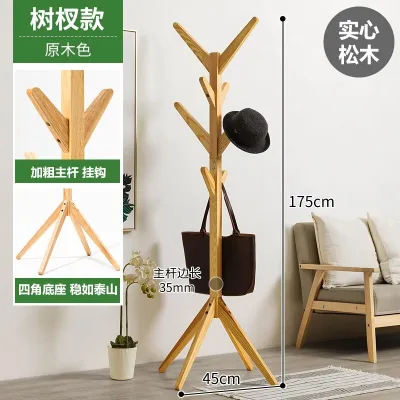
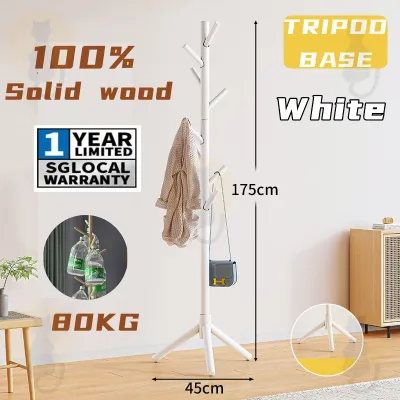
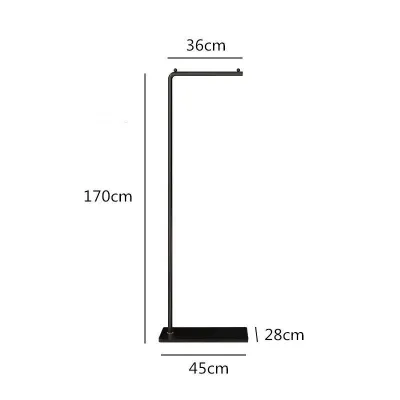




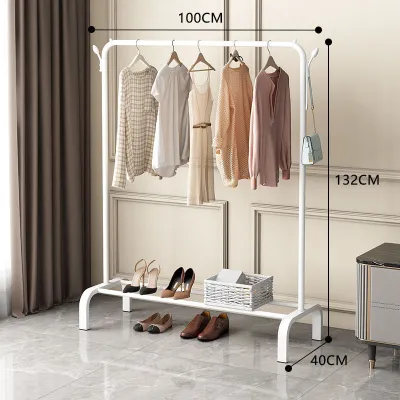
Prices are valid at publication and may change. Please refer to the product page for the latest price.
Beyond surface finishes, the structural joints of a hanger stand determine its ultimate lifespan and resistance to loosening. Inspect how the individual segments and hooks connect to the main shaft. High-quality metal stands typically feature welded seams or heavy-duty threaded metal-to-metal inserts. Avoid designs that rely on simple metal screws driven directly into thin-walled metal tubes, as these threads easily strip under tension. For wooden models, look for reinforced brackets or threaded steel dowels rather than wood screws driven directly into the timber, which inevitably loosen and strip after repeated use or seasonal humidity shifts.
Before finalizing your purchase, review the manufacturer’s care instructions and environmental warnings to ensure the stand is compatible with your specific indoor conditions. Some brands explicitly state that their products are only suitable for climate-controlled environments, while others are rated for semi-outdoor spaces like sheltered balconies or covered entryways. Checking these guidelines beforehand prevents premature wear and ensures you do not inadvertently void any product warranties through improper placement.
Assessing Stability and Weight Capacity
A hanger stand’s stability is heavily dictated by its base geometry and how it manages the unit’s center of gravity. Tripod bases offer excellent stability on slightly uneven floors because three points of contact naturally find a stable plane, but their protruding legs can present a tripping hazard in narrow corridors. Flat, weighted bases—often constructed from cast iron, heavy steel, or solid stone—keep the center of gravity exceptionally low, allowing for a much smaller physical footprint without sacrificing stability. Cross-bases offer a middle ground but require precise assembly to ensure all four points sit perfectly flush with the floor to prevent micro-wobbles.

To prevent dangerous tip-overs, always verify the manufacturer’s stated maximum overall load capacity and individual per-hook limits before buying. A stand might claim a generous overall capacity of 20 kilograms, but if the individual hook limit is only 2 kilograms, hanging a single heavy backpack or wet trench coat could bend the hook or cause the entire unit to list to one side. Look for brands that provide clear, segmented weight ratings for different tiers of the stand, which allows you to plan your storage safely.
Finally, measure the stand’s physical footprint against your available floor space to ensure it does not obstruct high-traffic pathways, doors, or built-in cabinetry. In compact entryways, a stand with a wide tripod base might block the swing of your front door or household shelter door. Choosing a model with a compact, weighted circular base or a semi-circular flat-back design allows you to position the stand flush against the wall, preserving precious walkway space while maintaining structural balance.
Design and Aesthetic Integration for Entryways
When integrating a hanger stand into your home, physical dimensions must align with daily ergonomics. Measure the total height of the stand and the reach of its highest and lowest hooks to ensure comfortable accessibility for all household members. If you have young children, look for stands featuring lower-tier hooks that allow them to hang their own school bags and jackets independently. Conversely, ensure the upper hooks are tall enough that long coats, dresses, or umbrellas do not drag on the floor or bunch up at the base.
Visual weight and style should complement your existing room decor and lighting to create a cohesive entryway. A thick, dark solid wood stand brings warmth and texture to traditional or rustic interiors but can feel visually overwhelming in a small, dimly lit foyer. For modern, minimalist, or industrial spaces, a slim-profile metal stand with a matte finish offers a clean, unobtrusive silhouette that allows light to pass through, making the entryway feel more open and spacious.
Multi-functional designs, such as stands with integrated shoe racks, storage benches, or umbrella holders, can be highly efficient space-savers if executed well. However, you must evaluate these features carefully to ensure they do not compromise the stand’s primary stability. An integrated umbrella stand, for example, must include a removable drip tray to prevent water from pooling around the base joints, which could lead to rust or wood rot. Ensure that any multi-functional unit remains bottom-heavy, especially when items are being removed or added in a hurry.
Decision Framework: Choosing the Right Hanger Stand
To select the ideal hanger stand, match your household’s specific storage demands with your entryway’s spatial limits. If your primary requirement is high load capacity for heavy winter coats, large backpacks, and structured bags, choose heavy-duty metal or solid hardwood stands equipped with wide, weighted bases. These robust designs distribute weight more effectively across a larger surface area, minimizing the risk of structural failure or tipping under heavy, uneven loads.
If your entryway has strict spatial constraints and you only need to hang lighter daily garments, keys, or hats, prioritize slim-profile, wall-adjacent, or corner-fitting designs. These space-saving models occupy minimal floor area while still providing organized vertical storage. By matching the stand’s physical capacity to your actual daily usage, you avoid paying for bulky furniture that overcrowds your living space.
Before finalizing your order from an online marketplace or a brand’s official store, double-check the exact finished dimensions, assembly conditions, and return policies. Verify whether the product arrives fully assembled or requires manual setup, and check if the necessary tools are included in the package. Understanding the retailer’s return policy provides peace of mind in the rare event that the stand arrives with manufacturing defects, missing hardware, or structural instability.
Frequently Asked Questions (FAQ)
How can I prevent a freestanding hanger stand from tipping over?
To prevent a freestanding hanger stand from tipping, always distribute weight evenly across all available hooks rather than clustering heavy items on a single side. If your stand features tiered hanging levels, place heavier items like bags and thick jackets on the lower hooks to keep the overall center of gravity as low as possible. Ensure the stand is positioned on a completely flat, level surface, and periodically check and tighten the base screws, as daily use and micro-vibrations can gradually loosen the connections over time.
What is the best way to clean and maintain different hanger stand finishes?
To maintain your hanger stand’s finish, use a soft, damp microfiber cloth and non-abrasive cleaners specifically formulated for your stand’s material. For sealed wood surfaces, avoid harsh chemical solvents or excessive water, which can penetrate the protective lacquer and cause warping. For powder-coated metal stands, avoid abrasive scrubbing pads that can scratch the protective layer and expose the underlying metal to moisture. Periodically wipe down the joints and check for any signs of moisture buildup, especially during humid seasons.

Community discussion
Share your experience or ask a question. Comments are reviewed before publication.