
Selecting the right ergonomic chair brand for a Singapore home office requires balancing personal physical dimensions, daily sitting duration, and the unique constraints of local living spaces. Rather than relying on marketing buzzwords, a successful comparison focuses on verifiable adjustability, material breathability for the tropical climate, and local warranty support. By understanding what to look for in structural design and build quality, you can make an informed investment that protects your posture and fits your budget.
Defining Your Home Office Space and Ergonomic Needs
Before comparing specific brands, you must evaluate your daily work habits and the physical environment of your home. A chair that is comfortable for a two-hour study session may not provide adequate support during an eight-hour workday. If you sit for extended periods, you require a chair that actively supports dynamic movement and frequent posture changes.
Spatial constraints are a major consideration in Singapore apartments, such as HDB flats and condominiums. Many home offices are set up in multi-purpose rooms, tight bedroom corners, or narrow study alcoves. You must measure the footprint of the chair base, which typically ranges from 65 to 70 centimeters in diameter, to ensure it does not block walkways.
Products mentioned in this guide
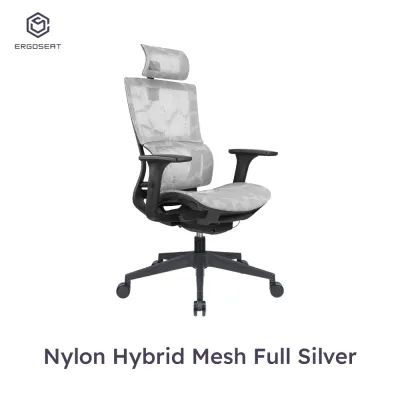
![[SG Ready Stock]Ergonomic Office Chair Computer Desk Chairs Mesh Home Office Desk Chairs with Lumbar Support](https://img.lazcdn.com/g/p/585691bae859ee8d697593367d59d085.jpg_400x400q80.jpg_.webp)
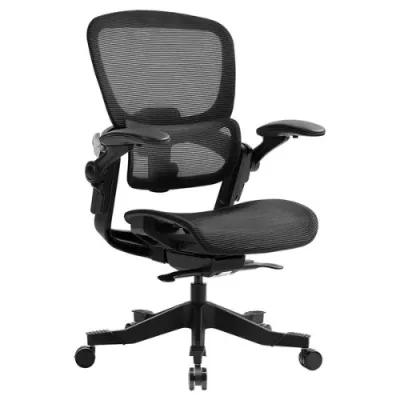
![[SG Ready Stocks] Ergonomic Office Chair - 8.5cm Thick Cushion + Antislip Surface Adjustable Backrest & Detachable Headrest Flip-Up Arms Rocking & Lock Function 15-Min Easy Assemble for Home/Office](https://img.lazcdn.com/g/p/056ecb65b2a442dd9a476ff654362085.jpg_400x400q80.jpg_.webp)
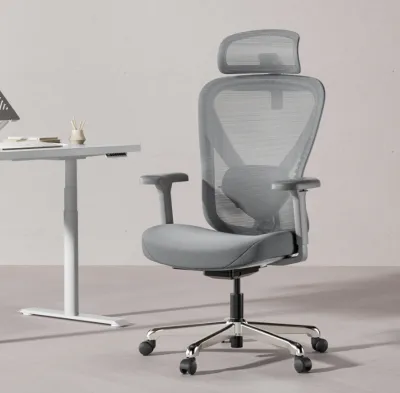
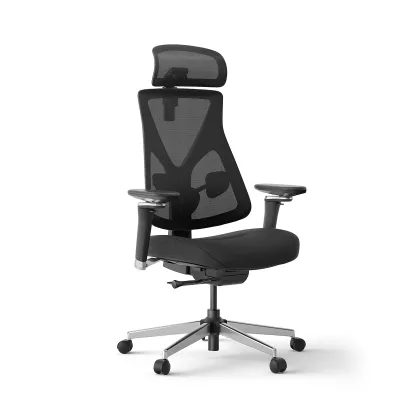
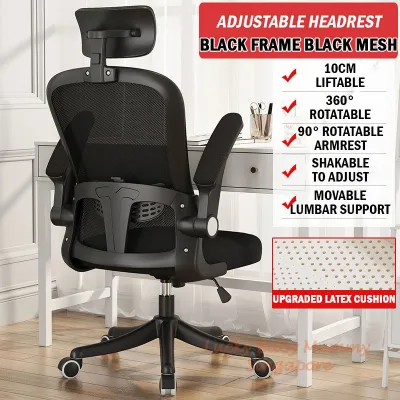
Prices are valid at publication and may change. Please refer to the product page for the latest price.
Desk clearance is another critical dimension to verify before purchasing. Measure the height from the floor to the underside of your desk, including any drawers or keyboard trays. The chair’s armrests must be able to slide under the desk when not in use, or adjust downward sufficiently to prevent them from hitting the desk edge.
Singapore’s tropical climate makes material selection a primary comfort factor. High humidity and warm temperatures mean that fully upholstered leather or thick polyurethane (PU) leather chairs can trap body heat and sweat. This heat retention often leads to discomfort, skin irritation, and premature peeling of the synthetic material.
For local homes without 24-hour air conditioning, highly breathable materials are essential. Woven mesh backrests allow continuous airflow, keeping your back cool throughout the day. If you prefer a cushioned seat, look for breathable fabric covers over high-density foam rather than solid vinyl or leather finishes.
Core Dimensions for Comparing Ergonomic Chair Brands
When comparing different ergonomic chair brands, look past marketing claims and focus on concrete adjustability specifications. The most critical component is the lumbar support system. A high-quality brand will offer lumbar support that is adjustable in both height and depth, allowing you to align the support with the natural curve of your lower spine.

Armrest adjustability is another key differentiator between entry-level and premium brands. Look for three-dimensional (3D) or four-dimensional (4D) armrests. These allow you to adjust the height, depth, angle, and width of the armrests, ensuring your elbows are supported at a 90-degree angle to reduce strain on your shoulders and neck.
Seat depth adjustment, often called a seat slider, is vital for proper circulation. A seat pan that is too deep will press against the back of your knees, restricting blood flow. A seat pan that is too shallow will not support your thighs adequately, increasing pressure on your sit bones. Look for a brand that offers at least 5 centimeters of seat depth adjustment.
Recline tension and tilt lock mechanisms determine how easily you can transition between upright focus and relaxed reclining. High-quality brands feature synchro-tilt mechanisms, where the backrest reclines at a faster rate than the seat pan. This movement keeps your feet flat on the floor and maintains proper spinal alignment as you stretch.
Material construction directly impacts both comfort and structural longevity. Examine the mesh tension; it should feel firm and supportive, not saggy or overly elastic. For cushioned models, high-density molded foam is superior to cut foam, as it retains its shape and supportive properties over years of daily use.
Finally, check the frame material and weight capacity specifications. Heavy-duty nylon-reinforced fiberglass or aluminum alloy frames offer the best structural stability. Ensure the chair’s rated weight capacity matches your body type, leaving a safe margin of at least 15 to 20 percent below the maximum limit.
Evaluating Build Quality and Long-Term Value
A cheap office chair that needs replacement every two years is often more expensive in the long run than a premium model with a decade-long warranty. When comparing brands, carefully read the warranty terms. Look for brands that offer local warranties of at least three to five years, with premium brands often extending this to ten or twelve years.
Verify what the warranty actually covers, as some brands offer a long warranty on the frame but only one year on the mesh, fabric, or gas lift. A reliable brand will have a physical service center or an established local distributor in Singapore. This local presence ensures you can easily obtain replacement parts or professional repair services if a component fails.
The mechanical components of the chair are the most common points of failure. Look for chairs equipped with a Class 4 gas lift cylinder, which is the industry standard for safety and durability. These cylinders are typically certified by independent testing bodies such as TÜV SÜD or SGS to meet BIFMA standards.
Examine the base and caster design to ensure they are suitable for your home’s flooring. A five-star base made of polished aluminum or reinforced nylon provides the best stability against tipping. The casters should glide smoothly; hard nylon casters are suitable for carpets, while soft polyurethane-coated casters are better for protecting vinyl, laminate, or parquet flooring from scratches.
Consider the assembly requirements and the availability of individual replacement parts. Some brands deliver chairs fully assembled, saving you time and ensuring correct setup. If assembly is required, check if the brand provides clear instructions and the necessary tools, and verify if you can purchase replacement armrest pads or casters directly from the distributor in the future.
Decision Framework: Matching Chair Tiers to Your Profile
To simplify your search, categorize ergonomic chair brands into three distinct tiers based on your daily usage, budget, and adjustment needs. This framework helps you identify which tier aligns with your specific profile before you begin comparing individual models.
The premium tier, typically priced at S$1,000 and above, is designed for power users who spend eight or more hours daily at their desks. These chairs feature highly advanced, dynamic ergonomic mechanisms that adapt automatically to your movements. They are constructed from top-grade materials and are backed by extensive ten-to-twelve-year warranties, making them a highly cost-effective investment over a decade of use.
The mid-range tier, ranging from S$400 to S$900, is the most popular category for hybrid workers spending four to eight hours daily at home. These brands offer excellent manual adjustability, including adjustable lumbar support, 3D armrests, and high-quality mesh. They provide a balanced compromise between ergonomic customization and budget, usually backed by a three-to-five-year warranty.
The entry-level tier, priced under S$300, is suitable for casual users who spend fewer than three hours daily at their desks. These chairs offer basic height adjustments and fixed lumbar support. While they lack the advanced customization of higher tiers, they provide adequate posture support for short tasks and are highly accessible for budget-conscious buyers.
Before finalizing your tier selection, verify if you have any specific physical requirements or pre-existing back conditions. If you suffer from chronic lower back pain, neck strain, or scoliosis, consult a medical professional or physiotherapist first. They can recommend specific adjustments, such as a highly pronounced lumbar curve or a dedicated headrest, which will guide your brand comparison.
Pre-Purchase Verification and Showroom Testing
While online reviews and specification sheets are helpful, physical testing is the most reliable way to verify if a chair fits your body. Whenever possible, visit local showrooms in Singapore to test your shortlisted models. Sit in each chair for at least fifteen to twenty minutes to allow your body to settle into the seat.
During showroom testing, perform several key physical checks. Pay close attention to the pressure on the underside of your thighs; the front edge of the seat should have a waterfall design that slopes downward to prevent numbness. Test the recline mechanism to ensure it operates smoothly without jerking, and verify that the lumbar support sits comfortably in the small of your back.
Logistics and delivery details should be confirmed before making a purchase. Measure your doorways, hallways, and elevator dimensions to ensure the delivery box can clear all entry points. Some premium chairs are delivered fully assembled in large, bulky boxes that may require special handling or lift access.
Inquire about the delivery services offered by the retailer. Many local brands include free delivery and professional on-site assembly, which eliminates the risk of incorrect setup. If you live in a walk-up apartment without lift access, check if there are additional stair-climbing fees.
Finally, review the return policies and trial period conditions. Some brands offer a home trial period, allowing you to test the chair in your actual workspace for a week or two. Understand the return conditions clearly, including whether you must keep the original packaging, who covers the return shipping costs, and if any restocking fees apply.
Frequently Asked Questions (FAQ)
How often should I replace my ergonomic office chair?
You should consider replacing your ergonomic chair when it no longer provides adequate physical support or shows clear signs of structural wear. The most common indicator is the loss of cushion density, where the foam becomes flat and no longer cushions your sit bones, leading to increased pressure. For mesh chairs, visible sagging or a loss of tension in the seat or backrest indicates that the material can no longer distribute your weight evenly.
Mechanical failures are another clear sign that a replacement or major repair is needed. If the gas lift cylinder constantly sinks when you sit down, or if the recline tension mechanism no longer locks securely, the chair’s safety and ergonomic benefits are compromised. If you experience persistent back or neck discomfort despite adjusting the chair correctly, it is likely time to upgrade to a model that better fits your current physical needs.
Can I upgrade the armrests or casters on my existing chair?
Yes, you can often upgrade individual components like armrests or casters, provided you verify compatibility specifications first. For casters, you must measure the stem diameter and length, which are typically standard sizes (such as 11mm by 22mm), though some brands use proprietary dimensions. Upgrading to soft polyurethane casters is a highly effective way to protect sensitive flooring like vinyl or parquet without needing a plastic chair mat.
Upgrading armrests is more complex and requires checking the mounting hole distances on the underside of the seat pan. Before purchasing third-party parts, check your chair’s warranty terms, as modifying the chair with non-original components may void your coverage. If your chair is still under warranty, it is always safest to contact the manufacturer or local distributor to purchase official upgrade kits or replacement parts.

Community discussion
Share your experience or ask a question. Comments are reviewed before publication.