
Selecting a computer chair for home use in Singapore requires looking past marketing buzzwords and focusing on verifiable specifications. With many professionals spending long hours at their desks, the physical construction and adjustability of a chair directly impact daily comfort and long-term physical well-being. A reliable chair must adapt to your body shape and support your posture throughout dynamic movements, rather than forcing your body to adapt to a rigid structure.
Evaluating different brands involves analyzing two primary pillars: ergonomic adjustability and material durability. Because Singapore’s tropical climate introduces high humidity and heat, material choices like mesh tension and foam density require careful consideration. By establishing a standardized comparison framework, you can objectively assess different models based on their mechanical features, structural materials, and warranty terms to find a configuration that matches your specific work habits and home environment.
Key Ergonomic Features to Compare Across Brands
When comparing different brands of computer chairs for home setups, the level of ergonomic adjustability is the most critical factor. A high-quality chair should allow you to customize multiple contact points to maintain a neutral sitting posture, where your feet rest flat on the floor, your thighs are parallel to the ground, and your spine maintains its natural curve.
Products mentioned in this guide
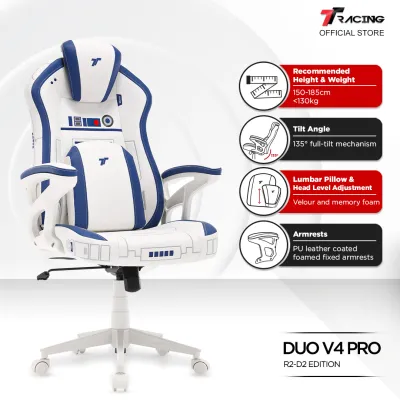
![[SG Ready Stocks] Ergonomic Office Chair - 8.5cm Thick Cushion + Antislip Surface Adjustable Backrest & Detachable Headrest Flip-Up Arms Rocking & Lock Function 15-Min Easy Assemble for Home/Office](https://img.lazcdn.com/g/p/056ecb65b2a442dd9a476ff654362085.jpg_400x400q80.jpg_.webp)
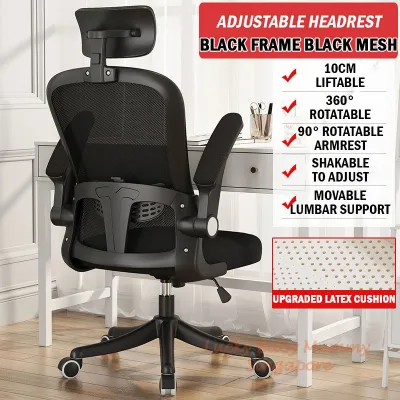
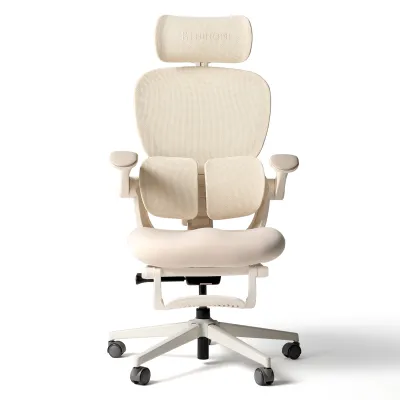
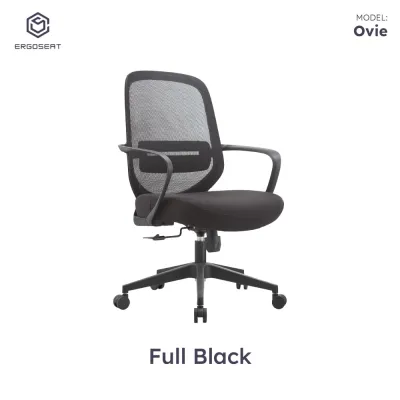
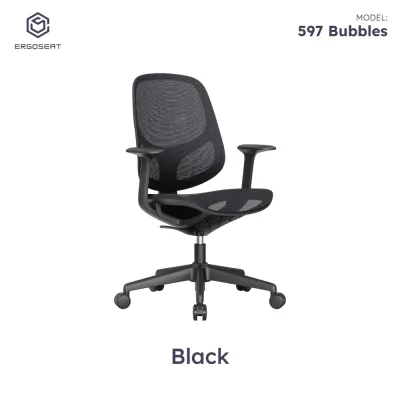
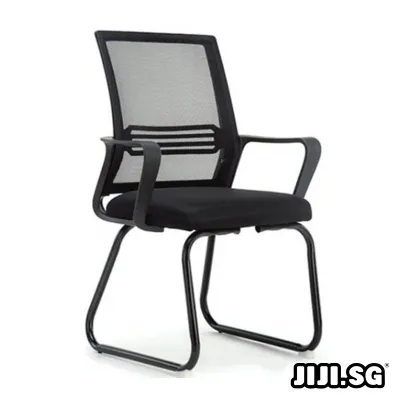
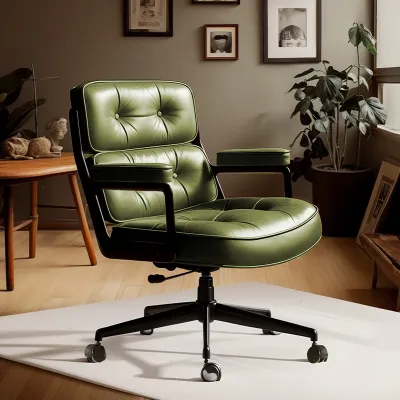
Prices are valid at publication and may change. Please refer to the product page for the latest price.
The lumbar support mechanism is the foundation of any ergonomic chair. Lower-tier brands often feature fixed plastic bands or basic cushions that cannot be adjusted, which may not align with your specific spinal curve. Mid-to-high-range brands typically offer adjustable lumbar support, allowing you to change either the height, the depth, or both. Some advanced models feature dynamic lumbar systems that automatically pivot and adjust tension as you shift your weight. When comparing brands, verify whether the lumbar support can be locked into place or if it relies on auto-tuning mechanisms, as some users prefer manual control over automatic resistance.
Armrest versatility is another key differentiator across brand tiers. Armrests are typically categorized by their degrees of freedom, ranging from 1D (vertical height adjustment only) to 4D (height, width, depth, and pivot angle). For a home office, 3D or 4D armrests are highly beneficial because they allow you to pull the chair close to your desk while keeping your elbows supported at a 90-degree angle, reducing strain on your shoulders and neck. Check the armrest pad material as well; slightly soft polyurethane pads generally offer better pressure relief than hard plastic.
Seat depth and tilt mechanisms dictate how well a chair supports dynamic sitting. A seat slide mechanism allows you to adjust the depth of the seat pan forward or backward. This is crucial for maintaining a proper gap (approximately two to three fingers wide) between the edge of the seat and the back of your knees, preventing restricted blood circulation. Additionally, look for synchro-tilt mechanisms rather than simple tilt locks. A synchro-tilt mechanism reclines the backrest at a greater ratio than the seat pan (typically 2:1), which keeps your feet planted firmly on the floor and maintains proper spinal alignment even when you lean back to rest.
Evaluating Build Quality and Material Durability
While ergonomic features determine immediate comfort, build quality dictates how long the chair will maintain that support. A chair that feels comfortable in a showroom may begin to sag, squeak, or lose its adjustment tension within a few months if the structural components are substandard.

The frame and base materials form the structural backbone of the chair. Entry-level models often utilize reinforced nylon or plastic bases, which are lightweight but can degrade or flex under heavy loads over time. Premium models generally feature heavy-duty aluminum alloy or steel bases. When comparing brands, always check the manufacturer’s specified load capacity and the overall diameter of the five-star base. A wider base provides greater stability and prevents the chair from tipping when fully reclined. Additionally, consider the assembly conditions; some brands deliver chairs fully assembled, while others require self-assembly, which demands checking that all joints and bolts can be securely tightened without stripping the threads.
Upholstery longevity is particularly important in Singapore’s warm and humid climate. High-density molded foam is excellent for distributing weight evenly and retaining its shape over years of use, but it can trap body heat if wrapped in non-breathable synthetic fabrics. Mesh upholstery offers excellent ventilation, keeping you cool during long working sessions without air conditioning. However, not all mesh is created equal. Low-quality mesh can stretch and sag over time, causing your pelvis to bottom out against the frame. Look for brands that specify the use of multi-zone woven mesh, which provides varying levels of tension across the seat and backrest to support different pressure points.
The moving parts, specifically the gas lift cylinder and the casters, are common failure points. The gas lift cylinder is responsible for height adjustments and must bear the user’s weight constantly. Ensure the chair uses a certified Class 3 or Class 4 gas lift, which indicates thicker steel walls and higher pressure resistance. For the casters, verify the material based on your home flooring. Hard nylon casters are suitable for carpets but can scratch parquet, vinyl, or tiled floors. If you have hard flooring, look for polyurethane-coated or rubberized casters that glide smoothly without leaving marks or generating excessive noise.
Using Warranties to Gauge Brand Reliability
A brand’s warranty policy is often the most reliable indicator of its manufacturing confidence and the actual lifespan of the chair. Because home office chairs are subject to daily mechanical stress, a comprehensive warranty protects your investment and ensures long-term utility.
When comparing warranties, it is essential to look beyond the headline number of years and examine the coverage scope. Many brands advertise a long warranty period, such as five to ten years, but a closer look at the terms reveals that this only covers the structural steel frame. The moving parts, such as the tilt mechanism, gas lift, and armrest adjusters, may only be covered for one or two years, while the mesh or fabric upholstery might have no coverage against wear and tear. Prioritize brands that offer clear, transparent breakdowns of what is covered under each component category.
The duration and conditions of the warranty often scale with the price tier of the chair. Premium brands frequently offer extensive, comprehensive warranties that cover both structural and mechanical components for up to ten years or more. Mid-range brands typically offer three to five years of coverage. Be sure to read the fine print regarding common exclusions. Standard wear and tear, such as minor cosmetic scuffs, fabric pilling, or gradual softening of the foam, are universally excluded from warranty coverage.
After-sales support and service accessibility are critical practical considerations for Singapore residents. Verify whether the brand has a local service center or authorized distributor in Singapore to handle claims. If a component fails, find out if you are required to transport the heavy chair to a service center yourself, or if the brand provides on-site repair services. Some brands offer self-service replacement parts that can be shipped directly to your home with clear installation instructions, which can save significant time and hassle.
Decision Framework: Matching Chair Specs to Your Work Style
To choose the right computer chair for home use, you must match the chair’s specifications to your daily routine, physical requirements, and home workspace constraints. Rather than buying the most expensive model, focus on the features that directly address your specific usage patterns.
If your work requires you to sit for long, continuous sessions exceeding six hours a day, investing in a highly adjustable, premium-tier chair is highly recommended. For these extended periods, precise adjustments like a seat slide, 4D armrests, and an adjustable lumbar support system are necessary to prevent cumulative physical strain. Look for models with certified high-density molded foam or premium elastomeric mesh that can withstand constant pressure without losing structural integrity.
For moderate daily usage, such as three to five hours of intermittent work or study, a mid-range chair with reliable basic adjustments is often the most practical choice. You can prioritize a stable frame, a certified Class 4 gas lift, and a comfortable synchro-tilt mechanism while opting for simpler 2D or 3D armrests and a fixed but well-positioned lumbar support. This approach ensures you receive the necessary structural durability and basic ergonomic support without paying for advanced customization features you may not frequently use.
Before finalizing any purchase, always verify the physical dimensions of the chair against your available home office space. Measure your desk height, the clearance between your desk drawers, and the width of your doorways or lift access to ensure the chair can be easily moved and stored. If you have specific physical conditions or chronic back pain, consult a medical professional for personalized ergonomic recommendations. Finally, check the brand’s return policy; because comfort is highly subjective, a trial period that allows you to test the chair in your actual home environment is incredibly valuable.
Frequently Asked Questions (FAQ)
How do I test a computer chair for home before buying online?
To test a chair effectively, visit local showrooms or brand experience centers in Singapore where you can sit in the chair for at least fifteen to twenty minutes. Adjust the seat height so your feet are flat on the floor, and check if the lumbar support aligns comfortably with your lower back. Measure your home desk height beforehand and compare it with the chair’s armrest height specifications to ensure it will fit under your workspace. Additionally, review the online marketplace or brand’s return policy to see if they offer a home trial period with hassle-free returns.
Does a higher price always guarantee better build quality?
A higher price does not automatically guarantee superior build quality, though it often correlates with more advanced ergonomic mechanisms and longer warranty periods. Some premium pricing is driven by brand prestige, aesthetic design, or imported shipping costs. To ensure you are paying for actual durability, look past the brand name and evaluate specific material specifications, such as an aluminum base, a Class 4 gas lift, and a comprehensive warranty that covers moving parts for several years. Comparing these objective metrics will help you find high-quality construction at a reasonable price point.

Community discussion
Share your experience or ask a question. Comments are reviewed before publication.