
Selecting the ideal bed headboard for a Housing & Development Board (HDB) flat in Singapore requires a careful balance between spatial efficiency and personal style. With the compact layouts of modern Build-To-Order (BTO) flats and the unique structural layouts of older resale units, a headboard is no longer just an aesthetic statement; it is a functional component that impacts room flow, storage, and comfort. While many furniture brands in Singapore offer stylish options, the right choice depends entirely on your specific bedroom layout, clearance limits, and the local climate. This guide compares the design approaches, space-saving features, and material finishes across popular brand categories to help you shortlist bed headboards that fit your room’s physical limits and interior theme.
Key Spatial and Aesthetic Constraints for HDB Bedrooms
Evaluating your specific HDB bedroom layout is the essential first step before browsing furniture catalogs. Modern HDB master bedrooms typically range from 10 to 14 square meters, while common bedrooms are often smaller, sometimes measuring under 9 square meters. In these compact spaces, every centimeter of floor space and visual clearance directly affects how comfortable and functional the room feels.
Ceiling height and wall proportions play a major role in how a headboard influences the perception of space. Standard HDB ceilings are approximately 2.6 meters high. An excessively tall or visually heavy headboard—such as a high-profile tufted design exceeding 1.2 meters in height—can visually cut the wall in half. This horizontal division makes the ceiling feel lower and the entire room more confined. For smaller rooms, low-profile headboards or designs with vertical slats can draw the eye upward, creating an illusion of greater vertical space.
Products mentioned in this guide
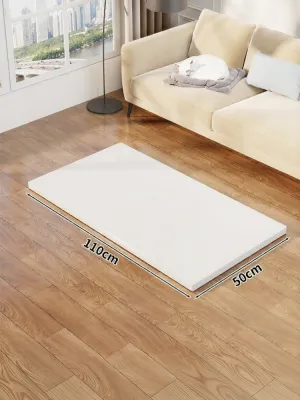
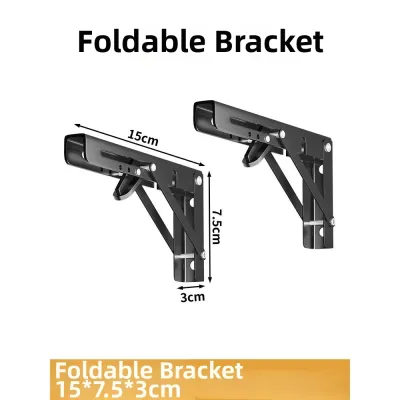
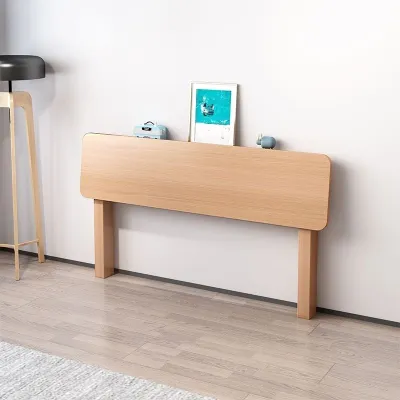
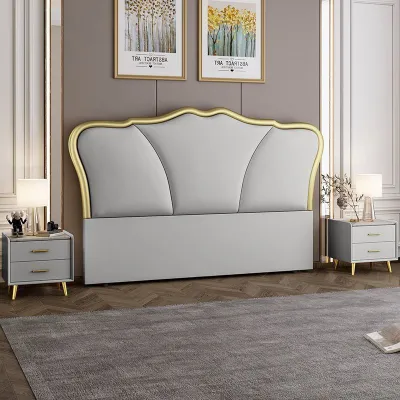
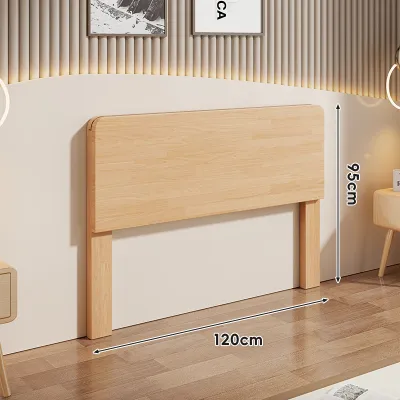
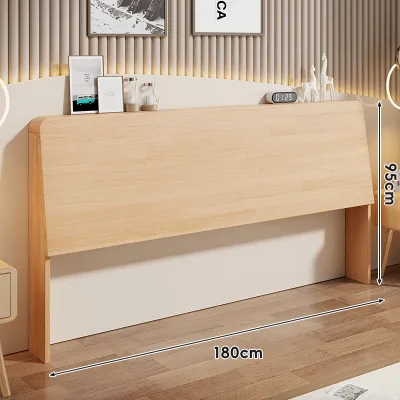
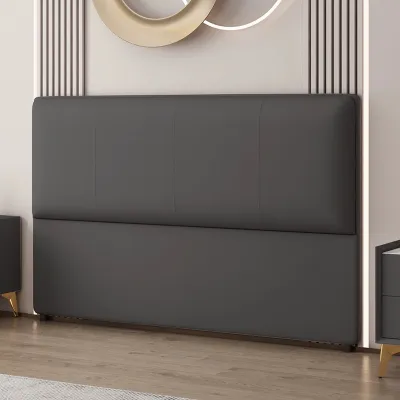
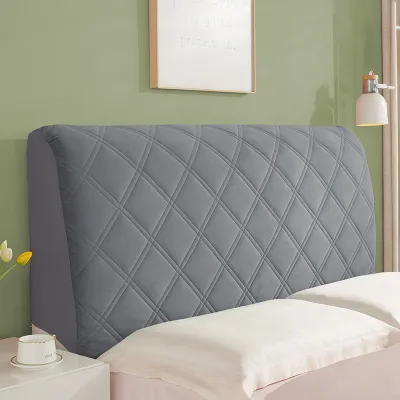
Prices are valid at publication and may change. Please refer to the product page for the latest price.
Room width and walkway clearance are equally critical physical limits. To maintain comfortable circulation, a bedroom walkway should ideally have at least 60 to 70 centimeters of clear space. A standard queen-sized mattress is 190 centimeters long, but a thick, heavily padded upholstered headboard can add another 15 to 25 centimeters to the overall length of the bed frame. In a narrow HDB bedroom, this extra depth can severely restrict the walkway at the foot of the bed, potentially blocking wardrobe doors or making it difficult to move around. Choosing a slim panel headboard with a depth of 5 centimeters or less preserves precious floor space.
Visual weight, color palettes, and textures also dictate how well a headboard integrates into typical HDB interior themes like Scandinavian, Japandi, or modern minimalist. Heavy, dark wood or dark leather headboards absorb light and can make a small room feel gloomy. Conversely, lighter wood tones, neutral fabrics, and slim metal frames reflect light and maintain an open, airy feel. When selecting a headboard, consider how its texture and color will interact with your bedroom’s natural light and wall paint to avoid overwhelming the space.
Comparing Headboard Design Approaches Across Popular Brands
Different furniture brands in Singapore address the challenges of compact HDB living through distinct design philosophies. Understanding these brand categories and their design specialties allows you to match their offerings with your specific spatial and functional needs.

Storage-integrated headboards are a popular solution offered by brands specializing in multi-functional furniture. These designs feature built-in shelving, hidden compartments, or sliding panels, effectively replacing the need for traditional bedside tables. This is highly advantageous for narrow HDB bedrooms where there is no space on either side of the bed. However, storage headboards are inherently deep, often measuring between 20 and 30 centimeters. When evaluating these options, you must verify that the added depth does not prevent you from opening swing-door wardrobes or accessing the bedroom entry door.
Low-profile and minimalist designs are the hallmark of brands focusing on Scandinavian or Japanese aesthetics. These brands typically offer slim wooden or metal headboards that prioritize a clean, uncluttered look. With depths often ranging from just 2 to 5 centimeters, these headboards maximize the available length of the room, leaving more space for walkways. The minimalist construction also keeps the visual line low, which helps maintain an open feel in rooms with standard HDB ceiling heights.
Upholstered and padded options are favored by brands that emphasize comfort, luxury, and acoustic dampening. Padded headboards provide comfortable back support for sitting up to read or watch television, and the fabric helps absorb sound, which is beneficial in high-density HDB blocks. However, upholstered headboards present a trade-off in depth and maintenance. To avoid overcrowding a small room, look for brands that offer slim-profile padded headboards (under 10 centimeters deep) rather than bulky, deep-tufted designs that extend far from the wall.
Evaluating price-to-value ratios across different budget tiers is essential for aligning your expectations with construction quality. Entry-level headboards (typically under S$300) are commonly made of basic particleboard finished with thin paper foil or low-pressure laminates. While budget-friendly, they may lack long-term durability in humid conditions. Mid-range options (S$500 to S$1,200) often feature higher-quality engineered wood, such as Medium-Density Fibreboard (MDF) or plywood, finished with durable high-pressure laminates (HPL) or real wood veneers. Premium options (above S$1,500) generally offer solid timber construction, premium natural fabrics, or custom upholstery with superior joinery and structural stability.
Material and Finish Considerations for Humid Environments
Singapore’s tropical climate, characterized by high relative humidity that frequently exceeds 80 percent, poses significant challenges for furniture materials. Selecting the wrong material or finish can lead to premature warping, peeling, or mold growth, making durability a key consideration.
When evaluating engineered woods and laminates, it is crucial to check manufacturer specifications for moisture resistance. Standard particleboard and low-grade MDF are highly susceptible to moisture absorption, which causes the fibers to swell and the laminate to peel. Inspect the quality of the edge banding on any laminate headboard; seamless, high-quality edge banding acts as a barrier, preventing humid air from penetrating the inner core. Plywood and moisture-resistant MDF grades perform significantly better over time in local conditions.
For upholstered headboards, fabric selection and maintenance requirements are paramount. High humidity can trap moisture and dust mites in fabric fibers, leading to musty odors or allergen buildup. To mitigate this, look for fabrics treated with moisture-resistant, stain-resistant, or anti-microbial coatings. Removable and washable covers are highly recommended, as they allow for thorough cleaning. Synthetic fibers like polyester or nylon blends generally withstand humidity better than natural linen or cotton, which tend to absorb more moisture from the air.
Structural stability and the suitability of mounting hardware must also be verified. A headboard must be securely attached to prevent wobbling or tipping. If you are choosing a heavy solid wood or thickly padded headboard, ensure the frame features robust joinery, such as mortise-and-tenon or dowel joints, rather than simple glue-and-screw construction. The mounting mechanism must be compatible with your specific bed frame or wall type to ensure long-term safety.
How to Measure and Verify Fit Before Purchasing
To avoid delivery-day disappointments, you must perform precise measurements and verify the compatibility of your chosen headboard with your bedroom’s physical layout and existing furniture.
Begin by measuring the exact width of the wall where the bed will be placed, taking note of any architectural features. Do not assume the wall is perfectly flat or empty. Measure the thickness of your skirting boards, which typically add 1.5 to 2 centimeters of depth at the base of the wall. A standard freestanding headboard may not sit flush against the wall if the skirting board pushes the bed frame forward, creating a gap where dust, pillows, or small items can fall. Some modern bed frames feature recessed legs or cutouts at the back to accommodate skirting boards, which is an excellent feature to look for.
Identify the placement of power outlets, light switches, and data ports on the bed wall. HDB flats often have double power sockets positioned on the main wall behind the bed. A solid headboard can completely block access to these outlets, forcing you to run extension cords or leave a large gap between the headboard and the wall. Measure the height and horizontal position of these outlets relative to your bed frame to ensure the headboard either sits below them, fits between them, or features built-in cutouts for cable management.
Verify bed frame compatibility before purchasing a standalone headboard. Headboards generally attach in one of three ways: bolt-on, freestanding, or wall-mounted. Bolt-on headboards require matching bracket holes on your existing bed frame; you must check the spacing and thread size of these brackets, as standards can vary between European, American, and Asian sizing. Freestanding headboards rely on the weight of the bed frame pushing them against the wall, which requires a heavy, stable bed frame to prevent shifting. Wall-mounted headboards require drilling directly into the wall, which brings specific structural considerations.
Finally, plan the delivery route from the loading bay to your bedroom. This is a crucial step that is often overlooked. Measure the height and width of the HDB lift door, the interior dimensions of the lift, the width of your corridor, and the turning radius of your front door and bedroom door. Large, pre-assembled headboards or king-sized frames may not fit into standard HDB passenger lifts or around tight corridor corners. If the delivery team cannot maneuver the item through the lift, you may face additional manual carrying charges, or the item may have to be returned.
Frequently Asked Questions (FAQ)
Can I install a wall-mounted headboard in an HDB flat?
Yes, you can install a wall-mounted headboard in an HDB flat, but you must first identify the wall type. Internal walls in HDB flats are typically either non-structural partition walls (such as drywall or lightweight concrete blocks) or structural reinforced concrete walls. Mounting a heavy headboard on a drywall partition requires locating the internal metal studs or using specialized heavy-duty toggle bolts to distribute the weight safely. For structural concrete walls, you will need a rotary hammer drill and appropriate masonry wall plugs. Always use a stud finder with a metal and live-wire detection mode before drilling to avoid damaging concealed electrical conduits or water pipes. If you are unsure of the wall structure or lack the necessary tools, it is highly recommended to engage a qualified professional installer.
Do I need a headboard if my bed is placed against a window?
If your bedroom layout requires placing the bed against a window, a traditional tall headboard is not recommended because it will block natural light and restrict access for opening, closing, or cleaning the window. In this scenario, you can opt for an ultra-low-profile headboard that sits entirely below the window sill, or choose a bed frame without a headboard. Be mindful of environmental factors when placing a bed near a window in Singapore. Direct sunlight exposure can cause fabrics to fade and wood finishes to crack or discolor over time. Additionally, condensation from rain or air conditioning can accumulate on the window pane and transfer moisture to the back of the bed. Ensure there is a small gap of at least 5 to 10 centimeters between the bed and the window to allow for proper air circulation and protect your furniture from moisture damage.

Community discussion
Share your experience or ask a question. Comments are reviewed before publication.