
Choosing between a click-clack and a pull-out foldable sofa cum bed for frequent conversion in a Singapore home requires balancing daily physical effort, available floor clearance, and comfort priorities. There is no single winner that suits every household. Click-clack models excel in rapid, low-effort transformation for compact spaces, making them ideal for tight study rooms or multi-functional living areas. Pull-out designs generally offer superior traditional seating and sleeping comfort, but they require significant forward clearance and more physical handling to set up. By understanding how these mechanisms interact with your daily routine and room layout, you can make an informed decision that avoids buyer’s remorse.
How Click-Clack and Pull-Out Mechanisms Actually Work
To choose the right foldable sofa cum bed, you must first understand the physical engineering behind each design. The click-clack mechanism, often associated with modern futon-style furniture, operates on a specialized hinge system connecting the seat and the backrest. To convert it, you lift the seat section forward until you hear an audible click, which unlocks the mechanism, and then lay the backrest flat to form a continuous sleeping surface. Because this design relies on the sofa’s existing cushions as the mattress, it features a streamlined, integrated structure without a separate hidden frame.
In contrast, a pull-out mechanism—frequently designed as a trundle, drawer, or fold-out frame—utilizes a multi-tiered structure hidden beneath the main seating area. To operate this style, you pull a handle or strap at the base of the sofa, sliding a concealed frame forward on tracks or casters. Depending on the specific model, the sleeping surface either rises to meet the seat level or unfolds a separate, dedicated mattress from within the sofa body. This design allows the sofa to retain its original backrest and armrests, keeping the seating and sleeping structures mechanically distinct.
Products mentioned in this guide
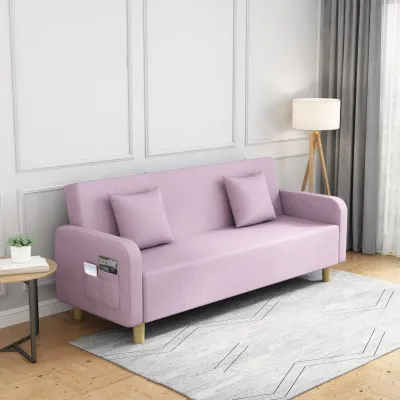
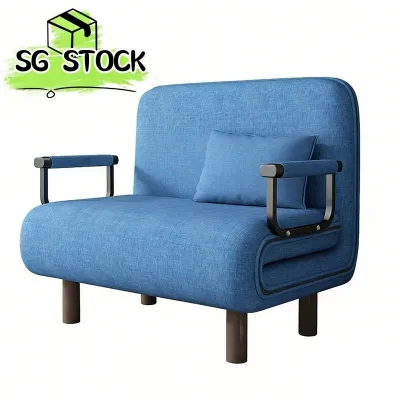
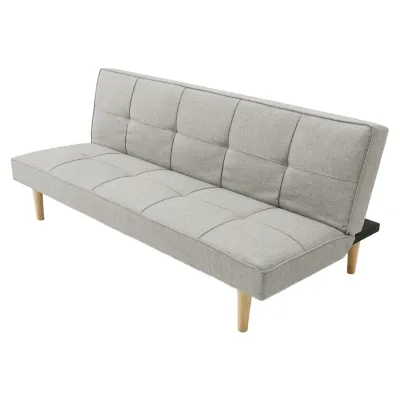
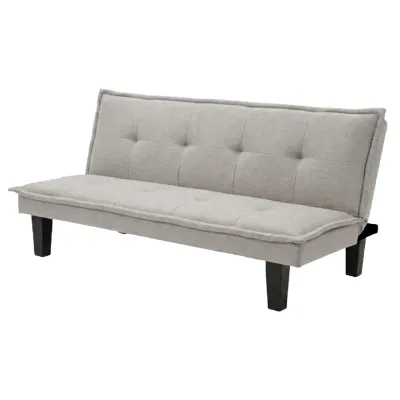
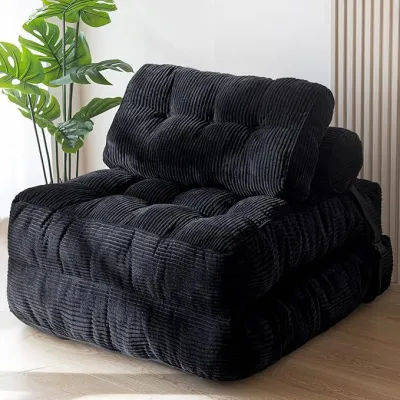
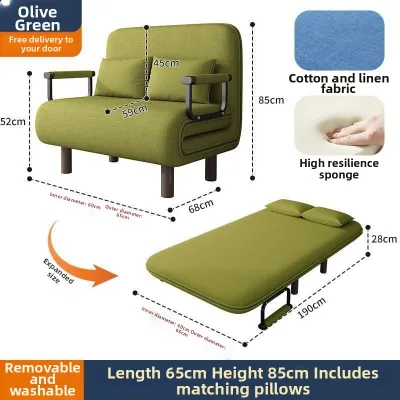
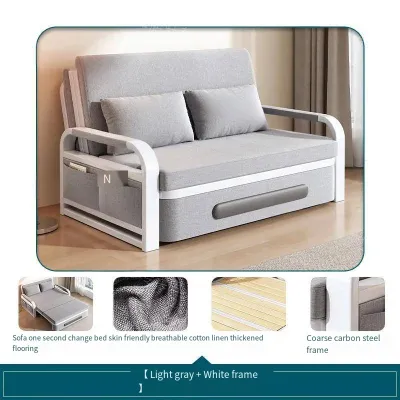
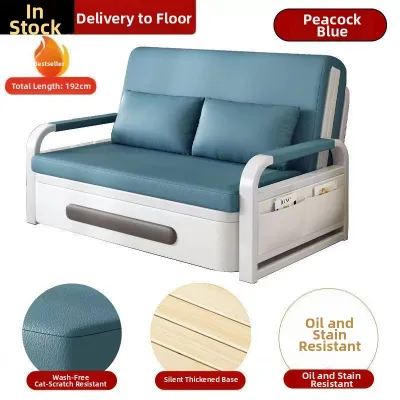
Prices are valid at publication and may change. Please refer to the product page for the latest price.
Before making a purchase, it is essential to check the manufacturer’s specifications and product labels for the exact materials used in these moving parts. Look for robust metal hinges in click-clack models and reinforced steel tracks or smooth-rolling casters in pull-out designs. Verifying the stated weight limits and frame materials ensures the mechanism can withstand the mechanical stress of daily conversion without warping or failing prematurely.
Daily Conversion Effort: Which is Easier to Operate?
When a piece of furniture must transition between a sofa and a bed every day, the physical effort required for conversion becomes a primary consideration. The click-clack mechanism is highly favored for its low step count and minimal physical strain. Unlocking the hinge and lowering the backrest typically takes only a few seconds and requires very little lifting force. This makes it an excellent option for households where children, older adults, or individuals with limited physical strength will be operating the bed regularly.

Pull-out models, on the other hand, demand a higher level of physical engagement and a multi-step process. Pulling a heavy metal or wooden base out from under the sofa requires a firm grip and core strength, especially on carpeted surfaces. Additionally, many pull-out designs require you to remove the primary seating cushions, store them elsewhere in the room, and then unfold a separate mattress. If you plan to convert the bed daily, this repetitive lifting and rearranging can quickly become a tedious chore.
To ensure long-term usability, always check the weight of the moving parts and test the smoothness of the sliding tracks or hinges if a display model is available. For homes in Singapore with vinyl, laminate, or polished tile flooring, floor protection is another critical factor. You must verify whether the bottom casters or feet of a pull-out bed are made of soft, non-marking rubber or polyurethane. Hard plastic wheels can easily scratch or dent delicate flooring over months of frequent pull-out actions, necessitating the use of protective rugs or caster cups.
Sitting and Sleeping Comfort: Managing the Trade-Offs
The comfort of a foldable sofa cum bed is inherently tied to its mechanical design, creating distinct trade-offs between sitting and sleeping ergonomics. In sofa mode, pull-out designs generally offer a superior, more traditional seating experience. Because the sleeping frame is tucked away underneath, the sofa can feature deep, angled seats, supportive backrests, and plush armrests that mimic a standard living room couch. Click-clack models, by comparison, must maintain a flatter, more symmetrical profile to ensure the bed mode is level, which often results in shallower seating, thinner padding, and restricted reclining angles.
When converted to sleep mode, the comfort dynamics shift. Pull-out beds often accommodate a dedicated, independent mattress—such as pocket spring or high-density memory foam—supported by a wooden slat or metal mesh base. This setup provides consistent, body-contouring support similar to a standard bed. Click-clack beds, however, require you to sleep directly on the sofa cushions. This configuration frequently introduces a central folding gap where the seat and backrest meet, which can cause discomfort, uneven firmness, and spinal misalignment during extended use.
To mitigate these comfort issues, carefully review the product specifications regarding filling density and spring types. High-density polyurethane foam or pocketed coils offer better longevity and support than low-density foam. If you intend to use a click-clack model for daily sleeping, check whether the flat dimensions match standard bedding sizes so you can easily add a supportive mattress topper. Keep in mind that a topper will require separate storage space during the day when the sofa is folded back into seating mode.
Space Planning: Clearance and Layout Compatibility
In Singapore’s compact residential layouts, such as HDB flats and condominiums, spatial efficiency is paramount. The way each mechanism unfolds dictates how you must arrange the surrounding furniture. A click-clack sofa bed extends backward as the backrest flattens. This means you cannot place the sofa flush against a wall; you must leave a clearance gap of several centimeters behind the frame, or be prepared to slide the entire sofa forward every time you want to convert it. This backward extension makes click-clack models highly suitable for open-plan spaces or rooms where the sofa acts as a divider.
Conversely, a pull-out sofa bed extends forward into the room, requiring significant floor clearance in front of the sofa. When fully deployed, a pull-out bed can easily double or triple the sofa’s original depth. This forward extension demands that the space in front of the sofa remains clear of heavy, immovable furniture. If you have a coffee table, a media console, or side tables, you must ensure they are lightweight or equipped with wheels so they can be easily pushed aside during the nightly conversion process.
Before purchasing any foldable sofa cum bed, create a precise layout plan using your room’s dimensions. Measure the width of your door frames, hallways, and lift access to ensure the delivery team can safely transport the furniture into your home. Additionally, calculate the safe walking distance around the fully deployed bed. You should maintain at least 50 to 60 centimeters of clearance on at least one side of the bed to allow for comfortable movement and easy bed-making without feeling cramped.
Decision Framework: Choosing the Right Foldable Sofa Cum Bed
To finalize your choice, evaluate your household’s specific spatial constraints, budget, and usage patterns against a clear decision framework.
You should choose a click-clack mechanism if:
- Your available floor space is extremely limited, and you cannot accommodate a bed that extends far into the room.
- The conversion frequency is very high, and you require a quick, single-motion setup that takes less than a minute.
- Your budget is constrained, as click-clack models generally feature simpler mechanical designs and lower price points.
- The bed is primarily intended for occasional overnight guests or short naps rather than daily, long-term sleeping.
You should choose a pull-out mechanism if:
- Traditional sofa aesthetics, deep seating comfort, and proper back support are your top priorities during the day.
- Your room layout offers ample forward clearance, allowing the bed to extend fully without blocking essential walkways.
- Sleep quality is a critical concern, and you require the consistent support of a thicker, dedicated mattress.
- You do not mind the extra physical effort and step count required to set up and pack away the bed each day.
Regardless of the mechanism you select, always verify several practical product details before finalizing your order. Check if the specific model requires complex home assembly or if professional installation is provided. In Singapore’s warm and humid climate, look for models with removable, washable fabric covers or breathable materials to prevent moisture buildup and simplify maintenance. Finally, review the warranty terms carefully, ensuring that the mechanical moving parts—such as hinges, tracks, and joints—are fully covered against manufacturing defects.
Frequently Asked Questions (FAQ)
Do click-clack sofa beds require a mattress topper for daily sleeping?
Yes, if you plan to use a click-clack sofa bed for daily sleeping, adding a mattress topper is highly recommended. Because click-clack designs require you to sleep directly on the split cushions, you will likely feel the central hinge gap and uneven firmness over time. A high-density foam or latex mattress topper helps bridge this gap, distributing your body weight more evenly and protecting your spine. Before purchasing, verify that the flat dimensions of the sofa bed align with standard single, super single, or queen-size toppers, and ensure you have a dedicated closet or storage chest to keep the topper during the day.
How much clearance space is needed in front of a pull-out sofa bed?
A pull-out sofa bed typically requires between 150 to 210 centimeters of clear, unobstructed space directly in front of the sofa backrest to unfold completely. To determine the exact clearance needed for your specific model, check the manufacturer’s fully extended depth specification. In addition to this measurement, you must factor in an extra 50 to 60 centimeters of walking space at the foot or sides of the bed to allow for safe movement, sheet changing, and daily access. Remember to account for any nearby swing doors, wardrobe doors, or heavy furniture that might obstruct the path of the pull-out frame during deployment.

Community discussion
Share your experience or ask a question. Comments are reviewed before publication.