
Selecting a wardrobe cabinet with a mirror for a Housing & Development Board (HDB) bedroom requires balancing tight spatial footprints with functional design. Because typical HDB bedrooms—especially in newer Build-To-Order (BTO) flats—range from approximately 9 to 12 square meters, every centimeter of floor space and visual clearance matters. A mirror-integrated wardrobe serves a dual purpose: it provides essential clothing storage while reflecting light to make a compact room feel significantly larger. However, finding the right option involves evaluating how different furniture brands, modular systems, and custom carpentry options fit into these standardized layouts.
To make an informed decision, homeowners must look beyond aesthetics and assess structural stability, door mechanisms, and material resilience against Singapore’s humid climate. Whether you opt for a ready-to-assemble modular wardrobe from a global retailer or a fully customized built-in unit from a local carpenter, the key is verifying how the physical dimensions and weight of the mirror panels interact with your specific room layout. This guide outlines the essential spatial measurements, brand evaluation criteria, and installation checks needed to select the ideal mirror wardrobe for your HDB home.
Assessing HDB Bedroom Dimensions for Mirror Wardrobes
HDB bedrooms require precise spatial planning to ensure that furniture does not obstruct daily movement or access to windows and air-conditioning units. In a standard master bedroom or common bedroom, the walkway clearance between the edge of the bed and the wardrobe doors should ideally be at least 60 to 70 centimeters. This clearance allows a person to walk past comfortably without squeezing. If you choose a wardrobe with hinged doors, you must add the width of the door leaf (typically 40 to 50 centimeters) to this clearance, meaning you need at least 100 to 120 centimeters of open space between the wardrobe frame and the bed.
Products mentioned in this guide
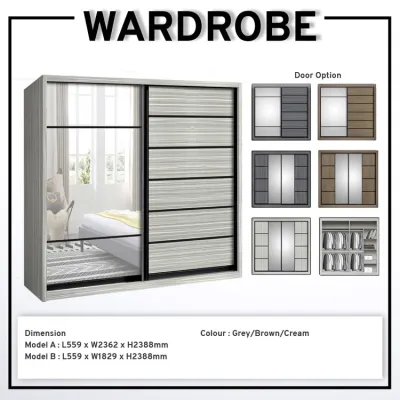
![[HOMIEST] TIA Melamine Half mirror Sliding Wardrobe in 4ft / 5ft](https://img.lazcdn.com/g/p/1776dd130c23b379885663629e56b0c8.jpg_400x400q80.jpg_.webp)
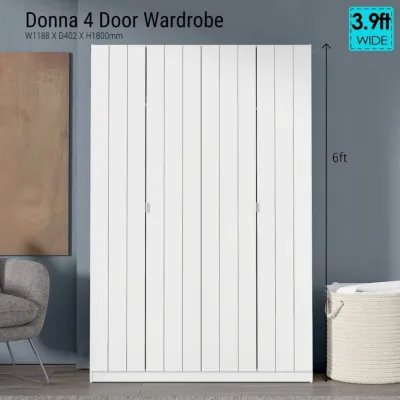
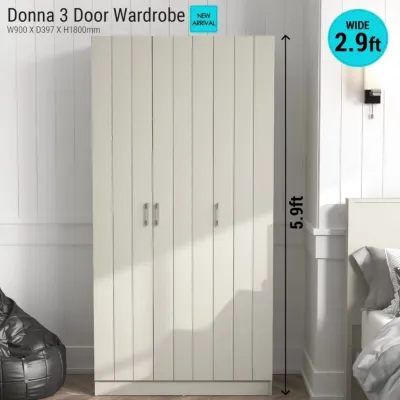
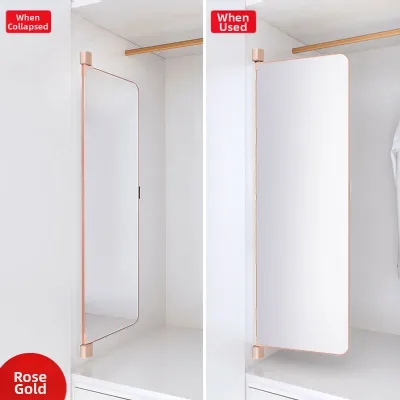
![[SG Stock]Wardrobe built-in full-length mirror folding sliding mirror escopic rotary mirror](https://img.lazcdn.com/g/p/cdcab0a79217e9d922a1789ba01f067d.jpg_400x400q80.jpg_.webp)
Prices are valid at publication and may change. Please refer to the product page for the latest price.
For rooms where the bed sits close to the wardrobe, sliding door configurations are highly advantageous. Sliding doors operate entirely within the wardrobe’s physical footprint, eliminating the need for outward swing clearance. This allows you to place the wardrobe as close as 50 centimeters from the bed frame while maintaining full access to your clothes. However, sliding door wardrobes are generally deeper than hinged ones—often requiring 65 to 70 centimeters of total depth to accommodate the sliding track mechanism, compared to the 55 to 60 centimeters required for hinged doors.
The visual impact of a full-length mirror in an HDB bedroom is substantial. Placing a mirror wardrobe opposite a window allows natural light to bounce throughout the room, instantly brightening dark corners and creating an illusion of double the depth. However, homeowners should consider the spatial flow and personal comfort regarding mirror placement. A mirror directly facing the bed can sometimes cause unwanted reflections or glare during the night, so angling the wardrobe or choosing a partial mirror configuration can help balance light distribution with a restful sleeping environment.
Criteria for Evaluating Wardrobe Brands in Singapore
When comparing wardrobe brands in Singapore, the first major decision point is choosing between modular fixed-size systems and custom carpentry. Modular brands offer cost-effective, rapid solutions with standardized widths (typically in increments of 50, 100, or 150 centimeters) and heights (usually around 200 to 236 centimeters). While these work well in square, unobstructed rooms, they can leave awkward gaps in bedrooms with structural pillars, low-hanging beams, or uneven ceilings. Custom carpentry brands, on the other hand, allow you to maximize vertical space up to the ceiling, preventing dust accumulation on top of the wardrobe, though they require longer lead times and a higher initial budget.

Material durability is a critical factor due to Singapore’s high relative humidity, which often hovers around 80% year-round. Homeowners should check the core materials used by different brands. Medium-density fibreboard (MDF) and particleboard are common in budget-friendly modular wardrobes, but they must be sealed with high-quality edge banding to prevent moisture from penetrating the core and causing warping or swelling. For long-term durability, look for brands that utilize high-pressure laminates, plywood cores, or moisture-resistant engineered wood. Inspecting the quality of the edge banding—ensuring there are no visible gaps or loose seams—is a reliable way to gauge how well the wardrobe will withstand local climate conditions.
After-sales support and local warranties are equally important when purchasing heavy furniture containing large glass components. A reputable brand should offer a clear warranty covering structural defects, door alignment issues, and hardware failures (such as drawer runners and door hinges) for at least one to five years. Because mirror wardrobes are exceptionally heavy and challenging to align correctly on uneven floors, verifying whether the brand provides professional assembly and installation services is essential. Self-assembly of large mirror doors carries a high risk of glass breakage or improper track alignment, which can void warranties and compromise safety.
Mirror Integration Styles and Space Efficiency
The way a mirror is integrated into a wardrobe door significantly affects both the room’s visual weight and the wardrobe’s structural integrity. Full-mirror facades, where the entire door surface is covered in glass, offer the maximum reflective surface area, making them excellent for small, dark bedrooms. However, a full-mirror design can dominate the room’s aesthetic and require frequent cleaning to remove fingerprints. Partial mirror accents—such as a single mirrored panel on a three-door wardrobe or a horizontal mirror strip—provide a more balanced look while still offering a functional dressing mirror.
Integrating large glass panels into wardrobe doors adds substantial weight to the overall structure. A single full-length mirror panel can weigh upwards of 15 to 20 kilograms, placing immense stress on the door frame, hinges, or sliding tracks. Homeowners must verify that the wardrobe frame is constructed from robust materials capable of supporting this load without sagging over time. Brands should use reinforced backing panels and heavy-duty hardware specifically rated for the weight of the glass to ensure the doors remain stable and safe during daily operation.
Sliding Door Mechanisms vs. Hinged Doors
Choosing between sliding and hinged doors for a mirror wardrobe involves weighing spatial efficiency against mechanical complexity. Sliding door systems are the premier choice for tight HDB bedrooms because they do not project into the room’s walking paths. However, the sliding tracks themselves require regular maintenance and take up about 5 to 10 centimeters of the wardrobe’s internal depth. This means the overall cabinet must be deeper to ensure that hanging clothes do not rub against the back of the sliding mirror doors, which can cause the doors to stick or derail.
Hinged doors offer complete access to the entire wardrobe interior at once, unlike sliding doors which always block at least half of the cabinet. Hinged systems are also mechanically simpler, relying on standard concealed hinges that are easy to adjust, tighten, or replace if they sag. However, because the weight of the mirror is concentrated on one side of the door frame, hinged mirror doors require high-quality, soft-closing hinges with multiple mounting points to prevent the door from dropping or pulling away from the cabinet carcass over time.
Internal vs. External Mirror Placements
The placement of the mirror—whether mounted externally on the door face or concealed internally—changes how you interact with your bedroom space. External mirrors are highly convenient for quick outfit checks and actively contribute to the room’s brightness by reflecting light continuously. The main trade-off is exposure; external mirrors are prone to smudges, dust, and accidental impacts, and some homeowners find the constant reflection of the room visually distracting when trying to rest.
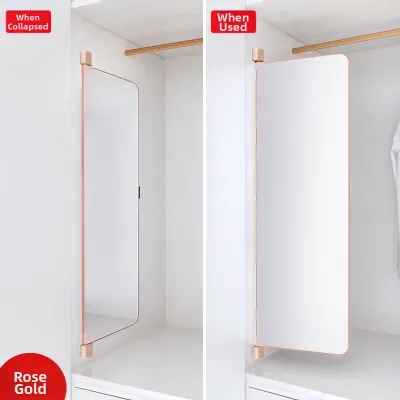
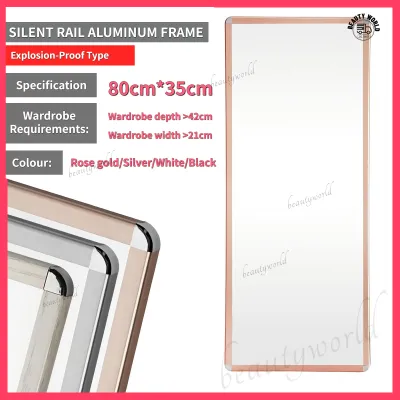
Concealed internal mirrors are typically mounted on the inside of a hinged wardrobe door or installed on a pull-out, rotatable track inside a sliding wardrobe. This configuration maintains a clean, minimalist exterior facade, keeping the bedroom free of reflective surfaces when the wardrobe is closed. It also protects the glass from dust and accidental bumps. The limitation is accessibility; you must open the wardrobe door every time you wish to use the mirror, which can be inconvenient and may temporarily block walkways or light sources within the room.
Sourcing and Verifying Furniture Retailers
Finding a reliable retailer in Singapore involves exploring physical showrooms, local custom carpentry workshops, and online ecommerce platforms. Visiting physical showrooms is highly recommended, as it allows you to physically test the sliding mechanisms, feel the sturdiness of the doors, and inspect the quality of the mirror glass for any distortion. When browsing online marketplaces, look for established local sellers who maintain physical service centers or warehouses in Singapore, as this simplifies the process of resolving delivery damage or missing parts.
Before making a purchase, thoroughly research verified customer reviews, paying close attention to feedback regarding delivery reliability and installation quality within HDB estates. Look for reviews that mention how installers handled tight corridor spaces, whether they successfully leveled the wardrobe on uneven floors, and how promptly the retailer responded to post-installation issues. A brand with high product quality can still deliver a poor experience if their third-party delivery and assembly team lacks the expertise to handle heavy, fragile mirror units.
Safety is paramount when dealing with large glass installations in a home environment. Homeowners should verify that the retailer uses tempered safety glass or applies a high-quality anti-shatter film to the back of the mirror panels. In the rare event of an impact, tempered glass breaks into small, blunt fragments rather than sharp shards, while anti-shatter film holds the broken glass pieces securely in place, preventing serious injury. Always ask the retailer for specifications regarding glass safety standards and structural load limits before finalizing your order.
Pre-Purchase and Installation Checklist
Before the delivery truck arrives, you must perform several logistical and structural checks to ensure a smooth installation process. First, measure the dimensions of your HDB block’s lift, staircase landings, and unit corridor. Large wardrobe panels—especially undivided sliding doors with integrated mirrors—can be over 2.4 meters long and may not fit into standard passenger lifts. If the items cannot fit in the lift, you may incur additional manual carrying fees per staircase flight, or worse, find that the wardrobe cannot be delivered to your floor at all.
Next, inspect the floor leveling and wall structural integrity in the designated installation area. Many HDB flats, especially older resale units, have slightly uneven floors due to settling or tiling variances. A heavy mirror wardrobe placed on an uneven floor will experience uneven weight distribution, causing sliding doors to roll open on their own or hinged doors to misalign. Installers must use shims to level the cabinet base perfectly. Additionally, if the wardrobe is a tall, freestanding unit, it must be securely anchored to the wall to prevent tip-over hazards, requiring you to check for hidden electrical conduits or water pipes before drilling.
Finally, familiarize yourself with HDB renovation guidelines regarding furniture installation. While freestanding wardrobes do not require any official permits, built-in carpentry that involves hacking walls, modifying electrical outlets, or securing heavy structures to structural columns must comply with HDB’s safety regulations. If you are hiring a custom carpenter, ensure they are an HDB Registered Renovation Contractor. This registration guarantees that they understand the structural limitations of HDB flats and will not compromise the building’s integrity during the installation of your custom mirror wardrobe.
Frequently Asked Questions (FAQ)
Do I need a permit to install a built-in mirror wardrobe in an HDB?
You do not need a permit from HDB to install standard built-in wardrobes or custom carpentry, as these are considered non-structural works. However, you must ensure that the installation does not involve hacking structural reinforced concrete walls or columns. If your wardrobe design requires relocating electrical sockets, light switches, or air-conditioning piping, you must engage a licensed electrical worker or a qualified technician to perform the modifications safely and in accordance with local utility regulations.
How do I prevent mirror wardrobe doors from derailing in high-humidity environments?
To prevent sliding mirror doors from derailing, establish a routine of cleaning the bottom tracks at least once a month to remove accumulated dust, hair, and clothing fibers. In Singapore’s humid climate, moisture can mix with dust in the tracks, creating a sticky residue that jams the rollers and forces the door off its path. Periodically inspect the rollers for wear, apply a small amount of silicone-based lubricant to the track mechanism if you feel resistance, and use a dehumidifier or ensure adequate ventilation in the bedroom to minimize moisture buildup on the metal hardware.

Community discussion
Share your experience or ask a question. Comments are reviewed before publication.