
Finding the right clothes storage cabinet for a Housing & Development Board (HDB) flat in Singapore requires balancing tight spatial constraints with functional storage needs. Because modern BTO (Build-To-Order) flats and older resale apartments feature distinct layouts, structural elements, and room dimensions, a one-size-fits-all wardrobe rarely suffices. The ideal solution lies in selecting wardrobe brands that offer high modularity, slim profiles, and moisture-resistant materials capable of withstanding the local tropical climate. Whether you opt for a flexible freestanding cabinet or invest in custom built-in carpentry, understanding how to evaluate brands based on HDB compatibility is the key to maximizing your bedroom floor plan.
Assessing Your HDB Bedroom Layout and Spatial Constraints
HDB bedrooms present unique architectural features that directly influence where and how you can place a clothes storage cabinet. In newer BTO flats, bedrooms are designed to be compact, often requiring highly efficient space planning to accommodate a queen-sized bed, bedside tables, and a wardrobe. One of the most common spatial obstacles is the presence of structural columns or pillars. These concrete supports often protrude from corners or run along walls, creating awkward recesses that prevent standard rectangular wardrobes from sitting flush against the wall. Forcing a pre-made cabinet into these spaces leaves unsightly gaps that collect dust and waste valuable floor area.
Another critical factor is the routing of air-conditioner trunking and the location of outdoor condenser ledges. In many HDB layouts, the insulated copper pipes for the air-conditioning system must run across the upper portion of bedroom walls to reach the external ledge. This trunking can block tall wardrobes from being pushed fully against the wall or may require custom cut-outs in the wardrobe’s back panel. Additionally, low ceiling clearances must be carefully considered. Standard HDB ceiling heights typically range from 2.6 to 2.8 metres, but the addition of plaster ceilings, false ceilings, or thick vinyl flooring can reduce this clearance further, making standard tall wardrobes difficult to assemble or stand upright.
Products mentioned in this guide
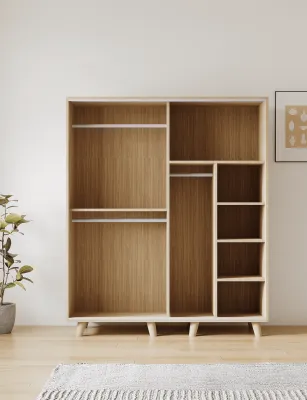
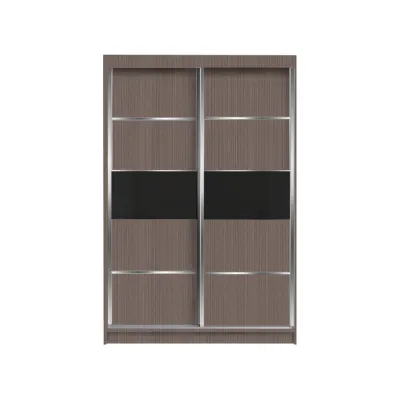
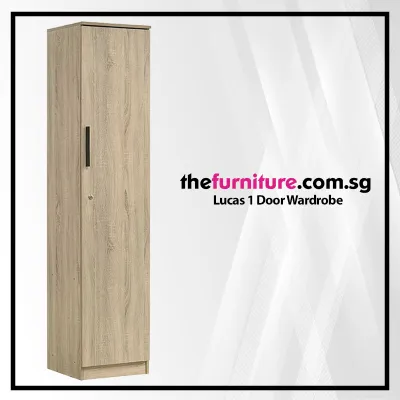
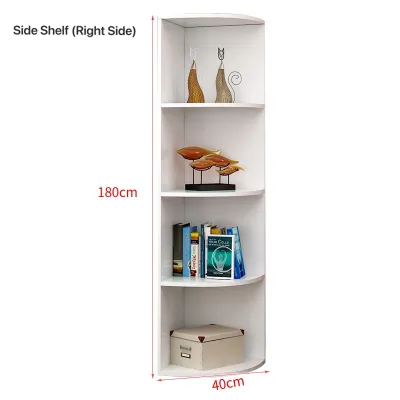
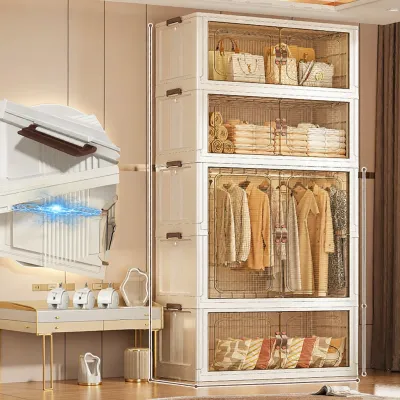
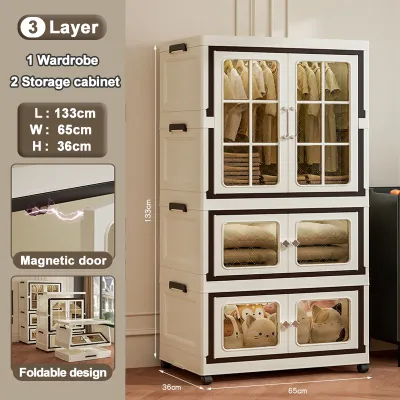
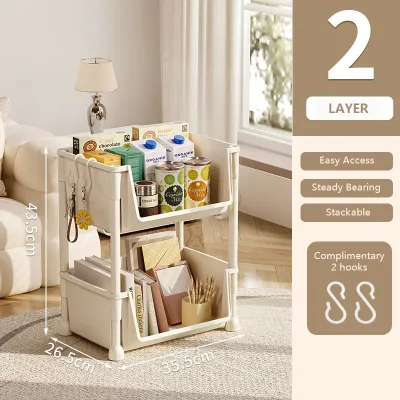
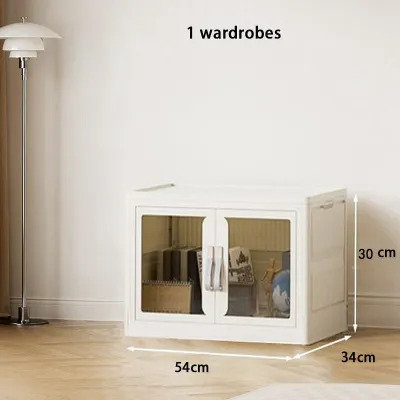
Prices are valid at publication and may change. Please refer to the product page for the latest price.
Evaluating the differences between BTO flats and older resale HDB apartments is also essential when planning your storage. Resale flats, particularly those built in the 1980s and 1990s, generally offer larger bedroom footprints, allowing for deeper and wider wardrobes. However, these older units often feature uneven walls, settled floors, or prominent structural beams that require careful leveling during installation. In contrast, BTO bedrooms are highly standardized but compact, meaning every centimetre counts. You must carefully calculate the necessary clearance space for walking paths, which should ideally be at least 60 centimetres wide, as well as the swing radius of wardrobe doors and adjacent bedroom doors to prevent frustrating physical bottlenecks.
Core Criteria for Selecting Wardrobe Brands and Clothes Storage Cabinets
When shortlisting wardrobe brands and clothes storage cabinets, modularity and adjustability should be your primary considerations. Brands that offer modular systems allow you to purchase individual frames, shelves, drawers, and hanging rods that can be configured to fit your specific room dimensions. This flexibility is invaluable for HDB flats, as it enables you to build a wardrobe that fits around awkward corners or under low-hanging beams. Look for brands that provide adjustable shelf heights and interchangeable door panels, allowing you to reconfigure the interior layout as your storage needs evolve over the years.

Material durability and surface treatments are equally critical due to Singapore’s hot and humid tropical climate. High humidity levels can cause low-grade particleboard or untreated medium-density fibreboard (MDF) to absorb moisture, leading to swelling, warping, and structural sagging over time. To ensure longevity, evaluate brands that utilize high-density fibreboard (HDF), solid wood accents, or engineered wood treated with moisture-resistant melamine or laminate finishes. Pay close attention to the quality of the edge banding, as poorly sealed edges are the first places where moisture penetrates and causes the material to delaminate.
Finally, practical after-sales support, warranty terms, and delivery logistics are vital components of the purchasing process. High-rise HDB living introduces specific delivery challenges, such as navigating narrow corridors, tight lift doors, and multi-storey car parks with height restrictions. Before purchasing, verify whether the brand’s delivery service includes transporting the heavy panels up to your specific floor and assembling them in situ. A reliable brand should offer a clear warranty on moving parts, such as sliding door tracks, soft-close hinges, and drawer runners, which are subject to daily wear and tear and are often the first components to fail.
Freestanding Cabinets vs. Custom Built-In Wardrobes for HDBs
Deciding between a freestanding clothes storage cabinet and a custom built-in wardrobe is a pivotal choice that depends on your budget, housing tenure, and long-term plans. Freestanding wardrobes offer unmatched flexibility and lower upfront costs, making them highly attractive for budget-conscious homeowners and tenants. Because these units are not permanently attached to the walls, you can easily rearrange your bedroom layout, take the wardrobe with you when you move, or replace it entirely if your style preferences change. However, freestanding cabinets rarely fit the exact dimensions of an HDB room, often leaving empty gaps at the top and sides that accumulate dust and reduce the overall storage efficiency of the space.
Custom built-in wardrobes, on the other hand, are designed to maximize every available millimetre of your bedroom from floor to ceiling and wall to wall. This approach provides a seamless, integrated aesthetic that can make a small HDB bedroom feel larger and more cohesive. Carpentry can be customized to build directly around structural columns, hide air-conditioner trunking, and incorporate specialized storage solutions tailored to your wardrobe collection. The trade-offs are higher upfront costs—often priced per foot run, which can quickly add up to several thousand dollars—and the permanence of the installation. Once built, these wardrobes cannot be moved, and removing them during a future renovation will require hacking and wall repairs.
To make the right decision, consider your current housing status and financial flexibility. If you are renting an HDB flat or planning to stay in your current home for less than five years, investing in high-quality freestanding modular cabinets is the most sensible and cost-effective choice. For long-term homeowners, particularly those moving into a new BTO flat who intend to stay past the five-year Minimum Occupation Period (MOP), a custom built-in wardrobe or a premium semi-custom modular system is often worth the investment. This option not only optimizes your daily living space but can also add to the resale appeal of the property in the future.
Step-by-Step Measurement and Pre-Purchase Checklist
To avoid costly mistakes and ensure your chosen clothes storage cabinet fits perfectly, you must follow a systematic measurement process before making a purchase. Begin by measuring the height, width, and depth of the designated wardrobe area. It is crucial to take these measurements at three different points—top, middle, and bottom—along the wall, as HDB walls and floors are rarely perfectly level. Use the smallest of the three measurements as your guide to ensure the cabinet will fit without scraping the walls or ceiling during installation.
Next, account for all architectural details and fixtures that could interfere with the wardrobe’s placement. Measure the height and thickness of your skirting boards, as these will prevent a freestanding wardrobe from sitting completely flush against the wall unless the cabinet has a matching base recess. Identify the locations of power sockets, light switches, air-conditioning controllers, and internet ports. Ensure that the wardrobe will not block access to these utilities, or plan for cut-outs to be made in the back panel of the cabinet to keep them accessible.
Finally, perform a thorough clearance check for all moving parts and access routes. If you are choosing a wardrobe with hinged doors, measure the door swing radius to ensure they can open fully without hitting your bed frame, bedside tables, or room entry door. For sliding doors, verify that the track mechanism runs smoothly and that the overall depth of the wardrobe (which is often deeper than hinged models to accommodate the tracks) does not encroach too far into your walking path. Lastly, check the delivery logistics by measuring your HDB flat’s main entrance door, the corridor clearance, and the internal dimensions of the passenger lift to guarantee the delivery team can safely transport the flat-pack boxes or pre-assembled frames into your home.
Frequently Asked Questions (FAQ)
Do I need a permit to install a built-in wardrobe in an HDB flat?
Standard carpentry work, such as installing a built-in wardrobe, does not require an HDB renovation permit. However, if the installation involves hacking existing walls, relocating electrical sockets, or drilling into structural columns, you must engage an HDB-registered renovation contractor to secure the necessary permits. Always check the latest official HDB renovation guidelines before starting any major carpentry work.
How can I prevent mould inside my HDB wardrobe?
Singapore’s high humidity makes wardrobes susceptible to mould. To prevent this, avoid pushing your wardrobe completely flush against cold exterior walls; leave a gap of 2 to 5 centimetres to allow air to circulate. Use commercial moisture absorbers or charcoal bags inside the cabinet, and ensure clothes are completely dry before hanging them up. Regularly opening the wardrobe doors on dry, breezy days also helps keep the interior fresh.

Community discussion
Share your experience or ask a question. Comments are reviewed before publication.