
Selecting the right wood for modular shelving is the most critical decision of your construction or purchasing process. The material you choose directly dictates how much weight your shelves can support, how easy the pieces are to assemble or reconfigure, and how well the unit will withstand environmental factors like humidity. Because modular shelving relies on adaptable joints and movable components, the physical characteristics of the wood—such as its density, fastener retention, and dimensional stability—will determine whether your shelving system remains sturdy over years of use or begins to sag and wobble.
To make an informed decision, you must balance structural performance with practical constraints like budget and tool availability. Plywood, solid wood, medium-density fiberboard (MDF), and particleboard each offer distinct advantages and trade-offs. Understanding these differences allows you to match the right material to your specific storage needs, ensuring a safe, durable, and visually appealing result.
Understanding Wood Material Options for Modular Shelving
To build or select a reliable modular shelving system, you must first understand the fundamental differences between the primary wood-based materials available on the market. These materials fall into two main categories: solid natural wood and engineered wood products. Each is manufactured differently, which directly influences how they behave under load and how they interact with assembly hardware.
Products mentioned in this guide
Prices are valid at publication and may change. Please refer to the product page for the latest price.
Plywood is an engineered wood made by gluing together thin layers of wood veneer, known as plies, with the grain of adjacent layers rotated 90 degrees to one another. This cross-laminated construction gives plywood exceptional dimensional stability and high strength-to-weight ratios. It resists warping, shrinking, and swelling, and its layered structure provides excellent screw-holding power along both the face and the edges, making it highly suitable for modular units that require frequent adjustment.
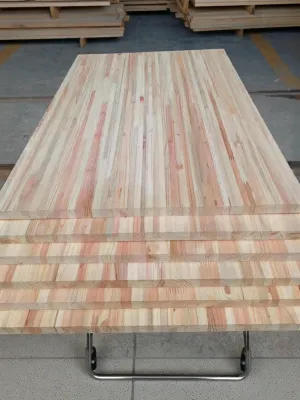
Solid wood refers to natural lumber cut directly from trees. It is categorized into hardwoods, such as oak or teak, and softwoods, like pine or fir. Solid wood offers unmatched natural beauty and long-term durability, as it can be sanded down and refinished multiple times. However, because it is a natural material, it retains a continuous grain direction, making it prone to expanding and contracting across the grain in response to changes in atmospheric moisture.
Medium-Density Fiberboard (MDF) is an engineered product created by breaking down hardwood or softwood residuals into fine wood fibers, combining them with wax and a resin binder, and forming them into panels under high temperature and pressure. MDF is highly uniform, completely free of knots or grain patterns, and presents an incredibly smooth surface that is ideal for painting. However, it is significantly heavier than plywood or solid wood, lacks structural elasticity, and has poor moisture resistance unless specifically treated.
Particleboard, sometimes called chipboard, is manufactured by mixing wood chips, sawmill shavings, or sawdust with a synthetic resin and pressing the mixture into sheets. It is the most economical wood-based material and provides a flat, consistent surface often finished with a laminate or wood veneer. While highly cost-effective, particleboard has the lowest tensile strength and fastener retention among these options, meaning its edges can crumble or strip out easily if subjected to high stress or improper hardware installation.
It is important to recognize that a material’s name alone does not guarantee its long-term durability or moisture resistance. Standard grades of plywood, MDF, and particleboard are highly susceptible to water damage if left unprotected. When planning your shelving, you must verify the specific surface treatments, edge banding quality, and manufacturer specifications to ensure the material is rated for your intended environment.
Comparing Strength, Workability, and Cost
Evaluating wood materials for modular shelving requires a clear comparison across three practical dimensions: structural strength, ease of working with the material, and overall project cost. Balancing these factors ensures you do not overspend on materials or select a wood that is too difficult to work with using your available tools.

Strength and Load Capacity
The ability of a shelf to resist bending under weight—known as deflection—depends on the material’s density, its thickness, and the length of the unsupported span. Solid hardwoods and high-grade plywoods possess high natural stiffness, allowing them to span longer distances without noticeable sagging. MDF and particleboard, while dense, are more prone to progressive sagging over time under continuous loads, a phenomenon known as creep. To prevent unsightly and unsafe bowing, you must check the manufacturer’s load ratings and design your shelves with appropriate thicknesses—typically at least 18 mm for standard shelving—and limit unsupported spans accordingly.
Workability for DIY
If you plan to cut, drill, and assemble the shelving yourself, workability is a major consideration. Solid wood is highly workable but requires an understanding of grain direction to prevent tear-out during cutting or routing. Plywood is generally easy to cut, though its outer veneer layers are prone to splintering along the cut line; using a fine-tooth saw blade and applying painter’s tape along the cut path can help maintain clean edges. MDF cuts very smoothly but produces a massive amount of fine, powdery dust that requires robust respiratory protection and excellent ventilation. Additionally, because MDF and particleboard lack a natural grain structure, their edges split easily if screws are driven without pre-drilling pilot holes.
Cost Considerations
Project budgets often dictate material selection, especially for large modular configurations. Particleboard and MDF represent the most budget-friendly tier, making them highly attractive for utility shelving or painted projects. Plywood occupies the mid-to-high price range, offering a strong balance of durability and value. Solid wood sits at the premium end of the spectrum, with prices varying widely depending on the wood species. When budgeting, check local hardware suppliers or online furniture retailers in Singapore for current S$ rates per sheet or pre-cut panel to calculate your total material costs accurately.
Matching Wood Types to Your Modular Shelving Needs
To select the ideal wood type, you must analyze what items you plan to store, where the shelving will be located, and the environmental conditions of the room.
Heavy Items (Books, Tools)
For heavy-duty storage, such as extensive book collections, heavy kitchen appliances, or garage tools, structural integrity is your primary concern. High-grade plywood, such as Baltic birch, or solid hardwoods are the most reliable choices because they can support substantial weight without shearing or bowing. When storing heavy items, keep your shelf spans short—ideally under 80 cm—and verify that your modular support brackets and wall standards are rated to handle the cumulative load.
Light Items (Decor, Linens)
If your modular shelving is intended for displaying lightweight decorative items, storing folded linens, or organizing toys, you do not need to pay a premium for high-strength materials. MDF or high-quality particleboard with a melamine finish are excellent, cost-effective options. These materials provide perfectly flat, smooth surfaces that prevent delicate fabrics from snagging and keep small decorative items stable, allowing you to focus your budget on aesthetic finishes and modular hardware.
Humid Environments
In areas prone to high humidity or moisture exposure, such as bathrooms, kitchens, or semi-outdoor balconies, standard engineered woods can fail rapidly. Singapore’s tropical climate can cause unsealed MDF or particleboard to absorb ambient moisture, leading to swelling, warping, and mold growth. For these spaces, prioritize solid moisture-resistant timbers, marine-grade plywood, or engineered woods explicitly labeled as moisture-resistant (MR). Ensure all exposed edges are completely sealed with heavy-duty edge banding or multiple coats of a protective polyurethane finish.
Essential Checks Before Building or Assembling
Before purchasing materials or beginning assembly, performing a few critical checks will save time, prevent structural failures, and ensure a safe installation.
First, measure your physical space and access routes. In Singapore apartments, tight lift doors, narrow corridors, and low ceilings can make transporting large, pre-assembled modular units or full-sized wood panels exceptionally difficult. Verify the maximum dimensions that can safely clear your building’s entryways and fit comfortably within your designated room.
Second, evaluate your wall construction for proper anchoring. Modular shelving units, particularly tall or narrow configurations, present a serious tip-over hazard if not secured. Identify whether your walls are solid concrete, brick, or drywall, and select the appropriate wall plugs, anchors, and heavy-duty anti-tip kits. Never rely on simple adhesive strips or lightweight screws to hold a modular shelving system in place.
Finally, verify that your assembly hardware matches your chosen wood material. Standard wood screws work well in solid wood and plywood but can easily strip the internal fibers of MDF or particleboard. For engineered woods, use specialized coarse-thread cabinet screws, confirming that the screw length is appropriate for the thickness of your panels to prevent the hardware from breaking through the finished surface.
Frequently Asked Questions (FAQ)
Can I mix solid wood and engineered wood in the same modular shelving unit?
Yes, mixing materials is a highly practical way to balance cost, weight, and aesthetics. A common approach is to use strong, rigid plywood or solid wood for the main vertical uprights and primary load-bearing shelves, while utilizing lighter, pre-finished MDF or particleboard for non-structural back panels, drawer fronts, or decorative dividers. When mixing materials, ensure that the thicknesses of all interlocking components match your modular hardware specifications. You can achieve a cohesive look by painting the entire unit or applying matching wood veneers to cover the contrasting edge grains.
How do I prevent MDF or particleboard shelves from sagging over time?
To prevent engineered wood shelves from sagging, you should limit the unsupported span of each shelf to a maximum of 60 to 70 cm. You can also significantly increase a shelf’s resistance to bending by attaching a solid wood cleat or a thick, rigid PVC edge band along the front and back edges. Always distribute weight evenly across the shelf surface rather than concentrating heavy items in the center, and strictly adhere to the manufacturer’s recommended weight limits for the specific material thickness you have installed.

Community discussion
Share your experience or ask a question. Comments are reviewed before publication.