
Maximising space in a Singapore Housing & Development Board (HDB) flat often means utilising every square inch of floor area, particularly under beds, inside wardrobes, or beneath low-lying cabinets. Adding wheels to your storage drawers turns heavy, static boxes into smooth, mobile organizers. However, selecting the wrong casters can lead to permanently gouged vinyl, cracked ceramic tiles, or annoying scraping sounds that echo through your home. Finding the right storage drawer wheels requires matching the wheel material to your specific HDB flooring, calculating a realistic weight capacity, and measuring precise clearance heights.
Assess Your HDB Flooring and Noise Requirements
Many modern HDB flats feature vinyl flooring, laminate, or glazed porcelain tiles, while older flats might have polished parquet or terrazzo. Vinyl and laminate are highly resilient but remain susceptible to pressure indentations and fine scratches from hard particles trapped under wheels. Parquet is particularly soft and easily gouged by hard plastics. Understanding your specific floor type is the first step in choosing a wheel material that prevents costly surface damage.
Polyurethane (PU) and thermoplastic rubber (TPR) are excellent choices for indoor residential spaces. These materials offer a soft outer tread that grips the floor slightly, absorbing minor vibrations and rolling silently across tile grout lines. Soft rubber wheels are also highly protective but can sometimes leave dark streaks if the rubber is not rated as non-marking. Avoid hard nylon or cheap polypropylene wheels on vinyl or wood, as they tend to slide rather than roll when lightly loaded, dragging grit across the surface.
Products mentioned in this guide
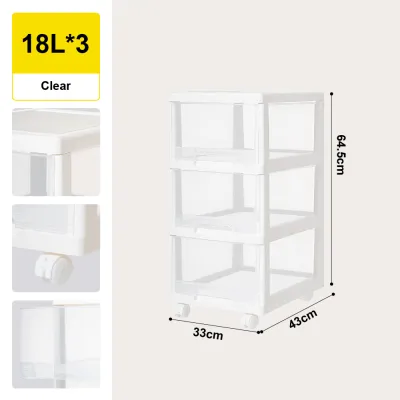
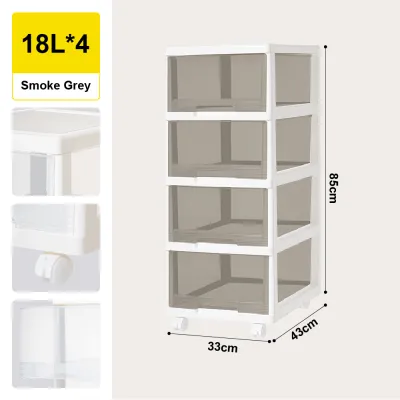
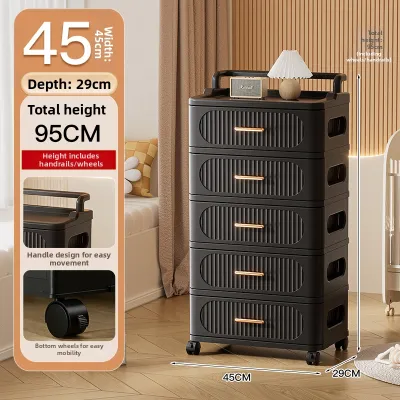
![[OKLIFE. SG]No Installation Home Office Drawer File Storage Desktop Organizer ABS Filing Cabinet White With Wheels](https://img.lazcdn.com/g/p/f38a119b64a4c5cb7152e53dde6afdb5.jpg_400x400q80.jpg_.webp)
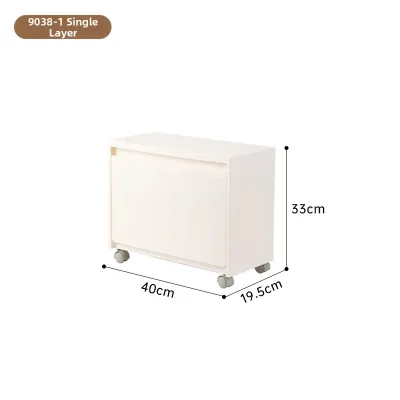
Prices are valid at publication and may change. Please refer to the product page for the latest price.
Before purchasing, always check the product label or manufacturer specifications to confirm the wheels are explicitly rated as non-marking and designed for hard floors. If you live in a multi-generational household or have young children, prioritizing shock-absorbing materials like TPR will significantly reduce the noise of rolling drawers, keeping your home quiet during early mornings or late nights.
Calculate Weight Capacity and Load Distribution
Storage drawers often hold heavy items like winter clothing, books, spare bedding, or toys. To prevent wheel failure, flat-spotting, or structural damage to the drawer base, you must calculate the total load. This calculation involves estimating the weight of the drawer itself combined with its maximum intended contents.

A common mistake is dividing the total weight of the loaded drawer by the number of wheels (usually four). In reality, floors are rarely perfectly level, and weight inside a drawer is seldom distributed evenly. To ensure safety, calculate the load capacity by dividing the total weight by three instead of four. For example, if your fully loaded drawer weighs 30 kg, each wheel should have a rated capacity of at least 10 kg, rather than 7.5 kg. This simple adjustment accounts for uneven weight distribution and floor irregularities.
Always verify the load rating on the caster packaging or manufacturer label before purchasing. If the manufacturer does not state a load rating, treat the wheel as light-duty only and avoid using it for heavy storage. Overloading wheels can cause the bearings to seize, making the drawer difficult to pull and increasing the risk of scratching your floors.
Measure Clearance and Space Constraints
Before buying, measure the exact vertical gap between the bottom of your drawer frame and the floor. If you are retrofitting wheels to an existing under-bed drawer, the total height of the wheel and its mounting plate must be slightly less than this gap to prevent the drawer from jamming against the bed frame. Even a few millimeters of miscalculation can render the drawer unusable.
If vertical space is extremely tight, standard top-plate casters might raise the drawer too high. In these cases, look for low-profile casters or recessed wheels. Recessed wheels sit partially inside a cutout in the drawer base, minimizing the height added to the drawer. This design is particularly useful for under-bed storage where clearance is often limited to a few centimeters.
Consider how the drawer will be accessed and how the wheel diameter affects maneuverability. If you only pull the drawer straight out and push it straight back, fixed (rigid) wheels are ideal because they keep the drawer on a straight track. If you need to navigate tight corners or slide the drawer sideways in a cramped bedroom, swivel wheels are necessary, though they require slightly more lateral clearance to rotate freely. Larger wheels roll more easily over obstacles but require more vertical clearance.
Choose the Right Mounting Type and Braking System
The base material of your storage drawer dictates how the wheels must be attached. For solid wood or thick plywood bases, top-plate casters secured with short wood screws offer the most stable connection. For thin MDF, particleboard, or plastic drawers, standard screws can easily tear out under load. In these cases, bolt-through stem casters with backing washers are preferred to distribute the pulling force across a wider surface area.
While free-rolling wheels make access easy, they can cause drawers to drift on slightly uneven floors or roll unexpectedly when you open them. If your flat has highly polished ceramic or homogeneous tiles, choosing wheels with total-lock brakes on at least two casters is highly recommended. These brakes lock both the wheel rotation and the swivel mechanism, keeping the drawer firmly in place when not in use.
Review the installation requirements before starting your project. Ensure you have the correct tools, such as a drill with a pilot bit to prevent wooden bases from splitting, and a screwdriver that matches the screw heads perfectly to avoid stripping the hardware. If you are mounting wheels to plastic drawers, consider adding a wooden reinforcement plate inside the drawer base to prevent the plastic from cracking under pressure.
Common Sizing and Installation Mistakes to Avoid
Choosing wheels that are too small is a frequent error. Small wheels struggle to roll over tile grout lines or rug edges, causing the drawer base to scrape against the floor and damage both the drawer and the flooring. Opting for a slightly larger wheel diameter ensures a smoother roll and better floor clearance.
When installing casters on plastic or engineered wood drawers, over-tightening the screws or bolts can easily crack the mounting area. Use hand tools for the final tightening steps rather than high-torque power drills. This allows you to feel the resistance and stop before damaging the drawer base.
Finally, do not ignore the swivel radius of your casters. Swivel wheels need space to swing 360 degrees. If you install swivel casters too close to the outer edges or corners of the drawer, the wheel can protrude past the drawer footprint when turning, catching on adjacent walls, bed legs, or wardrobe doors. Position the casters slightly inward from the corners to allow full rotation without interference.
Frequently Asked Questions (FAQ)
Can I use hard plastic wheels on HDB vinyl flooring?
It is highly discouraged to use hard plastic or nylon wheels on HDB vinyl flooring. Vinyl is a resilient material that can easily sustain permanent indentations, scratches, and scuffs from hard, unyielding surfaces. Over time, the friction from hard wheels can wear down the protective wear layer of your vinyl planks, potentially voiding your flooring manufacturer’s warranty. Opt instead for soft polyurethane or thermoplastic rubber wheels, which distribute weight more gently and roll smoothly without scratching.
Do I need brakes on my storage drawer wheels?
Whether you need brakes depends on the drawer’s location and weight. For lightweight under-bed drawers on a level floor, brakes are generally unnecessary. However, if your drawer is heavy, stacked, or placed on smooth, polished ceramic tiles, installing at least two wheels with brakes is highly beneficial. Brakes prevent the drawer from rolling out on its own due to minor vibrations or uneven weight distribution, reducing the risk of tipping hazards or accidental collisions with other furniture.

Community discussion
Share your experience or ask a question. Comments are reviewed before publication.