
Finding the right slim stackable drawer for under-bed storage in Singapore requires balancing tight spatial constraints with functional design. Many Singaporean apartments, such as HDB flats and condominiums, feature compact bedrooms where maximizing floor space is essential. Utilizing the empty void beneath your bed frame is an excellent way to store seasonal clothing, extra bedding, or daily essentials without cluttering your living area. However, success relies entirely on selecting drawers that slide smoothly, stack securely, and fit the exact dimensions of your specific bed frame.
Rather than relying on generic recommendations, the most effective approach is to build a personalized selection framework. This involves measuring your physical space, evaluating structural features like interlocking lids and wheel designs, and assessing material durability against Singapore’s humid climate. By focusing on verifiable product specifications and practical room layouts, you can establish an organized, dust-free storage system that remains easily accessible.
Measuring Your Under-Bed Clearance
Before browsing online marketplaces or visiting local home furnishing stores, you must obtain precise measurements of the void beneath your bed. Start by measuring the vertical clearance from the floor to the absolute lowest point of your bed frame. This is often not the side rail, but rather the center support beam, wooden slats, or protruding metal brackets underneath the mattress platform. Take this measurement at multiple points along the bed, as floors can have slight unevenness, and bed frames may sag slightly in the center over time.
Products mentioned in this guide
![[Clearance] AEGIS Stackable Slim Drawer Box Storage Box Organiser Desk Riser Drawer Table Organiser Makeup Cosmetic Storage Stacking Drawers](https://img.lazcdn.com/g/p/396523e063000b8a79ecf4a354313dff.png_400x400q80.png_.webp)
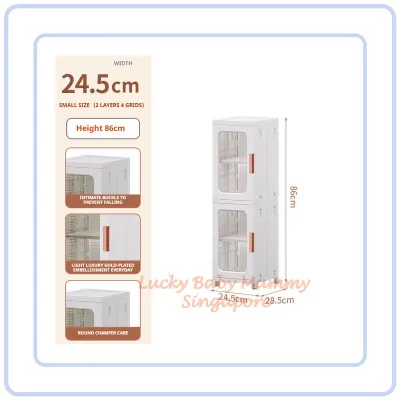
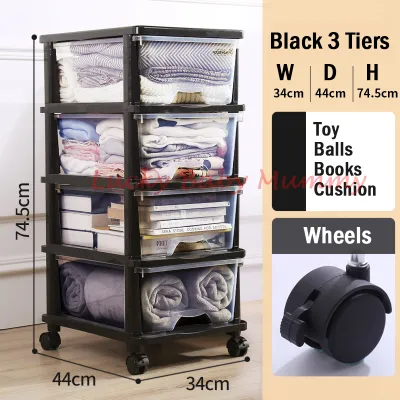
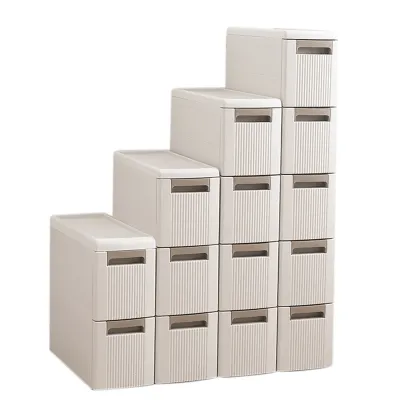
Prices are valid at publication and may change. Please refer to the product page for the latest price.
When planning to stack multiple slim drawers, you must calculate the cumulative height of the units. Note that some stackable drawers feature nesting lids where the top drawer sinks slightly into the rim of the bottom unit, while others stack flush on top of each other. Always check the manufacturer’s technical specifications for the stacked height rather than simply adding the individual heights together. Leaving a safety margin of at least one to two centimeters between the top of the stacked drawers and the lowest part of the bed frame will prevent the units from scraping or getting wedged.
Next, measure the depth and width of the available floor space under the bed. Consider the placement of bedside tables, wall baseboards, and the bed’s legs, which can restrict how far back a drawer can slide or how wide a drawer can be. If your bed frame has center support legs, they will divide the under-bed space into separate zones, meaning you will need multiple narrower drawers rather than one wide unit.
Finally, map out the clearance zone required to fully pull the drawers out. If your bedroom has limited space between the bed and the wall or wardrobe, you must ensure there is enough clearance to slide the drawers out completely to access their contents. For exceptionally tight spaces, drawers that open from the side or feature split-lid designs might be more practical than deep, front-pull drawers.
Essential Features for Slim Stackable Drawers
To build a stable under-bed storage system, the structural design of the drawers is just as important as their dimensions. True stackable drawers are engineered with specific interlocking mechanisms or deeply grooved lids. These grooves receive the feet or base rails of the drawer placed above it, preventing the upper units from sliding off when you pull the lower drawer open. Avoid using standard flat-lidded storage boxes for stacking unless they explicitly feature matching recessed channels designed to lock stacked units in place.

Mobility is another critical factor to evaluate, particularly when drawers are fully loaded. Slim drawers designed for under-bed use typically feature either built-in caster wheels or stationary flat bases. Caster wheels make sliding heavy drawers effortless, but they also add overall height to the unit. If you choose drawers with wheels, verify whether the wheels roll in all directions or are fixed to move only forward and backward; directional wheels are generally easier to guide straight under a bed.
For homes with parquet, laminate, or vinyl flooring, stationary bases or drawers with hard plastic wheels can cause scratches over time. If you select a stationary model, consider applying adhesive felt pads to the contact points to protect your flooring. Alternatively, look for drawers with rubberized or soft polyurethane wheels that glide quietly without leaving marks on delicate floor surfaces.
Dust protection is a major consideration for under-bed storage, as this area naturally accumulates dust bunnies and lint. Look for drawers with tight-fitting lids, overlapping lips, or integrated dust-proof seals along the drawer seams. While completely airtight seals are rare in sliding drawers, a well-designed overlapping frame will significantly reduce the amount of dust that settles on your stored linens or clothing, minimizing the need for frequent washing.
Evaluating Materials and Build Quality
The longevity of your under-bed storage depends heavily on the materials used and how well they withstand daily physical stress. Rigid plastics, such as polypropylene, are the most common materials for stackable drawers due to their moisture resistance and structural integrity. When evaluating plastic drawers, inspect the thickness of the walls and the rigidity of the frame. Thin, flexible plastic is prone to bowing under the weight of stacked units, which can pinch the drawer tracks and make them difficult or impossible to slide open.
Always review the manufacturer’s specifications for maximum weight limits, both for the internal drawer capacity and the top-loading stack capacity. A drawer might be rated to hold five kilograms internally, but its top frame might only support a stacked load of three kilograms before warping. If the manufacturer does not provide clear weight limits, look for structural indicators of strength, such as reinforced vertical corners, double-walled frames, or molded ribbing along the bottom and sides.
Non-rigid options, such as fabric or mesh drawers with internal wire frames, offer a lightweight alternative but require careful inspection. Check the density of the fabric—measured in Denier—and ensure the internal support panels are made of sturdy plastic or treated cardboard that resists moisture. Fabric drawers are highly susceptible to sagging if overloaded, and they lack the interlocking stability of rigid plastic, making them less suitable for stacking more than two units high.
Examine the construction of the drawer handles and sliding tracks. Handles should be molded directly into the drawer body or securely fastened with heavy-duty rivets; flimsy snap-on handles are often the first point of failure when pulling a heavy drawer. The sliding tracks should feature built-in drawer stops to prevent the drawer from pulling completely out of its frame and spilling its contents onto the floor.
Building Your Condition-Based Shortlist
Creating a shortlist of potential slim stackable drawers requires a systematic filtering process based on your specific storage needs and home environment. Begin by defining exactly what you plan to store. Lightweight items like bedsheets, pillowcases, and seasonal clothing require volume but minimal structural reinforcement, allowing you to prioritize taller, lighter plastic or fabric drawers. Conversely, heavy items like books, documents, or winter coats require shallow, highly rigid plastic drawers with reinforced bases to prevent sagging.
Once you have categorized your storage items, cross-reference their physical dimensions with the internal measurements of the drawers you are considering. Do not rely solely on the external dimensions listed on product pages, as the drawer frame, wheels, and interlocking lids can reduce the actual internal storage space by several centimeters. Ensure that folded blankets or specific items will fit comfortably without needing to be forced, which can cause the drawer walls to bulge outward and jam the sliding mechanism.
Next, filter your options by comparing your measured under-bed clearance against the external dimensions of the stacked units. If your bed frame clearance is 20 centimeters, look for ultra-slim drawers with heights of 15 centimeters or less. If you find a model that is exactly 18 centimeters tall, verify if the wheels can be detached to save an extra two or three centimeters of height, provided the drawer can still slide smoothly on your floor type without them.
Before making a purchase from online marketplaces or local retailers, analyze verified buyer reviews with a critical eye. Search the reviews specifically for keywords like “stacking,” “sagging,” “wheels,” and “dimensions.” Pay close attention to feedback regarding whether the drawers remain stable when stacked three-high, if the plastic warps when loaded, or if the wheels tend to pop off under weight. This real-world feedback is often more reliable than manufacturer marketing claims and will help you avoid units that fail under normal household conditions.
Safe Setup and Long-Term Maintenance
Once you have selected and purchased your slim stackable drawers, proper setup and ongoing maintenance will ensure they remain functional and safe for years to come. Begin by thoroughly cleaning the floor space under your bed. Vacuum away all dust, hair, and debris, and ensure the floor is completely dry before placing the drawers. If you have recently mopped or treated your floors, wait at least 24 hours to prevent trapping moisture beneath the drawer bases, which can lead to mold growth.
Verify that your floor is level before stacking the drawers. Even a slight slope can cause a tall stack of slim drawers to lean, putting uneven pressure on the interlocking joints and increasing the risk of the stack tipping over when a drawer is pulled open. If you notice any leaning, adjust the positioning of the drawers or reduce the stack height. Always place the heaviest items in the bottom drawer of the stack to lower the center of gravity and maximize stability.
Establish a regular maintenance routine to keep the drawers sliding smoothly. Every few months, pull the drawers completely out from under the bed and inspect the caster wheels or base glides. Hair, dust, and carpet fibers easily wrap around wheel axles, causing them to jam and drag across the floor. Clear away any debris using a small brush or tweezers. At the same time, wipe down the exterior frames with a damp cloth to remove accumulated dust, ensuring the interlocking tracks remain clean and clear of obstructions.
Frequently Asked Questions (FAQ)
Can I stack different brands of slim drawers together?
Stacking different brands of slim drawers together is generally not recommended due to safety and stability risks. Interlocking mechanisms, recessed channels, and alignment tabs are proprietary designs that vary significantly between manufacturers. Attempting to stack mismatched brands usually results in an unstable connection, increasing the likelihood of the top drawer sliding off or tipping over when opened. Additionally, differing base footprints and weight distribution profiles can place uneven stress on the lower drawer frames, leading to structural warping or collapse.
How do I prevent musty odors in under-bed storage drawers?
To prevent musty odors in under-bed storage, ensure all items are completely dry before placing them inside the drawers. Trapped moisture is the primary cause of mildew and unpleasant smells, especially in Singapore’s humid climate. Place standard desiccant packs, silica gel sachets, or compact moisture absorbers inside each drawer to control humidity levels. Finally, establish a routine to periodically pull the drawers out, open them fully, and let the contents air out in a well-ventilated room or under indirect sunlight for a few hours.
Are fabric stackable drawers suitable for heavy items?
Fabric stackable drawers are generally not suitable for heavy items. Unlike rigid plastic or wood, fabric and mesh materials lack the structural load-bearing capacity required to support heavy objects without sagging. Overloading fabric drawers can cause the internal wire frames to bend, preventing the drawers from sliding smoothly and compromising the stability of stacked units. Always check the manufacturer’s specific weight guidelines, and reserve fabric drawers for lightweight, compressible items such as bed linens, pillows, and seasonal clothing.

Community discussion
Share your experience or ask a question. Comments are reviewed before publication.