
Finding the perfect shoe shelf for a Singapore Housing & Development Board (HDB) flat requires balancing home organization with strict community safety standards. Because HDB entryways and common corridors serve as vital escape routes during emergencies, choosing an oversized storage unit can lead to safety hazards, neighbor disputes, or compliance issues with local authorities. By understanding the physical dimensions of your foyer, checking corridor clearance rules, and selecting space-saving furniture designs, you can keep your footwear organized while maintaining a safe, unobstructed path for everyone.
Measure Your Foyer and Corridor Clearance
To find a shoe shelf that fits seamlessly, start by taking precise measurements of both your internal foyer and the external corridor area. Inside your flat, measure the available wall width, the vertical height up to any electrical distribution boards or DB boxes, and the depth from the wall to the edge of the doorway. Remember to account for skirting boards, which can push a flat-backed cabinet forward by one to two centimeters, and check for any uneven plastering or wall protrusions that might affect how the unit sits.
Next, measure the external corridor width if you are considering placing a low-profile rack outside your door. Use a standard measuring tape to find the distance from your outer wall to the corridor parapet or the opposite wall. It is also essential to measure the clear walking path that remains when your main wooden door and metal gate are fully swung open.
Products mentioned in this guide
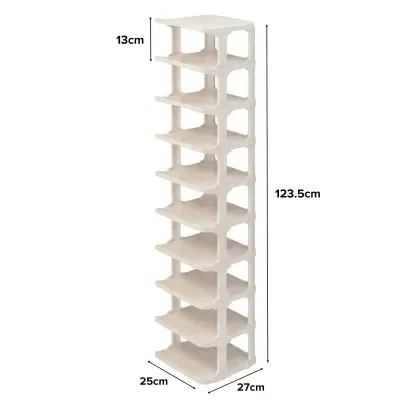
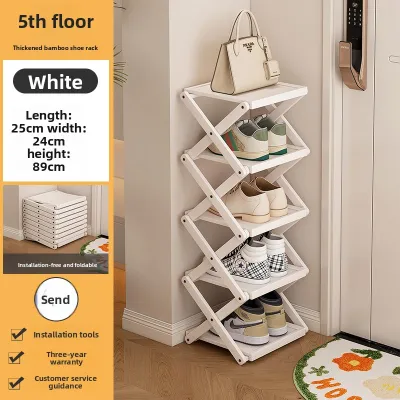
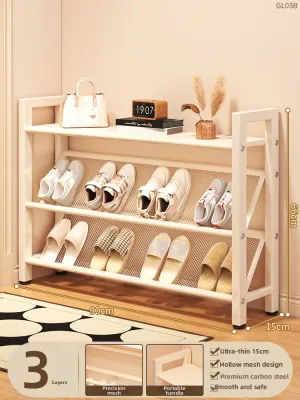
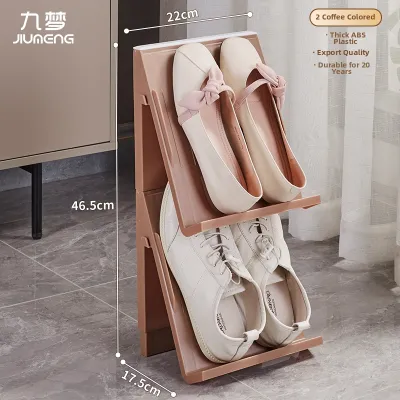
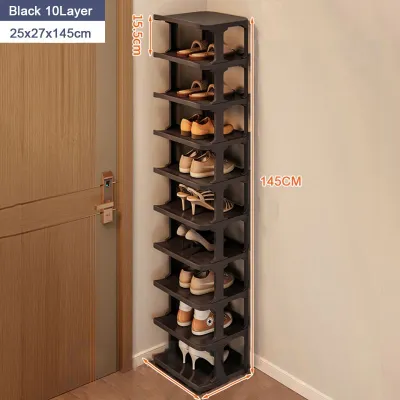
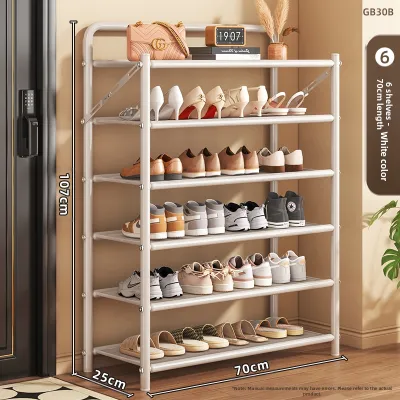
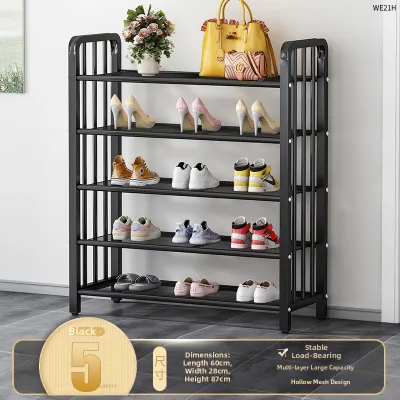
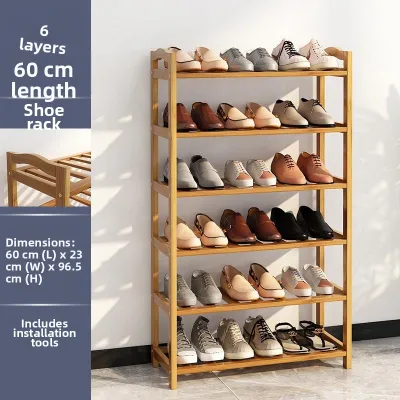
Prices are valid at publication and may change. Please refer to the product page for the latest price.
The door swing radius is a critical factor that many homeowners overlook during planning. Both your main wooden door and your outer metal gate must be able to open to their maximum angles without striking the shoe shelf. If a shelf is too deep or placed too close to the door frame, it can restrict your entry, scratch your door finish, or prevent emergency services from moving freely through the doorway.
Navigate HDB Corridor Obstruction Guidelines
Placing furniture in common areas of an HDB estate is governed by strict safety regulations to ensure residents can evacuate safely during an emergency. The general principle enforced by the Housing & Development Board (HDB) and the Singapore Civil Defence Force (SCDF) is that common corridors, staircases, and lift lobbies must remain clear of hazards. Obstructions can delay evacuation times and hinder fire fighters carrying heavy equipment.

According to standard SCDF fire safety guidelines, a minimum clear escape passage of 1.2 meters must be maintained along the common corridor at all times. This means that if your corridor is narrow, placing any shoe shelf outside your flat may be entirely prohibited. For wider corridors, any allowed protrusion must still leave this 1.2-meter clearance untouched, and no items should be placed along designated escape staircases or within lift lobbies.
Because block designs, floor plans, and fire safety requirements vary across different HDB estates—ranging from older slab blocks to newer Build-To-Order (BTO) developments—it is crucial to verify the specific rules for your block. Some modern layouts feature recessed entryways that offer slightly more flexibility, while others have highly restricted shared corridors. Checking with your local Town Council or reviewing the latest SCDF guidelines before purchasing an outdoor rack will help you avoid fines or forced removal of your furniture.
Choose Space-Saving Shoe Shelf Dimensions and Designs
When space is limited, the design and depth of your shoe shelf determine how well it fits your entryway. Standard shoe cabinets typically have a depth of 30 to 35 centimeters, which allows shoes to sit flat on the shelves. While this works well for spacious foyers, it can easily block a narrow HDB hallway or corridor.
For tight spaces, slim or tilt-out shoe cabinets are highly effective alternatives. These units feature tipping compartments where shoes are stored vertically or at an angle, reducing the cabinet depth to as little as 15 to 20 centimeters. This ultra-slim profile keeps the walkway clear while still providing ample storage for daily footwear, making it an ideal choice for narrow HDB entryways.
Another approach is to evaluate vertical space utilization versus low-profile designs. A tall, narrow shoe tower capitalizes on unused wall height, allowing you to store more pairs without expanding the floor footprint. Conversely, a low-profile storage bench offers a convenient place to sit while putting on shoes, but it holds fewer pairs and occupies more floor area, making it better suited for wider foyers.
Adjustable or modular shelving systems offer the flexibility needed to accommodate different footwear types without requiring a larger cabinet. By choosing a unit with removable shelves or adjustable pegs, you can customize the interior height to fit flat sandals, high heels, or bulky sneakers. This prevents wasted vertical space inside the cabinet, maximizing your storage capacity within a compact physical footprint.
Verify Safe Installation and Daily Usability
Securing your shoe shelf properly is essential for household safety, especially when opting for tall, narrow, or slim tilt-out designs. These units can easily become top-heavy when fully loaded with footwear, posing a tip-over risk. Planning for anti-tip anchoring is highly recommended; this involves securing the back of the cabinet directly to the wall using brackets or safety straps.
Before drilling into your entryway walls, you must identify the wall type to use the correct wall plugs and screws. HDB flats feature a mix of structural concrete walls, which require a rotary hammer drill and masonry plugs, and non-structural partition walls or lightweight concrete blocks, which require specialized anchors. Avoid drilling near light switches, electrical sockets, or DB boxes to prevent damaging hidden conduits.
Maintaining adequate ventilation and cleanliness around your shoe shelf is also vital in Singapore’s humid climate. Closed cabinets can trap moisture and odor, leading to mold growth on your footwear. Look for designs with slatted doors, ventilation cutouts, or open backs, and ensure there is a small gap between the cabinet and the wall to allow air to circulate. Leaving a clear space beneath the unit also makes it easier to sweep away dust and clean the floor.
Finally, verify that the shelf’s placement does not disrupt daily traffic flow or routine estate maintenance. The unit should not block access to your water meter compartment, electrical risers, or your neighbors’ entryways. It should also be positioned so that Town Council cleaners can easily wash the corridor floor without water pooling around the base of your furniture, which could cause wooden materials to warp over time.
Frequently Asked Questions (FAQ)
Can I place a shoe rack outside my HDB main door?
You can only place a shoe rack outside your main door if your corridor layout allows you to maintain a continuous, unobstructed escape path of at least 1.2 meters. This space is mandated by SCDF fire safety regulations to ensure safe evacuation and emergency access. If your corridor is too narrow to accommodate a rack while keeping this 1.2-meter clearance, you must store your shoes inside your flat. Always check with your local Town Council, as specific enforcement rules and corridor designs vary across different estates.
What is the best shoe shelf depth for large sneakers or boots?
For large sneakers, high-tops, or boots, a standard flat shelf requires a depth of at least 30 to 35 centimeters to prevent the shoes from protruding. If you are dealing with a narrow entryway, look for tilt-out shoe cabinets with adjustable internal dividers or removable shelves, which allow larger footwear to be stored at an angle. To ensure a perfect fit before buying, measure the physical length and height of your largest pair of shoes and compare them against the internal compartment dimensions of the shelf.

Community discussion
Share your experience or ask a question. Comments are reviewed before publication.