
Choosing the right shoe rack capacity for a small Singapore apartment closet requires balancing your physical wardrobe dimensions with your actual footwear collection. To find the perfect fit, you must measure the exact internal clearance of your closet, calculate the physical footprint of your shoes, and select a rack with adjustable or highly compatible tier spacing. Because space is at a premium in typical HDB flats and condominiums, maximizing vertical space without blocking doors or trapping tropical humidity is the key to a successful setup. By taking a systematic approach to measurements and storage habits, you can keep your bedroom closet organized, accessible, and free of clutter.
Measure Your Closet Clearance and Usable Space
Before browsing online marketplaces or visiting furniture showrooms, you must establish the absolute physical boundaries of your closet interior. Use a metal measuring tape to record the internal width, depth, and height of the specific section where the rack will sit. Do not rely on the external dimensions of the wardrobe, as internal panels, backboards, and corner support blocks can reduce the usable space by several centimeters. Measuring at multiple points—top, middle, and bottom—helps account for any slight warping or unevenness in the wardrobe structure.
Beyond the basic walls, you must identify and map out potential physical obstructions that could block a shoe rack. Internal door hinges, sliding door tracks, drawer runners, and low-hanging clothes can easily collide with a newly installed organizer. For example, if your closet has hinged doors, the hinges themselves often protrude into the opening space, meaning a rack that matches the exact internal width of the wardrobe will not slide in or allow the door to close. Measure the clearance from the innermost edge of these protrusions rather than the flat wooden panels.
Products mentioned in this guide
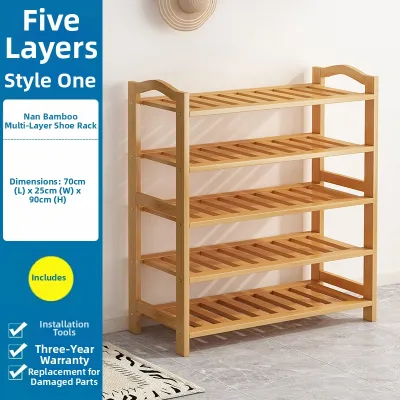
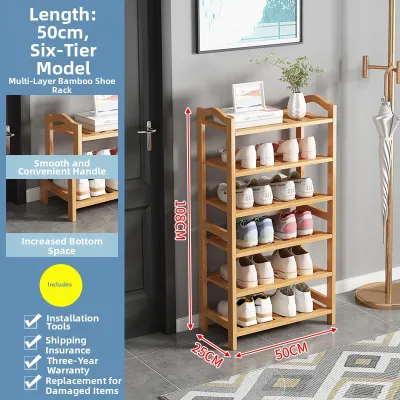
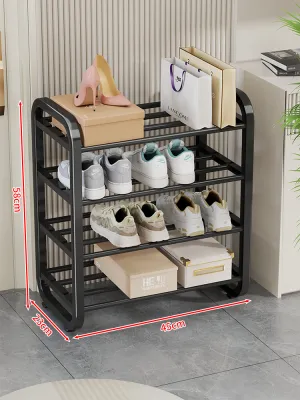
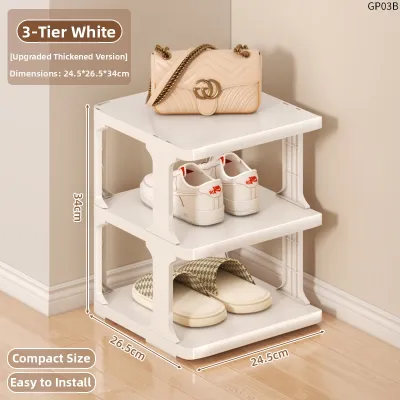
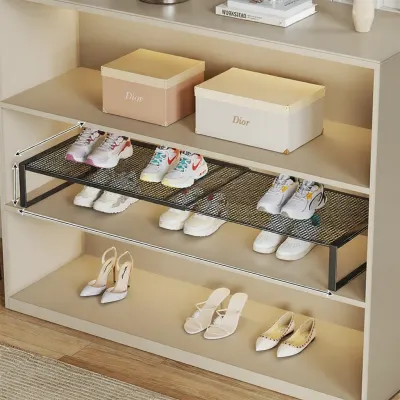
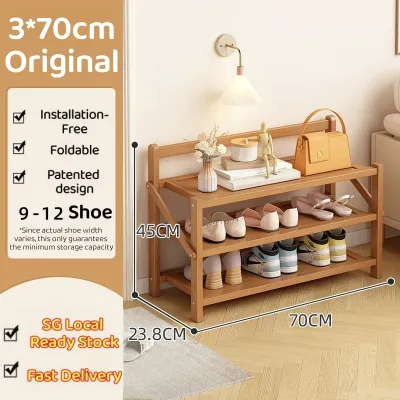
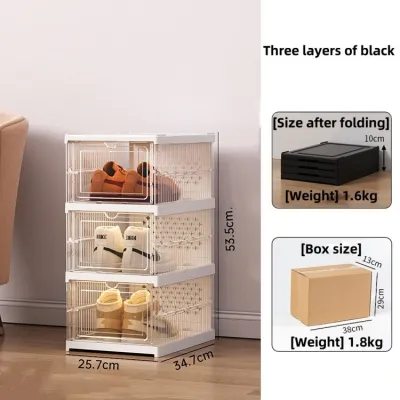
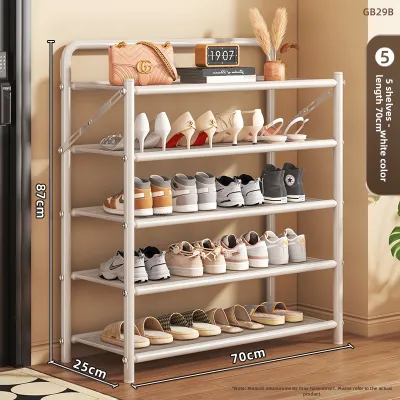
Prices are valid at publication and may change. Please refer to the product page for the latest price.
Airflow and door operation are equally critical factors when planning your closet layout. Singapore’s high relative humidity can lead to mold growth and musty odors if shoes are packed too tightly in an unventilated, enclosed space. Ensure you leave at least two to three centimeters of clearance on all sides of the rack to facilitate air circulation. Additionally, verify that the depth of the rack leaves enough room for the closet doors to close fully without pressing against the toes of your shoes, which can damage both the footwear and the door mechanism.
Calculate the Required Capacity for Your Shoe Collection
Determining how many tiers you need starts with a thorough audit of your current footwear collection and an honest projection of future purchases. Begin by gathering all the shoes you intend to store in the closet and categorizing them by type, such as flats, sneakers, heels, and boots. Different styles of footwear occupy vastly different amounts of physical space, both horizontally and vertically. A pair of bulky running shoes or high-top sneakers requires significantly more width and height than a pair of slim leather loafers or sandals.

To estimate your capacity needs accurately, factor in your household size and your seasonal rotation habits. If you share the closet with family members, assign a dedicated number of tiers to each person to prevent overlapping piles. Consider which shoes must remain in the bedroom closet versus those that can be kept in an entryway cabinet or stored away in off-season boxes. In Singapore’s climate, heavy winter boots or specialized travel footwear are rarely used and should be relegated to long-term storage containers on higher shelves, leaving the most accessible tiers for daily-wear items.
Prioritizing your capacity based on accessibility will help you avoid over-purchasing massive racks that overwhelm your closet. Divide your collection into daily-wear shoes, occasional formal wear, and long-term storage. Your daily-wear shoes should occupy the middle and lower-middle tiers of the rack, where they can be reached and returned with minimal effort. Occasional shoes can go on the very bottom or higher tiers, while rare-use items can be placed in clear, stackable shoe boxes on top of the rack if vertical space permits.
Match Rack Dimensions and Tier Spacing to Your Space
Once you have your closet measurements and shoe counts, you can begin cross-referencing these figures with the specifications of potential shoe racks. The external depth of the rack is one of the most critical dimensions to verify. Standard adult shoes typically require a rack depth of at least 30 to 35 centimeters to sit flat without hanging over the edges. If your closet depth is shallower than this, you may need to look for tilted-shelf designs or slim-profile cabinets that store shoes at an angle, though these options often hold fewer pairs per tier.
Tier spacing is another vital specification that directly impacts how efficiently you use your vertical closet space. Fixed-tier racks with a standard spacing of 15 centimeters are suitable for flats and low-profile sneakers, but they will fail to accommodate ankle boots, high heels, or high-top shoes without bending the collars. Look for shoe racks that offer adjustable shelf heights or removable panels. This flexibility allows you to customize the vertical gaps, creating taller sections for boots and tighter, space-saving sections for sandals and slippers.
Evaluate the total height of the shoe rack in relation to the rest of your closet configuration. If your wardrobe features a hanging rod for clothes, the top of the shoe rack must sit low enough to prevent your hanging shirts, trousers, or dresses from dragging across the shoes. Measure the length of your longest hanging garments and subtract this from the total internal height of the closet to find the maximum allowable height for your shoe rack. Leaving a clear buffer zone between the bottom of your clothes and the top of your shoes prevents fabric staining and maintains a tidy appearance.
Check Structural Stability and Material Suitability
A shoe rack must be robust enough to support the cumulative weight of your collection without sagging, wobbling, or tipping over. Review the manufacturer’s stated weight capacity for both individual tiers and the entire unit. Heavy leather shoes, boots, and thick-soled sneakers can add up to several kilograms per tier. If a rack is constructed from thin plastic or lightweight fabric shelves, it may bow under the weight over time, causing shoes to slide off or the frame to warp.
The materials and surface treatments of the rack must also be compatible with the indoor environment of your closet. Shoes carry dirt, dust, and moisture from the outdoors, which can easily transfer to the rack’s surfaces. Look for materials that are easy to wipe clean and resistant to scuffs, such as powder-coated metal, sealed engineered wood, or durable plastics. Avoid untreated wood or porous materials that can absorb moisture and oils from shoe soles, as these can become breeding grounds for mold and bacteria in Singapore’s humid climate.
Assembly methods and base designs play a major role in preventing stability issues within narrow closet spaces. Check whether the rack requires screw-in joints, snap-fit connectors, or tool-free tension rods. Screw-in metal frames generally offer superior rigidity compared to push-fit plastic joints, which can loosen over time with frequent use. If you are selecting a tall, narrow rack to maximize vertical space, inspect the base design to ensure it sits flat on the closet floor. For exceptionally tall units, look for options that can be anchored to the closet side panels or back wall to eliminate any risk of tipping when pulling shoes out.
Common Sizing and Capacity Mistakes to Avoid
One of the most frequent errors when choosing a closet shoe rack is forgetting to subtract the thickness of closet doors and hinge protrusions from the usable depth. Sliding doors, in particular, require overlapping tracks that eat into the internal depth of the wardrobe. If you measure only the distance from the back panel to the outer frame of the closet, you may buy a rack that prevents the sliding doors from bypassing each other. Always measure to the innermost track or the back of the closed door to ensure a perfect fit.
Another common mistake is assuming that all tiers can hold the exact same number of pairs regardless of shoe bulkiness. Manufacturer capacity ratings are often based on standard, slim dress shoes or flats. If your collection consists primarily of wide-soled running shoes, basketball sneakers, or platform heels, you will likely fit one less pair per tier than the advertised capacity. To avoid running out of space, it is wise to round down the manufacturer’s capacity estimate by twenty percent when planning your storage layout.
Finally, buying fixed-tier racks that cannot adapt to changing footwear styles or seasonal needs often leads to wasted space. Your shoe collection is dynamic; you may buy taller boots for travel, acquire bulkier athletic shoes, or transition to slimmer footwear over time. A rigid, non-adjustable rack forces you to adapt your shoes to the rack rather than the other way around. Opting for modular, stackable, or adjustable designs ensures your closet storage remains functional and efficient for years to come.
Frequently Asked Questions (FAQ)
How many pairs of shoes fit on a single tier?
The number of pairs that fit on a single tier depends on the physical width of the rack and the average width of your footwear. To calculate this for your own collection, measure the widest part of your typical shoes—usually across the ball of the foot—and add a small buffer of one to two centimeters between pairs for easy retrieval. Divide the total internal width of the shoe rack tier by this individual shoe pair width. For example, a standard 60-centimeter-wide tier will typically accommodate three pairs of average adult shoes, while an 80-centimeter-wide tier can comfortably hold four pairs.
Are adjustable or stackable racks better for compact closets?
Adjustable racks are generally better if you have a diverse collection of footwear with varying heights, such as heels, boots, and flats, as they allow you to customize the vertical spacing within a single footprint. Stackable racks, on the other hand, offer superior flexibility for growing collections or highly specific closet heights, allowing you to add tiers vertically as your storage needs expand. For compact closets with strict height limits, a combination of both—a stackable system with adjustable shelves—provides the ultimate spatial efficiency and adaptability.

Community discussion
Share your experience or ask a question. Comments are reviewed before publication.