
Finding a practical balance between storage capacity and floor space is the primary challenge when selecting a plastic shoe cabinet for a compact Singapore home. In HDB flats and condominiums, entryways are often narrow corridors where every centimeter counts. A plastic shoe cabinet offers a lightweight, moisture-resistant, and highly customizable solution, but choosing the wrong dimensions can quickly lead to blocked walkways or squished footwear. To make the right choice, you must align the physical limits of your foyer with the specific storage requirements of your household’s shoe collection.
Assessing Your Entryway Space and Storage Needs
Before browsing online marketplaces, measure the maximum available width, depth, and height of your entryway. Pay close attention to physical obstructions common in Singaporean homes, such as wall-mounted DB boxes (electrical distribution boards), intercom units, light switches, and skirting boards. Skirting boards can prevent a cabinet from sitting flush against the wall, stealing a centimeter or two of precious depth.
Next, evaluate the door swing clearance. If your main door opens inward, measure the arc of the door to ensure it will not strike the cabinet when fully opened. Similarly, if you choose a cabinet with swing-out doors or pull-out drawers, ensure there is enough remaining walkway space for a person to stand comfortably while retrieving their shoes. A good rule of thumb is to maintain a clear walkway of at least 90 centimeters in high-traffic entryways to prevent daily bottlenecks.
Products mentioned in this guide
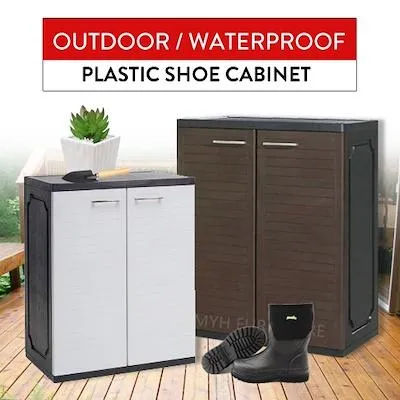
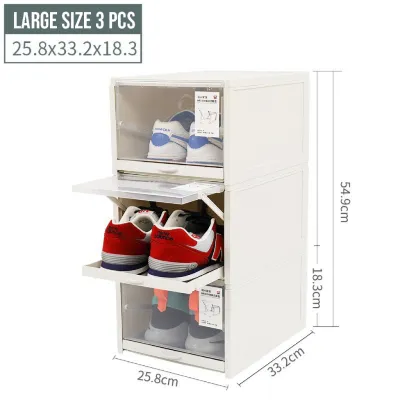
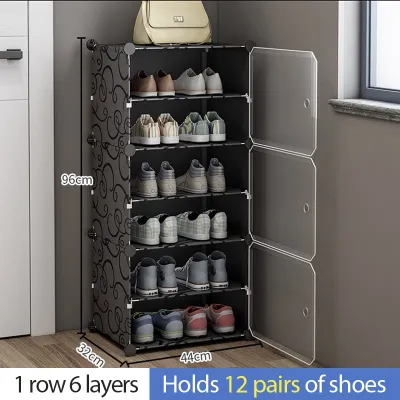
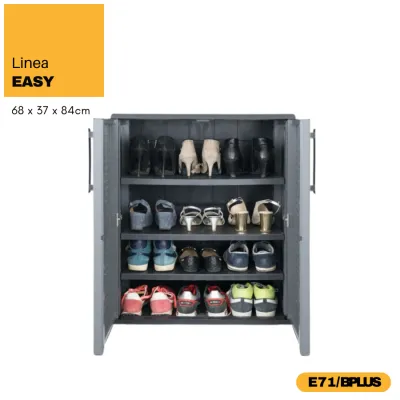
![[SG Stock]Plastic Shoe Rack Plastic Shoe Storage Cabinet DIY Shoe Storage Cabinet Multi-layer Shoes Rack](https://img.lazcdn.com/g/p/0d40be943a4bffe6751ae672988ced0f.jpg_400x400q80.jpg_.webp)
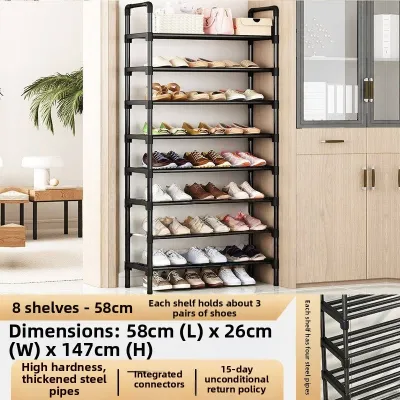
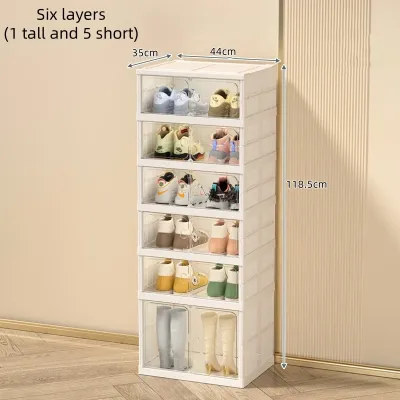
Prices are valid at publication and may change. Please refer to the product page for the latest price.
Calculating your actual storage needs prevents you from buying a cabinet that is either too small or unnecessarily bulky. Count your household’s shoes and group them by type, such as flats, sneakers, high heels, and boots. Larger shoes require more vertical and horizontal space than compact sandals. If a household of four uses three to four pairs each, you will need a cabinet that comfortably accommodates at least 12 to 16 pairs of shoes.
Standard Plastic Shoe Cabinet Dimensions and Configurations
Plastic shoe cabinets generally fall into two main structural categories: tall, narrow towers and low, wide consoles. Tall towers utilize vertical space efficiently, making them excellent for homes with high ceilings but limited floor width. Low consoles, on the other hand, offer a double-duty surface that can serve as a foyer table for keys and mail, though they require a wider stretch of wall.

When reviewing product specifications, always distinguish between the external footprint and the internal usable depth. The external depth of a standard shoe cabinet typically ranges from 30 to 35 centimeters. However, the internal shelf depth is often 2 to 3 centimeters shallower due to the thickness of the back panel and doors. If someone in your household wears larger shoe sizes, a cabinet with an internal depth of less than 32 centimeters may force you to store shoes sideways, drastically reducing the overall capacity.
Adjustable shelf configurations are a vital feature to look for in a plastic cabinet. Unlike fixed wooden shelves, many modular plastic designs allow you to adjust the height of individual compartments or remove shelves entirely. This flexibility is crucial if your collection includes a mix of flat sandals and taller footwear like ankle boots or high heels.
Be realistic when reading manufacturer-stated pair capacities. These estimates are often based on small, flat shoes arranged tightly together. If your collection consists of bulky running shoes or wide leather dress shoes, you should expect the actual capacity to be roughly 20% to 30% lower than the advertised maximum.
Space-Saving Designs for Narrow and Shallow Foyers
For exceptionally tight entryways where a standard 30-centimeter-deep cabinet would block the path, slimline tilt-out drawer designs are an excellent alternative. These cabinets feature tipping buckets where shoes are stored vertically rather than flat. This clever mechanism allows the external depth of the cabinet to be as slim as 15 to 18 centimeters, making it ideal for narrow HDB corridors.
Another highly adaptable option is the modular, stackable plastic shoe box system. These individual plastic units can be configured horizontally or vertically to fit unique architectural niches, such as the space under a bench or inside an awkward corner. As your shoe collection grows, you can simply purchase additional units and stack them upward, customizing the storage layout to match your changing needs.
However, ultra-slim profiles come with distinct trade-offs. Tilt-out drawers and ultra-shallow shelves are generally unsuitable for high-top sneakers, thick platform shoes, or ankle boots, as these bulkier designs cannot tilt properly or fit within the narrow compartments. If you have a diverse shoe collection, you may need to combine a slim cabinet for daily flats with a separate storage solution for larger footwear.
To handle overflow storage without cluttering the floor, consider supplementary options like over-the-door plastic organizers or wall-mounted shoe holders. These can be placed on the inside of utility closet doors or along a hidden wall segment, keeping seasonal or less-frequently worn shoes out of sight while preserving precious entryway floor space.
Evaluating Build Quality and Stability for Plastic Cabinets
While plastic is highly valued for its water resistance and ease of cleaning, build quality varies significantly across different products. When shopping, check the thickness of the plastic panels and look for reinforced joints or metal internal frames. Manufacturer-stated weight capacity limits should be verified; a shelf that is too thin will sag over time under the weight of heavy leather shoes or wet weather gear.
Stability is a critical safety consideration, especially for tall, narrow plastic cabinets. Because plastic is lightweight, a tall cabinet can easily become top-heavy when loaded with shoes. If you have children or pets in the home, it is essential to secure the cabinet to the wall using anti-tip wall anchors or mounting straps. Many manufacturers include these safety kits, but you should verify their inclusion or purchase a compatible hardware set separately.
Enclosed plastic environments are prone to trapping moisture and odors, particularly in Singapore’s humid climate. Look for cabinets that feature built-in ventilation solutions, such as louvered doors, open back panels, or dedicated ventilation grilles. Proper airflow is essential to prevent mold growth on leather shoes and to keep the entryway smelling fresh.
Finally, examine the surface finish and structural design of the plastic. High-quality polypropylene or ABS plastics often feature scratch-resistant textured surfaces and structural ribs on the underside of the shelves. These ribs provide extra load-bearing stability without adding unnecessary weight, ensuring the cabinet remains sturdy and functional for years to come.
Practical Tips for Arranging and Maintaining Your Shoe Cabinet
To maximize the efficiency of your plastic shoe cabinet, adopt smart arrangement techniques. Alternating your shoes heel-to-toe is a simple yet highly effective way to save horizontal space, as it prevents the widest parts of the shoes from pressing against each other. For very tight shelves, you can also use double-decker shoe slots that stack one shoe directly above its partner.
Managing humidity inside a plastic cabinet is vital for preserving your footwear. Since plastic does not breathe like natural wood, place small moisture-absorbing tubs or reusable silica gel packets on the shelves. Be sure to replace or reactivate these dehumidifiers regularly, especially during the monsoon seasons when indoor humidity levels spike.
Maintaining the cabinet itself is relatively straightforward. Regularly wipe down the plastic surfaces with a damp microfiber cloth and a mild, non-abrasive detergent to prevent dust buildup and staining. Avoid using harsh chemical solvents or abrasive scrubbing pads, which can scratch the plastic and lead to permanent yellowing or degradation of the material.
Periodically reassess your shelf configurations as your household’s lifestyle changes. If you transition from formal office wear to more casual sneakers, or if children’s shoe sizes grow, adjusting the shelf heights will ensure you continue to utilize every cubic centimeter of your cabinet efficiently.
Frequently Asked Questions (FAQ)
Can plastic shoe cabinets support heavy winter boots or large men's shoes?
Standard plastic shoe cabinets can support larger shoes, but you must verify the internal shelf depth and weight limits beforehand. Heavy boots or large men’s leather shoes can cause thin plastic shelves to sag over time. To prevent this, look for cabinets with reinforced structural ribs, place heavier footwear on the bottom shelves, and ensure the internal depth is at least 32 to 35 centimeters.
How do I prevent a tall plastic shoe cabinet from tipping over?
To secure a tall, lightweight plastic cabinet, always anchor it to a solid wall using an anti-tip safety kit or heavy-duty mounting straps. Additionally, practice smart weight distribution by placing your heaviest shoes, such as boots and thick-soled sneakers, on the lowest shelves to lower the overall center of gravity and improve stability.
Will enclosed plastic cabinets cause my shoes to smell?
Enclosed plastic cabinets can trap odors and moisture if they lack proper airflow, which can lead to mold. To avoid this, choose a cabinet with louvered doors or ventilation holes, and ensure your shoes are completely dry before putting them away. Placing active charcoal bags or moisture absorbers inside the cabinet will also help neutralize odors.

Community discussion
Share your experience or ask a question. Comments are reviewed before publication.