
Choosing a mattress for a floor bed setup in Singapore requires balancing spinal support with aggressive moisture management. Because the local tropical climate brings high humidity, placing a mattress directly on tiled, parquet, or vinyl floors creates a high risk of condensation and mold. To find the best option, sleepers must look for highly breathable materials, manageable weights for regular lifting, and brands whose warranties explicitly permit floor use. Rather than relying on brand names alone, success depends on verifying specific material certifications, trial policies, and structural designs.
What to Look for in a Floor Bed Mattress
A floor bed lacks the progressive yielding of a slatted frame or box spring, meaning the floor acts as an entirely unyielding surface. Therefore, the mattress must provide all the pressure relief and spinal alignment on its own. If a mattress is too thin, typically under 15 centimeters, a sleeper might bottom out and feel the hard floor beneath, especially side sleepers whose shoulders and hips require deeper contouring. Conversely, if the mattress is too thick, such as over 25 centimeters, it becomes heavy and difficult to lift, which is a critical drawback for a setup requiring frequent maintenance.
In Singapore, indoor temperatures and humidity levels are consistently high throughout the year. When you sleep, your body naturally releases heat and moisture into the bedding. On a traditional bed frame, this moisture escapes through the bottom of the mattress into the open air. On the floor, however, the moisture gets trapped between the bottom of the mattress and the cold floor surface, such as ceramic tiles. This temperature differential causes condensation to form, making breathability and airflow the most critical factors to look for in a mattress design.
Products mentioned in this guide
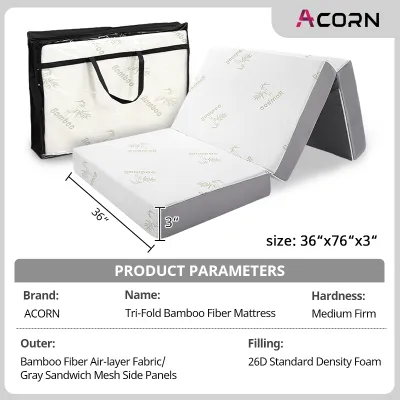
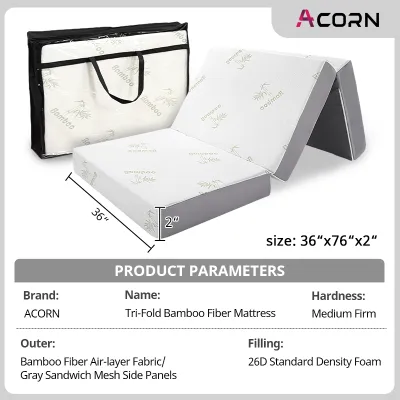
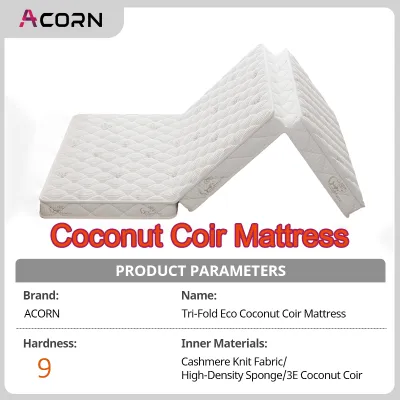
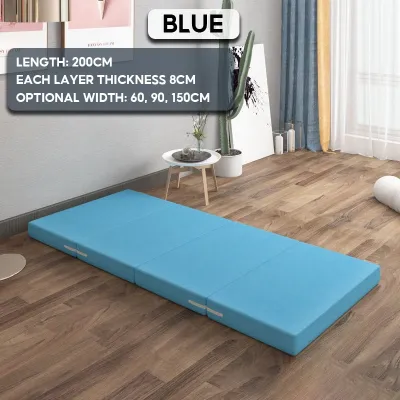
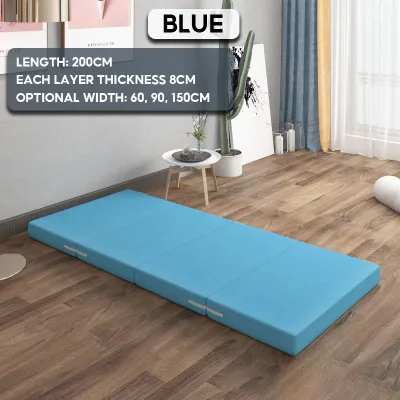
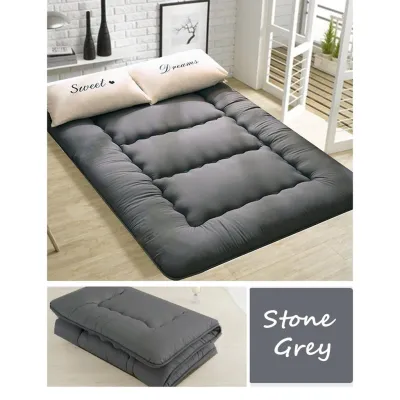
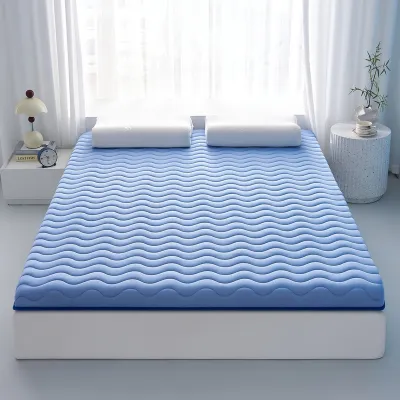
Prices are valid at publication and may change. Please refer to the product page for the latest price.
Weight and maneuverability are equally important because a floor bed is not a set-and-forget arrangement. To prevent mold and dust mite accumulation, you must lift and air the mattress regularly. A heavy hybrid mattress weighing over 40 kilograms is highly impractical for a single person to lift and prop against a wall in a typical HDB bedroom. Opting for lightweight latex, specialized high-density polyurethane foams, or modular designs allows you to move the mattress easily without straining your back.
How to Verify Material Suitability for Floor Use
When shopping for a floor bed mattress, do not accept generic material labels at face value. Standard memory foam is notorious for trapping heat and moisture, which is exacerbated when placed directly on the floor. Instead, look for manufacturer specifications detailing open-cell technology, where the cell walls of the foam are broken to allow air to pass through freely. For latex mattresses, verify if the core features molded pinholes or ventilation channels, which are characteristic of high-quality Dunlop or Talalay latex.

If you prefer innerspring or hybrid units, you must verify the durability of the base layer and the edge support. Hybrid mattresses combine pocket springs with foam layers, naturally providing excellent internal airflow. However, when placed on the floor, the bottom fabric and the lower foam casing bear the direct friction and pressure of the hard floor surface. Check if the manufacturer uses a heavy-duty, anti-slip base fabric and robust edge support to prevent the mattress sides from flaring out or sagging when you sit on the edge.
Never assume a mattress is inherently mold-resistant or waterproof unless specified by the manufacturer’s official documentation. Look for treated fabric specifications, such as covers woven with antimicrobial, anti-dust mite, or water-repellent finishes. However, keep in mind that these treatments often only protect the top cover, not the base. Always prioritize brands that provide clear, written care instructions regarding flat-surface use rather than relying on general assumptions about material performance.
Essential Maintenance to Prevent Moisture and Mold
In Singapore’s humid environment, a strict maintenance routine is non-negotiable for any floor bed setup. At least once a week, lift the mattress and prop it vertically against a wall to air out. Open your windows and turn on a fan or a dehumidifier to allow the underside of the mattress and the floor beneath it to dry completely. Additionally, rotate the mattress 180 degrees every three to six months to ensure even wear, as floor beds do not benefit from the shock-absorbing properties of a flexible bed base.
To minimize direct contact with the cold floor, consider using an intermediate moisture barrier. Traditional Japanese tatami mats made of woven rush grass provide a breathable, moisture-absorbing barrier that elevates the mattress slightly. Alternatively, low-profile slatted roll-out inserts or specialized non-slip, moisture-proof underlays can be placed directly on the floor. These inserts create a crucial gap of one to two centimeters, allowing air to circulate underneath the mattress and preventing condensation from forming on your tiles.
Dust and allergens accumulate more rapidly at floor level than on an elevated bed frame. Vacuum the floor around and under the mattress daily, and vacuum the mattress surface weekly using a clean brush attachment. If a spill occurs, spot-clean immediately according to the manufacturer’s guidelines, using as little water as possible. Avoid saturating the core materials with liquid cleaners, as trapped moisture inside a floor-bound mattress is incredibly difficult to dry and will rapidly lead to internal mold growth.
How to Filter Brands for Floor-Bed Compatibility
Checking warranty conditions is the most critical step when shortlisting mattress brands in Singapore. Many mattress warranties contain strict clauses that void coverage if the mattress is not supported by an approved foundation or a specific slatted frame. Before purchasing, download the warranty document from the brand’s official website and search for terms like floor, flat surface, or solid platform. If the language is ambiguous, contact the brand’s customer support via email to get written confirmation that floor placement will not void your warranty.
Because sleeping at floor level alters the perceived firmness and heat retention of a mattress, a home sleep trial is invaluable. Look for brands that offer a risk-free trial period, typically ranging from 90 to 120 nights, locally. This allows you to test how the mattress performs directly on your bedroom floor under real-world conditions. Pay close attention to whether the mattress feels too hot after a few consecutive nights and whether any dampness develops underneath, and ensure you understand the return shipping or pickup fees.
Finally, prioritize brands that design mattresses specifically for tropical climates. These models often feature cooling gel infusions, phase-change materials, or highly breathable Tencel and bamboo covers. When filtering brands, look for those that emphasize heat dissipation and moisture regulation in their product engineering. Avoid models that rely heavily on thick, dense layers of traditional memory foam without cooling or ventilation technologies, as these are highly likely to trap heat and moisture when restricted to floor use.
Frequently Asked Questions (FAQ)
Will placing a mattress directly on the floor void its warranty?
Yes, in many cases, placing a mattress directly on the floor can void its warranty. Manufacturers often require the mattress to be supported by a matching box spring, an approved slatted base with specific gap measurements, or a solid bed frame to prevent sagging and moisture accumulation. To protect your investment, always read the warranty’s fine print regarding foundation requirements. If you plan to use a floor bed, look for brands that explicitly state their mattresses can be used on flat, hard surfaces, or obtain written approval from their customer service department before buying.
Is a tatami mat or slatted board necessary under a floor bed mattress?
While not strictly mandatory, using a tatami mat, a low-profile slatted board, or a moisture-resistant underlay is highly recommended in Singapore. Direct contact between a warm mattress and a cold tiled or vinyl floor creates a temperature differential that leads to condensation, creating an ideal breeding ground for mold and mildew. An intermediate layer like a tatami mat absorbs excess moisture, while a slatted board elevates the mattress slightly to allow continuous airflow underneath. This simple addition significantly extends the lifespan of your mattress and protects your flooring from moisture damage.

Community discussion
Share your experience or ask a question. Comments are reviewed before publication.