
Selecting the right firmness for a king-size latex mattress requires balancing your primary sleeping position with your body weight to ensure proper spinal alignment and pressure relief. Because latex is naturally resilient and buoyant, it responds differently than memory foam or traditional innersprings. The ideal choice allows your heaviest body parts to sink just enough to keep your spine straight while supporting your lighter areas. When choosing a king-size bed, this decision often involves coordinating the needs of two sleepers, making an understanding of latex density and customization options essential for long-term comfort.
Assess Your Primary Sleeping Position
Your dominant sleeping posture is the most critical factor in determining how a mattress should contour to your body. During sleep, your spine must maintain its natural alignment to prevent morning aches and joint strain. Different positions distribute your body weight across different contact points, requiring specific levels of mattress give and resistance.
Side sleepers require a mattress that offers significant contouring and pressure relief. When you lie on your side, your shoulders and hips carry the bulk of your weight. If the latex is too firm, these areas will experience high pressure, leading to poor circulation and tossing. A softer to medium-firm latex mattress allows these pressure points to sink in sufficiently, keeping the spine in a straight, horizontal line.
Products mentioned in this guide

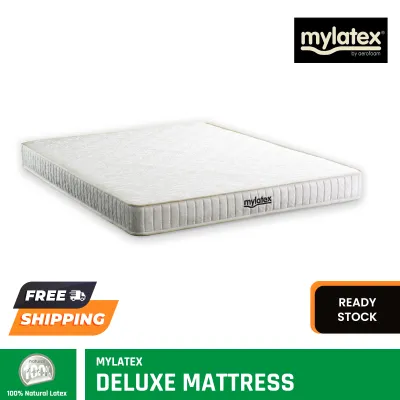
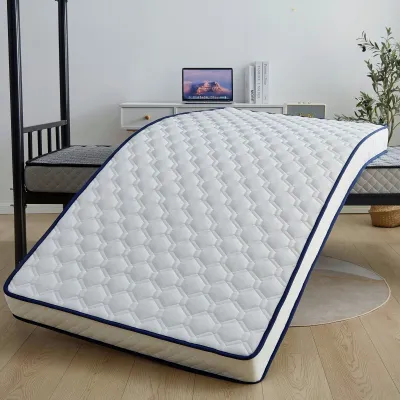
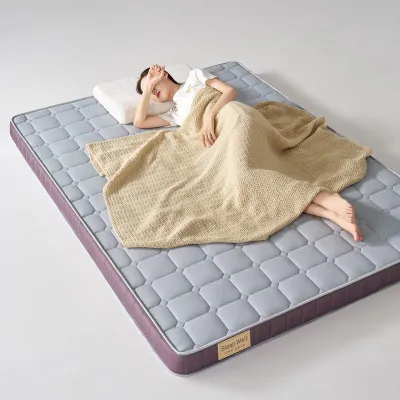
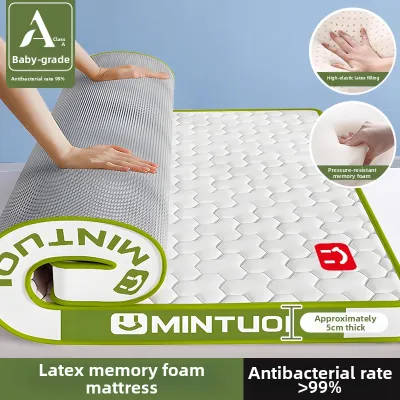
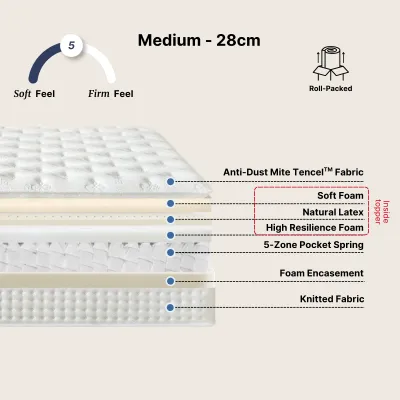
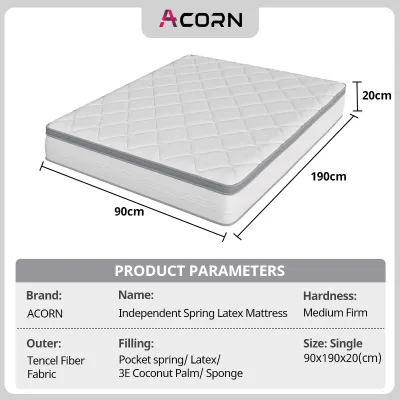
Prices are valid at publication and may change. Please refer to the product page for the latest price.
Back sleepers need a balanced surface that supports the natural curve of the lumbar spine. If the mattress is too soft, the pelvis sinks too deeply, flattening the lower back curve. If it is too firm, the mattress will not fill the gap under the lower back, leaving the lumbar muscles tense. A medium to medium-firm latex mattress typically provides the right blend of upward support and gentle contouring.
Stomach sleepers require a firmer surface than other sleep positions. Sleeping on the stomach naturally puts pressure on the lower back. If the mattress has too much give, the midsection and hips will sink into the bed, arching the spine backward. A firm latex mattress keeps the hips elevated and aligned with the shoulders, reducing the risk of chronic back pain.
Combination sleepers, who rotate through multiple positions during the night, benefit most from a medium-firm feel. Latex is highly responsive, meaning it quickly snaps back into shape when you move. This responsiveness makes it easier to change positions without feeling stuck. A medium-firm rating offers enough cushion for side sleeping while maintaining the support needed for back or stomach intervals.
Factor in Your Body Weight
Body weight directly influences how deeply you compress the latex layers, which alters your perception of mattress firmness. A mattress that feels plush to one person may feel unyielding to another. To find the right match, you must adjust the manufacturer’s standard firmness ratings based on your weight category.

Lighter individuals, typically weighing under 60 kilograms, exert less downward force on the mattress. On a standard medium-firm mattress, a lighter sleeper may not compress the top comfort layers enough to experience any contouring, making the bed feel excessively hard. For these sleepers, a softer latex mattress is often necessary to allow adequate sinkage and pressure relief.
Average-weight individuals, falling between 60 and 90 kilograms, generally experience mattress firmness as advertised by manufacturers. In this weight range, standard recommendations based on sleeping position are highly reliable. A medium-firm latex mattress will typically offer the intended balance of support and pressure relief without bottoming out or feeling too rigid.
Heavier individuals, weighing over 90 kilograms, compress mattress layers much more deeply. On a soft or standard medium mattress, a heavier sleeper risks sinking completely through the comfort layers and resting on the hard support core. This causes severe pressure points and misaligns the spine. To prevent this, heavier sleepers require firmer, high-density latex or thicker comfort profiles that offer robust upward resistance.
Understand Latex Firmness Categories and Materials
Latex mattresses are generally classified into soft, medium, and firm categories, but the actual feel depends heavily on the manufacturing process and material density. Rather than relying on arbitrary numerical scales, which vary widely between brands, buyers should understand the physical characteristics of the latex types used.
The two primary manufacturing methods for natural latex are Dunlop and Talalay. Dunlop latex is poured in a single continuous pour, resulting in a denser, heavier structure that is naturally firmer at the bottom. It is highly supportive and ideal for base layers or for sleepers who prefer a solid, stable surface. Talalay latex undergoes a vacuuming and flash-freezing process, creating a highly uniform, airy, and buoyant cell structure. This makes Talalay feel softer, more springy, and highly contouring, making it excellent for top comfort layers.
When evaluating a mattress, check the manufacturer’s specifications for layer composition and core density. A high-quality latex mattress often features a multi-layered design, combining a dense Dunlop core for structural support with a softer Talalay top layer for pressure relief. Understanding these material differences helps you look past marketing labels and choose a configuration that matches your physical needs.
Navigate King-Size Considerations for Couples
A king-size bed offers ample space, but sharing it with a partner often introduces conflicting comfort preferences. If one partner is a light side sleeper and the other is a heavier stomach sleeper, a single standard firmness level will inevitably leave one person uncomfortable. Resolving these differences requires careful planning and a look at customizable mattress designs.
Before purchasing, evaluate the weight and sleeping position of both partners. If your needs are similar, a standard medium-firm king-size mattress can serve as an excellent compromise. However, if your physical profiles or sleeping habits differ significantly, forcing a compromise on a single uniform firmness can lead to poor sleep quality and physical discomfort for one or both individuals.
For couples with contrasting needs, split-firmness king mattresses or customizable layered designs offer an ideal solution. A split-king setup consists of two individual long single mattresses side-by-side, allowing each person to select their exact firmness level. Alternatively, many latex manufacturers offer a single king-size cover containing split internal latex cores. This design allows you to customize the left and right sides of the bed independently without a visible gap in the middle.
Additionally, consider motion isolation and edge support when sharing a large sleeping surface. Natural latex is inherently excellent at isolating motion, meaning one partner’s movements are unlikely to wake the other. However, because latex is highly flexible, you should verify that the mattress has reinforced edges or a sturdy core to prevent a rolling-off sensation when sleeping near the perimeter of the king-size bed.
Test and Finalize Your Mattress Choice
Selecting a mattress is a long-term investment, and verifying your choice through practical testing and logistical preparation is essential. Because a king-size latex mattress is exceptionally heavy and bulky, planning the delivery and setup is just as important as choosing the right firmness.
Always utilize sleep trials to test the mattress in your own home. A brief trial in a showroom is rarely sufficient, as your body needs several weeks to adjust to a new sleeping surface. Carefully review the manufacturer’s return and exchange policies, paying close attention to any fees associated with returns or layer swaps. Many modular latex brands allow you to exchange individual internal layers during the trial period, which is a convenient way to fine-tune the firmness without returning the entire mattress.
Before the mattress arrives, verify that your existing bed frame or foundation can support the substantial weight of a king-size latex mattress. Natural latex is much heavier than polyurethane foam or traditional innersprings, often weighing over 60 kilograms for a king size. The foundation must be sturdy, with a solid center support leg and closely spaced slats to prevent the mattress from sagging and compromising its supportive properties.
Finally, measure your home’s access points to ensure a smooth delivery. In high-density urban environments, such as apartments or HDB flats in Singapore, navigating tight corridors, low stairwells, and small lift doors can be challenging. Measure the clearance of your entryway, hallways, and bedroom doors. Confirming these dimensions beforehand prevents delivery delays and ensures your new king-size mattress can be safely transported to your bedroom.
Frequently Asked Questions (FAQ)
Can I change the firmness of my latex mattress after buying it?
Yes, many latex mattresses are designed with zippered covers that allow you to rearrange or swap the internal latex layers to adjust the firmness. If your mattress is a solid, non-zippered model, you can still modify the feel by adding a separate latex mattress topper. A soft topper can cushion a bed that feels too rigid, while a firm topper can add surface stability, though it cannot fix a mattress that is sagging from a worn-out support core.
Does a king-size latex mattress require a special bed frame?
A king-size latex mattress requires a highly durable bed frame with excellent structural integrity due to the material’s extreme weight. The frame must feature a strong center support beam with legs that extend to the floor. If you use a slatted base, the slats should be made of strong wood or metal, spaced no more than five to seven centimeters apart, to prevent the latex from squeezing through the gaps and sagging over time.

Community discussion
Share your experience or ask a question. Comments are reviewed before publication.