
The ideal firmness for a floor sleeping mat depends primarily on your sleeping position, as the unyielding surface of a hard floor directly amplifies how firm the mat feels. Side sleepers generally require a medium-soft to medium mat to cushion the shoulders and hips. Back sleepers benefit from a medium to medium-firm surface that supports the natural curve of the spine, while stomach sleepers need a firm mat to prevent the pelvis from sinking. Combination sleepers should look for a balanced medium firmness that allows easy movement.
Sleeping on the floor is a practical, space-saving choice in many modern apartments. However, because a solid floor offers zero deflection, selecting the correct firmness is critical to avoiding morning stiffness. Understanding how your body weight, sleep posture, and the mat’s internal materials interact will help you make a comfortable, long-lasting choice.
Decoding Firmness and Support for Floor Sleeping
When shopping for a floor sleeping mat, it is essential to distinguish between surface firmness and structural support. Firmness refers to the initial feel of the mat when you first lie down—whether it feels soft, cushiony, or hard. Support, on the other hand, refers to the mat’s ability to keep your spine in a neutral alignment, preventing your heavier body parts from sinking too deep. A mat can have a soft surface layer but still offer excellent support if its core is resilient.
Products mentioned in this guide




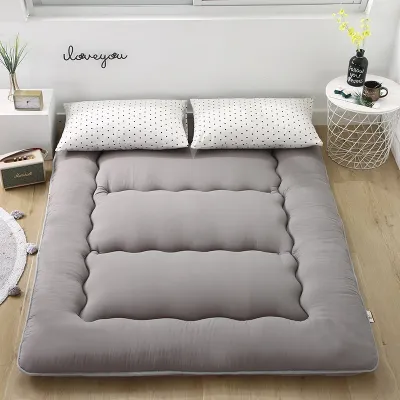
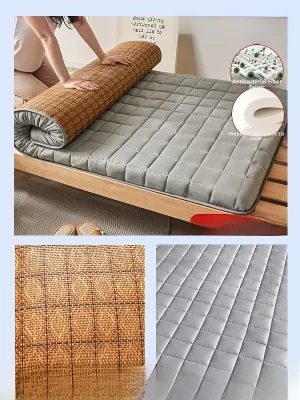
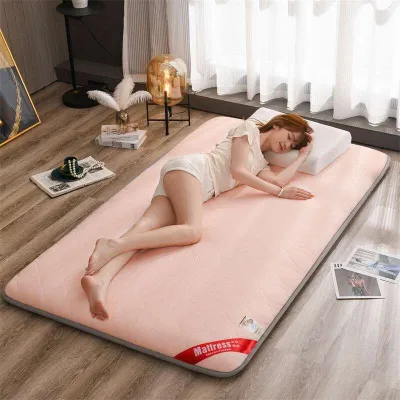
Prices are valid at publication and may change. Please refer to the product page for the latest price.
The surface you place your mat on plays a massive role in how it performs. Unlike a traditional bed setup that uses a flexible slatted frame or a box spring to absorb weight, a concrete, laminate, or tiled floor has absolutely no “give,” meaning any mat placed directly on the floor will feel significantly firmer than its official rating suggests. A mat rated as “medium” by a manufacturer might feel like a “medium-firm” or even “firm” when laid on a hard floor.
To make an accurate choice, avoid relying solely on subjective marketing labels like “extra plush” and instead look closely at the manufacturer’s specifications for the core material. High-density polyurethane foam, natural latex, or memory foam layers are excellent indicators of structural integrity, helping you verify if the mat will hold its shape or simply flatten out under pressure.
Choosing Firmness Based on Your Sleep Position
Your dominant sleeping posture determines where your body concentrates pressure and how much support your spine requires to stay aligned throughout the night.

Side sleepers require a floor sleeping mat with a medium-soft to medium feel. When you lie on your side, your shoulders and hips bear the brunt of your weight. A mat with surface give allows these wider areas to sink in comfortably, keeping your spine straight and preventing painful pressure points against the hard floor.
Back sleepers need a medium to medium-firm surface to maintain healthy spinal alignment. While back sleeping distributes weight evenly, it leaves a natural gap at the lower back. A medium-firm mat fills this lumbar gap while providing a stable base that prevents your pelvis from sagging and pulling your spine out of alignment.
Stomach sleepers require a firm floor sleeping mat to prevent discomfort. Stomach sleeping is highly sensitive to sag; if your midsection sinks, your spine hyperextends into an unnatural arch. A firm surface keeps your pelvis level with your shoulders to maintain a flat, neutral position.
Combination sleepers who regularly transition between different positions during the night benefit most from a balanced medium firmness. This middle-ground option offers enough surface cushioning for side sleeping while maintaining the structural support needed for back or stomach sleeping. When choosing a mat for combination sleeping, look for responsive materials like latex or high-resilience foam that adapt quickly to your movements.
Adjusting for Body Weight and Material Density
Your body weight acts as the primary force compressing the floor sleeping mat, meaning a firmness level that works for one person might feel completely different to another.
Heavier individuals exert more downward pressure, causing them to sink through soft mats. If you have a larger frame, a firmer mat with a high-density core is essential to maintain spinal alignment and prevent bottoming out. Look for robust materials that offer high resistance to compression.
Conversely, lighter individuals do not exert enough force to compress a firm mat, making it feel like concrete. Opting for a slightly softer surface or a lower-density top layer allows lighter sleepers to experience pressure relief without sacrificing support.
To ensure long-term comfort, always cross-reference your weight with the mat’s material density specifications. High-density foams are more resilient and less prone to sagging over time, making them a smart investment for daily use. Checking these specifications ensures you select a mat that matches your physical profile and will stand up to regular folding and storage.
Checking Thickness to Avoid Bottoming Out
“Bottoming out” is a common issue with floor sleeping, occurring when your body weight completely compresses the mat, causing your hips or shoulders to press directly against the hard floor. When this happens, the surface firmness of the mat becomes irrelevant, as you are effectively sleeping on the floor itself.
To prevent this uncomfortable experience, always verify the exact thickness of the mat in the product specifications. For temporary or occasional use, a thinner mat of around 5 to 8 centimetres may be sufficient if it features a very high-density foam core. However, for daily sleep, a thickness of 10 centimetres or more is highly recommended to provide a reliable, protective buffer between your body and the floor.
Thickness and density must work together. A thick mat made of cheap, low-density foam will quickly compress to nothing, whereas a slightly thinner mat with a high-density core can offer excellent, lasting support. Ensure the core layer is robust enough to handle your weight without collapsing.
Additionally, consider how thickness affects your daily routine. Thicker, denser mats are heavier and take up more storage space. Check the folded dimensions to ensure the mat fits easily into your wardrobe and is manageable to pack away each morning.
Frequently Asked Questions (FAQ)
Can I use a mattress topper to adjust the firmness of my floor mat?
Yes, a mattress topper can adjust the surface feel of your floor mat. If your mat is too firm, a soft memory foam or latex topper adds pressure relief. However, a topper cannot fix a mat that lacks core support or is already bottoming out. Additionally, ensure the combined height remains easy to fold and both materials allow adequate airflow to prevent moisture buildup on the floor.
Is a firmer mat always better for back pain?
No, a firmer mat is not a universal solution for back pain. Proper spinal alignment and pressure relief are far more important than absolute hardness. The ideal firmness depends entirely on your sleep position and body weight. A mat that is too firm creates painful pressure points, while one that is too soft causes your spine to sag. For persistent pain, consult a healthcare professional and look for mats with home trial periods to test the support.

Community discussion
Share your experience or ask a question. Comments are reviewed before publication.