
Transitioning to full-time remote work in Singapore means your office chair is no longer just a piece of furniture; it is the primary interface of your daily work life. Sitting for eight or more hours a day places significant cumulative stress on your spine, shoulders, and lower limbs. Finding the right ergonomic chair requires moving past generic marketing claims and focusing on how a chair’s mechanical adjustments, material composition, and physical dimensions align with your body and your home environment. By systematically evaluating these factors, you can establish a highly supportive setup that prevents chronic discomfort and sustains your productivity over years of remote work.
Key Adjustability Features for All-Day Support
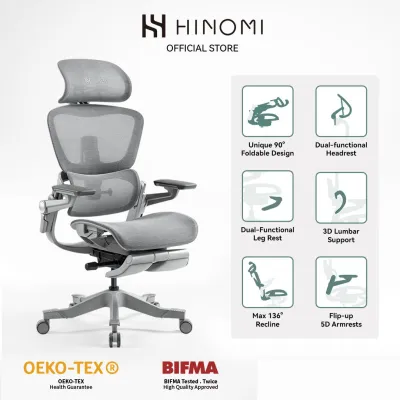
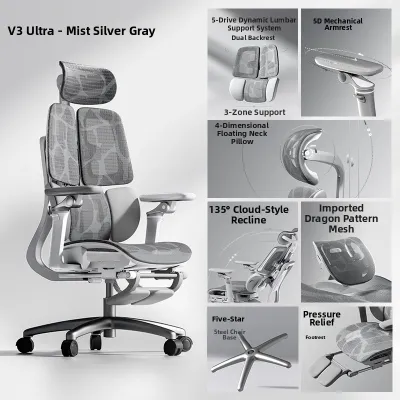
To sustain comfort throughout a full-time work schedule, an ergonomic chair must adapt to your unique physical proportions rather than forcing your body to conform to a rigid structure. The most critical component is the lumbar support mechanism. Fixed lumbar curves rarely fit everyone, as individual spinal curvatures vary. Look for chairs that offer adjustable lumbar depth and height tracks, allowing you to position the support precisely in the inward curve of your lower back. This targeted support maintains the natural lordotic curve of your spine, reducing the muscular effort required to sit upright.
The seat pan is another vital area where adjustability prevents physical strain. A seat pan that is too deep will press against the back of your knees, restricting blood circulation and forcing you to slide forward, which completely detaches your back from the lumbar support. Conversely, a seat pan that is too shallow fails to support your thighs adequately, increasing pressure on your sit bones. Opt for a chair with a sliding seat pan adjustment that allows you to maintain a gap of roughly two to three fingers between the front edge of the seat and the back of your knees.
Products mentioned in this guide
Prices are valid at publication and may change. Please refer to the product page for the latest price.
Armrests play a fundamental role in relieving tension in your neck and shoulders. Fixed armrests often force your shoulders to shrug or your elbows to splay outward, leading to upper body fatigue. Highly adjustable armrests—often designated as 4D armrests—allow you to adjust height, width, depth, and pivot angle. This level of customization ensures your elbows can rest comfortably at a 90-degree angle close to your torso, keeping your shoulders relaxed while typing or using a mouse.
Finally, the recline mechanism should support dynamic sitting rather than keeping you locked in a single, static posture. Look for chairs equipped with recline tension control and multi-position tilt locks. The tension control should adjust easily to balance your body weight, allowing you to lean back smoothly without feeling like you are falling backward, while the tilt lock lets you secure the backrest at specific angles when transitioning from focused typing to reading or virtual meetings.
Upholstery and Base Materials for Home Environments
The materials you select for your WFH chair directly impact your daily thermal comfort, maintenance routine, and the longevity of the chair. In Singapore’s warm and humid climate, heat dissipation is a primary concern. Mesh upholstery is highly favored for its exceptional breathability, allowing air to circulate freely around your back and thighs to prevent sweat buildup. However, not all mesh is created equal; high-tension elastomeric mesh is necessary to prevent sagging over time. If you prefer a more traditional feel, fabric upholstery offers a softer, more cushioned sit, though it requires regular cleaning to prevent moisture absorption and staining. Leather, while durable and easy to wipe clean, tends to trap body heat and can feel uncomfortably warm in non-air-conditioned rooms.

For chairs with fabric or leather upholstery, the underlying foam density is the primary indicator of long-term comfort. Low-density foam may feel exceptionally soft initially, but it quickly bottoms out under your weight, leaving you sitting directly on the hard seat frame. Look for high-density, molded polyurethane foam. This material retains its shape and supportive properties over years of continuous use, distributing your weight evenly and reducing pressure points.
The base and casters of the chair must be matched to your home’s flooring to prevent permanent damage. Most standard office chairs come with hard nylon casters designed for low-pile carpets. If your home office features vinyl, parquet, or homogeneous tiles—common in Singaporean apartments—hard casters can scratch the surface or wear down protective coatings. Instead, ensure your chair is fitted with soft polyurethane (PU) casters, which glide quietly and protect hard flooring from scuffs. Additionally, a heavy-duty aluminum or reinforced nylon base provides the structural stability needed to support dynamic movement without flexing or tipping.
Space and Clearance Checks Before Purchasing
Before committing to a specific chair, you must verify that its physical dimensions are compatible with your designated workspace. The most common oversight is desk height clearance. Measure the distance from your floor to the underside of your desk frame or drawer unit. Compare this measurement against the chair’s maximum armrest height and minimum seat height. If the armrests cannot slide under the desk, you will be forced to sit too far back from your keyboard, leading to forward leaning and shoulder strain.
Floor space requirements are equally critical, especially in compact study corners or shared living areas. An ergonomic chair requires a clear radius not just for sitting, but for swiveling, reclining, and rolling backward when standing up. Ensure there is at least 80 to 100 centimeters of unobstructed space behind your desk to accommodate the full recline angle of the backrest and the footprint of the five-star caster base without striking walls, bookshelves, or nearby furniture.
Finally, consider the logistics of getting the chair into your home. Many premium ergonomic chairs are delivered fully assembled in large, bulky boxes. Measure the width of your home’s doorways, elevator entryways, and any tight corridor turns. If you live in a multi-story walk-up or an apartment with narrow lift access, confirm the boxed dimensions with the retailer beforehand to ensure the delivery team can safely transport the item to your room of choice without damage.
Matching Chair Profiles to Your Working Style
Ergonomic needs are highly dependent on how you interact with your workstation throughout the day. Different tasks require different levels of physical support and freedom of movement. By identifying your primary working style, you can narrow down your options to a chair category designed to support your specific daily habits.
For Long Hours of Typing and Screen Focus
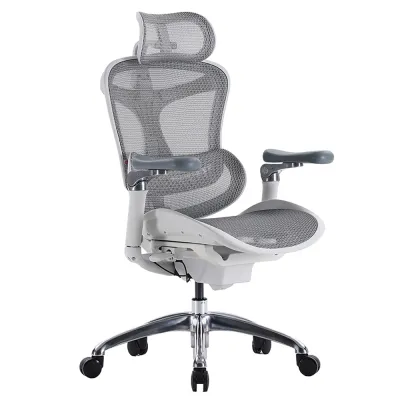
If your daily routine involves continuous, highly focused tasks like coding, writing, or data analysis, you likely remain in a relatively stationary, upright position for hours. For this working style, a high-back chair with an integrated or highly adjustable headrest is ideal. The high backrest provides continuous support along the entire length of your spine, while the headrest cradles your neck during moments of reflection or when slightly reclined. Look for a synchronous tilt mechanism, which tilts the seat pan at a smaller ratio than the backrest. This movement keeps your feet flat on the floor and maintains your eye level relative to your monitor, preventing neck strain as you shift angles.
For Active Sitters and Frequent Movement
Some remote workers prefer to shift positions constantly, alternate between tasks, or lean forward during collaborative calls. If you are an active sitter, a rigid, highly restrictive chair can feel confining. Instead, look for a mid-back chair with a flexible, dynamic backrest that twists and bends with your torso. These chairs often feature responsive, weight-activated recline mechanisms that automatically adjust resistance based on your body weight without requiring manual knob adjustments. This design encourages natural movement, stimulates blood flow, and provides continuous support without locking you into a single posture.
For Compact Apartments and Shared Spaces
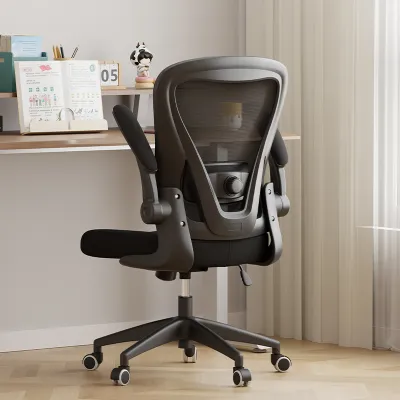
When your home office is integrated into a bedroom or a living room, visual clutter and physical footprint become major considerations. A massive executive chair can overwhelm a small room. For these environments, look for compact ergonomic chairs featuring space-saving designs, such as flip-up armrests that allow the chair to slide completely under the desk when not in use. A smaller five-star base footprint reduces the floor space occupied by the chair. Additionally, choosing a chair with a light-colored frame and a translucent mesh backrest reduces its visual weight, helping it blend seamlessly into your home decor.
What to Verify on the Product Label and Warranty
A high-quality ergonomic chair is a significant financial investment, often ranging from S$300 to well over S$1,500. To ensure long-term value and safety, you must carefully verify the manufacturer’s specifications and warranty terms before purchasing. Start by checking the certified weight capacity. Reliable manufacturers test their chairs to meet international structural standards, such as BIFMA (Business and Institutional Furniture Manufacturers Association) or EN 1335. A certification from these bodies guarantees that the gas lift, base, and frame have undergone rigorous durability and load testing.
Next, read the fine print of the warranty policy. A long warranty period can be misleading if it only covers certain parts. Premium chairs often offer warranties spanning 5 to 12 years, but you must check which components are included. It is common for the structural frame and steel base to have a lifetime or 10-year warranty, while the moving mechanical parts, gas cylinder, and upholstery may only be covered for 2 to 5 years. Ensure you understand what is excluded, such as normal wear and tear, fabric pilling, or mesh sagging.
Finally, clarify the return and trial policies, especially when buying online. Sitting in a chair for five minutes in a showroom is very different from sitting in it for an eight-hour workday. Look for retailers that offer a home trial period, allowing you to test the chair in your actual WFH setup. Be sure to check if the return policy requires you to keep the original packaging, whether you must disassemble the chair yourself, and if there are any restocking or collection fees associated with a return.
Frequently Asked Questions (FAQ)
Is a headrest strictly necessary for full-time work from home?
A headrest is not universally necessary and depends entirely on your working posture. If you spend the majority of your day sitting upright, typing actively, and looking straight ahead, your head should naturally align over your spine, meaning your head will rarely touch a headrest. In this position, a poorly adjusted headrest can actually push your neck forward, causing strain. However, if your work involves frequent reading, video calls, or periods of creative thinking where you prefer to recline, a headrest becomes highly beneficial. It supports the weight of your head in a reclined state, relieving pressure on your neck and shoulder muscles.
How can I test an ergonomic chair's fit without a physical showroom?
If you cannot visit a showroom, you can accurately evaluate a chair’s fit by comparing its published specification sheet against your personal measurements. First, sit in your current chair with your feet flat on the floor and measure your popliteal height—the distance from the floor to the crease behind your knees. Ensure the chair’s seat height range accommodates this measurement. Next, measure your thigh length from the back of your pelvis to the back of your knee; the chair’s seat depth should be at least 3 to 5 centimeters shorter than this measurement to prevent edge pressure. Finally, measure your desk’s underside clearance to ensure the chair’s armrests can slide underneath, and prioritize retailers that offer clear, low-risk home trial policies.

Community discussion
Share your experience or ask a question. Comments are reviewed before publication.