
Selecting the right drawer storage dimensions for a typical HDB bedroom is a balancing act between maximizing your storage capacity and preserving precious floor space. In standard Singapore flats, where bedroom footprints are highly optimized, choosing furniture that is even a few centimeters too deep can transform a comfortable room into a cramped, frustrating space. The ideal drawer unit must not only fit its designated wall space when closed but also allow enough clearance for drawers to open fully without blocking walkways, doors, or built-in wardrobes.
To achieve this balance, you must look closely at the physical layout of your bedroom, the exact dimensions of your preferred furniture, and the ergonomic clearances required for daily movement. By planning around these spatial boundaries, you can select drawer storage that keeps your clothes organized while maintaining a clean, open, and highly functional layout.
Understanding HDB Bedroom Clearances and Space Constraints
Standard HDB bedrooms have specific spatial limits that dictate the scale of your furniture. A typical common bedroom in a modern HDB flat generally ranges from 9 to 11 square meters, while master bedrooms usually offer around 12 to 15 square meters. When you place a standard queen-size bed (which measures approximately 150 cm wide by 190 cm long) into these spaces, a large portion of the floor area is instantly claimed, leaving limited zones for freestanding storage.
Products mentioned in this guide
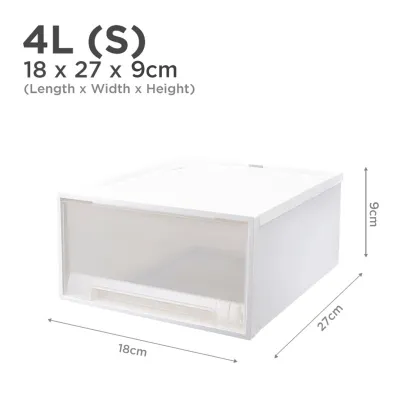
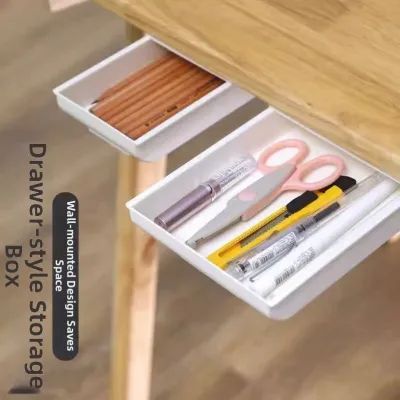
Prices are valid at publication and may change. Please refer to the product page for the latest price.
To move comfortably around your bedroom without having to squeeze past furniture, you must prioritize standard ergonomic walkways. A minimum clearance of 60 cm is required for a single person to walk sideways or pass through comfortably. For a more natural, forward-facing walk, or to accommodate shared master bedrooms, maintaining a walkway width of 90 cm is highly recommended.
Another critical factor is the door swing radius of both your bedroom entry door and any built-in wardrobe doors. A standard HDB bedroom door requires a swing clearance of roughly 80 to 90 cm. If your freestanding drawer storage is placed within this arc, you risk constant collisions that can damage the furniture’s finish, loosen the hinges, or block entry to the room entirely.
Visual weight also plays a major role in how spacious your bedroom feels. Tall, deep drawer units placed near the entrance can block natural light and create a visual bottleneck, making the room feel smaller than it actually is. Opting for low-profile units or tall, slender configurations helps preserve sightlines and maintains an airy, uncluttered aesthetic.
Ideal Drawer Dimensions for Different Bedroom Zones
Bedside and Under-Bed Drawer Limits
Bedside drawer units, or nightstands, require compact dimensions to avoid encroaching on the main bed pathway. For a standard HDB layout, look for bedside drawers with a maximum depth of 30 to 40 cm and a width of 40 to 50 cm. Keeping to these limits ensures the unit does not extend past the head of the bed or obstruct wardrobe doors that run parallel to the mattress.

If you are utilizing under-bed drawer storage, precise vertical measurements are essential. Before purchasing rolling storage boxes or integrated under-bed drawers, measure the exact clearance height from the floor to the bottom of your bed frame. This clearance typically ranges from 15 to 25 cm; choosing drawers that are at least 2 cm shorter than this height prevents them from scraping against the frame or snagging on rugs.
Additionally, you must account for window treatments when positioning bedside drawers. If your bedroom features floor-length curtains or thick roller blinds, leave a gap of at least 10 to 15 cm between the side of the drawer unit and the wall. Pushing the furniture flush against the wall can pinch the fabric, making it difficult to draw the curtains and causing premature wear on the material.
Dressers and Chests Opposite the Bed
For larger drawer units placed on the wall directly opposite or adjacent to the bed, a maximum depth of 40 to 45 cm is the standard recommendation. This depth provides ample storage for folded clothing while ensuring that when the drawers are pulled open (extending another 30 to 40 cm), you still have at least 60 cm of clearance to stand and move between the open drawer and the edge of the bed.
When deciding between a wide, horizontal dresser and a tall, narrow chest of drawers (often called a tallboy), consider your floor space versus your storage needs. Horizontal dressers (generally 75 to 90 cm high and over 100 cm wide) offer a generous top surface that can double as a vanity, but they consume significant floor area. Tallboys (typically 120 to 140 cm high and 50 to 60 cm wide) utilize vertical space, making them far more efficient for tight pathways.
Before finalizing the height of a dresser, check for overhead and wall-mounted obstacles. If you plan to place the drawer unit beneath a window sill, air-conditioning trunking, or a wall-mounted television, ensure there is at least 10 cm of clear space above the unit. This gap prevents the furniture from blocking access to utility lines, interfering with TV viewing angles, or obstructing natural ventilation.
Space-Saving Drawer Configurations for Tight Layouts
To make the most of limited HDB floor space, you can choose from several specialized drawer configurations designed to maximize utility without adding bulk.
- Vertical Tallboys: By stacking drawers upward rather than outward, tallboys provide five to six tiers of storage on a footprint that is often no larger than a standard bedside table. This makes them ideal for narrow walkways opposite the bed.
- Modular and Stackable Systems: Lightweight modular drawer units allow you to customize your storage layout over time. You can start with a low, two-drawer setup and stack additional units as your storage needs grow, adapting the furniture to your changing lifestyle.
- Corner Drawer Units: Corner spaces are frequently wasted in square or L-shaped HDB bedrooms. Specialized corner drawer chests feature angled fronts or pivoting drawer slides that utilize these dead zones, turning awkward corners into highly functional storage areas.
- Multi-Functional Storage: Combining your drawer storage with other essential furniture pieces is one of the most effective ways to save space. Storage beds featuring built-in drawers or hydraulic lift mechanisms, as well as end-of-bed benches with integrated drawers, eliminate the need for freestanding chests entirely.
Step-by-Step Measuring Guide for Your Bedroom
To ensure your chosen drawer storage fits perfectly, follow this systematic measuring process before making a purchase.
- Map the Floor Plan: Use a metal measuring tape to measure the length and width of your bedroom. Do not rely solely on your official HDB floor plan, as actual built dimensions can vary; always measure from the skirting boards rather than the bare walls to get the true usable floor area.
- Locate Fixed Obstacles: Mark the positions of all wall outlets, light switches, data ports, and air-conditioning pipes. Ensure your proposed drawer unit will not block access to these essential utilities or prevent you from plugging in electronics.
- Simulate the Drawer Depth: Use painter's masking tape to outline the footprint of the closed drawer unit on the floor. Then, lay down a second set of tape lines representing the drawers at their maximum extended depth to visualize how much walkway space remains when you are actively using the storage.
- Verify Delivery Paths: Measure the height and width of your bedroom door frame, the main apartment entrance, the building elevator door, and any tight stairwell turns. Confirming these dimensions ensures that either the fully assembled furniture or the flat-pack packaging can be safely delivered into your home without damaging your walls or the product.
Common Drawer Sizing Mistakes to Avoid
One of the most common errors is measuring only the closed dimensions of a drawer chest. Shoppers often find a unit that fits beautifully against their wall, only to realize after delivery that opening the drawers blocks the main bedroom walkway entirely or collides with the edge of the bed frame.
Another frequent mistake is placing drawer units too close to other furniture or doors. If a chest of drawers is positioned immediately adjacent to a built-in wardrobe, the drawer handles can snag on the wardrobe door frames or prevent the wardrobe doors from opening past a certain angle, creating constant daily inconvenience.
Finally, avoid buying excessively deep drawers for shallow bedroom niches or alcoves. While deep drawers offer more volume, a unit that protrudes past the edge of a wall niche breaks the visual flow of the room, creates sharp corners that are easy to bump into, and can block natural light coming from nearby windows.
Frequently Asked Questions (FAQ)
How much clearance is needed to fully open a dresser drawer?
To open a dresser drawer fully and access its contents comfortably, you need a clearance equal to the depth of the drawer cabinet plus an additional 30 to 45 cm. This extra space allows you to stand, bend down, and reach into the back of the drawer without your back or hips pressing against the bed or wall. If the drawer unit is located in a primary walkway, aim for a total clearance of at least 90 to 100 cm from the front of the closed chest to the opposite obstacle.
Can I place a drawer chest in front of a window in an HDB bedroom?
Yes, you can place a drawer chest in front of a window, but you must ensure the unit’s height is at least 10 cm below the window sill. This prevents the furniture from blocking natural light, obstructing cross-ventilation, or hindering your access to window grilles for cleaning and maintenance. For safety, especially in households with children or pets, never place a tall chest of drawers directly beneath a window, as it can be used as a climbing platform; always secure any tall furniture to the wall using the manufacturer’s supplied anchoring brackets to prevent tip-over risks.

Community discussion
Share your experience or ask a question. Comments are reviewed before publication.