
Selecting the right bed headboard for an HDB bedroom in Singapore requires balancing personal style with strict spatial constraints. Because HDB bedrooms—especially in newer Build-To-Order (BTO) flats—often feature compact layouts, every centimeter of floor space and wall area must be carefully calculated. A headboard that is too thick can restrict movement around the foot of the bed, while one that is too wide might block power sockets or wardrobe doors.
Instead of searching for a single universal design, homeowners should evaluate headboards based on how well they integrate with their specific room dimensions, wall types, and daily habits. By comparing different material specifications, customization options, and delivery services offered by local furniture retailers, you can find a headboard that enhances your bedroom’s comfort without compromising on usability.
Measuring Your HDB Bedroom for a New Bed Headboard
Before browsing online catalogs or visiting local showrooms, you must establish the physical limits of your bedroom. Accurate measurements prevent the common mistake of purchasing a bed frame that blocks essential pathways or structural features. Start by measuring the target wall’s width and height, but do not stop at the basic wall-to-wall dimensions. You must account for skirting boards, which typically protrude one to two centimeters from the base of the wall. If a headboard does not have a bottom recess to accommodate these boards, the entire bed frame will be pushed away from the wall, creating an awkward gap and wasting valuable floor depth.
Products mentioned in this guide
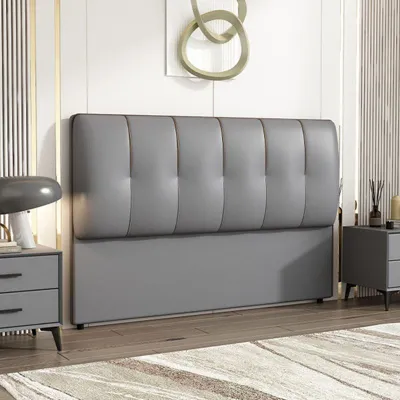
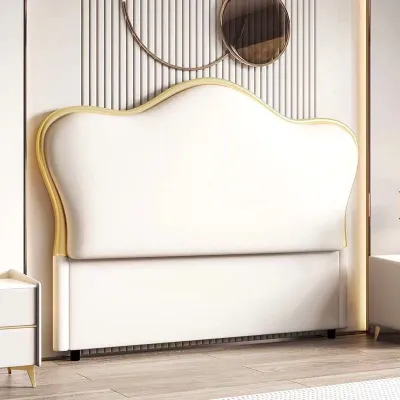

![[PRE-ORDER] Getha V6 Headboard](https://img.lazcdn.com/g/p/73a7b43ed7069e4572e7c5324027179e.jpg_400x400q80.jpg_.webp)
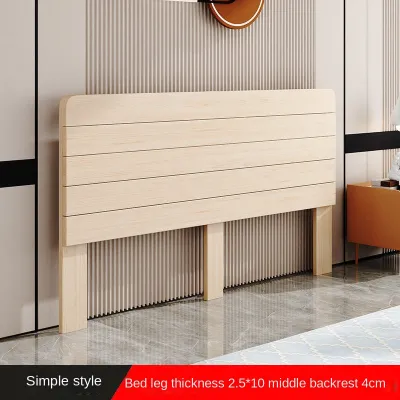
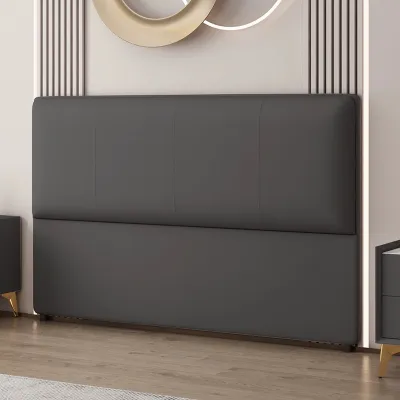
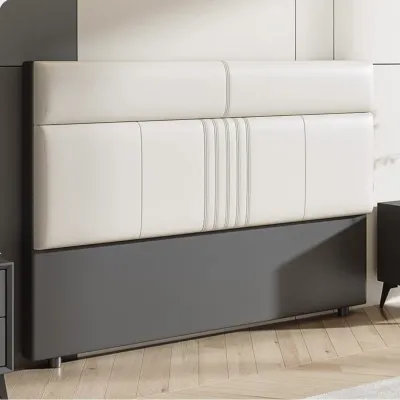
Prices are valid at publication and may change. Please refer to the product page for the latest price.
Next, identify the locations of all wall fixtures. HDB bedrooms are equipped with pre-installed power sockets, light switches, and sometimes fiber optic termination points. A wide or low-profile headboard can easily cover these outlets, making them inaccessible or forcing you to run unsightly extension cords. Additionally, look upward to check for air-conditioner unit placements and the path of the associated trunking. Air-con trunking often runs along the top or side of HDB bedroom walls, which can severely restrict the maximum height of a tall or wall-mounted headboard.
Door swings and wardrobe clearances are equally critical. Measure the distance between the edge of the proposed bed frame and your built-in wardrobe doors. If you have swing-out wardrobe doors, you need to ensure they can open fully without hitting the mattress or the headboard. Even if you have sliding wardrobe doors, you still require at least 50 to 60 centimeters of walking space between the bed and the wardrobe to move comfortably.
Finally, map out the delivery route from the ground floor to your bedroom. Many homeowners forget to measure the physical entry points of their building. You must check the height, width, and diagonal clearance of the HDB passenger lift, as well as the width of your flat’s main entrance and the corridor leading to the bedroom. Large, solid, or non-demountable headboards may not fit into standard lifts or around tight hallway corners, leading to delivery failures or unexpected handling fees.
Comparing Headboard Styles and Material Specifications
Headboards come in a variety of designs, each impacting the visual weight and physical footprint of your bedroom differently. Upholstered headboards, which feature fabric or faux-leather padding over a wooden or metal frame, offer excellent comfort for those who enjoy sitting up in bed to read or watch television. However, these designs are typically the thickest, often adding 10 to 20 centimeters to the overall length of the bed. In a tight HDB room, this extra depth can make the difference between a comfortable walkway and a cramped squeeze.

Wooden and metal headboards generally offer a much slimmer profile, often measuring just a few centimeters in depth. Wooden designs bring natural warmth to a space and are highly versatile, ranging from solid panels to open slats. Slatted wooden or thin metal headboards are particularly useful for small rooms because they allow light and air to pass through, creating a sense of visual openness. The trade-off is comfort; these hard surfaces do not provide built-in cushioning, meaning you will need to rely on pillows for back support.
When evaluating materials, it is important to look beyond marketing terms and focus on actual manufacturer specifications and care labels. For example, do not assume a fabric headboard is stain-resistant or that a wooden headboard is immune to warping simply because of the material name. Check the manufacturer’s tags for specific fabric compositions and cleaning codes. In Singapore’s humid climate, upholstered headboards made from tightly woven synthetic fibers or treated fabrics are often easier to maintain than delicate natural linens, which can absorb moisture and dust more readily.
For wooden options, verify the type of finish used. A protective lacquer or polyurethane coating helps seal the wood against ambient moisture, making it easier to wipe clean with a dry or slightly damp cloth. Inspect the joint construction of the headboard as well. High-quality headboards utilize sturdy joinery methods, such as mortise-and-tenon joints or heavy-duty steel brackets, rather than simple staples or thin screws. Robust joints ensure the headboard remains stable and quiet, preventing annoying squeaks when you shift weight against it.
Evaluating Bed Frame Brands for Delivery and Customization
Because purchasing a bed frame is a long-term investment, comparing the services and product flexibility of different local brands is just as important as comparing the furniture itself. Start by reviewing the delivery and assembly terms of each retailer. Some brands include professional in-house assembly in their delivery fee, which is highly recommended for complex bed frames and heavy headboards. Professional installers ensure the headboard is securely attached to the frame or wall, minimizing the risk of structural instability or damage to your property.
Warranty coverage is another crucial point of comparison. Read the fine print to understand what is actually covered under the brand’s warranty policy. A reliable warranty should cover structural defects, such as frame warping, joint separation, or broken slats, for several years. Be aware that fabric pilling, minor surface scratches, and normal wear-and-tear are rarely covered. If you are considering an adjustable or modular headboard system, check if the moving parts and attachment mechanisms are included in the warranty.
For HDB owners with highly specific room layouts, brands that offer customization or modular designs are particularly valuable. Some local retailers allow you to select the headboard separately from the bed base, giving you the freedom to pair a slim headboard with a storage bed frame. Other brands offer customizable dimensions, allowing you to specify the exact height of the headboard or request a custom cut-out at the base to accommodate your room’s skirting boards. This level of customization ensures a flush fit against the wall, saving precious floor space and preventing dust from accumulating in hard-to-reach gaps.
Additionally, inquire about old furniture disposal services. Disposing of a bulky bed frame and headboard in an HDB estate requires coordination with the town council or a private disposal service. Many local furniture brands offer a convenient one-for-one disposal service for a nominal fee when delivering your new bed, saving you the hassle of arranging independent transport and heavy lifting.
Decision Framework: Choosing the Right Headboard for Your Layout
To finalize your choice, match your bedroom’s layout and structural conditions to the most compatible headboard type. Use the following scenarios to guide your decision:
- Scenario A: Extremely Limited Floor Space. If your bedroom has barely enough room for a queen-sized bed and a wardrobe, prioritize a slim, wall-mounted, or floating headboard. These designs minimize the bed's overall length, keeping the walkway clear. Alternatively, consider a bed frame with no headboard at all, using a painted accent wall or removable wall decals to create a visual focal point without sacrificing a single millimeter of floor space.
- Scenario B: Comfort and Utility Priority. If you frequently sit up in bed and have at least 60 centimeters of clearance at the foot of the bed, an upholstered, padded headboard is an excellent choice. Look for brands that offer slim upholstered designs (under 10 centimeters in thickness) to get the benefits of cushioning without excessive bulk. Ensure the fabric is easy to vacuum or spot-clean.
- Scenario C: Visual Lightness and Easy Maintenance. If you prefer a clean, minimalist aesthetic and want to make a small room feel larger, opt for a slatted wooden or metal headboard. These styles do not trap dust or moisture, making them highly practical for Singapore's climate. They are also lightweight and easy to move if you decide to rearrange your room layout in the future.
Before committing to a wall-mounted headboard, you must verify the structural integrity of your target wall. HDB flats consist of both structural concrete walls and non-structural partition walls. Drilling into structural concrete requires a high-quality hammer drill and appropriate masonry wall plugs to secure heavy items safely. If your bed is positioned against a drywall partition, you must locate the internal studs to anchor the headboard, or use specialized heavy-duty hollow-wall anchors. Always consult HDB renovation guidelines or hire a qualified handyman to ensure your installation complies with local safety standards.
Frequently Asked Questions (FAQ)
Can I mount a heavy headboard directly on an HDB wall?
Yes, but you must first identify the wall type and use the correct anchoring hardware. Structural walls in HDB flats are made of reinforced concrete, which can support heavy loads if you use high-quality masonry drill bits and expansion plugs. Non-structural partition walls, such as drywalls, have much lower load capacities. Mounting a heavy headboard on drywall requires anchoring it directly into the internal metal or wooden studs, or using specialized toggle bolts. If you are unsure of your wall’s load capacity or do not have the proper tools, consult a qualified professional installer to prevent wall damage or structural failure.
How do I clean and maintain an upholstered headboard in a humid climate?
To maintain an upholstered headboard in Singapore’s humid weather, establish a regular cleaning routine based on the manufacturer’s care label. Vacuum the headboard weekly using an upholstery brush attachment to remove dust, skin flakes, and pet dander, which can attract dust mites. For minor spills or sweat marks, spot-clean immediately with a clean, damp microfiber cloth and a mild, fabric-safe detergent, taking care not to oversaturate the material. Avoid using harsh chemical cleaners that can degrade the fabric fibers or backing. Finally, keep your bedroom well-ventilated by opening windows on dry days or using a dehumidifier to prevent moisture buildup and mold growth.

Community discussion
Share your experience or ask a question. Comments are reviewed before publication.