
Finding the right headboard for a Singapore Housing & Development Board (HDB) bedroom requires balancing aesthetic preferences with strict spatial realities.
If your primary constraint is floor clearance or avoiding interference with built-in wardrobe doors, look for brands specializing in slim-profile, floor-standing, or wall-mounted headboards. These designs typically keep depth under 5 cm, preserving precious walking paths.
If you prioritize acoustic comfort, back support for reading, or integrated bedside utility, focus on brands offering upholstered panels or modular storage headboards. These options add functional depth but require careful planning around power outlets and side clearance.
Products mentioned in this guide
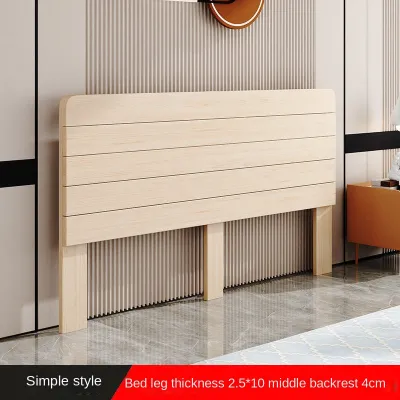
![[PRE-ORDER] Getha Moonlight Headboard](https://img.lazcdn.com/g/p/3d2882d4d30b88817e1a0579ff82a102.jpg_400x400q80.jpg_.webp)
![[PRE-ORDER] Getha V6 Headboard](https://img.lazcdn.com/g/p/73a7b43ed7069e4572e7c5324027179e.jpg_400x400q80.jpg_.webp)
![[PRE-ORDER] Getha Diamond Square V-Wing Headboard](https://img.lazcdn.com/g/p/86a465229de94136591a26b57ebc9c15.jpg_400x400q80.jpg_.webp)
Prices are valid at publication and may change. Please refer to the product page for the latest price.
Regardless of the brand category, always verify the manufacturer’s exact specification sheet against your actual room layout before purchasing.
Critical Sizing & Spatial Rules for HDB Bedrooms
HDB bedrooms, particularly in newer Build-To-Order (BTO) flats, feature compact layouts where every centimeter counts. A standard master bedroom or common room has fixed dimensions that dictate bed placement. Understanding these dimensions is crucial before browsing furniture catalogs, as a headboard that is even slightly oversized can disrupt the entire room’s flow.
When selecting a headboard, the overall width is the first critical constraint. Standard Queen and King mattresses have fixed widths, but headboards often extend beyond these boundaries to create a grander look. If a headboard is wider than the bed frame, it can block access to adjacent power sockets, light switches, or the pathway to the bathroom. Ensure you maintain at least 60 cm of clearance on either side of the bed for comfortable movement and to allow bedside drawers to open fully.
Clearance for built-in wardrobes is another major hurdle. Many HDB bedrooms feature floor-to-ceiling built-in wardrobes with sliding or swing doors. A headboard that is too wide or positioned too close to the wardrobe track can prevent doors from opening fully or block drawers from sliding out. Additionally, consider the height of the headboard in relation to low-hanging ceiling fans or window tracks. A very tall headboard can disrupt airflow, cast shadows, or block natural light if placed near a window.
Depth is the final spatial dimension to calculate. Standard headboards range from a slim 2 cm to a bulky 20 cm or more for storage-integrated models. In a typical HDB room, adding 15 cm of depth to the head of the bed can reduce the walking path at the foot of the bed to an uncomfortable squeeze. Measure the remaining space between the foot of your mattress and the opposite wall or wardrobe to ensure you have at least 50 cm to 60 cm of clear walking space for daily passage.
Comparing Headboard Categories: Design, Materials & Value
Furniture brands in Singapore generally categorize their headboards into minimalist slim profiles, upholstered panels, or integrated storage units. Choosing between these categories involves weighing space consumption against comfort and utility. Each category serves a distinct layout challenge, making it essential to match the design to your specific room constraints.

Minimalist and slim-profile headboards, often made of solid wood, engineered wood, or metal, are highly suited for tight HDB layouts. They offer a clean, visually light aesthetic that makes small rooms feel more spacious. Because they add minimal depth, they allow you to maximize the length of the bed frame. In contrast, thick upholstered headboards provide a plush, luxurious feel and excellent back support, but they physically consume more floor area and can dominate a small room visually.
When evaluating materials, do not assume durability based on the material name alone. Instead, check the manufacturer’s care labels and humidity resistance instructions. Singapore’s warm, humid climate can affect materials differently. For instance, look for upholstered brands that specify moisture-resistant fabrics, anti-dust mite treatments, or removable, washable covers to prevent mold and dust mite accumulation. For wooden or veneered headboards, verify if the finish is rated for high-humidity environments to prevent warping, swelling, or peeling over time.
To assess overall value, compare the brand’s warranty terms, assembly requirements, and modularity. A good warranty should cover structural defects for at least one to five years, giving you peace of mind. Consider whether the brand offers professional installation or if you must assemble it yourself, as complex headboards may require specialized tools. Modular headboards, which allow you to add or remove panels or storage components, offer excellent long-term value as they can adapt if you move to a different home or reconfigure your bedroom layout within your S$ budget.
Space-Saving & Wall-Mounted Designs
Wall-mounted headboards are an excellent way to save floor space, but they require careful structural verification. Before purchasing a wall-mounted design, check the mounting hardware requirements and your wall’s load-bearing capacity. While solid concrete walls can support heavy panels, drywall partitions common in some modern HDB layouts require specialized anchors and have strict weight limits.
Additionally, verify the exact protrusion depth of the mounted headboard. Even a floating design can interfere with bedside tables if it extends too far from the wall. Ensure that any wall-mounted option allows easy access to wall sockets, which are often positioned directly behind or beside the bed in HDB layouts.
Upholstered & Integrated Storage Designs
Upholstered and storage headboards offer enhanced comfort and utility but demand closer inspection of material specifications. For upholstered options, review the fabric care instructions and stain resistance claims on the manufacturer’s tags. Look for performance fabrics that can be easily spot-cleaned, especially if you enjoy reading or working in bed.
For integrated storage headboards, which may feature built-in shelves, cubbies, or LED lighting, check the structural stability and weight limits of these features. Ensure that the integrated wiring for any lighting or charging ports complies with local electrical safety standards and can easily reach your room’s existing power outlets without creating a tripping hazard.
Decision Framework: Which Headboard Style Fits Your Room?
To simplify your selection process, follow this step-by-step framework to match your HDB bedroom conditions with the ideal headboard design.
Step 1: Measure the exact wall width. Use a measuring tape to record the width of the wall where the bed will be placed. Be sure to account for the thickness of skirting boards at the base of the wall, as these can prevent a headboard from sitting flush against the wall. Mark the locations of all power sockets, light switches, and the swing path of wardrobe doors or bedroom doors.
Step 2: Define your primary functional need. Determine what you value most in your bedroom setup. If your room is extremely compact and you need to maximize every square centimeter of floor space, your primary need is visual and physical lightness. If you spend a lot of time sitting up in bed, your primary need is ergonomic back support. If you lack space for bedside tables, look for integrated storage or shelving.
Step 3: Apply the conditional selection framework. Use your measurements and primary needs to shortlist the right headboard style:
- If wall space is under 160 cm (Standard Queen layout) and wardrobe clearance is tight: Choose a slim, floor-standing wooden or metal headboard with a depth of under 5 cm.
- If you require back support but have limited floor depth: Opt for a slim upholstered headboard (under 8 cm depth) that mounts directly to the bed frame rather than the wall.
- If you have ample wall width but no space for bedside tables: Select a modular headboard system with integrated floating shelves that extend horizontally, keeping the floor area clear.
- If you are renting or prefer easy re-arrangement: Avoid wall-mounted options entirely and choose a freestanding headboard that secures directly to a compatible bed frame.
Frequently Asked Questions (FAQ)
Can I install a wall-mounted headboard on an HDB household shelter wall?
HDB household shelters (also known as bomb shelters) are constructed with heavily reinforced concrete to serve as protective spaces. Under HDB renovation guidelines, drilling into the internal or external walls of a household shelter is strictly regulated to avoid compromising its structural integrity. Generally, deep drilling, hacking, or mounting heavy fixtures on these specific walls is prohibited. If your bed must be positioned against a household shelter wall, avoid wall-mounted headboards entirely. Instead, opt for a bed-frame-mounted or freestanding headboard that does not require any wall drilling. Always consult official HDB guidelines or a qualified, HDB-registered contractor before attempting any installation near a household shelter.
Do headboards affect the clearance for built-in wardrobes?
Yes, headboards can significantly impact the functionality of built-in wardrobes, especially in compact HDB bedrooms where the bed is placed parallel or adjacent to the wardrobe. If a headboard is wider than the bed frame, it can overlap with the wardrobe doors, preventing swing doors from opening or blocking sliding doors from sliding fully. Furthermore, the depth of the headboard pushes the entire bed frame forward, reducing the clearance space between the foot of the bed and the wardrobe. Before purchasing, measure the exact gap required for your wardrobe doors to open fully, and ensure your chosen headboard’s width and depth leave at least 10 cm of clearance beyond the maximum door swing or slide path.
Community discussion
Share your experience or ask a question. Comments are reviewed before publication.