
Selecting the right anti-bedsore mattress firmness for a bedridden patient in Singapore requires balancing structural support with localized pressure relief. There is no single universal firmness level that works for every individual. Instead, the ideal choice depends on the patient’s level of mobility, their body weight, and their overall risk of developing pressure injuries. For patients who can still shift their weight or sit up with minimal assistance, a medium-firm static mattress made of high-density foam or gel-infused materials often provides the necessary stability. Conversely, for patients with highly restricted or zero mobility, traditional static firmness scales are less relevant; these individuals typically require dynamic alternating pressure air mattresses where the firmness is continuously adjusted via an external pump to redistribute pressure away from vulnerable bony prominences.
How Firmness Affects Pressure Relief for Immobile Patients
To understand how mattress firmness impacts a bedridden patient, it is essential to distinguish between standard comfort firmness and medical-grade pressure redistribution. Standard residential mattresses are designed for comfort and spinal alignment in healthy individuals who move naturally throughout the night. For an immobile patient, however, a mattress must actively prevent tissue ischemia—the restriction of blood flow caused by prolonged pressure on skin and soft tissues. If a mattress is too soft, the patient’s heaviest body parts, such as the sacrum and hips, will sink completely through the comfort layers. This phenomenon, known as bottoming out, concentrates the patient’s entire body weight onto a small surface area, rapidly leading to tissue damage.
Conversely, an excessively firm mattress fails to contour to the natural curves of the body. Instead of distributing weight evenly, a hard surface creates high-pressure zones at prominent bony areas, such as the heels, shoulder blades, and the back of the head. The ideal medical-grade mattress utilizes a multi-layered design. The top layer must be soft enough to conform to the body’s contours, maximizing the contact area and reducing peak pressure points. Meanwhile, the lower layers must provide a highly supportive, firm base to maintain proper spinal alignment. Proper alignment is not just a matter of comfort; it prevents secondary musculoskeletal complications and supports respiratory function, which can be compromised when a patient is confined to a flat or semi-reclined position for long periods.
Products mentioned in this guide
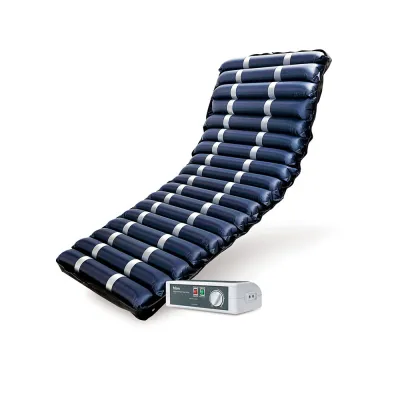
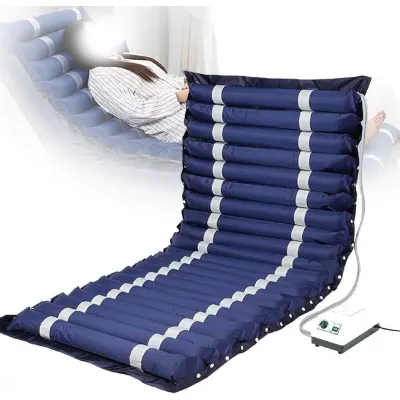




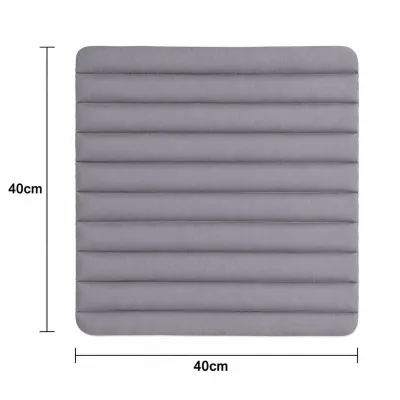
Prices are valid at publication and may change. Please refer to the product page for the latest price.
The relationship between patient weight and mattress sinkage is a critical factor in determining the appropriate firmness. A lighter patient may not exert enough force to compress a firm mattress, meaning they will rest on top of the surface with minimal pressure redistribution. For these individuals, a softer, more conforming top layer is necessary. On the other hand, a heavier patient requires a mattress with higher density and firmer support layers to prevent them from sinking to the bottom of the mattress core. Caregivers must evaluate how the patient’s body mass interacts with the mattress material to ensure that the pressure-relieving properties are fully active and that the patient remains properly supported without touching the underlying bed frame.
Matching Mattress Type to Patient Mobility and Risk Levels
When selecting an anti-bedsore mattress, the patient’s level of physical mobility serves as the primary guide for choosing between static and dynamic mattress technologies. Static mattresses, typically constructed from high-density foam or specialized gels, are suitable for patients who retain some ability to reposition themselves independently. These mattresses do not require electricity and remain silent, making them a highly stable option for home care. Within the static category, a medium-firm rating is generally preferred. This level of firmness provides enough surface resistance to assist the patient when they attempt to roll over or sit up, while the contoured or castellated cuts in the foam help reduce shear forces—the sliding friction that can tear fragile skin when the head of the bed is elevated.

For patients with severely limited or completely absent mobility, static mattresses are often insufficient to prevent pressure injuries. In these scenarios, dynamic alternating pressure air systems are the standard choice. These systems consist of a series of individual air cells that inflate and deflate in a programmed, alternating cycle. By constantly shifting the support points beneath the patient’s body, these mattresses ensure that no single area is subjected to continuous pressure for more than a few minutes at a time. Because the air cells are constantly changing state, traditional static firmness metrics do not apply. Instead, the firmness of a dynamic mattress is managed by adjusting the inflation pressure within the cells, which must be calibrated precisely to the patient’s weight and body shape using the system’s control pump.
Ultimately, the patient’s repositioning frequency and the current condition of their skin must dictate the mattress technology. If a patient can be reliably turned by a caregiver every two hours and shows no signs of skin redness, a high-quality static foam mattress may be appropriate. However, if the patient is highly vulnerable to skin breakdown, has a history of pressure ulcers, or if caregiving resources are limited, a dynamic alternating pressure mattress is essential. These systems help mitigate the risks associated with infrequent manual turning, though they should always be used in conjunction with a comprehensive repositioning plan rather than as a complete replacement for manual care.
Essential Structural Checks Beyond the Firmness Scale
While firmness and pressure redistribution are critical, several other structural features must be verified to ensure the mattress is safe and practical for a home care environment in Singapore. One of the most overlooked features is edge support. Many medical mattresses feature reinforced foam borders along the sides. This firm perimeter is essential for safe patient transfers, providing a stable edge for the patient to sit on when moving to a wheelchair or commode. It also prevents the patient from accidentally rolling off the bed during manual turning and assists caregivers by providing a firm surface to lean against while administering care.
Another vital consideration is the mattress cover’s ability to manage the skin microclimate, which is particularly challenging in Singapore’s hot and humid environment. High humidity and elevated body temperatures increase sweating, which can lead to skin maceration—a state where the skin becomes soft, wet, and highly susceptible to tearing and infection. The mattress cover must be constructed from a highly breathable, vapor-permeable material that allows heat and moisture to escape while remaining completely waterproof to protect the inner core from bodily fluids. Caregivers should look for multi-stretch covers that move with the patient, as this flexibility reduces shear forces on the skin during repositioning.
Finally, dimensional compatibility with the bed frame is a crucial safety check. Home care beds and adjustable hospital frames in Singapore are available in various sizes, and a mismatch can lead to serious safety hazards. If the mattress is too small for the frame, dangerous gaps can form along the sides or at the head and footboards, creating entrapment risks for the patient’s limbs. Conversely, if the mattress is too large, it will bunch up when the bed is adjusted, creating hard ridges that can cause localized pressure injuries. Always measure the internal dimensions of the bed frame and compare them directly with the manufacturer’s mattress specifications before making a purchase.
How to Test and Verify the Mattress Setup
Once an anti-bedsore mattress is installed, caregivers must perform practical tests to verify that the setup is safe and effective for the patient’s specific physical needs. The most reliable method for verifying support is the hand-test. To perform this test, slide your hand, palm facing upward, beneath the mattress directly under the patient’s heaviest areas, which are typically the sacrum, hips, and shoulder blades. If you can feel the hard bed base through the mattress, or if there is less than a few centimeters of clearance between your hand and the patient’s body, the mattress is bottoming out. For static foam mattresses, this indicates that a firmer or thicker model is required; for alternating pressure systems, it means the pump’s pressure setting must be increased.
In addition to physical testing, caregivers must carefully review the manufacturer’s documentation. Pay close attention to the stated weight limits, as operating a mattress near its maximum capacity can severely compromise its pressure-redistribution capabilities. Care instructions must also be followed precisely; medical-grade covers require specific cleaning agents to maintain their waterproof and antimicrobial properties without degrading the material. Using incompatible household bleach or harsh detergents can strip the protective coatings, leading to fluid penetration and hygiene issues.
While these guidelines provide a strong foundation for selecting and verifying a mattress, they should never replace professional medical advice. Every patient’s physical condition, skin integrity, and medical history are unique. It is highly recommended to consult a qualified healthcare professional, such as an occupational therapist, a wound care nurse, or a physiotherapist, before finalizing your choice. These professionals can conduct a formal risk assessment and provide personalized recommendations to ensure the selected mattress setup aligns perfectly with the patient’s clinical care plan.
Frequently Asked Questions (FAQ)
Can a standard mattress topper replace a dedicated anti-bedsore mattress?
Standard retail mattress toppers, such as those made of memory foam or latex designed for general comfort, are not suitable replacements for dedicated medical-grade anti-bedsore mattresses. While a comfort topper may make a bed feel softer, it lacks the engineered density, zoned pressure redistribution, and deep support cores required to prevent tissue ischemia in high-risk, immobile patients. Using a standard topper can lead to bottoming out, where the patient sinks through the soft layer and presses against the hard mattress underneath, increasing the risk of pressure injuries.
How do I know if an alternating pressure mattress is set correctly?
To verify that an alternating pressure air mattress is set correctly, perform the hand-test during the deflation cycle of the cells directly beneath the patient’s pelvis. Slide your hand between the deflated air cell and the base of the mattress; you should feel a clear cushion of air and not the patient’s bony prominences resting directly on the bed frame. Most modern pumps feature weight-guideline dials or auto-calibration functions, but these should always be verified visually and physically. Regularly inspect the patient’s skin for persistent redness, which indicates that the pressure settings may need adjustment.

Community discussion
Share your experience or ask a question. Comments are reviewed before publication.