
Finding the right firmness for a foldable foam mattress depends primarily on your sleeping position, as the segmented design of these portable beds behaves differently than a standard solid mattress. Side sleepers generally benefit from a medium-soft to medium surface that cushions the shoulders and hips, while back sleepers require a medium-firm feel to support the lumbar spine. Stomach sleepers need a firm mattress to prevent the pelvis from sinking and straining the lower back. Because foldable mattresses feature hinges or seams, selecting the correct firmness is essential to ensure these joints do not compromise your spinal alignment or cause localized pressure points during the night.
Decoding Foam Firmness Ratings for Foldable Beds
Foam firmness is typically rated on a scale from 1 to 10, with lower numbers representing plush comfort and higher numbers indicating rigid support. When evaluating a foldable foam mattress, this scale becomes more complex because the mattress is split into distinct segments held together by a fabric cover. The fabric hinges that allow the mattress to fold create natural flex points. When you lie down, the tension on the cover and the gaps between the foam blocks can make the mattress feel softer or less stable than a solid foam block of the same rating. This introduces a direct trade-off: softer foams fold more compactly, but they offer less structural resistance at the seams where your body weight is concentrated. Because there is no universal industry standard for firmness ratings, verifying the feel through physical comfort trials or flexible return policies is essential.
Matching Firmness Levels to Your Sleeping Position
To achieve restful sleep, your mattress must keep your spine in a neutral, straight alignment from your head to your hips. Your preferred sleeping posture dictates where your body exerts the most pressure on the mattress surface. On a segmented foldable mattress, this pressure must be distributed evenly across the individual foam panels to prevent the joints from shifting or collapsing under your weight. Your body weight plays a critical role in how you experience foam firmness; a heavier individual will sink deeper into the same mattress, potentially passing through the comfort layers and feeling the hard floor beneath. If your mattress does not match your sleeping position, your body will often let you know the next morning through localized lower back stiffness, neck strain, or hip soreness.
Products mentioned in this guide
![[1-2 day delivery] Foldable Foam Mattress 3-Fold Mattress](https://img.lazcdn.com/g/ff/kf/Se38f308a460b4ba3aef73a3da6703c621.jpg_400x400q80.jpg_.webp)
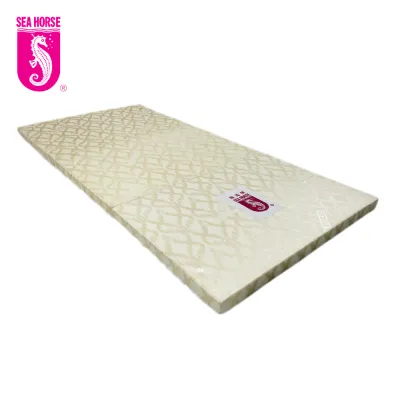

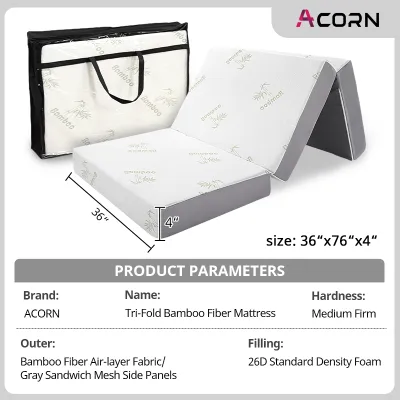

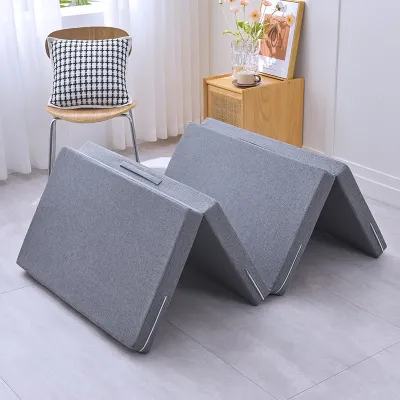
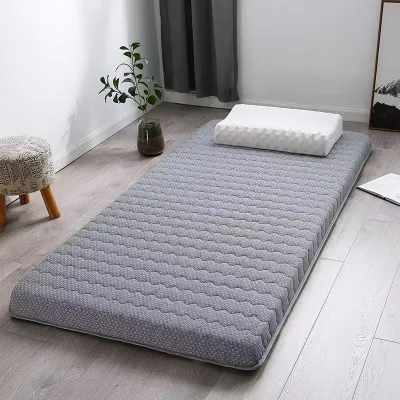
Prices are valid at publication and may change. Please refer to the product page for the latest price.

Side Sleepers
Side sleepers require a medium-soft to medium mattress that provides sufficient contouring for the shoulders and hips. These areas bear the majority of the weight in a lateral position, and a mattress with a bit of give allows these pressure points to sink in, keeping the spine straight. When choosing a foldable foam mattress, it is crucial to check the placement of the seams. If a fold line aligns directly with your shoulder or hip, a foam that is too soft can cause these joints to bottom out against the floor. Ensure the foam segments are thick and resilient enough to cushion these high-pressure areas without letting them sink into the gaps between the panels.
Back Sleepers
Back sleepers need a medium-firm mattress that supports the natural S-curve of the spine. The mattress must fill the gap under the lower back while preventing the heavier pelvic region from sinking too deeply. If the mattress is too soft, the hips sag, which flattens the lumbar curve and leads to lower back strain. For a foldable mattress, back sleepers should test the bed to ensure the middle segment provides consistent resistance. Since your center of gravity rests near the middle of the mattress, any weakness or excessive softness at the central fold line can cause your torso to sag. A medium-firm foam helps distribute your weight evenly across all segments of the bed.
Stomach Sleepers
Stomach sleepers require a firm mattress to keep the pelvis elevated and aligned with the shoulders. Sleeping on the stomach naturally arches the lower back; if the mattress is too soft, the midsection sinks into the foam, exaggerating this arch and compressing the spine. On a foldable foam mattress, stomach sleepers must be particularly cautious of soft foams. The hinges or seams can act as weak points, causing the torso to “hammock” or sag if the foam lacks sufficient density. A firm surface ensures that your body remains in a flat, neutral plane, preventing morning backaches and neck stiffness.
Critical Specs That Affect Foldable Mattress Support
Beyond the basic firmness rating, several technical specifications influence how a foldable mattress supports your body over time. Foam density is one of the most reliable indicators of durability and support. High-density polyurethane foam resists sagging and maintains its original shape much longer than low-density alternatives, especially along the high-stress fold lines. The overall thickness of the mattress is another critical factor, particularly if you plan to place the bed directly on a hard floor. A mattress that is only 5 to 8 centimeters thick is highly susceptible to bottoming out under adult weight. Opting for a thickness of 10 to 15 centimeters provides a deeper comfort barrier, ensuring the foam can compress fully without letting your body contact the hard surface underneath. Finally, avoid falling for terms like “orthopedic” or “therapeutic,” which lack standardized regulatory definitions and must be verified through personal comfort trials.
Testing and Verifying Your Mattress Choice
Once your foldable mattress arrives, conducting a systematic physical test is the best way to confirm it meets your support needs. Start by placing the mattress on the exact surface you plan to use, whether that is a bed frame or a floor. Lie down in your primary sleeping position and remain still for at least 15 minutes to allow the foam to react to your body heat and weight. During this test, pay close attention to the hinge areas. Shift your weight across the seams and feel for any sudden drops in support, hard gaps, or friction from the fabric cover. Your spine should feel relaxed and aligned, and you should not feel the hard floor beneath you. Finally, always review the manufacturer’s return policy, sleep trial duration, and warranty exclusions for fold-specific wear before committing to the purchase.
Frequently Asked Questions (FAQ)
Can I use a mattress topper to change the firmness of my foldable mattress?
Yes, you can use a mattress topper to adjust the surface feel of your foldable bed. Adding a soft topper can provide extra cushioning for a mattress that feels too firm, while a firm topper can add a layer of stable support. However, a topper is only a surface fix; it cannot correct underlying structural sagging or a lack of support caused by worn-out foam or weak hinges. Additionally, using a separate topper makes storage more difficult, as you will need to remove and store the topper separately whenever you fold the mattress away.
Does a foldable foam mattress lose its firmness faster than a standard bed?
Foldable foam mattresses can experience faster localized wear due to the mechanical stress of folding, unfolding, and transport. The foam edges along the seams are subjected to repeated compression and stretching, which can break down the foam cells faster than in a solid, non-folding mattress. To promote even wear and extend the lifespan of your bed, check the manufacturer’s care instructions. Rotating the mattress end-to-end periodically can help distribute your body weight across different segments and prevent premature softening at the main fold lines.

Community discussion
Share your experience or ask a question. Comments are reviewed before publication.