
Maximising a compact closet or HDB bedroom wardrobe requires a smart vertical storage strategy. When floor space is limited, stackable plastic shoe boxes offer an efficient way to keep footwear organized, visible, and protected from dust and humidity. The ideal shoe box system for a small closet must balance structural stability, ease of access, and space efficiency. Rather than relying on flimsy, disposable containers, selecting boxes with rigid frames, secure interlocking mechanisms, and front-access doors ensures that your shoe tower remains stable and functional even when stacked several tiers high.
Measure Your Closet Space Before Buying Shoe Boxes
Before purchasing any storage containers, taking precise measurements of your closet interior is the most critical step to avoid costly mistakes. Begin by measuring the absolute depth, width, and vertical clearance of the specific area where you plan to build your shoe box tower. It is vital to account for internal obstructions that might not be immediately obvious, such as wardrobe door hinges, sliding door tracks, hanging clothes that drape downward, and existing shelving units. For instance, a sliding wardrobe door requires a certain amount of clearance to glide smoothly; if your shoe boxes protrude even a few millimetres too far, they can block the door or cause scratches.
Next, evaluate your shoe collection to determine the internal dimensions you will actually need. Shoes are not uniform in size or shape. High-top sneakers, platform heels, and ankle boots require significantly more vertical clearance and width than flat sandals, loafers, or running shoes. Group your footwear by type and measure the height and width of the largest pairs. This categorization prevents the common frustration of buying a uniform set of boxes only to find that your favorite heels must be stored sideways or your boots do not fit at all.
Products mentioned in this guide
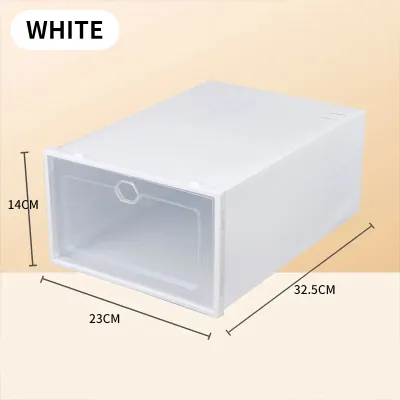
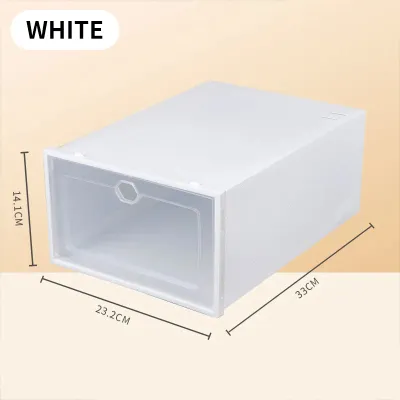
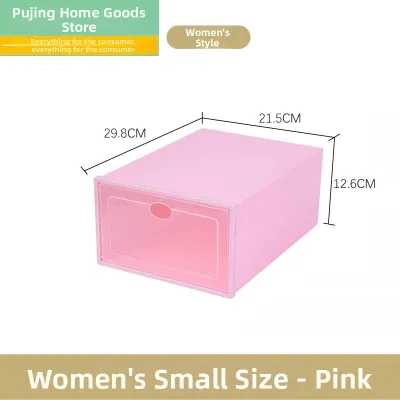

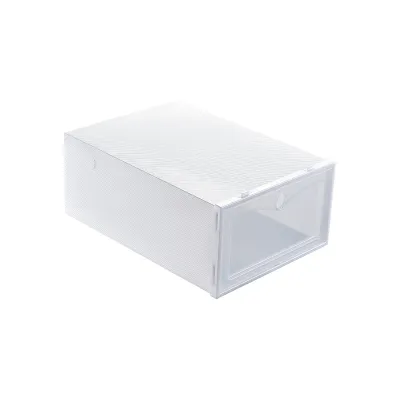
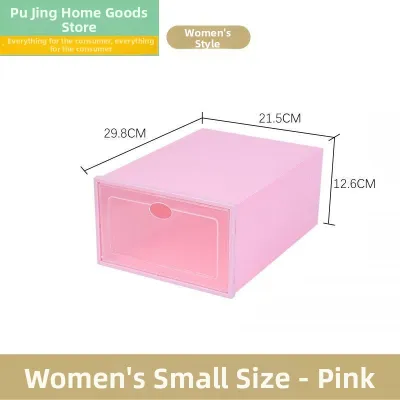
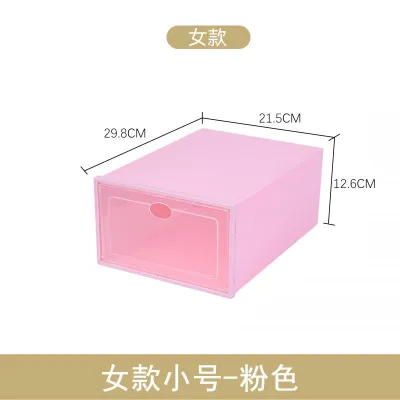
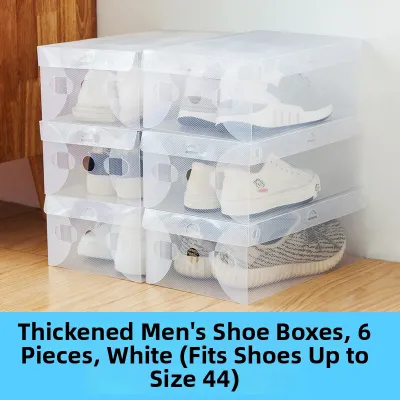
Prices are valid at publication and may change. Please refer to the product page for the latest price.
Finally, calculate the maximum footprint available for your shoe box tower. Ensure that the planned stack does not obstruct walkways, bedroom doors, or the natural flow of movement within the room. If you are placing the boxes on the floor of a walk-in wardrobe, leave enough clearance to stand comfortably in front of the stack. By mapping out the physical boundaries of your closet beforehand, you can determine exactly how many boxes will fit horizontally and vertically, creating a tailored storage plan that maximizes every cubic centimetre.
Essential Features for Stackable Plastic Shoe Boxes
When evaluating stackable plastic shoe boxes, specific design features dictate how practical they will be in daily use. The first major consideration is the entry mechanism: drop-front doors versus top-opening lids. For stacked configurations, top-opening lids are highly impractical because you must unstack every box above to reach a pair at the bottom. Drop-front doors, which swing downward or outward from the front panel, allow you to retrieve any pair of shoes instantly without disturbing the integrity of the tower. This front-access design is essential for maintaining an organized, low-effort routine in a busy household.

Stacking stability is another non-negotiable feature, especially when building tall towers in tight spaces. Look for boxes engineered with interlocking grooves, anti-slip bases, or alignment pegs. These physical design elements lock the top of one box into the bottom of the next, preventing the tower from shifting, sliding, or tipping over when you open a door. A secure interlocking system distributes the weight evenly across the vertical column, ensuring the entire structure remains rigid and safe.
In humid climates like Singapore, adequate ventilation is crucial to protect your footwear. Sealed plastic environments trap moisture, which can lead to mold growth, musty odors, and the deterioration of shoe materials like leather and polyurethane. Look for boxes that feature built-in ventilation holes or rear mesh panels. These openings promote continuous airflow, allowing moisture to evaporate and keeping your shoes fresh during long-term storage.
Lastly, weigh the benefits of clear versus opaque plastic. Clear plastic front panels or fully transparent bodies offer maximum visibility, allowing you to locate the exact pair you want at a glance without opening multiple boxes. However, if your closet is exposed to direct sunlight, or if you prefer a highly uniform, minimalist aesthetic that hides visual clutter, semi-opaque or frosted plastic boxes may be more suitable. Frosted options still allow you to distinguish shapes and colors while providing a cleaner, more cohesive look.
Checking Material Labels and Structural Integrity
The durability and safety of a shoe box tower depend heavily on the quality of its materials and construction. To ensure your boxes do not warp or collapse under weight, always review the manufacturer’s specifications and product labels for the stated load-bearing capacity per tier. High-quality storage systems will explicitly state how much weight an individual box can support and the maximum recommended stacking height. Avoid products that lack these specifications, as they are often made from thin, low-grade plastics that deform easily.
Inspect the physical build quality of the boxes before making a final decision. Look for thick outer walls, reinforced corners, and robust joint connections. The front frame, which houses the door, should be particularly rigid, as this area bears the brunt of the vertical load and experiences the most physical wear from daily opening and closing. Flimsy frames will bow under pressure, causing the doors to jam or misalign over time.
Understanding common plastic material indicators on product labels can help you assess their suitability. Polypropylene (PP) is widely used for the body of shoe boxes because it is flexible, highly resistant to moisture, and durable. Acrylonitrile Butadiene Styrene (ABS) or Polystyrene (PS) is often used for the rigid front frames and doors to provide structural strength and crystal-clear visibility. Checking for these material markings ensures you are purchasing a product designed to withstand long-term household use.
Be vigilant for physical signs of poor manufacturing. Inspect the boxes for uneven molding, rough edges, weak stress points along the seams, or flimsy latches that do not click securely into place. A latch that fails to hold the door closed or a hinge that feels loose out of the box will quickly degrade under daily use, rendering the storage system ineffective.
Safe Stacking and Layout Strategies for Small Closets
Building a stable and safe shoe box tower requires strategic planning and careful layout execution. Always determine a safe stacking height based on your ceiling clearance, the stability of the floor surface, and the manufacturer’s guidelines. Even with high-quality interlocking boxes, stacking too high can create a top-heavy structure that is prone to tipping. As a general rule, keep towers to a height that is easily reachable without a step stool, ensuring you can safely retrieve shoes from the top tier.
Organize the layout of your shoe tower based on frequency of use. Place your daily footwear—such as work shoes, school shoes, or common sneakers—at eye level or waist height for effortless access. Seasonal footwear, formal shoes, or pairs reserved for special occasions should be placed on the highest tiers. Heavy shoes, such as thick-soled boots or heavy trainers, must always be placed in the bottom boxes of the stack to lower the center of gravity and maximize overall stability.
For exceptionally tall stacks or households with active pets and young children, consider anchoring the tower to the wall. Many premium modular shoe box systems come with mounting brackets or anti-tip straps. If your product instructions recommend anchoring, secure the top of the tower to a wall stud or the back of the wardrobe frame to eliminate any risk of accidental tipping.
Integrate your shoe box tower seamlessly with your existing closet infrastructure. If you have adjustable modular shelving, position the shoe boxes on the lower shelves to keep the floor clear. Alternatively, place the tower directly beneath short-hanging clothes rods to utilize the often-wasted space below shirts and jackets. By aligning the boxes with the existing lines of your wardrobe, you create a cohesive, built-in look that optimizes every inch of available space.
Cleaning and Maintaining Clear Plastic Boxes
Regular maintenance is essential to keep your plastic shoe boxes looking pristine and to protect the footwear stored inside. When cleaning clear plastic surfaces, always use mild, non-abrasive liquid soap and a soft microfibre cloth. Avoid harsh chemical cleaners, ammonia-based sprays, or abrasive scrubbing pads, as these can easily scratch, dull, or permanently cloud the transparent plastic, ruining the visibility of your collection.
Managing internal moisture and odor is a continuous task, particularly in humid environments. To prevent mold and mildew from developing inside the enclosed boxes, place a small silica gel packet or an activated charcoal sachet in the corner of each box. These moisture absorbers work silently to keep the internal air dry and neutralize any lingering odors from worn shoes.
Periodically inspect the structural components of your shoe box tower. Check the interlocking joints, corner seams, and door hinges for any signs of warping, stress cracks, or latch fatigue. Over time, the weight of the stack can cause minor shifts; re-aligning the boxes and ensuring they are fully locked into place will prolong the lifespan of the entire storage system.
Before storing shoes for an extended period, especially seasonal or delicate leather pairs, ensure they are completely clean and dry. Wipe down the interior of the shoe box with a damp cloth, allow it to air dry completely, and clean the soles of the shoes to remove dirt and debris. This simple routine prevents the transfer of grime and bacteria, keeping both your storage boxes and your footwear collection in excellent condition for years to come.
Frequently Asked Questions (FAQ)
Can stackable plastic shoe boxes hold heavy boots?
Yes, but it depends entirely on the structural specifications of the box. Standard plastic shoe boxes are designed for lightweight footwear like flats, sneakers, and sandals. For heavy leather boots or work boots, you must check the manufacturer’s stated weight limit per box and ensure the frame is reinforced. Additionally, standard boxes are often too short to accommodate the shaft of a boot. Look for specialized ‘large’ or ‘boot’ variants that offer increased height and a higher load-bearing capacity to prevent the box from buckling under the weight.
How do I prevent yellowing in clear plastic shoe boxes?
Yellowing is primarily caused by ultraviolet (UV) degradation from direct sunlight exposure. To prevent this discoloration, position your shoe box tower away from windows or areas in your bedroom that receive strong natural light. If your closet is exposed to sunlight, check product labels for materials that feature UV-resistant stabilizers. Keeping the boxes inside a closed wardrobe or using frosted, opaque options can also significantly reduce UV exposure and maintain the clarity of the plastic.
Are drop-front doors better than magnetic closures?
Both mechanisms serve different preferences, but they offer distinct advantages. Drop-front doors with physical latches provide a highly secure closure that keeps dust out, though they require clear space in front of the box to swing open. Magnetic closures offer a sleek, premium feel and are incredibly easy to open with a gentle pull. However, because they require a small amount of force to break the magnetic seal, they can cause lightweight, unanchored boxes to shift slightly when opened. Choose magnetic closures for heavy, stable stacks, and latched drop-front doors for lightweight setups.

Community discussion
Share your experience or ask a question. Comments are reviewed before publication.