
To build an efficient small book shelf in a Singapore HDB flat, the ideal modular cube dimensions generally feature an external depth of 28 to 30 centimeters, an internal height of 30 to 35 centimeters, and an individual module width of 30 to 40 centimeters. These dimensions balance the physical constraints of compact HDB bedrooms and living areas with the structural requirements of standard book sizes. Selecting modular shelving within these ranges prevents the furniture from protruding into tight walkways while ensuring that standard paperbacks, novels, and average-sized hardcovers fit comfortably without wasting vertical or horizontal space.
Measuring Your HDB Space Constraints Before Buying
HDB flats, especially newer BTO (Build-To-Order) units, require precise spatial planning. Before purchasing any modular components, measure the exact floor footprint where the shelf will sit. Pay close attention to the skirting boards along the base of the walls. Skirting boards can push the bottom of a shelf away from the wall by 1 to 2 centimeters, creating an unstable gap at the top. To achieve a flush fit, look for modular designs with base cutouts or plan to account for this gap when securing the unit.
Vertical space is equally critical. Measure the ceiling height, but also account for any low-hanging beams, air-conditioning trunking, or electrical conduits running along the walls. In Singapore, air-con piping is frequently encased in white trunking that runs near the ceiling or along the upper walls of bedrooms. Placing a tall modular shelf directly beneath or against this trunking can block access for maintenance or prevent the shelf from standing upright.
Products mentioned in this guide
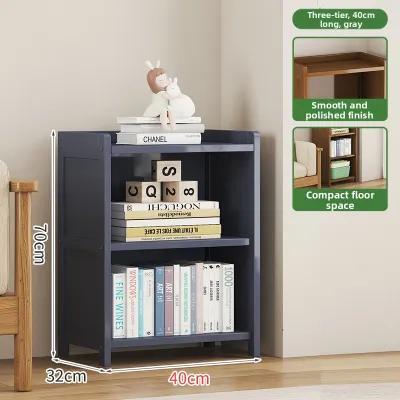
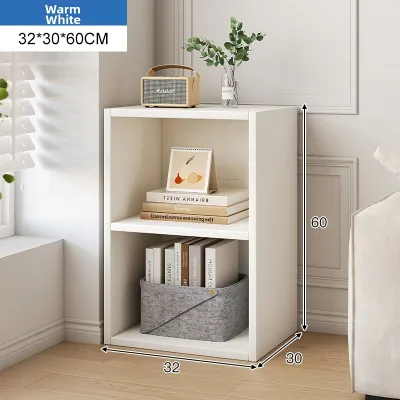
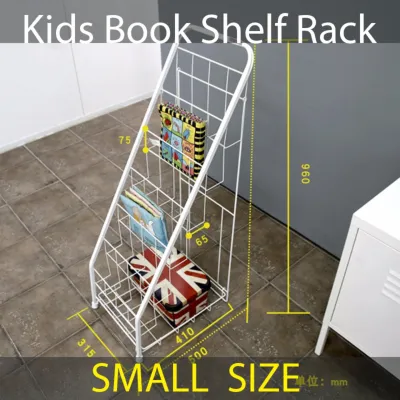
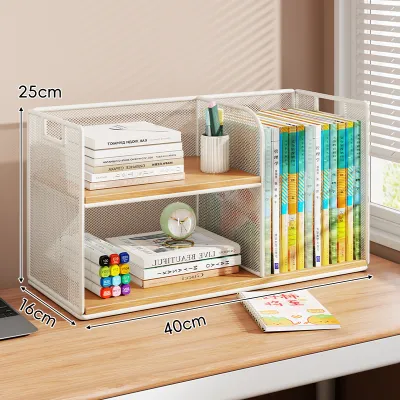
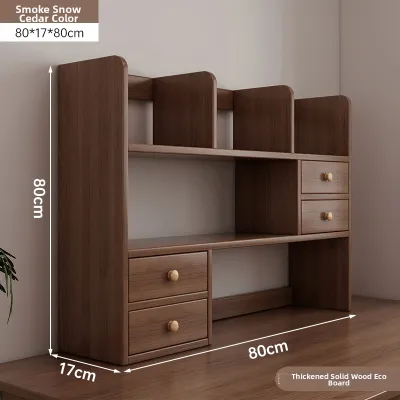
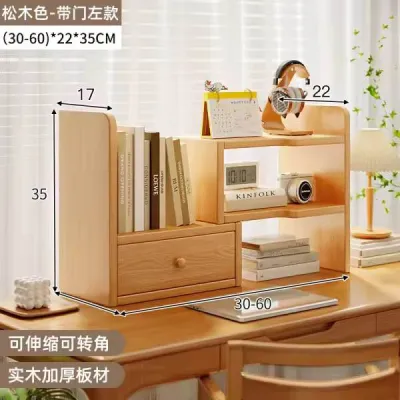

Prices are valid at publication and may change. Please refer to the product page for the latest price.
Ensure the footprint does not interfere with door swings, wardrobe doors, or window openings. Walkways in HDB flats should ideally maintain a clear path of at least 70 to 90 centimeters to allow comfortable movement. If your modular shelf is placed in a high-traffic corridor or next to a bedroom door, a shelf that is too deep will restrict passage. Additionally, locate all wall outlets and switches. Blocking electrical sockets with a heavy bookshelf limits your power access and can bend plugs awkwardly against the back panel.
Finally, consider the location of your household shelter. Singapore civil defense regulations strictly prohibit any modifications that compromise the structural integrity of the reinforced shelter walls. If you plan to place a small book shelf near or inside the household shelter, the unit must not obstruct the heavy steel door from opening fully to its designated angle. You must also avoid drilling any mounting screws or anchors into the shelter’s reinforced concrete walls, as this violates building codes.
Comparing Modular Cube Sizes for Book Storage
When selecting modular cubes for a small book shelf, matching the cube dimensions to your reading collection prevents wasted space and structural failure. Standard paperbacks and fiction novels typically require a shelf depth of only 20 to 22 centimeters. However, standard modular cubes are often sold in deeper configurations, such as 30 to 40 centimeters. Opting for a depth of 28 to 30 centimeters is generally the most versatile compromise for an HDB flat; it accommodates larger hardcovers and textbooks without protruding excessively into the room.

The width of each individual module is a primary factor in preventing shelf sagging. For manufactured wood materials like particleboard or medium-density fiberboard (MDF), an unsupported span should ideally not exceed 40 to 50 centimeters when loaded with heavy books. Solid wood or metal modular frames can support slightly wider spans, but keeping individual modular cubes between 30 and 40 centimeters wide provides excellent structural integrity and prevents the shelves from bowing over time under the weight of dense paper volumes.
To help visualize how different modular dimensions fit your specific storage needs and room layout, consider the following dimension guidelines:
| Cube Type | External Depth | Internal Height | Best Suited For | HDB Room Placement |
|---|---|---|---|---|
| Compact / Shallow | 20 to 25 cm | 25 to 28 cm | Standard paperbacks, manga, small paper novels | Narrow corridors, study room walkways |
| Standard / Medium | 28 to 30 cm | 30 to 35 cm | Hardcovers, textbooks, standard storage bins | Living room alcoves, bedroom corners |
| Deep / Oversized | 35 to 40 cm | 35 to 40 cm | Art books, vinyl records, large binders | Under-window spaces, low-height credenzas |
Using this matrix, you can mix and match modular cubes. For instance, placing a row of deep cubes at the base of your configuration and stacking shallower cubes on top creates a stepped profile that maximizes floor space while providing stable storage for various book sizes.
Configuring Modules for Stability and Space Efficiency
Assembling modular cubes into a cohesive small book shelf requires careful attention to physical stability, especially when building upward in a compact room. A basic rule of thumb for freestanding furniture is the base-to-height ratio. To minimize the risk of tipping without wall anchors, the height of the assembled shelving unit should not exceed three to four times its depth. For example, a modular shelf with a shallow depth of 30 centimeters should not be stacked higher than 90 to 120 centimeters unless it is securely anchored to a structural wall.
Wall anchoring is highly recommended for any configuration taller than one meter, particularly in homes with active pets or young children. Before drilling, you must identify the wall type in your HDB flat. Most internal walls in older HDB flats are solid concrete or brick, which require a hammer drill, masonry drill bits, and plastic wall plugs to secure L-brackets or anti-tip straps. In newer BTO flats, some internal partition walls are made of drywall or lightweight concrete panels. Drywall partitions require specialized toggle bolts or hollow-wall anchors, as standard plastic plugs will pull out easily under the weight of a loaded bookshelf.
The arrangement of your books also plays a critical role in structural safety. Always place your heaviest items—such as thick reference books, encyclopedias, and large binders—in the bottom row of modules. This lowers the overall center of gravity of the shelving unit, making it significantly more stable and less prone to tipping forward. Reserve the upper modules for lightweight paperbacks, decorative items, or empty storage boxes.
Avoiding Common Sizing and Placement Mistakes
One of the most frequent mistakes when setting up a small book shelf in an HDB flat is ignoring the clearance needed for book overhang. If you purchase a shelf with an external depth of 25 centimeters, but your books are 26 centimeters deep, they will protrude past the edge of the shelf. This not only looks untidy but also increases the risk of books being knocked off as people walk past in narrow HDB corridors. Always measure the depth of your largest books and compare them to the internal depth specification of the modular cubes, which is often 1 to 2 centimeters less than the external depth due to the thickness of the back panel and front frame.
Another common error is exceeding the manufacturer’s specified weight capacity. Books are deceptively heavy; a single linear meter of tightly packed books can weigh between 15 and 30 kilograms depending on whether they are paperbacks or heavy hardcovers. Before stacking modules, check the manufacturer’s load limits per cube. If a module is rated for only 5 kilograms, filling it completely with heavy textbooks can cause the joints to fail or the bottom panel to crack.
Lastly, pay attention to environmental factors unique to Singapore’s tropical climate. Avoid pushing your modular bookshelf completely flush against external-facing walls or placing them directly beneath air-conditioning units. High humidity combined with cold air from air-con units can cause condensation to form on the walls or the back of the furniture, leading to mold growth and warping of wood-based materials. Leave an expansion and ventilation gap of at least 2 to 5 centimeters between the back of the shelf and the wall to promote airflow and protect both your books and your walls from moisture damage.
Frequently Asked Questions (FAQ)
Can I place a modular bookshelf inside my HDB household shelter?
Yes, you can place a freestanding modular bookshelf inside your HDB household shelter, provided it does not interfere with the safety functions of the space. The Singapore Civil Defence Force (SCDF) mandates that the shelter door, ventilation sleeve, and gas-tight valves must remain completely unobstructed at all times. You must not drill, mount, or anchor any shelving units into the reinforced concrete walls or floor of the shelter, as this compromises its structural integrity during an emergency. Opt for a low, stable, freestanding modular configuration that can be easily moved if necessary, and ensure it does not block the door’s swing path.
How do I prevent a tall, narrow modular shelf from tipping over?
To prevent a tall, narrow modular shelf from tipping, you must secure it to the wall using anti-tip kits, L-brackets, or safety straps. For solid concrete walls typical in HDB flats, use a masonry drill to insert plastic wall plugs and screw the brackets directly into the concrete. If you are mounting to a drywall partition, ensure you use heavy-duty toggle bolts or locate the internal metal studs to anchor the screws. Additionally, always load the heaviest books in the lowest modules to maintain a low center of gravity, and avoid stacking modules higher than the manufacturer’s recommended limit.

Community discussion
Share your experience or ask a question. Comments are reviewed before publication.