
To find the right Singapore cabinet brand for a customizable movable island table, you must prioritize structural stability, heavy-duty hardware, and seamless countertop integration. While many local carpentry firms and modular kitchen specialists can construct these units, the ideal provider should offer a physical showroom to test mobility, in-house fabrication to control joinery quality, and flexible design options that match your existing cabinetry.
Because the perfect solution depends on your specific kitchen layout, budget, and material preferences, evaluating brands based on their engineering capabilities rather than marketing claims is essential. By focusing on customizable dimensions and robust hardware, you can secure a versatile workstation that adapts to your culinary needs.
Key Features to Evaluate in Customizable Movable Islands
The foundation of any movable island must withstand lateral forces during food preparation, such as chopping, kneading, or mixing. Traditional dowel or mortise-and-tenon joinery combined with high-density moisture-resistant (HDMR) board or solid plywood cores provides the necessary rigidity. Avoid lightweight particle boards that can warp or degrade under the structural stress of frequent movement.
Products mentioned in this guide
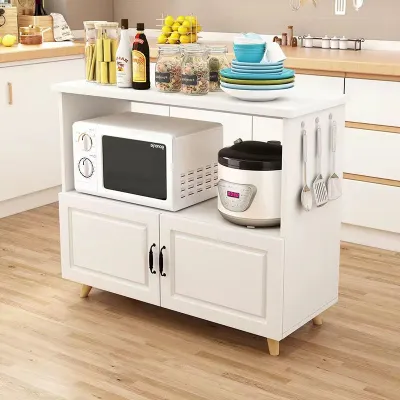
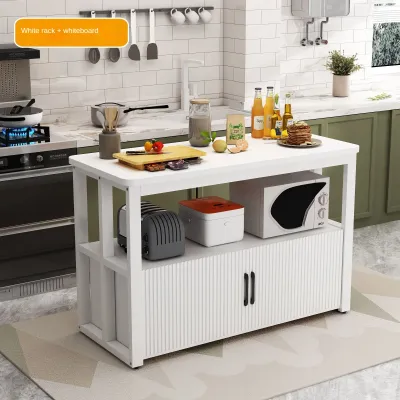
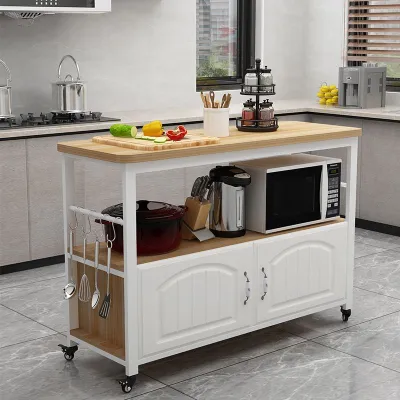
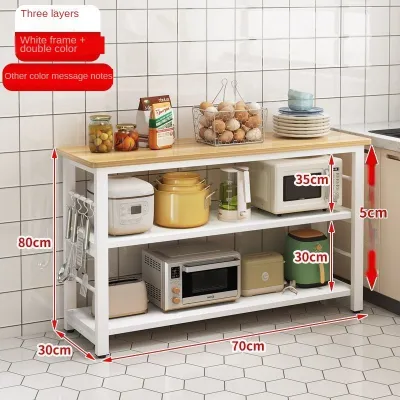
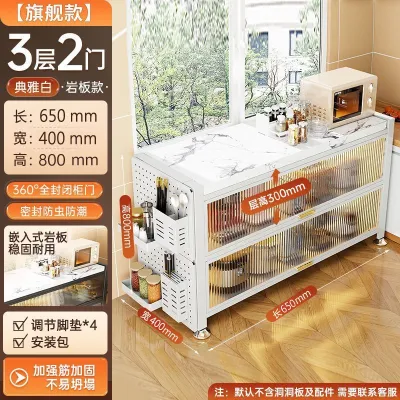
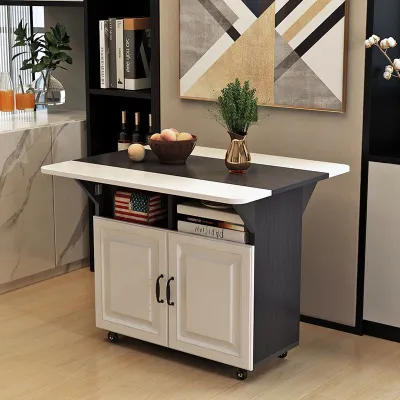
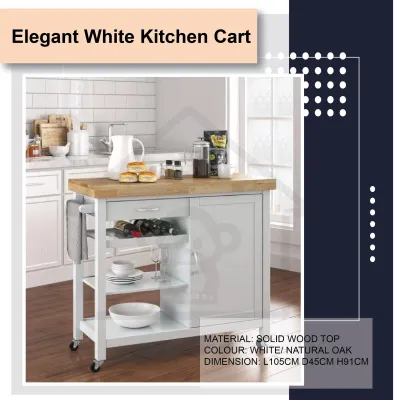
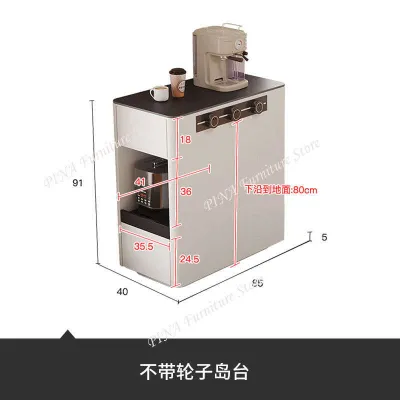
Prices are valid at publication and may change. Please refer to the product page for the latest price.
The mobility of your island relies entirely on its caster assembly. Look for heavy-duty, industrial-grade casters with a load capacity that far exceeds the estimated weight of the island when fully loaded with heavy cookware. A reliable locking system must feature dual-locking casters, which lock both the wheel rotation and the swivel axis simultaneously to prevent the table from drifting during use.
Integrating heavy materials like quartz, granite, or sintered stone requires careful structural engineering. The base cabinet must be reinforced with internal bracing to support the dead weight of the stone without sagging. If you plan to have a breakfast bar overhang, ensure the cabinet’s center of gravity remains stable, or incorporate concealed steel support brackets to prevent tip-over risks.
Customizable islands allow you to optimize storage based on your cooking habits. Deep drawer runners with soft-close mechanisms are ideal for heavy pots and pans, while adjustable open shelving offers quick access to frequently used appliances. For a clean aesthetic, consider integrating an appliance garage with roll-up doors or pull-out trays equipped with cable management channels.
Adapting Movable Islands to Singapore Kitchen Layouts
In typical Singapore residential layouts, such as HDB flats and condominiums, space is at a premium. To maintain comfortable traffic flow, aim for a minimum clearance of 900mm to 1200mm between the island and surrounding countertops or appliances. This distance ensures that oven doors, dishwashers, and low cabinets can open fully without obstructing the walkway.

A movable island should enhance, not disrupt, your kitchen’s work triangle—the path between the sink, refrigerator, and stove. Position the island so it serves as an adjacent prep station rather than a physical barrier. When not in use, the unit should have a designated parking spot out of the primary traffic lanes and away from emergency exit paths.
A massive island can easily overwhelm a compact galley or L-shaped kitchen. To maintain visual balance, consider an island with an open-frame base or a cantilevered countertop that allows light to pass through. The physical footprint of the island should generally not exceed one-third of the available floor space in the kitchen.
The type of flooring in your home dictates the type of casters you should select. Hard, smooth surfaces like homogeneous tiles or polished concrete offer low rolling resistance and are highly durable. However, if your kitchen features vinyl, laminate, or engineered wood flooring, you must use soft polyurethane or rubber wheels to prevent indentation and scratching over time.
Evaluating Local Kitchen Cabinet Brands for Custom Islands
When vetting local cabinet makers, clarify whether they offer true bespoke carpentry or merely semi-custom modular configurations. True bespoke carpentry allows you to specify dimensions down to the millimeter, select custom laminate combinations, and design unique storage layouts. Semi-custom options may limit you to standard widths but often come with lower price points and faster turnaround times.
Never purchase a movable island based solely on 3D renders or online catalogs. Visit local showrooms to physically test the display units. Push the island to check for lateral wobble, operate the drawers to assess the smoothness of the glides under simulated weight, and engage the wheel locks to verify how firmly the unit grips the showroom floor.
Request to see the brand’s portfolio of completed projects, specifically looking for movable islands installed in layouts similar to yours. Pay close attention to how they handle edge-banding, joint seams, and the integration of different materials. Online reviews on independent platforms can provide insights into their installation professionalism, punctuality, and communication.
Because a movable island experiences more physical wear and tear than stationary cabinetry, robust after-sales support is crucial. Inquire about the warranty coverage for moving components, such as caster bearings, drawer runners, and door hinges. A reputable local brand should offer at least a one-year warranty on carpentry workmanship and extended warranties on branded hardware.
Comparing Customization Options and Specifications
To help you decide between different construction approaches, it is helpful to compare the three primary tiers of customizable movable islands available in Singapore.
| Feature / Specification | Fully Bespoke Carpentry | Semi-Custom Modular Systems | Ready-to-Assemble Mobile Units |
|---|---|---|---|
| Base Dimensions | Fully customizable to the millimeter | Pre-set widths (e.g., 600mm, 900mm, 1200mm) | Fixed standard sizes |
| Frame Materials | Solid plywood, blockboard, or HDMR | Medium-density fiberboard (MDF) or engineered wood | Particle board or lightweight metal |
| Countertop Options | Quartz, sintered stone, solid surface, or granite | Selected quartz or laminate options | Laminate or stainless steel |
| Hardware Brands | Premium European brands (e.g., Blum, Hettich) | Mid-range proprietary hardware | Basic utility hardware |
| Estimated Lead Time | 4 to 8 weeks | 2 to 4 weeks | Immediate to 1 week |
| Starting Price Range | S$1,500 – S$3,500+ | S$800 – S$1,800 | S$200 – S$600 |
Fully bespoke carpentry offers unmatched design cohesion and precise sizing, making it the best choice for homeowners seeking a seamless match with existing kitchen cabinets. However, this route requires a higher budget and a longer lead time. Semi-custom modular systems strike a balance, offering reliable hardware and moderate customization at a more accessible price point. Prefabricated units are the fastest and most economical solution but offer very limited material choices and may not withstand heavy daily use as effectively.
Pre-Purchase and Installation Checks
Before signing the fabrication order, conduct a meticulous physical audit of your kitchen. Measure the exact path the island will travel, taking into account wall skirting boards, protruding door handles, and wall-mounted power outlets. Ensure that the island’s height aligns comfortably with your elbow height for food preparation, typically between 850mm and 900mm.
Calculate the approximate total weight of the island, including the carcass, heavy stone countertops, and stored items. Ensure that your flooring material can support this concentrated load without cracking or sinking. If you have raised flooring or delicate parquet, consult your contractor to verify the maximum load capacity per square meter.
A common oversight is failing to verify the delivery route. Measure the width and height of your lift doors, the main entrance door, and any tight corners in your hallways. If the island is delivered fully assembled, it must clear these bottlenecks easily; otherwise, arrange for on-site assembly with the cabinet maker.
Upon delivery, perform a thorough inspection before signing off on the installation. Test the locking mechanisms on all casters to ensure the island remains completely stationary under pressure. Open and close every drawer and cabinet door to check for smooth alignment, and inspect the countertop seams and laminate edges for any chips, gaps, or adhesive residue.
Frequently Asked Questions (FAQ)
Can I add a sink or cooktop to a movable kitchen island?
Integrating active utilities like sinks or cooktops into a movable island is highly complex and generally impractical for residential kitchens. Hard-plumbing a sink requires fixed drainage and water supply lines, which defeats the purpose of a mobile unit; while flexible hoses are possible, they present significant leakage and hygiene risks. For cooktops, electrical safety is a major concern, as high-power appliances require heavy-duty wiring. Running extension cords across a walkway creates a severe tripping hazard and violates local electrical safety standards. If you require utilities, it is best to opt for a stationary island or consult a licensed plumber and a certified electrician to explore specialized floor-box connections.
How do I prevent a movable island from scratching my kitchen floor?
Preventing floor damage requires a combination of proper hardware selection and regular maintenance. Ensure your island is fitted with high-quality, non-marking polyurethane or soft rubber casters rather than hard plastic or metal wheels. Periodically inspect the wheels to clean out trapped grit, pet hair, or debris, which can act like sandpaper against your flooring. If your kitchen has highly sensitive flooring like natural timber or soft vinyl, consider placing a durable, low-profile runner rug along the island’s primary path of travel. Finally, always ensure the caster locks are fully disengaged before attempting to move the island, and lift the unit slightly when navigating over thresholds or transitions.

Community discussion
Share your experience or ask a question. Comments are reviewed before publication.