
Selecting the right seating for a Housing & Development Board (HDB) flat in Singapore requires balancing comfort, aesthetics, and spatial constraints. Boneless fabric sofas—characterized by their unstructured, low-profile, and frameless designs—have emerged as a compelling choice for modern homeowners seeking a relaxed, contemporary aesthetic. These pieces offer a distinct departure from traditional, heavy-framed furniture, bringing a sense of casual warmth and visual openness to compact living areas.
However, integrating a frameless sofa into an HDB layout involves more than simply picking a pleasing color. The high humidity of Singapore’s tropical climate, the specific dimensions of standard flat layouts, and the practicalities of daily maintenance all play critical roles in determining whether a boneless design will succeed in your home. To find the ideal match, you must evaluate structural fills, assess fabric durability, measure access pathways, and establish a clear framework for comparing options.
What Defines a Boneless Sofa and Why It Matters for HDB Layouts
A boneless sofa, often referred to as a frameless or unstructured sofa, is constructed entirely without a rigid internal wooden, plastic, or metal frame. Instead of relying on a traditional skeleton, these pieces maintain their shape through engineered layers of high-density polyurethane foam, structured modular inserts, or specialized bead and fiber fills. This unique construction allows the sofa to contour gently to the body, offering a soft, enveloping sit that traditional sofas rarely replicate.
Products mentioned in this guide
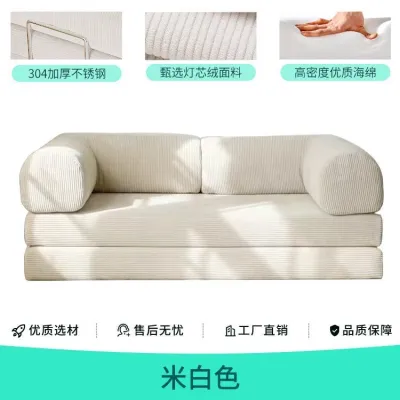
Prices are valid at publication and may change. Please refer to the product page for the latest price.
In a typical HDB living room, where floor area is at a premium, visual weight is just as important as physical dimensions. Traditional sofas with high backs, thick armrests, and elevated wooden legs can dominate a room, making the ceiling feel lower and the walls closer. Boneless sofas, with their low-profile silhouettes, sit closer to the floor. This lower center of gravity creates an unobstructed line of sight across the room, instantly making compact living spaces feel more expansive, airy, and open.
Another significant advantage for HDB residents is the inherent modularity and lightweight nature of frameless designs. Because they lack heavy timber or steel frames, individual modules are remarkably easy to lift, slide, and rearrange. You can easily transition your living room from an intimate family setup to an open, social layout when hosting guests. This adaptability is particularly valuable in multi-functional HDB spaces where the living room often doubles as a home office, play area, or exercise zone.
Measuring and Planning Your HDB Living Room Layout
Before committing to a boneless sofa, precise spatial planning is essential. Start by measuring the exact wall length where the sofa will sit, but do not stop there. You must account for a minimum walkway clearance of 60 to 75 centimeters around the piece to ensure comfortable movement. If your living room opens onto a balcony, verify that the sofa’s depth does not obstruct the sliding door tracks. Additionally, measure the distance between the proposed seating edge and your TV console; a low-profile sofa alters your viewing angle, requiring a comfortable distance to prevent neck strain.

The layout strategy should align with your specific HDB flat configuration. In compact 3-room flats, placing a single, deep boneless piece or an L-shaped modular configuration against a corner maximizes floor space and keeps the central walkway clear. For larger 4-room or 5-room flats featuring open-concept living and dining areas, you can use a modular boneless sofa as a floating room divider. Positioning the sofa away from the walls defines the living zone without the need for physical partitions, preserving the bright, open flow of the flat.
A common oversight when purchasing large furniture in Singapore is neglecting the delivery path. While boneless sofas are often lighter than framed alternatives, they can still be bulky, especially if they are delivered as single-piece units rather than compressed modules. Measure the height and width of your HDB lift door, the interior cabin dimensions, and the clearance of any tight corridor corners or staircase landings. If the sofa cannot fit into the lift, you may face additional manual carrying fees or, worse, a rejected delivery. Always confirm these dimensions with your building layout and share them with the retailer before finalizing your order.
Choosing Climate-Appropriate Fabrics and Fills
Singapore’s year-round warmth and high humidity demand careful attention to upholstery selection. When browsing fabric options, look closely at the manufacturer’s specifications. Prioritize highly breathable materials, such as linen blends, cotton-polyester mixes, or specialized performance synthetics designed to wick moisture away. Avoid heavy, tightly sealed synthetic fabrics that trap body heat and cause discomfort during warm afternoons. Additionally, check the Martindale rub count on the fabric label; a rating of 15,000 to 20,000 rubs is generally suitable for light domestic use, but active households should aim for 25,000 rubs or higher to ensure long-term wear resistance.
The internal composition of a boneless sofa directly impacts how it handles local environmental conditions. High-resilience foam is highly recommended for tropical climates because its open-cell structure promotes air circulation while maintaining excellent shape recovery. In contrast, pure feather or down fills, while incredibly soft, tend to absorb ambient moisture from the air, which can lead to clumping, sagging, and musty odors if not regularly aired out. If you prefer the plush feel of fiber blends, ensure they are treated with anti-microbial properties or paired with a moisture-resistant inner liner to prevent mold growth.
Before making a purchase, read the fine print regarding fabric care and product warranties. Some manufacturers void warranties if the furniture is exposed to direct sunlight near large living room windows, which can cause fabric degradation and color fading. Verify whether the warranty covers foam sagging or structural deformation under normal tropical conditions. Understanding these parameters beforehand helps you establish a suitable placement and care routine, ensuring your investment remains comfortable and visually appealing for years to come.
Navigating Delivery, Access, and Daily Maintenance
When purchasing a boneless sofa in Singapore, clarify all logistical details with the retailer during the inquiry stage. Ask whether the delivery fee includes bringing the sofa up to your specific HDB floor, unpacking the items, and positioning them in your living room. Some retailers offer comprehensive white-glove services that handle everything, including the disposal of bulky packaging materials, which can be difficult to manage within standard HDB waste disposal areas. Knowing these details upfront prevents unexpected surcharges on delivery day.
Maintaining the shape and cleanliness of a frameless sofa requires a consistent, proactive approach. Because these sofas lack rigid support, the filling can shift over time with regular use. Make it a habit to rotate and flip modular cushions weekly to distribute wear evenly. For bead-filled or fiber-blend designs, regular fluffing and shaking of the modules are necessary to restore loft and prevent permanent flattening. Additionally, use a vacuum cleaner with a soft brush attachment at least once a week to clear dust, lint, and crumbs from the deep crevices that naturally form between modular sections.
Accidental spills are inevitable, but how you handle them determines the lifespan of your fabric. Always refer to the manufacturer’s care label before applying any cleaning agents. Many modern boneless sofas feature removable, machine-washable covers, which simplify maintenance significantly. However, if the label specifies dry-clean only or warns against water-based cleaning, do not attempt to scrub stains out yourself. If a stubborn stain occurs on a non-removable cover, or if the fabric requires deep sanitization, stop DIY attempts and contact a professional upholstery cleaning service in Singapore to avoid shrinking or discoloring the material.
Building Your Shortlist: In-Store and Online Evaluation Checks
If you are visiting physical showrooms in Singapore, approach your testing systematically. Sit on the sofa for at least ten to fifteen minutes to evaluate the seat depth and back support. Pay close attention to the foam recovery speed; when you stand up, the high-density foam should bounce back relatively quickly rather than leaving a deep, lasting impression. Examine the stitching along the seams, as frameless designs experience significant tension when sat upon; double-stitched or reinforced seams are crucial indicators of quality. Finally, push gently against the side of the sofa to check its base stability and ensure it does not slide too easily on smooth flooring.
When shopping online, you must rely on precise technical specifications to make an informed decision. Study the dimensional diagrams carefully, comparing them against your living room measurements. Look for detailed breakdowns of the fabric composition and the density of the foam layers (measured in kilograms per cubic meter). A higher foam density generally correlates with better durability and support. Additionally, read the retailer’s return and exchange policies thoroughly, paying attention to who covers the return shipping costs if the sofa does not meet your expectations upon arrival.
Never underestimate the value of physical fabric swatches. Many online furniture brands offer to mail small fabric samples directly to your home, often for a nominal fee or even for free. Requesting these swatches allows you to feel the actual texture, assess the true color under your home’s specific lighting conditions (which can vary significantly from bright showroom lights or digital screens), and test the material’s resistance to pilling by rubbing it firmly between your fingers. This simple step eliminates guesswork and ensures the final product aligns perfectly with your interior vision.
Frequently Asked Questions (FAQ)
Do boneless sofas provide enough back support for daily use?
Yes, provided you select a model constructed with high-density, multi-layered foam. While boneless sofas lack a rigid frame, high-quality polyurethane or memory foam cores are engineered to offer firm, resilient support that contours to your body’s natural curves. To ensure adequate spinal alignment during daily use, look for designs that feature structured backrests or integrated bolster cushions. Testing the sofa in person is the most reliable way to verify that the seat depth and back angle accommodate your height and preferred sitting posture comfortably.
Can I use a boneless sofa if I have pets or young children?
Boneless sofas are highly suitable for households with children and pets due to their soft, low-profile construction. The absence of sharp wooden corners or exposed metal frames significantly reduces the risk of accidental bumps and injuries during active play. To manage the wear and tear of pets and kids, prioritize sofas with tightly woven synthetic fabrics, such as heavy-duty polyester or performance linen, which resist claw snags and pilling. Opting for models with fully removable, machine-washable covers will also make cleaning pet hair, dirt, and accidental spills much more manageable.

Community discussion
Share your experience or ask a question. Comments are reviewed before publication.