
Finding the right wooden 2-door wardrobe for a Singapore HDB bedroom requires balancing storage capacity with tight spatial constraints. Because typical HDB bedrooms—especially in newer Build-To-Order (BTO) flats—frequently range from approximately 9 to 11 square metres, every centimetre of floor space is critical. A 2-door wooden wardrobe offers a compact footprint, but its success depends on precise measurements, door clearance calculations, and selecting materials that can withstand local humidity.
To make an informed decision, you must evaluate how the wardrobe interacts with your room’s layout, the physical limits of your doorways and lifts, and the structural integrity of different wood types. This guide provides a practical framework to measure your space, select the right dimensions, and verify critical product details before making a purchase.
Understanding HDB Bedroom Dimensions and Clearance Needs
Before browsing furniture catalogues, you must establish the exact physical limits of your bedroom. Use a steel measuring tape rather than a fabric one, as steel tape remains rigid over long distances and provides more accurate readings. Measure the length of the wall where you plan to place the wardrobe at three different heights: near the floor, at chest level, and near the ceiling. Walls in residential units are rarely perfectly square, and a variance of even one centimetre can prevent a wardrobe from fitting into a tight alcove.
Products mentioned in this guide
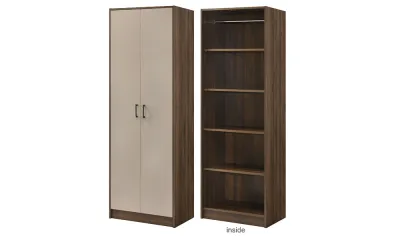
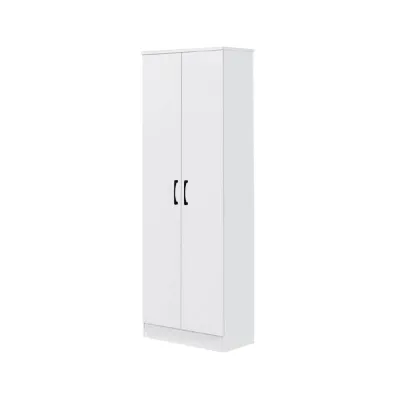
![ASTAR Cheapest SOLID PLYWOOD SOFT CLOSED 2 DOORS WARDROBE CABINET 2 DOOR CUPBOARD WITH ASSEMBLY [SG STOCKS]](https://img.lazcdn.com/g/p/efd8ee451ee07de82971fec42b8c7a1b.jpg_400x400q80.jpg_.webp)
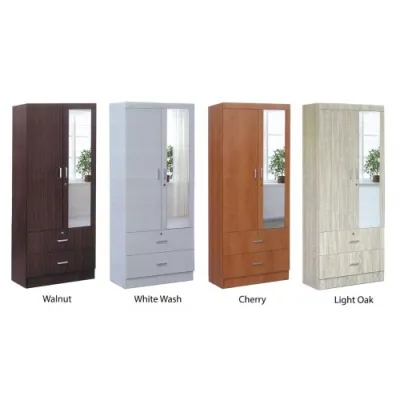
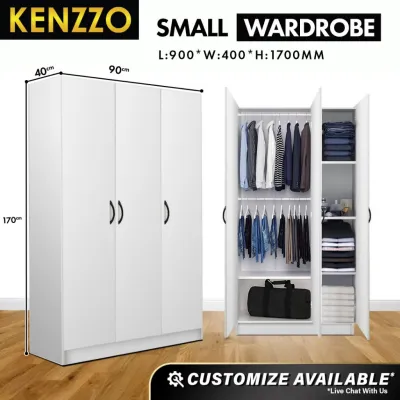
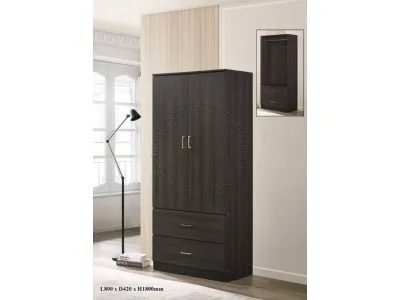
Prices are valid at publication and may change. Please refer to the product page for the latest price.
Next, account for skirting boards along the base of your walls. These wooden or tiled borders typically protrude by 1 to 2 centimetres from the plaster. If a wardrobe does not feature a recessed base or a skirting cutout at the back, it cannot sit flush against the wall. This creates an awkward gap that traps dust and reduces the available clearance space in front of the wardrobe.
Ceiling height is another critical constraint. Standard HDB ceilings generally measure around 2.6 metres, but structural beams, false ceilings, or air-conditioning trunking can significantly lower this clearance. Measure the height from the floor to the lowest obstruction in the designated wardrobe area to ensure the unit can stand upright without scraping the ceiling.
Clearance paths are vital for maintaining a comfortable flow of movement. You should maintain a minimum walking path of 60 centimetres between the wardrobe and any adjacent furniture, such as the bed frame. If you choose a wardrobe with hinged doors, you must add the width of the door leaf—typically 40 to 50 centimetres—plus an additional 45 centimetres of standing space to allow a person to open the doors and access their clothing comfortably.
Finally, identify any fixed architectural elements that could interfere with the wardrobe. Look for electrical trunking, internet data points, light switches, and window sills. Placing a tall wardrobe directly over a light switch or blocking access to a window handle will create daily inconveniences that are difficult to resolve once the furniture is installed.
Key Sizing Dimensions for 2-Door Wooden Wardrobes
Wooden 2-door wardrobes come in several standard size configurations, each suited to different storage needs and room layouts. Understanding these dimensions helps you choose a model that maximizes storage without overwhelming the visual space of your bedroom.

Width is the primary factor determining how much hanging space you will have. Standard 2-door wardrobes generally range from 80 centimetres to 120 centimetres in width. An 80-centimetre unit is highly compact and fits easily into small guest rooms or study rooms, but it only accommodates a limited number of garments. A 120-centimetre unit offers a more practical hanging capacity for a single occupant but requires a longer, uninterrupted stretch of wall.
Depth is crucial for keeping your clothes in good condition. The external depth of a standard wardrobe ranges from 55 to 60 centimetres. This depth is necessary because standard adult clothes hangers require an internal clearance of at least 50 centimetres. If a wardrobe’s internal depth is too shallow, your clothes will rub against the doors, causing wrinkles and potentially jamming the door mechanisms.
Height options typically range from 180 centimetres to 240 centimetres. A shorter wardrobe standing at 180 to 200 centimetres leaves a visible gap below the ceiling, which can make a small bedroom feel more open. However, this open top tends to accumulate dust quickly. A taller wardrobe of 220 to 240 centimetres maximizes vertical storage but can dominate the room visually, making it feel smaller if the wood finish is dark.
When evaluating height, always check the assembly clearance. Many flat-packed wardrobes are assembled flat on the floor and then tilted upright. If the diagonal measurement of the wardrobe is greater than your ceiling height, it cannot be raised into position. In such cases, you must ensure the wardrobe can be assembled vertically, or opt for a shorter model.
Wood Materials and Finishes for Local Climates
Singapore’s tropical climate, characterized by high relative humidity that often exceeds 80 percent, presents unique challenges for wooden furniture. Selecting the right wood type and protective finish is essential to prevent warping, swelling, and mold growth over time.
Solid wood offers exceptional structural strength and a natural aesthetic, but it is highly reactive to moisture. Species like oak, teak, or mahogany expand and contract as humidity levels fluctuate. If you choose solid wood, verify with the retailer that the timber has been properly kiln-dried to reduce internal moisture content, and ensure it is treated with a polyurethane or lacquer finish to seal the pores.
Engineered wood, such as Medium-Density Fibreboard (MDF) or particle board, is a common and cost-effective alternative. However, standard engineered wood is highly susceptible to moisture absorption; if water penetrates the surface, the fibres swell and crumble. When choosing engineered wood, look for moisture-resistant grades or High-Density Fibreboard (HDF), which is denser and less prone to water damage.
Plywood consists of multiple thin layers of wood glued together in alternating grain directions. This cross-laminated structure makes plywood highly stable and resistant to warping in humid conditions. Plywood wardrobes finished with high-pressure laminate (HPL) are exceptionally durable and well-suited to local HDB environments.
Regardless of the core material, inspect the quality of the edge banding. The edges of wooden panels are the most vulnerable points for moisture entry. Ensure the wardrobe features thick, professionally applied thermoplastic (ABS) edge banding with no visible gaps or glue lines. A poorly sealed edge will eventually peel, allowing humidity to rot the wood core.
Internal ventilation is another critical feature to look for. Wardrobes that lack airflow can trap stagnant, humid air, leading to musty odors and mold on your clothes. Check if the wardrobe design includes ventilation grilles on the back panel, or if there is a small gap designed into the top of the backboard to encourage natural air circulation.
Door Mechanisms and Space-Saving Configurations
The choice between hinged doors and sliding doors significantly impacts both the usability of your wardrobe and the layout of your bedroom. Each mechanism has distinct spatial requirements and maintenance considerations.
Hinged doors are the traditional choice, offering full access to the entire wardrobe interior at once. This makes organizing and viewing your clothes straightforward. However, because the doors swing outward, you must ensure there is sufficient clearance in front of the wardrobe. Hinged doors also require high-quality hardware; look for adjustable, soft-closing hydraulic hinges that prevent the doors from slamming and damaging the wooden frame.
Sliding doors are highly efficient for tight spaces because they do not require any outward swing clearance. You can place a sliding door wardrobe close to the side of a bed or a desk without restricting access. However, sliding door mechanisms require a dedicated track system, which typically consumes 5 to 10 centimetres of the wardrobe’s total depth. Consequently, a sliding door wardrobe must have a larger external depth to provide the same internal hanging space as a hinged model.
Furthermore, sliding doors only allow you to access one side of the wardrobe at a time. The overlapping door panels can also create small gaps where dust can enter if the unit is not fitted with dust-exclusion strips or brush seals along the vertical edges.
When evaluating sliding doors, inspect the track and roller system carefully. Aluminum or stainless steel tracks paired with ball-bearing rollers offer smoother, quieter operation than plastic alternatives. Ensure the track system includes an anti-jump mechanism to prevent the doors from slipping off the rails during daily use.
Building Your Shortlist: What to Verify Before Buying
Once you have identified a few wooden 2-door wardrobe models that fit your aesthetic preferences, you must run them through a practical verification checklist to avoid delivery and installation complications.
First, cross-reference the manufacturer’s exact product specifications with your room measurements. Do not rely on general size categories like “standard” or “compact.” Confirm the total external width, depth, and height, including any protruding elements such as handles, decorative top moldings, or baseboard extensions.
Second, evaluate the delivery path from the unloading bay to your bedroom. HDB passenger lifts have strict weight and dimensional limits. Measure the height and width of your lift door, the interior cabin depth, and the height of your home’s front entrance. If you live in an older estate with tight corridor corners or stairwell turns, ensure a fully assembled wardrobe or long flat-pack boxes can navigate these spaces without getting stuck.
Third, clarify the assembly requirements. Some retailers deliver wardrobes fully assembled, while others assemble them on-site. If the wardrobe is assembled on-site, ensure you have cleared enough floor space in the bedroom for the installation team to work safely. Ask if the assembly service is included in the purchase price or if it incurs an additional fee.
Fourth, assess the stability and safety of the unit. Tall, narrow 2-door wardrobes can become top-heavy when filled with heavy winter coats or storage boxes on the upper shelves. Check if the manufacturer provides wall-anchoring brackets. Anchoring the wardrobe to your bedroom wall is highly recommended to prevent accidental tipping, especially if you have young children or pets.
Finally, review the retailer’s warranty and return policies. A reliable structural warranty should cover manufacturing defects, warping of the doors, and hardware failures (such as broken hinges or misaligned tracks) for at least one year. Understand the terms for returns or exchanges if the wardrobe arrives damaged or does not fit your space due to inaccurate product listings.
Frequently Asked Questions (FAQ)
Can I place a wooden wardrobe directly against an external HDB wall?
It is not advisable to place a wooden wardrobe completely flush against an external HDB wall. External walls are exposed to direct sunlight and heavy rain, which can cause temperature fluctuations and moisture transfer through the concrete. When warm, humid indoor air meets a cooler external wall, condensation can form behind the wardrobe. This trapped moisture creates an ideal environment for mold and mildew, which can rot the wooden backboard and ruin your clothes. To prevent this, always leave a gap of at least 2 to 5 centimetres between the back of the wardrobe and the wall to allow proper air circulation.
How do I prevent wooden wardrobe doors from warping in humid weather?
To prevent wooden wardrobe doors from warping, you must manage the humidity levels inside your bedroom and maintain the wardrobe’s hardware. Keep the room well-ventilated by opening windows on dry days, or use a dehumidifier during the monsoon season to extract excess moisture from the air. Avoid placing the wardrobe in direct sunlight, as uneven heat can cause one side of the wood to dry faster than the other, leading to bowing. Additionally, check the door hinges every six months; use a screwdriver to adjust the alignment screws if you notice the doors starting to sag or rub against the frame, as keeping the doors properly aligned distributes weight evenly and prevents permanent warping.

Community discussion
Share your experience or ask a question. Comments are reviewed before publication.